Support

Devonport Airport

About the Airport

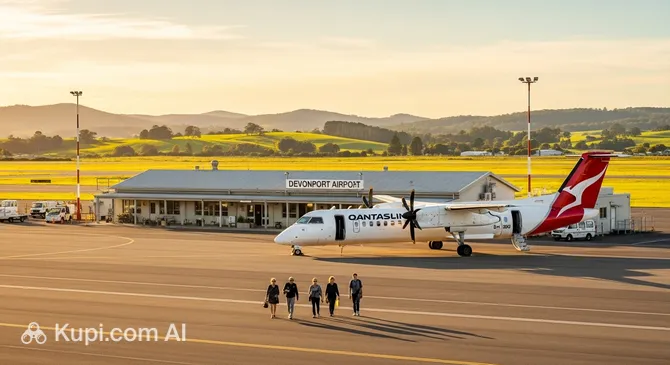
Devonport Airport. Source: Kupi.com Binoculars

Devonport Airport (DPO) is a cosy gateway opening the path to the wild beauty and tranquillity of Tasmania. Located just a few minutes' drive from the coast of the Bass Strait, this airport offers travellers a relaxed atmosphere, devoid of the noise and bustle of major aviation hubs. It is the ideal starting point for those who want to head straight to majestic Cradle Mountain upon arrival or comfortably reach the Spirit of Tasmania ferry terminal.

IATA Code DPO
ICAO Code YDPO
City Devonport
Distance to centre ~10 km
Status Regional
Passengers per year ~140,000

One of the airport's main advantages is its compactness and efficiency. The small terminal allows passengers to complete check-in and security control in a matter of minutes, which practically eliminates the risk of being late and reduces pre-flight stress. Everything here is within walking distance, and the friendly staff are always ready to help, creating a sense of home-like comfort.

The airport is also distinguished by its favourable geographical location. It serves as a convenient transport hub for tourists planning to explore the north-western part of the island by rental car. Proximity to the city and port makes it an important link in the region's logistics, allowing for easy combination of air travel with sea voyages or trips inland to national parks.

Contact Information

For your convenience, we have compiled the main contact information for Devonport Airport (DPO). Please note that the airport is managed by TasPorts, so many contacts may lead to its general services.

  • Official Website: Current information on flights, services, and airport regulations can always be found on the official TasPorts operator website: www.tasports.com.au.
  • Information Desk Phone: For general questions related to airport operations, you can contact: +61 3 6427 0666.
  • Airport Address: Airport Road, Wesley Vale, Tasmania 7307, Australia.
  • Email: For written inquiries, you can use the operator's general email address: enquiries@tasports.com.au.
  • Social Media: The airport does not have its own official social media pages. News and updates can be tracked on the pages of the managing company, TasPorts.
  • Lost Luggage Information: If your luggage was lost or damaged during the flight, you should contact your airline's representative directly. Airport staff do not handle the search for checked baggage. For items left in the terminal building, please contact the general information desk phone.
  • Customer Support Contacts: For assistance and consultations regarding your stay at the airport, use the main information desk phone or the feedback form on the official website.

How to Get to the Airport

Getting to Devonport Airport (DPO) from the city centre of Devonport is quite simple due to its close proximity. A trip by car or taxi usually takes no more than 10-15 minutes, making it one of the most accessible regional airports in Australia.

Taxis and transfers are the most popular and convenient way to get to the airport. You can easily find a taxi in the city or book one in advance. This is the ideal option if you have a lot of luggage or are travelling in a group. The cost of the trip will be higher than public transport, but the comfort and speed justify the expense. Private shuttle services are also available and can be booked online.

As for public transport, options are limited. There is no direct train or metro connection to the airport. Some routes of local bus companies may pass near the airport, but they run infrequently. It is recommended to check the schedule and routes on the local carrier's website in advance to plan your trip. This option is the most budget-friendly but requires careful planning.

Car rental is an excellent choice for those planning to explore the island of Tasmania. Most major rental companies have their counters right in the airport terminal. You can pick up a car immediately upon arrival or return it before departure. For those arriving at the airport in their own vehicle, convenient parking is provided. There are zones for both short-term and long-term parking, located just a few steps from the terminal entrance.

For travellers looking for more flight options, it is worth considering the island's larger airports, such as Launceston Airport (LST) or Hobart International Airport (HBA), which offer a wider network of domestic and international flights.

Terminals and Map

Devonport Airport (DPO) is a compact and modern regional airport that handles all flights within a single passenger terminal. Its small size and thoughtful layout make it extremely convenient for travellers, eliminating the stress typical of major aviation hubs.

The terminal is designed very logically and simply. All key zones — airline check-in counters, security screening, the departure lounge, and the baggage claim carousel upon arrival — are on the same level and within walking distance of each other. Thanks to this, navigating the airport is intuitively clear, and you will not have to spend time searching for the right gate or service. The departure and arrival zones are effectively parts of one common space, which simplifies meeting and seeing off passengers.

Due to the compactness of the terminal, completing pre-flight formalities here takes significantly less time than in large airports. Flight check-in and security screening proceed quickly and efficiently. Despite this, it is standard recommendation to arrive at the airport approximately 60–90 minutes before departure to calmly check in your luggage and go through all procedures.

To navigate the terminal, simply follow the clear signs. It is practically impossible to get lost here, as only a few minutes of leisurely walking separate the building entrance from the boarding gate. This simplicity and efficiency are the main advantages of Devonport Airport, making the start and end of your journey as comfortable as possible.

Airport History

The history of Devonport Airport (DPO) begins in the post-war years when an acute need arose for reliable air connections for the north-west coast of Tasmania. The site for the future airport was chosen in 1947, and its official opening took place in 1949. The first flights were operated by Australian National Airways (ANA) on legendary Douglas DC-3 aircraft, which connected the region with mainland Australia and other parts of the island. Initially, the infrastructure was modest, but the airport immediately proved its strategic importance for the local population and economy.

With the growth of passenger traffic and the development of aviation, the need for modernisation arose. A key stage in the airport's development was the construction of a new terminal. In 1988, a modern building was inaugurated, which significantly increased comfort for passengers and the throughput capacity of the air harbour. This reconstruction allowed for the reception of more modern types of aircraft and expanded the geography of flights, strengthening Devonport's status as an important air gateway for the region.

Throughout its history, Devonport Airport has served flights of various airlines, adapting to changes in the Australian aviation industry. It has survived the ups and downs of carriers such as Ansett Australia, and today continues to play a key role, mainly thanks to QantasLink flights. The airport is not only an important transport hub for tourists eager to explore the beauties of Cradle Mountain National Park and the north-west coast but also a vital artery for business travel and cargo transportation.

One of the most interesting facts in the airport's history is its owner. The air harbour is managed by TasPorts, which is also the operator of Tasmania's seaports. Such a combination of sea and air transport under one management is unique for Australia and highlights the multimodal significance of Devonport as a key logistics centre. Furthermore, the airport's close proximity to the Spirit of Tasmania ferry terminal makes it part of a unified transport hub connecting Tasmania to the mainland by air and by sea.

Services and Amenities

Devonport Airport (DPO) is a compact and convenient regional air terminal where all basic conditions for a comfortable wait for a flight have been created. Before departure, passengers can have a snack and drink coffee at the local cafe, which offers light bites, sandwiches, and beverages. Also, a small shop usually operates in the terminal, where you can purchase newspapers, souvenirs, or travel essentials.

A general hall is equipped for waiting for boarding. Although there are no separate VIP lounges in an airport of this size, travellers can use free Wi-Fi for work or communicating with loved ones. Charging stations for electronic devices are also provided in the terminal. Regarding financial services, ATMs are installed in the airport building; however, currency exchange points are absent here, so it is worth taking care of money exchange in advance.

Devonport Airport is equipped for the needs of all categories of passengers. For travellers with small children, baby care rooms with changing tables are provided. Passengers with reduced mobility are provided with all necessary assistance — from ramps and specially equipped toilets to staff assistance when boarding the aircraft. It is recommended to notify your airline in advance about the need for special service. First aid can be provided by airport staff.

There are no specialized business centres or conference rooms at the airport, as it is primarily oriented towards passenger transport. Travellers requiring workspace or a venue for business meetings can find suitable options in hotels in the city of Devonport. There are no hotels within the airport itself, but many accommodation options are located just a few minutes' drive from the terminal.

Where to Eat

Devonport Airport (DPO) is a compact regional airport, so dining options here are concentrated in one main establishment that serves all passengers. Do not expect a large variety of restaurants as in major international hubs, but having a snack or drinking coffee before departure is certainly possible.

The main place for dining is the cafe located in the main terminal hall, in the public zone (landside), meaning before passing security control. It is ideal for those who have arrived at the airport early or are seeing off departing passengers. Its opening hours are usually tied to the flight schedule: the cafe opens before the first morning departure and closes after the departure of the last evening flight.

The menu usually features:

  • For a quick snack: Fresh sandwiches, pastries, cakes, and classic Australian meat pies, which are worth trying to experience the local flavour.
  • Drinks: A wide selection of coffee, tea, juices, and soft drinks. Often you can find products from local producers as well, for example, Tasmanian beer or wine.
  • Full lunch: Options for a hearty lunch are limited, but you can usually order a hot sandwich, soup of the day, or a simple hot dish.

Regarding special dietary needs, the choice may be limited. Usually, a few vegetarian sandwiches or salads are available. However, finding gluten-free, vegan, or Halal dishes may be difficult. If you have strict dietary restrictions, it is recommended to bring food with you. Prices in the cafe correspond to the average level for airports in Australia — slightly higher than in the city, but quite acceptable.

Travel Tips

Travelling through Devonport Airport (DPO), like through most regional airports, can be calmer and faster compared to major international hubs. To ensure your trip goes smoothly, use these tips. Generally, for domestic flights within Australia, it is recommended to arrive at the airport 1.5–2 hours before departure. This time is sufficient to check in luggage without rushing, pass security control, and reach the boarding gate.

To save time, always complete online check-in for your flight as soon as it opens. This will allow you to head straight to the bag drop counter or, if you are travelling only with carry-on luggage, straight to security screening. Security control in Devonport usually proceeds faster than in metropolises, but the rules are standard: prepare electronic devices and containers with liquids up to 100 ml, packed in a transparent bag, in advance.

When choosing a seat on the plane, consider that flights over Tasmania are often accompanied by picturesque views. A window seat will give you a wonderful opportunity to take beautiful photos during takeoff and landing. An aisle seat is more convenient if you plan to get up during the flight. If you have a short connection, choose a seat closer to the exit to leave the plane among the first.

Pay special attention to carry-on luggage rules. In addition to standard restrictions on liquids, sharp objects, and flammable substances, strict biosecurity laws apply in Australia. It is strictly forbidden to bring fresh fruits, vegetables, meat, dairy products, and plants into the country (and often even between states) without special permission. Always declare any food products to avoid large fines. Passengers on international flights undergo customs control at the first airport of arrival in Australia (for example, in Melbourne or Sydney), so this procedure will likely not affect you in Devonport.

Passengers with connections must remember that Devonport is an airport with predominantly domestic flights. Your connections will likely be in larger cities. Study the layout of the transfer airport in advance and allow sufficient time between flights, especially if a change of terminal or repeated security screening is required.

To save money, book a taxi or transfer in advance, and book airport parking online — this is often cheaper. Bring an empty water bottle with you, which can be filled at drinking fountains after passing security. In case of a flight delay, contact your airline representative first to find out about further actions. The airline is obliged to provide you with information, and in case of long delays — vouchers for meals or hotel accommodation in accordance with the rules.

Reached the end of the page?

That means the route is fully explored