Support

Mornington Airport

About the Airport

Mornington Airport is not merely a runway, but an aerial gateway to one of the most distinctive corners of Australia. Located on the remote Mornington Island in the Gulf of Carpentaria, it serves as a vital link for the local community and a starting point for those seeking a unique cultural experience. Touching down here, you enter a world of ancient traditions and pristine nature, far removed from the hustle of big cities. Although this airport is not connected to the Mornington Peninsula in Victoria—popular with tourists—it offers access to a completely different, authentic Australia.

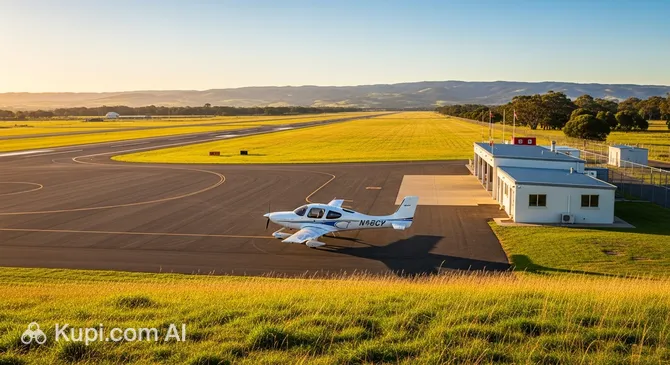
Mornington Airport. Source: Kupi.com Binoculars
IATA Code ONG
ICAO Code YMTI
Location Mornington Island (Gununa settlement)
Distance to settlement centre ~1 km
Status Domestic
Annual passenger traffic Approximately 10,000
Main airline Regional Express (Rex)

The main feature of Mornington Airport is its key role in island life. It is not a major tourist hub, but rather a functional transport node ensuring regular connection with the mainland for local residents. For travellers, it is the only way to quickly reach the island and explore the rich culture of the Indigenous Lardil people. It is important to remember that the island is an Aboriginal self-governed territory, and a special permit may be required to visit. The airport infrastructure is minimal and designed to service small regional aircraft, so the focus here is entirely on functionality and maintaining a link with the outside world.

Contact Information

  • Official Airport Website: www.mornington.qld.gov.au (Website of the managing body, Mornington Shire Council)
  • Help Desk Phone: +61 7 4745 7800 (Council/Airport Administration)
  • Airport Address: Cemetery Road, Gununa, Mornington Island, QLD 4871, Australia
  • Email: airport.reporting@mornington.qld.gov.au
  • Social Media: Airport and regional news are published on the official Mornington Shire Council pages (Facebook).
  • Lost Luggage Information: It is recommended to contact the airline operating the flight directly (the main carrier is Rex Airlines) or a representative at the airport.
  • Passenger Support Contacts: Mornington Shire Council Office (1 Mission Road, Gununa), phone: +61 7 4745 7800.

How to Get to the Airport

Mornington Airport is located on Mornington Island, in close proximity to the main settlement, the town of Gununa. Given the compact size of the settlement and the island's remoteness from the mainland, the transport infrastructure here has its own specific characteristics. Passengers should not expect the variety of routes typical of major cities, so it is best to plan your transfer in advance.

Transfers and Taxis. This is the most reliable and common way to get to the airport. Since classic taxi services and ride-hailing apps do not operate here, a private transfer remains the primary option. It is recommended to arrange a meeting with representatives of your accommodation or host in advance. Often, the local council (Mornington Shire Council) can assist in organising transport. The car journey from the centre of Gununa to the terminal takes just 5–10 minutes.

Public Transport. There is no public transport system in the town of Gununa and its surroundings: there are no metros, trains, or regular bus routes connecting the town to the airport. Travellers must rely exclusively on car transport or assistance from local residents.

Car Rental and Parking. There are no counters for international car rental companies within the airport building. Renting a car is only possible through prior personal arrangement with private individuals or organisations in town, subject to availability at the time of your visit. A small parking area is provided in front of the terminal. Generally, parking is free of charge, as passenger traffic is low and there are usually sufficient spaces.

Walking Distance. The airport is located very close to the residential zone. For tourists with light luggage and a good level of fitness, walking is a viable option. The walk from the settlement centre will take about 15–25 minutes. However, weather conditions should be considered: on hot days or during the wet season, this option may be uncomfortable.

Useful Tip: The fare (if you arrange a ride with a private driver) is often negotiable. It is recommended to carry cash, as card payment terminals are generally not available in vehicles.

Terminals and Map

Mornington Airport (ONG) is a compact regional aviation hub, the infrastructure of which fully meets the needs of the small island community. There is only one passenger terminal in operation here, serving all domestic flights (mainly directions to Cairns, Mount Isa, and other Queensland settlements). Thanks to its small size, passengers are spared the hustle and complex transfers typical of large international hubs.

Layout and Navigation. The layout of the terminal building is extremely simple and intuitive. The building is a single-storey structure where all key zones are in immediate proximity to one another. Upon entering the terminal, you will immediately see the airline check-in counters (the main carrier is Rex Airlines). Navigation requires no special maps or signs: it is impossible to get lost here, as the entire path from the entrance to the boarding gate takes mere minutes.

Departure and Arrival Zones.
Located in the Departure Zone are the baggage drop-off and passenger check-in counters, as well as the security screening point. The waiting area is a common space with seating, from where passengers proceed to the tarmac to board the aircraft.
The Arrival Zone is integrated into the general structure of the terminal. Familiar baggage carousels are absent here; baggage collection is usually performed manually by ground staff in a designated sector or directly from trolleys near the terminal building.

Terminal Features. The airport offers only a basic set of amenities necessary for a short wait before a flight. There are restrooms and a small rest area. Travellers should note that there may be no cafes, ATMs, or shops in the terminal, so it is recommended to take care of snacks and cash in advance, while still in Gununa.

Processing Times. Despite the absence of queues typical of large airports, one should not be complacent. Flight check-in closes strictly according to schedule. It is recommended to arrive at the airport 45–60 minutes before departure. The screening and document check process itself usually takes no more than 10–15 minutes, but punctuality is extremely important here, as planes depart strictly on time.

Navigation Recommendations. Since there are no transfers between terminals, your main task is simply to reach the airport building on time. If you are flying with heavy luggage, note that porter services are not provided, and transporting belongings from the parking area to the check-in counter is done independently (the distance is minimal).

Airport History

The history of Mornington Airport is inextricably linked to the development of the remote community on the island and the need to maintain a connection with the "mainland". Unlike major capital hubs built for tourism and commerce, this aviation node was created as a vital artery ensuring the safety and supply of Gununa's residents.

The Dawn of Aviation in the Region. Regular air connections with the island began to form in the mid-20th century. Initially, the landing site was a simple dirt strip capable of receiving only light aircraft. In those years, aviation became a true lifeline for the island, which previously depended solely on maritime supplies that were often interrupted during the storm season. A significant role in establishing routes was played by the legendary company Bush Pilots Airways, pioneers of Queensland regional aviation, who began establishing air bridges in the Gulf of Carpentaria.

Development Stages and Change of Operators. Over the decades, the airport has seen several air carriers change, reflecting the general turbulence in the Australian regional transport market. For a long time, flights were operated by companies such as Flight West Airlines and MacAir Airlines. The bankruptcy of MacAir in 2009 was a serious test for the island, temporarily threatening the regularity of supplies and passenger transport. The situation stabilised with the arrival of Regional Express (Rex), which won the government tender to service routes in the Gulf region and continues to fly here to this day.

Reconstruction and Modernisation. One of the most significant stages in the airport's history was the transition from a dirt surface to a paved runway. This allowed for the reception of heavier turboprop aircraft (such as the Saab 340) and, more importantly, made the airport all-weather. In tropical climate conditions, when dirt roads wash away during the wet season, having a hard runway guarantees that the island does not end up in total isolation.

Modern Improvements. In the 21st century, the airport underwent a series of important updates, funded mainly through government grants for the development of remote regions.
Key improvements included:
Installation of fencing around the perimeter for protection against wild and stray animals (kangaroos, livestock), which significantly increased the safety of take-offs and landings.
Modernisation of lighting equipment, allowing for landings at night. This is critically important for emergency medical flights.

Role in Emergencies. The airport has repeatedly become the centre of rescue operations during natural disasters. The region is prone to tropical cyclones, and it is the airfield that serves as the main point for evacuating the population or delivering humanitarian aid after storms pass. There have been moments in the airport's history when it remained the only "window" to the world for the entire island.

Interesting Facts:

  • Base for "Flying Doctors": The airport is a key node for the Royal Flying Doctor Service (RFDS). For local residents, the airport's history is primarily a history of saved lives, as complex medical assistance is available only on the mainland.
  • Geographical Specifics: Due to remoteness and a lack of alternatives, Mornington Airport has one of the highest passenger traffic per capita figures among small regional airports in Queensland—practically every resident of the island uses its services regularly.

Services and Facilities

Mornington Airport (ONG) is a small regional aviation hub serving the island of the same name in Australia. The terminal infrastructure is designed to meet the basic needs of passengers departing from or arriving on the island. Given its size and purpose, the range of services here is quite modest, so it is worth preparing for your trip in advance.

Restaurants, Cafes, and Shops. Opportunities for shopping and dining at the airport are extremely limited. There are no major restaurants or duty-free shops here. Passengers might find a small kiosk or vending machines where beverages and light snacks can be purchased. It is recommended to bring food with you, especially if you follow a specific diet.

Waiting Areas and Wi-Fi. A general waiting hall is equipped for all categories of passengers. Specialised VIP lounges, business lounges, or conference rooms are absent. Free public Wi-Fi is likely not provided, so it is better to use mobile data for internet access. The number of power outlets for charging electronic devices may be insufficient, so a portable power bank would be useful.

Financial and Medical Services. There are no bank branches, ATMs, or currency exchange points within the terminal grounds. All financial transactions are recommended to be completed in major cities beforehand. There is also no medical centre, although airport staff can provide basic first aid and call emergency services if necessary.

Passenger Services. The airport is equipped with basic amenities, including restrooms. There are no designated play areas for children. Passengers with reduced mobility requiring assistance with boarding, disembarking, and moving through the terminal are strongly advised to contact their airline in advance. There are no hotels directly at the airport, but accommodation options can be found in nearby settlements on the island.

Where to Eat

When planning a trip through Mornington Airport (ONG), it is important to consider its specific nature. Since it is a small regional hub located in a remote area, there are no full-service dining establishments here. Passengers should not expect the service typical of international airports with food courts, restaurants, or cafes. To ensure your wait for the flight is comfortable, it is recommended to take care of food and drinks in advance.

Cafes and Restaurants in the Terminal.
In the airport's single passenger terminal, there are no operating fixed cafes, bars, or restaurants. The airside (departure) and landside (general) zones are equipped only with seating areas. Consequently, there is no opportunity to buy a hot lunch or freshly brewed coffee immediately before boarding.

Options for Snacks and Water.
Sometimes vending machines with a basic set of snacks (chips, chocolate, biscuits) and bottled drinks may be available in the waiting lounge, but their presence and stock levels are not guaranteed.
Drinking fountains (water coolers) are usually provided in the terminal. It is recommended to carry an empty reusable bottle, which can be filled after passing security, or bring a supply of water with you (up to the security checkpoint).

Where to Eat Before Departure (in Gununa Town).
The only way to have a proper meal before your flight is to visit establishments in the town of Gununa before heading to the airport. Since the drive takes only 5–10 minutes, this is the most sensible option.
The settlement has a General Store and a bakery where you can buy:
Traditional Australian Meat Pies and sausage rolls—a hearty and inexpensive option.
— Fresh sandwiches and pastries.
— Soft drinks and juices.

Dietary Requirements (Vegetarian, Vegan, Halal).
Due to the lack of catering facilities at the airport itself, a specialised menu is unavailable.
For Vegetarians and Vegans: It is recommended to purchase fruit, nuts, or suitable snacks at the Gununa store in advance.
Gluten-Free and Halal Options: Travellers with strict dietary restrictions are strongly advised to bring food from home or their place of accommodation, as the choice of products on the island is limited.

Price Range.
If purchasing food in local shops before departure, consider the "island markup". The cost of groceries and prepared food here is usually higher than on the mainland due to complex delivery logistics. The average bill for a light snack (pie + drink) may be around 10–15 AUD.

Expert Recommendations:
1. For a full lunch: Eat a substantial meal at your accommodation or in Gununa 1.5 hours before departure.
2. For a quick snack: Be sure to pack a "travel kit" (sandwiches, muesli bars, fruit) before leaving for the airport. Rex Airlines usually offers light snacks and beverages on board, but full hot meals may not be provided on short flights.

Travel Tips

Travelling through a small regional airport like Mornington differs significantly from the experience of flying through large international hubs. There is less hustle here, but there are strict rules and nuances, knowledge of which will make your trip comfortable and calm. Below are proven tips for those planning to fly from the island.

Arrival Time and Check-in.
The main rule of regional flights in Australia: "A small airport does not mean you can be late."
Optimal Time: Arrive at the airport 60 minutes before departure. Rex Airlines check-in counters close strictly 30–45 minutes prior to take-off. If you are late even by a couple of minutes, the computer system may not allow the boarding pass to be printed.
Documents: Keep your identification (passport) handy. Staff at the counter often know locals by face, but they will certainly check the documents of tourists.

Hand Luggage and Baggage Specifics.
Flights to Mornington Island are usually operated by turboprop aircraft (most often the Saab 340), which have compact cabins and small overhead lockers.
"Premium Hand Luggage" Procedure: If your hand luggage bag is of standard size (as for a Boeing or Airbus), it may not fit in the overhead locker. In this case, at the aircraft steps, a staff member will ask you to leave the bag on a special trolley. You will receive it back immediately upon landing, also at the steps. Remove valuables, gadgets, and medication from the bag in advance.
Strict Weight Control: In regional aviation, weight is critical. Be prepared for both your checked baggage and your hand luggage to be weighed. The standard limit is 7 kg. Excess weight is charged at high rates.

Seat Selection on the Plane.
Since flights take place at a relatively low altitude, passengers are treated to stunning views of the Gulf of Carpentaria and the Wellesley Islands group.
Best View: Try to get a Window seat. When flying from Mornington towards the mainland (Cairns or Mount Isa), the views of the turquoise waters and sandbanks are truly mesmerising.
Noise: Note that in turboprop aircraft, seats located near the propellers (in the front part of the cabin) can be noisier. If you are sensitive to sound, choose seats in the rear of the cabin or use noise-cancelling headphones.

Special Rules: Alcohol and Biosecurity.
This is one of the most important points for tourists visiting Indigenous communities.
Alcohol Restrictions: Strict Alcohol Management Plans are in effect on Mornington Island. The importation of alcohol may be completely prohibited or strictly limited. Police may search the luggage of arriving passengers. Be sure to check current rules before flying to avoid large fines and confiscation.
Biosecurity: Do not take local plants, seeds, or animals off the island without permission. Australia takes quarantine measures between regions very seriously to prevent the spread of pests.

Tips for Transit Passengers.
There are no direct flights to major state capitals (other than regional centres), so transfers are inevitable.
Allow Extra Time: Weather in the tropics is unpredictable. In the wet season, flights may be delayed. If you have a connection in Cairns for an international flight, leave a gap of at least 3–4 hours.
Single Ticket: Try to book your flight on a single ticket if possible. In case of a delay to the first flight, the airline will be responsible for your connection.

In Case of Flight Delay.
Airport infrastructure is minimal, so a long wait can be tiring.
Entertainment: Wi-Fi in the terminal may work intermittently or be absent. Download movies, music, or books to your devices in advance.
Comfort: Air conditioners in the waiting lounge may operate at full power. Take a light jacket or scarf with you to stay warm during the wait, even if it is hot outside.

Money-Saving Hack.
Taxis and transfers on the island are not cheap, and it is difficult to "hail" a car at the exit. The most budget-friendly and reliable option is to correspond with your hotel or host in advance. Often, local lodges provide transfers for free or for a nominal fee if arranged at the accommodation booking stage.
Reached the end of the page?

That means the route is fully explored