Support

Flinders Island Airport

About the Airport

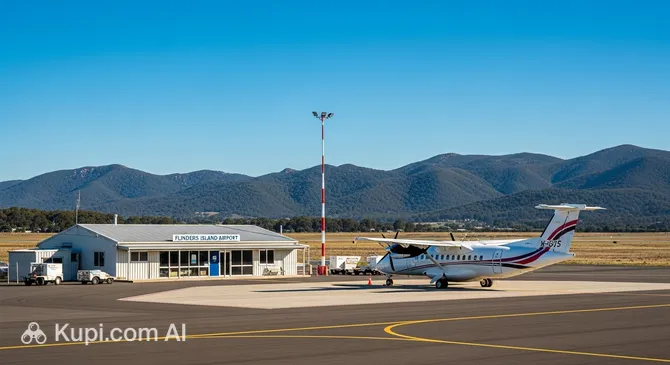
Flinders Island Airport. Source: Kupi.com Binoculars

Flinders Island Airport is not merely a transport hub, but a true gateway to a world of wildlife and serenity in the middle of the Bass Strait. From the very first moments of arrival, as the aircraft approaches for landing with breathtaking views of the majestic Mount Strzelecki and turquoise waters, you feel the hustle and bustle of the mainland fading far behind. This cosy air harbour sets a relaxed and leisurely rhythm for your entire journey through this unique corner of Tasmania.

IATA Code FLS
ICAO Code YFLI
City Whitemark (Flinders Island)
Distance to Centre 4 km
Status Regional
Annual Passengers Approx. 25,000
Schedule Available on official airline resources

Despite its modest size, Flinders Island Airport boasts a number of undeniable advantages that make arriving here as comfortable as possible:

  • No Queues: Thanks to the low passenger flow, clearing all formalities takes just a few minutes. You will not encounter tedious waiting times at security checks or baggage claim here.
  • Scenic Location: The airfield is surrounded by stunning landscapes. Waiting for a flight turns into a pleasant pastime with views of the mountains and the island's pastoral fields.
  • Convenient Logistics: The airport is located just a few minutes' drive from Whitemark, the island's administrative centre, where shops, cafes, and main infrastructure are concentrated.
  • Atmosphere of Hospitality: The airport staff typically consists of locals who are known for their friendliness and willingness to help, creating a sense of home-like comfort immediately upon landing.

Contact Information

Below you will find the main contact information for Flinders Island Airport (FLS). Please note that the airport is regional, and for many issues (such as lost luggage or booking changes), you should contact your airline directly.

  • Official Website: The airport is managed by the island's Council; all information is available on their official resource: www.flinders.tas.gov.au
  • Help Desk Phone: +61 3 6359 2144
  • Airport Address: Palana Rd, Whitemark TAS 7255, Australia
  • Email: For official enquiries, you can use the Council's email: council@flinders.tas.gov.au
  • Social Media: The airport does not maintain separate social media pages. News and updates may be published on pages dedicated to tourism on Flinders Island or on Council resources.
  • Lost Luggage Information: For all questions related to lost or damaged luggage, it is necessary to contact the airline you flew with directly.
  • Passenger Support Contacts: For information on flights, ticket booking, and check-in, please contact your airline. For general questions regarding airport infrastructure, you can call the phone number listed above.

How to Get to the Airport

Getting to Flinders Island Airport (FLS), just like moving around the island itself, is part of the unique experience of travelling to this secluded corner of Australia. It is important to consider that Flinders Island is a small and sparsely populated territory, so the transport infrastructure here differs from the mainland. The island's main settlement, Whitemark, is located just a few kilometres from the airport, so the trip will not take much time.

Car Rental

This is the most popular and convenient way to get around the island. By renting a car, you gain complete freedom to explore its numerous beaches, national parks, and lookouts. Most car rental companies offer vehicle collection directly at the airport upon arrival. It is strongly recommended to book a car in advance, especially during the peak tourist season, as the number of vehicles on the island is limited. Rental costs depend on the vehicle type and season.

Taxis and Private Transfers

There are no conventional taxi ranks on the island where cars wait for passengers. If you need a transfer, it must be booked in advance. There are local operators providing taxi and shuttle services. Additionally, some hotels and guesthouses organise airport pick-ups for their guests. The trip from the airport to Whitemark takes just 5-10 minutes. Be sure to confirm the cost when booking.

Public Transport

Flinders Island lacks a public transport system in the usual sense — there are no regular bus routes, trains, or metro here. When planning your trip, you should rely on car rental or a pre-arranged transfer.

Airport Parking

Flinders Island Airport has a car park located in immediate proximity to the small terminal. Generally, finding a parking space is not difficult. If you plan to leave your car for a long period, it is better to check the conditions with the airport administration or the rental company in advance.

Terminals and Map

Flinders Island Airport (FLS) is a small regional airport serving the island. Its structure is extremely simple and intuitive, making your stay here as comfortable as possible and eliminating the stress typical of large aviation hubs.

The airport operates one passenger terminal, which serves both arriving and departing flights. The terminal building is very compact, and all infrastructure is located in one common hall. Thanks to this, navigation presents no difficulty — it is practically impossible to get lost here. Immediately upon entry, you will see the check-in counters, a small waiting area, and the baggage claim zone.

Since there is only one terminal, there is no need for transfers between terminals. All procedures — from check-in to boarding — take place in one building. Departure and arrival zones are effectively in the same space, rather than in different wings or on different floors. After completing check-in, passengers wait for their flight in the general hall, from where they are invited for boarding. Arriving passengers proceed immediately to the baggage claim area located next to the terminal exit.

Clearing all formalities, including flight check-in and security screening, takes a minimum amount of time. Due to the low passenger flow and small number of flights, queues here are a rarity. Typically, the entire process from entering the terminal to the waiting lounge takes no more than 10-15 minutes. Nevertheless, it is recommended to arrive at the airport in accordance with your airline's rules, usually 45-60 minutes before departure.

Airport History

The history of Flinders Island Airport (FLS) is, above all, a story of connecting an isolated island community with mainland Australia. Although the first unofficial airstrips appeared on the island thanks to enthusiasts as early as the 1930s, the full-fledged development of air travel began after World War II. It was then that an urgent need arose for regular flights to deliver mail, cargo, and, of course, passengers, which provided the impetus for creating an official airfield.

The main stages of the airport's development are closely linked to the evolution of regional aviation. Initially, it was a simple runway capable of accepting only small propeller aircraft. Over the years, the infrastructure improved: the runway was lengthened and strengthened, allowing for larger and more modern turboprop liners. This became a key moment in the island's history, significantly increasing its accessibility for tourists and simplifying logistics for locals and businesses.

Over the decades, the airport has undergone modernisation several times. The most significant changes concerned the terminal — the old building was replaced with a modern one meeting current safety and passenger comfort requirements. Today, Flinders Island Airport not only serves regular commercial flights but is also an important base for private aviation and medical flights by the Royal Flying Doctor Service, saving lives in emergency situations.

The main achievement in the airport's history is not passenger traffic records, but its role as a reliable and uninterrupted "lifeline" for over half a century. Interesting fact: for islanders, the airport is not just a gateway to the world of travel, but an integral part of daily life. Flying to the mainland for a doctor's visit, business, or studies is as commonplace here as a metro ride is for a resident of a big city. This best highlights the unique significance of this small but vital transport hub.

Services and Facilities

Flinders Island Airport (FLS) is a small and cosy regional aviation hub serving as the main gateway to the island. Given its compact size, the range of services is focused on meeting basic passenger needs before departure or immediately after arrival. Here you will find a comfortable waiting area where you can quietly await your flight.

Regarding dining and shopping, options at the airport are limited. Typically, there is a small cafeteria or vending machines where you can purchase drinks and light snacks. There are no full-service restaurants or duty-free shops in the terminal, so serious shopping or dining should be taken care of in advance in one of the island's towns.

Facilities for work and rest at the airport are basic. Specialised VIP lounges, business centres, or conference rooms are absent. Access to Wi-Fi may be limited, and the number of charging stations for electronic devices is small, so it is recommended to carry a portable power bank.

There are no bank branches or currency exchange points directly within the airport building. All financial transactions are best completed in advance in the major cities of Australia. Basic medical services are provided by airport staff in emergency cases. Standard amenities, such as accessible restrooms, are provided for passengers with children and people with disabilities. If you require special assistance during boarding or disembarking, it is strongly recommended to notify your airline of this in advance.

There are no hotels on the airport territory itself, however, Flinders Island has many accommodation options — from cosy guesthouses to cottages located a few minutes' drive from the terminal. You can easily book accommodation and arrange a transfer.

Where to Eat

Flinders Island Airport (FLS) is a small and cosy regional airport, so the choice of dining establishments corresponds to its size. Do not expect a wide variety of restaurants as found in large international hubs; however, passengers can find everything necessary here for a comfortable wait for their flight in Australia.

A small cafe usually operates in the airport's single terminal. It is located in the general area, accessible to both departing passengers and those meeting them. Here you can order coffee, tea, soft drinks, fresh pastries, sandwiches, and light snacks. It is an excellent place for a quick bite before a flight or to leisurely drink a cup of coffee.

Despite the modest selection, you can often find something special in the local cafe. Look out for homemade pastries or products from local farmers that may be used in food preparation. This is a wonderful opportunity to enjoy the authentic tastes of the island one last time. The establishment is best suited for breakfast or a light lunch; for a full dinner, it is better to choose a restaurant in one of the island's towns before travelling to the airport.

Passengers with strict dietary restrictions (e.g., vegan, gluten-free, or Halal dishes) should note that specialised options will likely be limited or unavailable. It is recommended to take care of your own snacks in advance or check the ingredients of offered dishes with the staff. The cafe's opening hours are usually tied to the flight schedule, and prices correspond to the average level for small regional airports.

Travel Tips

Travelling through Flinders Island Airport is the starting point for exploring the secluded beauty of the island. To ensure your trip starts smoothly, use our tips adapted for this small and cosy regional airport in Australia.

Arrival and Check-in: The airport on Flinders Island is small, so there are no long queues characteristic of major hubs. We recommend arriving approximately 60-90 minutes before departure. This time will be quite sufficient to check in for the flight, drop off luggage, and pass through security control without rushing. Procedures here proceed much faster and in a calmer environment.

Seat Selection and Hand Luggage: Flights to the island are usually operated by small turboprop aircraft. To enjoy stunning views of the Bass Strait and the coastline, choose a window seat. Regarding hand luggage, standard rules for domestic flights apply here: liquids up to 100 ml must be packed in a transparent bag, and sharp objects are prohibited. Be sure to check baggage allowances with your airline, as they may be stricter on small aircraft.

Customs and Biosecurity: Since the airport serves only domestic flights, there is no international customs control here. However, in Australia, and especially when entering islands like Tasmania and Flinders Island, strictest biosecurity rules apply. It is categorically forbidden to bring fresh fruit, vegetables, plants, and certain animal products with you to protect the unique local flora and fauna from external threats.

Saving Money and Flight Delays: To save money, book tickets in advance, especially during the peak tourist season. Keep in mind that due to weather conditions, flights to the island may be delayed or cancelled. The airport offers only basic amenities, so in case of a delay, be prepared to wait. We recommend bringing a book, a charged power bank, and having your airline's contact details on hand to receive up-to-date information on flight status.

Reached the end of the page?

That means the route is fully explored