Support

Newcastle Airport

About the Airport

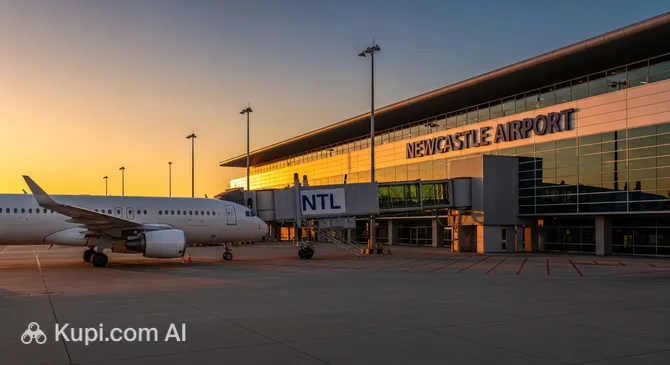
Newcastle Airport. Source: Kupi.com Binoculars

Newcastle Airport (NTL), also known as Williamtown Airport, is your aerial gateway to the picturesque Hunter region and the stunning coastlines of Port Stephens. Located on the grounds of a Royal Australian Air Force base, it combines the compactness of a regional hub with the growing ambitions of an international destination. Your journey to famous vineyards, sandy beaches, and the vibrant city of Newcastle begins here, offering a convenient and quick start to an unforgettable Australian adventure.

IATA Code NTL
ICAO Code YWLM
City Newcastle, Australia
Distance to Centre About 27 km
Status International (serves domestic and select international flights)
Passengers per Year Over 1.2 million (financial year 2023-2024)
Popular Airlines Jetstar, Qantas, Virgin Australia.
Schedule online board "Newcastle Airport"

Despite its relatively small size, Newcastle Airport offers travellers everything needed for a comfortable wait for their flight. The modern and spacious terminal is easy to navigate, significantly reducing the time required for pre-flight formalities. The airport is the thirteenth busiest in Australia and is constantly developing: modernisation is planned for completion in 2025 to expand international capabilities. Convenient transport links, including buses and taxis, allow for quick access to both Newcastle city centre and key tourist spots in the Hunter region.

Contact Information

  • Official Website: www.newcastleairport.com.au
  • Help Desk Phone: +61 2 4928 9800
  • Airport Address: Williamtown Dr, Williamtown NSW 2318, Australia
  • Email: For general enquiries and feedback, it is recommended to use the contact form on the airport's official website.
  • Social Media: Newcastle Airport is present on popular platforms such as Facebook and Instagram. Official pages can be found by searching for "Newcastle Airport".
  • Lost Property Information: For items left on the aircraft or lost luggage, please contact your airline directly. If you have lost something within the airport terminal, fill out the form in the "Lost Property" section on the official website.
  • Passenger Support Contacts: For consultation, you can call the main help desk number or use the feedback form on the website.

How to Get to the Airport

Getting to Newcastle Airport (NTL) from the city centre of Newcastle is quite simple, as it is located just a 25-30 minute drive away. Depending on your budget, time, and preferences, you can choose from several convenient methods: public transport, taxi, or car rental. While planning your trip to this corner of Australia, you will easily find the best option for you.

The most economical way to get to the airport is by public transport. Port Stephens Coaches operates regular bus services (routes 130 and 131) that connect the terminal with key points in the city, including the Newcastle Interchange transport hub. From there, you can easily transfer to trains or other buses. Please note that there is no direct train or tram connection to the airport, so the bus is the primary mode of public transport for this purpose. The bus journey will take about 40-50 minutes.

For maximum comfort and speed, use taxis or ridesharing services (such as Uber). This is the fastest way to reach the terminal, especially if you have a lot of luggage. The trip from the city centre will take approximately 25-30 minutes, though the cost will be significantly higher compared to the bus. Pre-booked shuttles and private transfers are also popular and can be more cost-effective than taxis, especially for groups.

If you plan to travel around the Hunter region, car rental can be an excellent solution. You can rent a car in the city and return it directly at the airport before departure. Newcastle Airport offers several parking options: from short-term, ideal for dropping off passengers, to long-term car parks at more favourable rates. All car parks are within walking distance of the terminal, making this option very convenient for those arriving in their own vehicle.

Terminals and Map

Newcastle Airport (NTL) is a modern and compact aviation hub distinguished by a simple and clear structure. You won't have to worry about complicated transfers and long corridors, as the airport has only one passenger terminal serving both domestic and international flights.

The terminal is a single building, making navigation intuitively clear. Departure and arrival zones are clearly separated and marked with signs. Immediately after entering, you find yourself in a general area with several cafes and check-in counters. After completing check-in and baggage drop, passengers proceed to security screening, beyond which lies a comfortable departure lounge with shops, a food court, and boarding gates.

Thanks to the airport's compactness, all procedures are completed quite quickly. Check-in and security checks usually take no more than 20-30 minutes; however, during peak hours or before international flights, it is worth allowing a little more time. It is recommended to arrive at the airport 90 minutes before a domestic flight and 2-3 hours before an international one.

Since there is only one terminal, there is no need to transfer between different buildings. All services—from car rental to information desks—are within walking distance of each other. Getting lost in Newcastle Airport is practically impossible, making it particularly convenient for travellers who value time and comfort.

Airport History

The history of Newcastle Airport (NTL) is inextricably linked with the military aviation of Australia. The airport is located on the grounds of the Royal Australian Air Force (RAAF) Base Williamtown, which was established in 1941 during World War II to provide protection for the city's steelworks. After the war, a need for civilian transport arose, and in 1947, the first commercial passenger flights began, operating out of a simple wooden hangar.

For a long time, the airport remained a modest regional hub. A real breakthrough began in the 1990s when the management of the civil part of the airport was transferred to Newcastle Airport Limited. This triggered massive modernisation. In 2005, a new, significantly expanded terminal was opened, designed to serve up to 1.5 million passengers per year. However, traffic growth exceeded all expectations, and by 2015, another major reconstruction was completed, doubling the terminal area and preparing it to receive international flights.

One of the most interesting facts about Newcastle Airport is its joint use status. Passenger aircraft take off and land on the same runway as F-35A Lightning II fighters and other RAAF aircraft. This creates a unique spectacle for passengers, who can watch military aviation flights right from the terminal windows. Today, Newcastle Airport is one of Australia's leading regional airports, constantly breaking passenger traffic records and demonstrating impressive growth rates.

Services and Amenities

Newcastle Airport (NTL) offers passengers a wide range of services to make waiting for a flight as comfortable and productive as possible. Regardless of the purpose of your trip, you will find everything you need here, from places to rest and work to various shops and cafes.

Several restaurants, cafes, and dining venues are located within the terminal, where you can have a snack, drink coffee, or enjoy a full meal. For shopping enthusiasts, there are stores offering souvenirs, press, travel goods, and, of course, products in Duty Free format. This is a great opportunity to buy gifts for loved ones or something for yourself at competitive prices.

For those who need to stay connected, free Wi-Fi is available at the airport. Also, charging stations for mobile phones, laptops, and other gadgets are equipped throughout the terminal. For passengers preferring enhanced comfort, there are lounges and VIP areas where you can relax in a quiet atmosphere away from the main hustle and bustle.

All essential financial services are provided at Newcastle Airport. You will easily find ATMs and can use currency exchange services if necessary. In case of unforeseen health situations, there is a medical point on the premises ready to provide first aid.

Special attention is paid to passengers with children and people with disabilities. Parents' rooms are equipped for travellers with little ones. The airport is fully adapted for citizens with reduced mobility: there are ramps, elevators, and special restrooms. Staff are always ready to provide necessary assistance upon prior request.

If you have an early flight or a long layover, several hotels of varying comfort levels are located near the airport. For business travellers, business centres or small conference rooms for meetings may be available, allowing for effective use of waiting time.

Where to Eat

Newcastle Airport (NTL), despite its relatively small size, offers passengers a thoughtful selection of establishments where you can have a snack before departure or a full lunch. Most cafes and restaurants are concentrated in the main terminal building, both before and after security control, allowing for a comfortable time while waiting for a flight.

In the public zone (landside), before screening, there are usually several cafes where you can enjoy coffee with pastries or a sandwich. This is a convenient option for those seeing someone off or those who arrived at the airport early. A calmer atmosphere prevails here, and you can leisurely enjoy a cup of aromatic flat white—one of the coffee symbols of Australia.

The main food court is located in the departure zone (airside), after passing security control. Here the choice is significantly wider. Available to passengers are:

  • Cafes and Coffee Shops: A great place for a quick snack. The menu features fresh sandwiches, salads, pastries, and, of course, a variety of coffee drinks.
  • Restaurants and Lounges: For those who prefer a more substantial meal, there is a venue offering classic dishes such as burgers, fish and chips, as well as salads. This is also a wonderful opportunity to taste local specialties from the famous Hunter Valley region.
  • Fast Food Outlets: Here you can find snacks, juices, and other beverages that are convenient to take on board.

Regarding special dietary preferences, most establishments offer vegetarian dishes. Options for vegans or gluten-free meals are also available, however, it is recommended to check their availability with the staff of the specific cafe or restaurant. Muslim travellers are advised to enquire about Halal options directly at the outlets. The price range is generally moderate and corresponds to average airport prices. Opening hours are usually tied to the flight schedule, so you will always be able to find an open cafe, even if you have an early morning or late evening flight.

Travel Tips

To ensure your journey through the airport of Newcastle goes as smoothly as possible, use these proven tips. Newcastle Airport (NTL) is an important regional hub serving both domestic and some international flights, so preparation will help avoid unnecessary stress.

Arrival Time and Check-in. For domestic flights within Australia, it is recommended to arrive at the airport 1.5–2 hours before departure. If you have an international flight, it is better to arrive 2–3 hours in advance. To save time, complete online check-in beforehand and save your boarding pass on your phone. Self-service kiosks for check-in and baggage drop are also available at the airport, significantly speeding up the process.

Security Control and Seat Selection. Security checkpoints at Newcastle Airport usually operate efficiently, but queues are possible during peak hours. Prepare in advance: take out laptops and large electronic devices, and remove outerwear. when choosing a seat on the plane, consider your preferences: a window seat offers beautiful views during take-off and landing, while an aisle seat offers more freedom of movement. Book your seat in advance to get your desired option.

Hand Luggage and Customs. Carefully study your airline's hand luggage rules, especially weight and size restrictions. In Australia, strict rules apply for liquids, aerosols, and gels (no more than 100 ml in one container), as well as for powders on international flights. Upon entering the country, be prepared for thorough customs and biosecurity control. Be sure to declare all food items, plants, and animal products to avoid large fines.

Transfers and Flight Delays. If you have a connecting flight, check with the airline if you need to collect and re-check your luggage. Leave enough time between flights. In case of a flight delay or cancellation, contact your airline representative first. They will provide information on the flight status and your rights, including possible provision of meals or accommodation.

Tips for Saving. To save money, book airport parking online—it is almost always cheaper. Take an empty reusable water bottle with you and fill it after passing security at special water fountains. Instead of an expensive taxi, consider using public transport or shuttles if they suit your schedule.

Reached the end of the page?

That means the route is fully explored