Support

Tom Price

About

Tom Price is a fascinating destination that holds the title of the highest town in Western Australia. Located in the picturesque Pilbara region at an elevation of 747 meters above sea level, it offers tourists a unique blend of modern industrial power and pristine wilderness. Despite its small population of about 3,000 people, the town boasts a well-developed infrastructure and a special, welcoming atmosphere.

For many travelers, this is the starting point for exploring the rugged yet beautiful landscapes that Australia is so famous for. The climate here is hot and arid, typical of the outback; however, the elevation makes summer temperatures slightly more bearable and winter nights cool and refreshing.
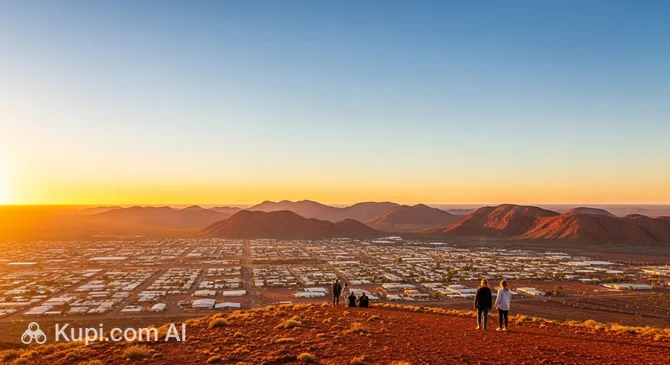
Tom Price. Illustration.
Source: Kupi.com AI

The town was founded in the 1960s to service a giant iron ore mine. The industrial history of Tom Price is closely intertwined with mining, and today this heritage is one of the region's "highlights." Tourists can take a tour of one of the largest open-cut mines in the world to appreciate the colossal scale of production and see massive mining equipment in action.

However, the main draw for nature lovers is its proximity to Karijini National Park. Tom Price serves as the perfect base for exploring its deep red gorges, ancient rocks, and cool natural pools. Equally popular is Mount Nameless (Jarndunmunha), located right next to the town. It is one of the few mountains in the region whose summit can be reached by a 4WD vehicle to catch an unforgettable sunset.

Visiting Tom Price is an opportunity to immerse yourself in the authentic life of the Australian outback without sacrificing comfort. If you are looking for adventure and want to see the spectacular landscapes of the Pilbara, this town is a must on your itinerary.

Weather Overview

The climate in this region is typical of the Pilbara: hot and arid weather prevails here, dictating its own rules for travelers. When planning a trip, it is important to consider seasonality, as the temperature difference between summer and winter can be quite significant.

Summer months (December to February) are truly sweltering here. In January, the average temperature is around 31.3°C, and on the hottest days, the air can heat up to 37.8°C or higher. This time is also characterized by the highest probability of rain: for example, there can be up to 7 rainy days in February, although overall humidity remains low.

Winter, which falls in June, July, and August in the Southern Hemisphere, is considered the most comfortable time to visit. Days are clear and warm, with maximum temperatures around 22-24°C, but nights become noticeably cool. In July, night temperatures can drop to 9.8°C, and rain during this period is very rare.

Expect a very hot summer with occasional thunderstorms and a mild, sunny winter with cool nights. To better prepare for your trip and choose the right clothing, be sure to check the detailed weather in Tom Price before you leave.

Average monthly temperature

Average monthly precipitation

Interesting Facts

Помимо основных достопримечательностей, Том Прайс хранит множество увлекательных секретов и историй, которые открывают этот шахтерский городок с совершенно новой стороны. Вот несколько фактов, которые могут удивить даже опытных путешественников:
  • The man behind the name. The town is named after Thomas Moore Price, the vice president of the American company Kaiser Steel. He played a key role in evaluating the region's potential, but fate was tragic: it is said that he passed away at his desk just two hours after receiving confirmation of the colossal ore reserves in these lands.

  • The mountain with a "missing" name. The famous Jarndunmunha peak was long marked on maps as Mount Nameless. It is one of the highest points in Western Australia accessible by a four-wheel-drive vehicle, making it a unique spot to catch sunsets without a grueling hike.

  • The tidiest town. Contrary to stereotypes about rugged industrial settlements, Tom Price is known for being clean and cozy. It has repeatedly won the "Tidy Towns" competition, impressing visitors with its abundance of greenery and well-maintained streets in the middle of the red desert.

  • Private property. Until the 1980s, Tom Price was effectively a "closed" town, entirely owned and managed by the Hamersley Iron mining company. There was no private housing in the usual sense, and all infrastructure was built exclusively for mine employees and their families.

How to Get There

When planning a trip to the heart of the Pilbara region, it is important to think through the logistics in advance, as distances in this part of the country are quite substantial. You can find more details on how to get to Tom Price to choose the most suitable route. The main way for tourists to reach the town remains an air flight followed by a transfer or car rental.

The most convenient and closest transport hub is Paraburdoo Airport (IATA: PBO). Please note: there is no airport in the town of Tom Price itself, so you need to fly into the neighboring town of Paraburdoo, which is about 53 km away. This is a regional airport receiving regular flights from Perth. The travel time from the terminal to the center of Tom Price by bus or car is about 45–50 minutes.

Another option for those who want to take an extensive road trip across Western Australia is flying into Newman Airport (IATA: ZNE). It is located in the town of Newman, significantly further away—about 220 km from Tom Price. This is also an important regional hub. A drive from here takes about 2.5–3 hours, allowing you to enjoy the rugged scenery along the way.

For convenience, here is summary information on the main airports:

AirportPassenger trafficDistance
Paraburdoo Airport238 30053 km
Koodaideri Mine (Gudai-Darri Mine) Airport200 000133 km
Barimunya150 000141 km
Newman Airport420 000221 km
Karratha Airport600 000244 km

As for rail transport, there is no passenger service to Tom Price. Although there is an extensive rail network in the Pilbara, it is private and used exclusively by mining companies to transport iron ore to the ports. The famous extra-long trains seen in the area do not carry tourists. Therefore, travelers are advised to rely on flights or car travel.

Main Attractions

Karijini National Park is perhaps the main reason travelers stop in this region. Although the park is outside the town limits, Tom Price is considered its western "gateway" and the best starting base. This is Western Australia's second-largest park, striking for its ancient red gorges, crystal-clear waterfalls, and natural pools. Be sure to visit Dales Gorge and Hancock Gorge to swim in the cool waters after a hot day.

For those who want to see the industrial power of the region with their own eyes, a Rio Tinto mine tour is a mandatory part of the program. This is one of the largest open-cut iron ore mines in the world. During an organized tour, you can appreciate the colossal scale of the operation, see giant Haul Pak trucks in action, and learn how the ore begins its journey by rail to the ports. The tour usually starts from the local visitor center and allows for a safe look into the heart of the "iron giant."

Panoramic view enthusiasts should head up Mount Nameless (Jarndunmunha). This is one of the highest peaks in Western Australia accessible by a four-wheel-drive (4WD) vehicle. From its height of 1,128 meters, there is a breathtaking view of the town and the mine, particularly impressive at sunset when the red desert earth is painted in incredible shades. For more active tourists, there is a walking trail that takes about 3 hours round trip.

If you are looking for a quiet spot for the whole family to relax, head to Kings Lake. This is a true green oasis amidst the arid Pilbara landscape. The man-made lake is surrounded by shady trees and lawns, with barbecue areas and gazebos provided. It is a great place to have a picnic, watch local birds, and simply relax in the quiet of nature.

Local Cuisine

The gastronomic scene in Tom Price fully matches the spirit of the Australian outback: you won't find fine dining restaurants here, but you certainly won't go hungry. Local establishments offer simple, hearty, and high-quality food, perfect for refueling after long walks in national parks. The menu is dominated by "pub food" classics prepared with fresh Australian ingredients.

Among the dishes you must try, barramundi is the king of the table. This iconic Australian fish is prepared excellently here—most often grilled and served with chips and salad. Meat lovers will enjoy massive local beef steaks or the traditional chicken "parmi" (parmigiana)—a breaded chicken fillet topped with tomato sauce and melted cheese. For a quick snack, a classic Australian meat pie from a local bakery is ideal.

As for drinks, ice-cold beer is definitely at the top of the list. In the hot Pilbara climate, it's not just a drink, but part of the survival culture. Bars offer a wide selection of both popular Australian lagers and craft varieties. Wine lovers will find a decent selection of wines from Australia, particularly from the famous Margaret River region, which, though far to the south, regularly supplies its products even to these remote corners. In the morning, locals can't do without quality coffee—the coffee culture here is surprisingly well-developed.

The dining culture in town is concentrated around a few key spots: the hotel restaurant, the supermarket food court, and small cafes. However, perhaps the most authentic way to dine in Tom Price is to host your own barbecue. Parks and campsites are equipped with public grills where tourists and locals grill sausages and steaks, enjoying the conversation and the starry desert sky.

Travel Tips

Traveling to the heart of the Pilbara region is a true adventure that requires careful preparation, as conditions here differ significantly from typical resorts. To ensure your trip to Tom Price and your introduction to the wilderness Australia is famous for is as comfortable and safe as possible, we have gathered several important recommendations.

  1. Clothing and Equipment. Due to the ubiquitous iron-rich red dust, it is highly recommended not to bring light-colored clothes—it will be almost impossible to wash the stains out. Opt for earth tones (khaki, beige, brown). The climate here is contrasting: during the day you will need light, breathable clothes and a wide-brimmed hat for sun protection, but for cool evenings and nights (especially in winter), be sure to pack a fleece jacket. Sturdy, closed-toe shoes are a must for protection against thorns and insects.
  2. Transport. There is no developed public transport system in town. The only way to move around freely is with a rental car. For trips to Karijini National Park and remote natural attractions, it is best to choose a 4WD vehicle. A regular sedan may not handle the unsealed roads. Refuel whenever possible, as distances between gas stations can be huge.
  3. Finances. The local currency is the Australian dollar. At the Coles supermarket, gas stations, and the hotel, Visa and Mastercard are accepted without issues. However, if you plan to buy souvenirs from local artisans or visit remote campsites, keep a supply of cash. Note that prices for food and fuel in Tom Price are higher than the national average due to the region's remoteness, so plan your budget with a buffer.
  4. Health and Safety. The main dangers are dehydration and heatstroke. Always carry a supply of drinking water at a rate of at least 4–5 liters per person per day. There is a hospital in town, but there are no 24-hour pharmacies, so pack a basic first-aid kit in advance. Be careful in nature: watch your step to avoid encounters with snakes, and don't forget fly repellent, as they can be very persistent.
  5. Communication. The primary language is English. Mobile signal (mainly Telstra) is stable within the town limits, but once you drive 10-20 km away, the signal may disappear. There is usually no reception at all in the national park gorges. It is critically important to download offline maps of the area in advance and inform someone of your route and return time before heading out into nature.
  6. Local Etiquette. In the Australian outback, it is customary to be friendly. If you are driving on a deserted road and see an oncoming car, drivers often greet each other with a wave or a finger lift from the steering wheel—do the same; it's a sign of solidarity. In public places (pubs, shops), it is common to say hello with a simple "G'day" or "Hello."
  7. What to Avoid. Categorically avoid driving at dawn, dusk, and night outside the town. This is when kangaroo and livestock activity is at its peak, and the risk of animal collisions on the highway is very high. It is also strictly forbidden to enter areas marked with mining company signs—these are high-risk industrial zones.
  8. Additional Tip. If you want to go on a tour of the giant iron ore mine, book your spots at the local Visitor Centre immediately upon arrival or in advance online. Demand for these tours is high, and spots fill up quickly. Also, note the shop hours: on weekends, the supermarket may close earlier than you are used to in big cities.

Tom Price is a place where rugged natural beauty meets human hospitality. By following these simple tips, you can avoid everyday troubles and focus entirely on contemplating the incredible red landscapes and the starry desert sky.

Entertainment & Nightlife

Nightlife in Tom Price has its own unique character, which differs significantly from bustling metropolises. You won't find neon signs for trendy clubs or entire districts where music thumps until dawn. Evening entertainment in this small mining town is primarily about cozy gatherings at the pub, socializing with locals, and the relaxed atmosphere of the true Australian outback.

The center of activity after dark is the Central Road area. This is where the town's main establishment, the Tom Price Hotel, is located. This is a classic Australian hotel-pub that serves as the heart of social life for the whole district. The atmosphere here is extremely casual and friendly; at neighboring tables, you might find tourists discussing canyon routes and mine workers relaxing after their shift. The dress code is casual—shorts and a t-shirt are perfectly appropriate, though many prefer to change out of work clothes into something neater in the evening.

Another popular spot for evening leisure is the Tom Price Sports & Recreation Club, known simply as "The Rec" by locals. This is a community club with a large bar, pool tables, and screens for sports broadcasts. The atmosphere here is more family-oriented, and prices for drinks and food are often slightly lower than in commercial venues. It's a great place to try a classic "chicken parmi" and chat with residents in an informal setting. Note that tourists may need to go through a simple registration procedure at the entrance to such clubs.

Fans of alternative "nightlife" should look to nature. Tom Price is an ideal place for stargazing. Instead of disco lights, you have the myriad stars of the Southern Hemisphere. A trip to the top of Mount Nameless (Jarndunmunha) after sunset will reward you with a stunning view of the glowing town and working mine below, creating a surreal contrast between industry and the eternity of space.

When planning your evening, keep a few practical points in mind. Public transport and taxis are virtually non-existent at night, and services like Uber do not operate. If you plan to consume alcohol, arrange for a "sober driver" in advance or choose accommodation within walking distance of the center (for example, the tourist park is very close to the main establishments). The town is very safe for night walks, but be cautious of wild animals appearing on unlit road sections.

Daytime entertainment in town is quieter and geared toward relaxation. During the hottest hours, you can visit the local swimming pool, which is a true lifesaver in the Pilbara climate, or stroll through the shaded alleys of local parks. The cultural program is usually limited to visiting the visitor center and souvenir shops, as the main adventures await beyond the town limits.

Parks & Museums

Despite its reputation as a rugged industrial hub, Tom Price surprises travelers with its green spaces and careful attention to the region's history. The town, which grew in the middle of the red desert, offers guests cozy parks for relaxation and unique opportunities to learn about the industrial and natural heritage of the Pilbara.

The main green oasis within the town limits is rightfully considered Kings Lake Park. This picturesque spot with a man-made lake contrasts sharply with the surrounding arid landscapes. Shady eucalyptus trees are planted here alongside soft lawns, making the park an ideal place for a family picnic. Tourists appreciate it for its equipped barbecue areas and the chance to observe local birds that flock to the water.

For those who want to touch wildlife without going far from civilization, the natural area at the foot and on the slopes of Mount Nameless (Jarndunmunha) is a must-visit. While it is not a classic city park with benches, it is a magnificent nature reserve. There are walking trails where you can see the unique flora of the region, including the famous wildflowers that bloom in winter months, and encounter kangaroos in their natural habitat.

The cultural and museum life of the town is concentrated not in traditional galleries, but around its history and geology. The central place for getting acquainted with the region's heritage is the Tom Price Visitor Centre. This is more than just an information office: inside, there are often displays telling the history of iron ore mining, the geological features of the Pilbara, and the culture of the Indigenous people. Here you can see mineral samples and purchase works by local artisans.

The mining infrastructure itself can be called a kind of "open-air museum." Tours of the Rio Tinto mine organized from the town serve as an interactive museum of industrialization. Visitors can see giant machinery and learn how modern technologies coexist with an ancient landscape, providing a deep understanding of what life is like in modern Australia.

Insider Tip: If you find yourself in town between July and September, be sure to stroll around the Kings Lake Park area or the trails at Mount Nameless. During this time, the dry red earth is covered with a carpet of vibrant wildflowers, creating incredible landscapes for photos that not all tourists know about.

Getting Around

In Tom Price, as in many small settlements in the remote Pilbara region, a public transport system in the usual sense is completely absent. You won't find city bus routes, trams, or a metro here. The town's infrastructure is designed with the assumption that every resident and visitor has their own or a rented car. This is a key feature to consider when planning your trip's logistics.

The only exception resembling public transport is the shuttle buses running between the town and Paraburdoo Airport. These trips are specifically timed to coincide with Qantas flight arrivals and departures. The services are usually operated by private tour companies (e.g., Lestok Tours). These are comfortable, air-conditioned buses that take passengers from the airport terminal to main points in Tom Price, including the visitor center and the hotel.

The payment system for the shuttle bus differs from urban transport. Transport cards or passes do not work here. Tickets must be booked in advance online on the carrier's website or purchased at the Visitor Centre. Paying the driver on the spot is often impossible or requires exact cash, so electronic booking is the most reliable option. The fare is fixed and quite high compared to city transport in metropolises.

As for taxis and ridesharing services (Uber, DiDi, etc.), they are practically non-existent in Tom Price. There might be one or two private taxis operating in town, but their schedule is unpredictable, and hailing a car on the street is impossible. If you need a ride, you will have to arrange it with a driver well in advance by phone, and it won't be cheap. Apps for calling a taxi simply don't exist here.

For tourists, renting a car is not just an alternative, but a necessity. Rental points are located at Paraburdoo Airport and in the town itself. It is strongly recommended to book a car (preferably a 4WD) several weeks or even months before your trip, as the fleet is limited and demand from mining companies is high. Without private transport, you will be limited to walking in the town center, which will prevent you from seeing the region's main attractions.

Walking is possible within the central part of town (Town Centre). Tom Price is compact: the supermarket, hotel, bank, and visitor center are all within walking distance of each other. There are sidewalks in town, and walking is safe; however, in the summer months, the sweltering heat makes long walks extremely uncomfortable. Bicycle rental as an organized city service is absent; bikes are mainly used by locals for sport.

Accommodation

Accommodation options in Tom Price are limited, which is typical for remote settlements in the Pilbara region. Tourists should not expect five-star resorts or a wide selection of boutique hotels here. The main housing stock consists of tourist parks (caravan parks) with cabins of varying comfort levels and classic motels. Accommodation here is functional, clean, and geared toward practical travelers who spend most of their time exploring the surroundings.

In terms of location, the town is very compact, so the concept of "districts" is relative. Most tourists choose one of two options: staying in the town center, in close proximity to the supermarket and cafes, or choosing accommodation at the foot of Mount Nameless. The second option is particularly popular among those traveling in motorhomes or those who prefer a quieter atmosphere in nature, away from residential blocks.

One of the most popular places to stay is the Tom Price Tourist Park. This is a comprehensive facility offering both camping sites and comfortable air-conditioned chalets and cabins, which is critical in the summer heat. Another well-known option is the Tom Price Hotel, located in the center. It offers standard motel-style rooms and is convenient because it houses the town's main pub and restaurant, solving the dining issue.

Important booking tip: Tom Price is not just a tourist hub, but a working town. A significant portion of the room stock is often booked by mining companies for their employees. During the peak tourist season (May to September), finding a vacancy on the day of arrival is almost impossible. It is highly recommended to book accommodation 2–3 months in advance, especially if you need comfortable cabins rather than just a tent site.

The price range in the town can be described as medium to above average. Due to the remoteness and limited competition, prices here are higher than in major coastal cities. The only budget option remains camping (your own tent or motorhome). It is best to book directly through the accommodation's website or by phone, as local inventory is not always fully represented on popular international aggregators.

Nearby Cities

Для тех, кто хочет исследовать окрестности, Том Прайс служит отличной отправной точкой для однодневных поездок в несколько интересных близлежащих мест. Учитывая огромные масштабы австралийского аутбэка, понятие «близко» здесь относительное, но несколько населенных пунктов заслуживают внимания путешественников. Вот несколько направлений, которые можно включить в маршрут: * Paraburdoo. This is the closest "neighbor" to Tom Price, located just an hour's drive away. The town is known for its airport, which serves as the main air gateway for the region, but it is also interesting in its own right. Here you can see the "Resilience" sculpture and learn more about the lives of mining communities. Paraburdoo is often called the garden city of the Pilbara due to the efforts of locals in greening the streets, creating a pleasant contrast with the red desert. * Newman. Although the trip here takes more time (about 3–4 hours one way by road), this town is worth visiting for a tour of Mount Whaleback. This is the world's largest open-cut iron ore mine, which impresses with its size even those who have already seen the mines in Tom Price. Newman also has an excellent arts center featuring works by Indigenous artists from the Martu people. * Karratha. This town is located on the coast and, although the distance is great for a relaxed day trip, it is an important destination for those who want to swap the red rock scenery for the turquoise waters of the Indian Ocean. Karratha offers modern amenities, shopping centers, and access to the Dampier Archipelago with its famous rock art.
CityPopulationDistance
Paraburdoo1 70057 km
Wittenoom075 km
Yandicoogina147 km
Pannawonica695191 km
Newman7 306211 km
Эти близлежащие направления позволяют получить представление о разнообразной культуре и ландшафтах региона, от глубоких карьеров до прибрежных оазисов.

Shopping & Souvenirs

Shopping in Tom Price is primarily practical, which is not surprising for a remote industrial hub. Tourists should not expect high-end boutiques or massive malls here. The main goal of local shops is to provide residents and travelers with everything necessary for life and survival in the harsh conditions of the Pilbara. It is an ideal place to restock provisions, buy high-quality outdoor gear, or find unique regional souvenirs before heading into the national parks.

The town's commercial life is compactly concentrated in its central part, around Central Road and the adjacent Stadium Road. This is the "heart" of town activity, where the main shops, a pharmacy, a post office, and banks are located within walking distance of each other. For a tourist, this is very convenient: you don't need to spend time traveling; everything can be handled in one short walk.

The main and only large shopping complex is the Tom Price Shopping Centre. This is a single-story building where the Coles supermarket acts as the anchor tenant. Here, travelers can find a wide range of groceries, fresh fruits and vegetables, as well as camping and barbecue supplies. Inside the complex and nearby, there are also smaller shops: a bakery with fresh pastries, a home goods store, and a specialized sport and workwear store where you can buy reliable gear for hiking in canyons.

Classic markets are not a permanent part of town life; however, community fairs like the Tom Price Community Markets are held periodically. They are usually organized on the green lawns in the center (Village Green) during the cooler months. At these fairs, local artisans sell handmade items, home-baked goods, and crafts. It is best to ask about the date of the next market at the local visitor center upon arrival.

For memorable gifts, head straight to the Visitor Centre. This is the best souvenir shop in the region. Here you can purchase:

  • Authentic Indigenous artwork (paintings, painted boomerangs).
  • Books and photo albums about the Pilbara's nature and mining history.
  • Samples of local minerals and semi-precious stones.
  • Branded clothing and accessories with town and mine symbols.

Shops in Tom Price follow a standard outback Australian schedule. The main supermarket is open daily, usually from 8:00 AM to 8:00 PM (weekend hours may be reduced). Small private shops and souvenir stalls generally operate from 9:00 AM to 5:00 PM and may be closed on Sundays. Bank cards (Visa, Mastercard) are accepted almost everywhere, but it is recommended to have some cash for visiting small fairs or remote kiosks.

Since Australia supports the Tourist Refund Scheme (TRS), you can claim a 10% Goods and Services Tax (GST) refund when leaving the country. To do this, you must make a purchase of at least 300 AUD in one store (multiple receipts allowed) no earlier than 60 days before your flight. The refund is processed at the international departure airport (e.g., Perth), so keep your original receipts if you plan large purchases of equipment or jewelry.

Reached the end of the page?

That means the route is fully explored