Support

Casa de Cultura Villa Maria

About

In the heart of the historical district of Campos dos Goytacazes lies a true architectural gem — the Villa Maria Cultural Center (Casa de Cultura Villa Maria). This elegant palacete, built in 1918, is a magnificent example of eclectic style with strong Italian influences. Once a private residence, the building now serves as an important cultural hub under the management of the State University of Northern Rio de Janeiro (UENF).
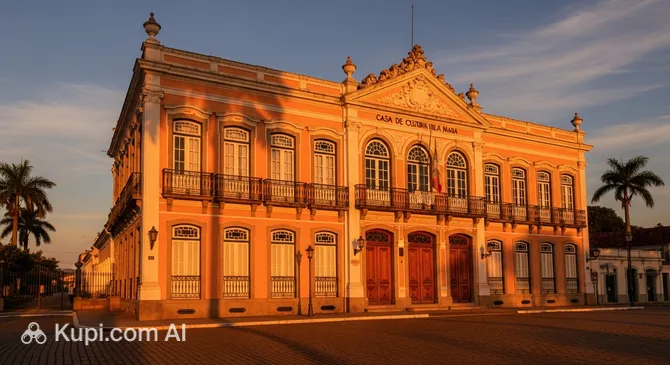
Villa Maria Cultural Center
Villa Maria Cultural Center. Иллюстрация. Источник: Kupi.com AI

This landmark, which all of Brazil takes pride in, draws the eye with its refined facade and a magnificent green garden spanning over 6,000 square meters. Villa Maria is recognized as a tangible and tourist heritage site of the state, serving as a living testament to the "golden age" of regional industry and architectural craftsmanship of the early 20th century.

Inside the rooms designed by Italian architect José Benevento, an atmosphere of tranquility and enlightenment prevails. Villa Maria is not just a monument to the past, but an actively developing space housing unique audio and iconographic archives, hosting research, and pulsing with the city's modern creative life.

Contacts

For your convenience, we have gathered essential information about the location and official resources of this cultural site. When planning your visit, you can check for the latest news on their website.

How to contactContact
AddressR. Baronesa da Lagoa Dourada, 234 - Centro, Campos dos Goytacazes - RJ, 28035-200, Бразилия
Websitevmaria.uenf.br

What to Do

Visitors to Villa Maria can expect a rich intellectual program. One of the center's main treasures is its phonotheque—a vast collection of musical recordings where you can explore both local works and global masterpieces. Movie buffs should check out the local videotheque, which offers free access to classics of Brazilian and foreign cinema.

Those who enjoy peace and aesthetics will appreciate a stroll through the shaded garden and a tour of the building itself. Be sure to notice the details: the entrance to the palacete is adorned with an exquisite mosaic created in honor of "Finazinha," the house's first owner. The interior often hosts temporary art exhibitions, lectures, and book presentations, making every visit an engaging immersion into the region's contemporary culture.

If you are interested in the history of technology and communications, you will find the center's museological collections fascinating. It houses rare objects related to sound recording and audiovisual technologies of the past. For students and researchers, there is a cozy reading room where you can work with rare documents and literary editions surrounded by historic interiors.

Getting There

The cultural center is located in the very heart of the city, in the so-called Historical Square (Quadrilátero Histórico). Thanks to its central location, it is very easy to reach on foot if you are already downtown or exploring nearby architectural monuments.

For those who prefer public transport, almost any bus route heading to the central district will work. Taxis and ride-sharing apps (such as Uber) are also active in the city, which is particularly convenient if you are traveling from the bus station or more distant neighborhoods.

If you arrive in the city via Bartolomeu Lisandro Airport (CMG), the journey to Villa Maria is about 10 kilometers. A trip by car or taxi from the terminal to the center's doors usually doesn't take long, with the Lyceum of Humanities serving as a nearby landmark.

Ближайший город: Campos dos Goytacazes

History & Facts

The history of this elegant building began in 1918. The palacete was built by industrialist Atilano Chrysóstomo de Oliveira on the grounds of the former farm of the Baron of Miracema. It was not just a house, but a luxurious gift for his wife, Maria Tinoco Queirós de Oliveira, who was affectionately known in the city as Finazinha.

After her husband's death, Finazinha remained the sole mistress of the estate until her passing in 1970. Having no heirs, she left a noble will: the house was to be transferred to the ownership of the first state university to be opened in the city. For a long time, the building stood empty until the late 1970s, when it temporarily housed the city hall.

A new chapter in the life of the villa began in 1993 with the creation of the State University of Northern Rio de Janeiro (UENF). On the initiative of the famous anthropologist Darcy Ribeiro, the building was handed over to the university to create a cultural center. A thorough restoration followed, preserving its unique eclectic appearance and transforming the former estate into a public center for knowledge and art.

Time Needed

For a brief introduction to the architecture of the palacete and a walk through its picturesque garden, 1–2 hours will be quite enough. This is sufficient time to view the exterior facades, step inside to appreciate the interiors, and take some beautiful photos against the backdrop of the old Italian-style building.

However, if you decide to dive into the cultural program—for example, listening to rare recordings in the phonotheque, watching a film classic in the videotheque, or visiting a temporary exhibition—you should plan for at least half a day. The cultural center invites a leisurely exploration of its collections and reading in the quiet of the library halls.

Working Hours

The cultural center is typically open to visitors on weekdays and Saturdays. The standard operating schedule is Monday through Friday from 09:00 to 18:00, and on Saturday from 09:00 to 17:00. The center is closed on Sundays.

Please note that hours may change during special events or public holidays. Before your visit, we recommend checking the official UENF university website for information on current exhibitions and any potential schedule changes.

DayWorking hours
понедельник09:00–18:00
вторник09:00–18:00
среда09:00–18:00
четверг09:00–18:00
пятница09:00–18:00
суббота09:00–17:00
воскресеньеЗакрыто

Nearby

A stroll around the surroundings of Villa Maria will allow you to immerse yourself deeper into the city's atmosphere and see how modern life intertwines with history. Nearby, you'll find cozy parks and commemorative monuments that will perfectly complement your sightseeing route.

NameDistance
Fratello Pizzas & Pastas0.4 km
Jeitin Di Minas Bistro & Cafe0.8 km
Campos History Museum1.1 km
Cathedral of the Most Holy Savior1.1 km
Aquarius Steakhouse1.5 km
Partage Campos1.6 km
Zilda Arns Children's City1.7 km

Reached the end of the page?

That means the route is fully explored