Support

Carazinho Airport

About the Airport

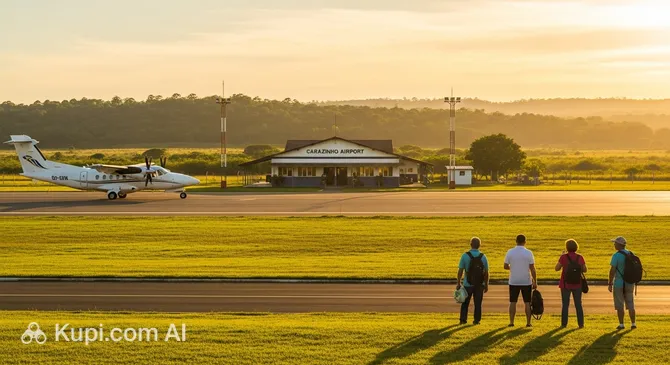
Carazinho Airport. Source: Kupi.com Binoculars

Carazinho Airport is a compact aerial gateway opening the path to the northern regions of the state of Rio Grande do Sul. Located in the heart of a major agro-industrial region of Brazil, this airport serves as a convenient departure point for business travellers and general aviation enthusiasts. Instead of the noise and bustle of giant terminals, a peaceful atmosphere reigns here, allowing you to begin your acquaintance with Brazilian hospitality literally from the first minutes after landing.

AirportCarazinho Airport
IATAQRE
ICAOSSKZ
CityCarazinho
TimezoneAmerica/Sao_Paulo
ScheduleOnline board

Airport Features and Advantages:

The main advantage of the airport is its convenient location: it is situated just a few kilometres from the city centre, next to the important BR-285 highway, which ensures excellent transport accessibility. The air terminal specialises in receiving small aircraft and charter flights, which guarantees maximum service speed and the absence of queues typical of large hubs.

Contact Information

  • Official Airport Website: There is no dedicated website. Current information can be found on the page of the Carazinho Aeroclub (Aeroclube de Carazinho), which is based on the premises, or on the city hall portal.
  • Inquiry Service Phone: +55 (54) 3331-2921 (Aerodrome Administration).
  • Airport Address: Rua Sadi Kissmann, 800, Bairro Santa Terezinha, Carazinho — RS, 99500-000, Brasil. Entry is also possible via the Rodovia BR-285 highway, Km 326.
  • Email: aerocarazinho@hotmail.com (Administration), contato@aerocarazinho.com.br (General inquiries).
  • Airport Social Media: There are no official verified accounts. Regional aviation news is often published on the pages of the local aeroclub.
  • Lost Luggage Information: Due to the small size of the terminal, there is no separate department. In case of lost items, you must contact the airport administration directly or the pilots of your charter flight.
  • Passenger Support Contact: +55 (54) 98434-7871 (Mobile number of the administration for urgent questions).

How to Get to the Airport

Getting to Carazinho Airport is quite simple thanks to its proximity to the city limits. Since the air harbour is located just 6 kilometres from the city centre, the trip will not take much time, and the choice of transport, although limited by the scale of the region, allows you to find a convenient option for any budget.

Taxi and Transfer

The most comfortable way to get to the airport is to use taxi services. Both local radio taxi services and popular mobile apps (such as Uber or 99) operate in the city and are widely used in the state of Rio Grande do Sul. A trip from the city centre usually takes about 10–15 minutes. The cost of such a trip is quite reasonable and varies depending on the time of day, but generally does not exceed average regional rates.

Car Rental and Parking

For those who prefer freedom of movement, renting a car is an excellent option. Offices of rental companies (Localiza and others) are located primarily in the centre of Carazinho; however, many of them offer a vehicle delivery service to the aircraft steps by prior arrangement. The road to the airport runs via the BR-285 highway, the surface quality of which is rated as good. A parking zone is provided within the airport territory. Given that the airport focuses on private aviation, the parking lot is usually not overcrowded and is located in immediate proximity to the hangars and the administrative building.

Public Transport

There are no specialised express trains or rail links to the airport. City buses run through nearby districts, but stops may be located at some distance from the entrance to the airfield territory. This option is suitable only for travellers without heavy luggage who are well-oriented in the area. For most tourists, public transport will not be the most convenient solution in this case.

Alternative Routes via Neighbouring Airports

Since Carazinho Airport mainly serves private flights, most tourists arrive in the region via larger neighbouring aviation hubs. The most popular option is Passo Fundo Airport, located less than 50 km away; from there, you can quickly reach Carazinho by intercity bus or taxi.

Travellers planning a complex route through southern Brazil may also consider flying via Chapecó Airport or Sepé Tiaraju Airport in Santo Ângelo, although they are located at a distance of more than 130 km. For those flying from distant regions or other countries, the main gateway remains Salgado Filho Airport in the state capital. Another option for connections can be Hugo Cantergiani Regional Airport in Caxias do Sul, known for its proximity to the region's vineyards.

Terminals and Map

The infrastructure of Carazinho Airport fully corresponds to its status as a regional airfield focused on private aviation and air taxis. You will not find confusing mazes or multi-level crossings here: everything is arranged as compactly, functionally, and conveniently as possible for passengers.

Number of Terminals and Their Purpose

The airport has one passenger terminal. It is a small single-storey building that serves both departing and arriving flights. Due to the absence of regular commercial air service with large liners, the terminal is not divided into sectors for domestic and international flights in the traditional sense. It acts as a cosy waiting hall and an administrative processing point for pilots and passengers of small aircraft.

Airport Layout and Service Zones

Navigation inside the terminal is intuitive even for those here for the first time. The layout of the building is extremely simple:

  • Registration and Reception Zone: Located immediately at the entrance. Document processing for charter flights and meeting of passengers takes place here.
  • Waiting Hall: A small space equipped with seating where you can spend time comfortably before departure.
  • Administrative Premises: Offices of the aeroclub and aerodrome administration are located in the same building or in immediate proximity.

Features of Departure and Arrival Zones

At Carazinho Airport, the departure and arrival zones are effectively combined or located in adjacent rooms. Passengers arriving on private jets pass through the terminal or head straight to the parking lot, bypassing lengthy procedures. Boarding takes place directly from the waiting hall onto the apron. Thanks to the absence of jet bridges and buses, the path from the terminal building to the aircraft takes mere seconds and is done on foot.

Processing Time

The main feature and advantage of this airport is the phenomenal speed of service. Since there is no mass flow of tourists here:

  • Pre-flight formalities (document checks, luggage screening, if required for a specific flight) take from 5 to 15 minutes.
  • There is no need to arrive 2–3 hours before departure. Usually, arriving 30–40 minutes before the scheduled departure time is sufficient to calmly resolve all organisational matters.

Navigation Recommendations

It is practically impossible to get lost on the territory of Carazinho Airport. Follow the signs when entering from the highway towards the main administrative building. If you are flying via private charter or air taxi, the crew or ground staff often meet passengers personally at the terminal entrance. For maximum comfort, clarify the exact meeting point with your flight organiser in advance, as some departures may take place directly from the aeroclub hangar zone.

Airport History

The history of Carazinho Airport is inextricably intertwined with the enthusiasm of local aviators and the establishment of the Aeroclube de Carazinho. In fact, this air harbour appeared thanks to the immense passion of the region's residents for the sky. The official starting point is considered to be 1940, when the organisation was founded, becoming the main engine for the creation and development of the airfield. In those early years, the site was a simple dirt field where the first pilots trained and light piston aircraft landed.

A key stage in the infrastructure development was the modernisation of the runway. Changing the grass surface to hard asphalt opened up opportunities for receiving faster and heavier aircraft. This transformation was dictated by the economic growth of the region, which was rapidly turning into one of Brazil's agricultural centres. Owners of large agricultural enterprises began actively using aviation for monitoring lands and business visits, which required appropriate flight conditions.

An important milestone in the modern chronicle of the airport was the installation of a lighting system (night beacon). This update allowed the airport to switch to 24-hour operation. The possibility of night take-offs and landings was of colossal importance not only for private aviation but also for the social sphere: the airport became accessible for emergency medical flights and organ transport at any time of day, which has helped save lives more than once.

Carazinho Airport plays a special role during the prestigious international agro-industrial exhibition Expodireto Cotrijal, which takes place annually in the neighbouring municipality of Não-Me-Toque. During the forum days, the modest regional airfield turns into a bustling hub of business aviation. The apron fills with dozens of private jets, helicopters, and government aircraft delivering major businessmen, politicians, and investors from around the world. During this period, the airport works at the limit of its capabilities, confirming its status as a strategically important transport node for the region's agribusiness.

The airfield is also famous for its aviation celebrations. For decades, aeroclub festivals, gliding competitions, and exciting air shows have been regularly held here. These events gather thousands of spectators, supporting youth interest in flying and turning a technical facility into a centre of the city's cultural life.

Interesting Facts:

  • Despite its compact size, the airport has become the "alma mater" for hundreds of professional pilots. Many graduates of the local aeroclub have built successful careers in commercial aviation, captaining liners for giants such as Varig or LATAM.
  • Locals often call the airfield the "home" of agricultural aviation, as a huge number of flights for field treatment are made from here, making it an indispensable economic asset.
  • In different years, projects were considered to launch regular passenger flights connecting Carazinho with the coast, but due to the proximity of the larger Passo Fundo Airport (less than 50 km away), Carazinho secured the status of an exclusive harbour for private and business aviation.

Services and Amenities

Carazinho Airport (QRE) is a small regional airfield focused primarily on private and business aviation, as well as the activities of the local aeroclub. Consequently, passengers should not expect the wide range of services characteristic of large international hubs. The infrastructure is minimalist and tailored for rapid transit, where waiting time for departure is kept to a minimum.

Restaurants, Cafes, and Shops

There are no full-service restaurants, chain coffee shops, or Duty-Free shops within the terminal territory. Catering service here is of a basic nature:

  • A small buffet or snack bar may operate in the building, serviced by the aeroclub, where you can purchase water, coffee, and light snacks.
  • For a full lunch or dinner, it is recommended to visit establishments in the city of Carazinho itself. Since the centre is only a 10–15 minute drive away, many travellers prefer to eat there before arriving at the airport.
  • There are no souvenir shops or newsstands in the terminal.

Lounges and VIP Service

There is no division into regular and business lounges at the airport. The entire passenger terminal represents a single waiting zone. Thanks to the lack of heavy passenger traffic, the atmosphere here is calm and private, which effectively equates the level of comfort to VIP lounge standards in other airports. Soft chairs and the absence of noise allow for a comfortable time before boarding.

Connectivity and Electronics

  • Wi-Fi: Wireless internet is usually available on the premises of the administrative building and aeroclub. The password for access can be obtained from staff at the reception desk or administration.
  • Charging Stations: There are no specialised stands for charging gadgets, but a sufficient number of standard electrical sockets are available in the waiting hall, which passengers can use free of charge.

Financial Services

Bank branches, currency exchange points, and ATMs are absent directly in the airport building. Travellers are strongly advised to ensure they have cash (Brazilian Reals) in advance. The nearest banks and 24-hour ATMs are located within the city limits of Carazinho.

Medical Services

The airport has a first aid kit for emergencies. There is no full-scale medical centre with a doctor on permanent duty. In case of serious health problems, the city ambulance is called; thanks to the proximity of the city, the arrival time of medics is minimal. The region's main hospitals are just a few kilometres from the runway.

Services for Passengers with Children

There are no specialised mother and child rooms or playgrounds. However, the compactness of the terminal allows parents to easily keep an eye on children. Restrooms are equipped with basic amenities. It is recommended to carry everything necessary for child care in your hand luggage, as it will not be possible to buy baby food or diapers on-site.

Services for Passengers with Reduced Mobility

The airport infrastructure is friendly to passengers with limited mobility thanks to its simplicity:

  • No Stairs: The terminal is single-storey, all passages are on the ground level, which eliminates the need for elevators or escalators.
  • Boarding the Aircraft: Since there are no jet bridges, boarding takes place from the apron. Airport staff and private vessel crews are always ready to provide individual assistance during boarding and disembarking.
  • Parking spaces for people with disabilities are located in immediate proximity to the entrance.

Hotels and Accommodation

There are no hotels on the airport territory. Since flights usually do not involve long layovers, there is no acute need for this. For overnight stays, passengers can choose one of the hotels in the city of Carazinho:

  • Hotels of various categories, from budget to business class, are located in the city centre (6–8 km from the airport).
  • During major agricultural exhibitions, it is recommended to book rooms in advance, as demand in the region rises sharply.

Business Services

The airport does not have a business centre or equipped conference rooms. However, in case of urgent necessity, the aeroclub administration may provide a room for a short briefing. For holding full-scale negotiations, it is better to use the infrastructure of city hotels or business venues in neighbouring Não-Me-Toque.
Where to Eat

It is important to understand that Carazinho Airport (QRE) is a small regional airfield serving primarily private aviation and the aeroclub. Consequently, food courts, restaurants, bars, or chain coffee shops familiar to large hubs are completely absent here. Passengers should not count on a full meal directly in the terminal before departure.

Snacks at the Airport

Dining options within the terminal building itself are extremely limited:

  • Snacks and Drinks: A vending machine or a small self-service buffet may be located in the waiting area or the aeroclub administrative room, where you can buy water, soda, carton juice, chips, or chocolate.
  • Coffee: Basic filter coffee or espresso from a machine is usually available, often offered to guests and pilots for free or for a nominal fee.
  • Recommendation: If you are travelling with children or adhere to a strict diet, it is strongly recommended to bring food and water with you.

Where to Eat Properly: Local Cuisine Nearby

Since the centre of Carazinho is only a 10–15 minute drive away, the best solution for passengers would be lunch or dinner in the city before arriving at the airport. The state of Rio Grande do Sul is famous for its gastronomic traditions, and even a short trip will allow you to appreciate the local flavour.

Local Specialties to Try:

  • Churrasco: This is the region's calling card. There are traditional churrascarias (steakhouses) in the city, where meat is served "rodizio" style (unlimited service of various types of meat on skewers). This is an ideal option for a hearty meal.
  • Chimarrão: A traditional drink made from yerba mate. Although rarely served in restaurants (it is more of a social ritual), you may see locals with gourds and thermos flasks everywhere.
  • Galeto: Small chickens roasted over charcoal, often served with pasta or polenta — a heritage of the region's Italian immigrants.

Dietary Requirements (Vegetarian, Vegan, Gluten-Free, Halal)

There are no specialised options on the airport territory. However, finding suitable food in Carazinho restaurants is not difficult:

  • Brazilian self-service restaurants (buffet a quilo) always offer a huge selection of fresh vegetables, fruits, rice, and beans, which is excellent for vegans and vegetarians.
  • Meat dishes (churrasco) are usually prepared using only coarse salt, making them safe for people with gluten intolerance (however, it is always worth clarifying the composition of sauces).
  • Halal food is more difficult to find; it is recommended to stick to fish or vegetarian dishes at city cafes.

Prices and Opening Hours

Since there are no commercial catering establishments in the airport, the concept of "opening hours" applies only to venues in the city. Most restaurants in Carazinho are open for lunch from 11:30 to 14:00 and for dinner from 19:00 to 22:30. The average bill in the city is quite democratic: an excellent lunch will cost approximately 40–80 Brazilian Reals per person.

Tips for Travellers

Travelling through Carazinho Airport differs significantly from the experience of flying through large international hubs. Since it primarily serves private aviation and air taxis, many customary rules work differently here. To ensure your visit goes as smoothly and comfortably as possible, we have prepared a number of useful recommendations considering the specifics of this regional harbour.

Optimal Arrival Time

Unlike large air terminals, there is no need to arrive 2–3 hours before departure. Registration and pre-flight formalities happen lightning-fast. We recommend arriving at the airport 30–40 minutes before the scheduled departure time. This is sufficient to calmly meet the pilot, load luggage, and undergo the necessary briefing without languishing in waiting.

Check-in and Security Control

The check-in procedure here is maximally personalised. Instead of standing in queues at counters, you will most often be met by a representative of the charter company or the aircraft commander directly.

  • Keep documents (passport or ID card) at hand — checking them is mandatory even for private flights.
  • Security screening is conducted, but it is less invasive than in commercial terminals. Nevertheless, standard bans on carrying weapons and dangerous substances apply strictly.

Seat Selection on the Aircraft

If you are flying on a small aircraft (for example, a turboprop or light jet), seat selection is often dictated not only by your desire but also by the rules of aircraft weight and balance. The pilot may ask you to take a specific seat for even weight distribution. If you have a choice, sit by the window: flights over the state of Rio Grande do Sul offer stunning views of endless fields and green hills.

Hand Luggage and Baggage

Space is limited in small aviation. Hard suitcases on wheels may simply not fit into the luggage compartment of a small plane.

  • Tip: Use soft travel bags or backpacks. They are easier to arrange in the limited space of the luggage compartment.
  • Liquids and Food: Rules for carrying liquids here are often more lenient than on regular flights, but it is better to clarify this point with your air carrier in advance.
  • It is categorically forbidden to carry flammable items and aerosols.

Recommendations for Transit Passengers

Carazinho Airport is not designed for connections in the classical sense. If your goal is to transfer to a large commercial flight, allow sufficient time for ground transfer. The nearest airport with regular flights, Passo Fundo, is a 50-minute drive away. Consider possible traffic jams on the highway and plan for a minimum of 3–4 hours between arrival in Carazinho and the departure of the next flight from the neighbouring city.

Customs and Sanitary Control

Since the airport serves domestic flights, passport control is absent. However, Brazil takes phytosanitary norms seriously. Do not attempt to take out or bring in undeclared seeds, plants, or animal products without factory packaging, as this is monitored especially strictly in agrarian regions to protect local crops.

Saving Time and Money

  • Dining: Do not count on buying food at the airport. Have lunch in the city — it will be tastier and significantly cheaper.
  • Transport: Use taxi apps (Uber, 99) instead of ordering a private transfer through a hotel. Distances are short, and the trip will cost a modest sum.
  • Connectivity: Charge gadgets in advance. Although there are sockets in the waiting hall, their number is limited.

What to Do in Case of Flight Delay

Small aviation is more sensitive to weather conditions (fog, strong wind) than large liners. If the departure is delayed:

  • Do not sit in the empty terminal for hours. Check the forecast with the pilot. If a long delay is expected, return to the city (only 10 minutes by taxi). There you can wait comfortably in a cafe or hotel.
  • Be sure to have the direct phone number of the pilot or your flight manager for prompt communication, as there are no information boards at the airport.

Reached the end of the page?

That means the route is fully explored