Support

Esteio

About

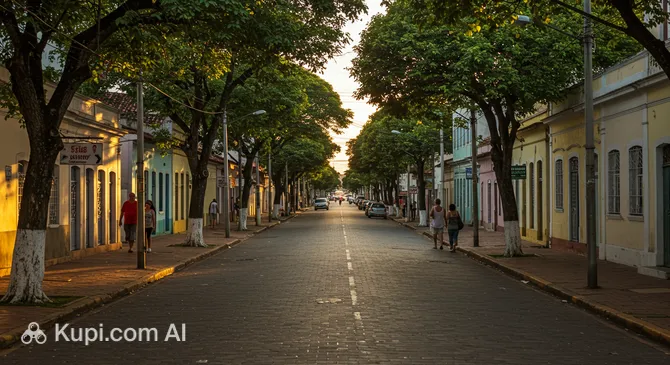
Esteio is a cozy and welcoming city located in the heart of the state of Rio Grande do Sul, in southern Brazil. It is situated in a picturesque valley surrounded by green hills and vast pastures, just 25 kilometers from the major metropolis of Porto Alegre. This convenient location makes Esteio an excellent starting point for exploring the region's rich culture and nature.

Esteio. Illustration.
Source: Kupi.com AI

With a population of about 80,000 people, the city combines the dynamics of an important commercial center with the tranquility of the provinces. Although the modern rhythm of life is palpable here due to its status as a major exhibition hub, Esteio's history is carefully preserved in its traditions and way of life. The city is famous for its safety and the friendliness of its locals, allowing tourists to feel as comfortable as possible.

Travelers should visit Esteio for the chance to see an authentic, non-touristy side of the country. Stroll through the shaded streets and well-kept parks where families often relax, and be sure to stop by local restaurants to appreciate true southern Brazilian cuisine. It is an ideal place to take a break from the hustle and bustle and immerse yourself in an atmosphere of sincere hospitality.

Weather Overview

The climate in Esteio is characterized by distinct seasonality, typical of southern Brazil. Travelers should expect hot summers and cool winters with occasional precipitation, which is distributed fairly evenly throughout the year. The hottest month is January, when daytime temperatures often reach 30°C, and the number of rainy days can reach 15.

With the arrival of winter (from June to August), it becomes noticeably fresher. In July, the coldest month of the year, the average temperature is about 14.9°C, and at night the thermometer can drop to 10°C. There is slightly less precipitation at this time, but cloudy days still occur regularly.

To ensure your trip is as comfortable as possible and you can plan your wardrobe correctly, we recommend checking the current weather forecast in Esteio in advance. Spring and autumn are considered transitional seasons here with pleasant temperatures in the 18–22°C range, which is perfect for walking around the city.

Average monthly temperature

Average monthly precipitation

Interesting Facts

Beyond its main attractions, Esteio holds many fascinating secrets and unique features that make it a special place on the state map.

  • The city gained widespread fame thanks to Expointer — a grand agricultural exhibition considered one of the largest in Latin America. Every year, Esteio becomes a magnet for visitors from all over Brazil, transforming into a stage for colorful parades, workshops, and tastings of the finest farm products.

  • An old European spirit is surprisingly well-preserved here. The heritage of German and Italian immigrants is evident not only in architectural details but also in spoken language: ancestral dialects can still be heard on the streets, and schools teach these languages to preserve cultural identity.

  • The historical roots of local winemaking are inextricably linked to the Schmitt family. This dynasty founded the first estates, turning Esteio into a kind of "wine gateway" to the region, and the memory of their contribution to the development of Rio Grande do Sul's culture is still alive today.

  • Mystery lovers are drawn to urban legends about a system of underground passages. Long-time residents say that ancient tunnels are hidden beneath the streets, connecting the city center to wine cellars; however, no one has yet managed to find these hidden paths and confirm the myth.

How to Get There

Planning logistics is an important part of any trip. Thanks to its convenient location near major transport hubs in the state of Rio Grande do Sul, reaching your destination will be easy. You can find out more about how to get to Esteio to choose the most suitable route for you.

Esteio itself does not have its own airport, but this is not a problem for tourists. Most travelers fly into Salgado Filho Airport (IATA: POA), located in Porto Alegre. It is the region's largest aviation hub, hosting many domestic and international flights. It is located just 16.4 km from Esteio. A taxi or transfer will take about 45 minutes, making this the fastest and most convenient option.

Another flight option is Hugo Cantergiani Regional Airport (IATA: CXJ), located in the city of Caxias do Sul. This airport is further away, approximately 72 km from Esteio. A car trip from here will take about 2 hours and 10 minutes. This route may be of interest to those who want to combine their trip with a visit to the Serra Gaúcha mountain region.

For clarity, here is summary information on the main airports through which you can reach the city:

AirportPassenger trafficDistance
Salgado Filho International Airport7.5 mln16 km
Hugo Cantergiani Regional Airport449 38872 km
Passo Fundo Airport284 551210 km
Pelotas Airport100 000235 km
Humberto Bortoluzzi135 200243 km

Main Attractions

While Esteio is often perceived by travelers as an important business hub, there are several iconic spots that reveal the soul of this southern city. The main attractions are linked to the region's rich traditions and cultural life, allowing guests to better understand the way of life in the state of Rio Grande do Sul.

The city's main point of attraction is the Assis Brasil Exhibition Park (Parque Estadual de Exposições Assis Brasil). This grand complex serves as a true symbol of the city and covers an impressive territory. Although it gained world fame for the Expointer agricultural exhibition, the park is interesting to visit year-round thanks to its scale and architectural elements, such as the "Sphere" monument, symbolizing integration. A walk here allows you to feel the scope of the agricultural traditions that Brazil is so proud of.

Art and creativity enthusiasts should visit the Lufredina Araújo Gaya House of Culture (Casa de Cultura Lufredina Araújo Gaya). This building, with its interesting modern architecture, serves as the heart of Esteio's social life. Inside, you'll find the municipal library, a theater hall, and spaces for workshops. For tourists, it's a great opportunity to see the non-touristy side of the city, visit local art exhibitions, or attend musical evenings where the creative intelligentsia gathers.

For those who want to dive deeper into the region's past, the Historical Museum of Esteio (Museu Histórico de Esteio) is open. The museum's exposition carefully preserves the memory of the city's formation, from the first settlers to its transformation into an important transport hub. It features vintage photographs, documents, and everyday objects that help trace the local community's development path. This small but atmospheric place allows you to feel the connection between eras and learn how previous generations of citizens lived.

Local Cuisine

The culinary soul of Esteio is a harmonious mix of Brazilian, German, and Italian traditions, reflecting the region's rich immigration history. The main gastronomic symbol of the city is rightfully considered asado (churrasco) — the famous southern Brazilian barbecue. It is cooked over an open fire using select beef raised on local pastures. For the residents of Esteio, this is more than just food: on weekends, families and groups of friends gather for lively picnics to enjoy meat, homemade bread, and conversation.

Lovers of European cuisine should pay attention to the region's Italian heritage. Pasta with thick meat sauces, hearty risotto, and pizza, often prepared according to old family recipes, are popular here. If you want to feel the local flavor, head to the farmers' markets. There you can try fresh cheeses, homemade sausages, and the famous German apple strudel with cinnamon.

For those with a sweet tooth, the city offers unique desserts such as cucuruzada (corn cake), guava jam, or delicate grape mousse. Among beverages, young local wine holds a special place, but the true symbol of hospitality is chimarrão. This strong mate is drunk from a traditional vessel — a calabash — through a metal straw, and this ritual is an integral part of any friendly gathering.

The best way to get to know Esteio's gastro-scene is to visit one of the regular culinary festivals. At such events, you can not only taste the full diversity of local cuisine in one place but also chat with farmers and winemakers, immersing yourself in the warm and delicious atmosphere of southern Brazil.

Travel Tips

A trip to Esteio will go as smoothly as possible if you consider local details regarding the rhythm of life, climate, and logistics in advance. We have prepared a list of practical recommendations to help you feel confident in this city in the state of Rio Grande do Sul.

  • The Expointer Factor. If your trip coincides with the dates of the main agricultural exhibition (usually late August to early September), book your accommodation several months in advance. During these days, the city's population almost doubles, and finding a free hotel room becomes an impossible task, while rental prices increase significantly.

  • Wardrobe Seasonality. Remember that seasons in Brazil are the opposite of European ones. Summer (December–March) is hot and humid, while winter (June–August) can be cool with temperatures around +10°C. Since central heating is often absent in homes, be sure to bring warm pajamas and a sweater for a winter trip.

  • Transport Accessibility. For trips to neighboring Porto Alegre, the Trensurb surface metro is the most convenient — the station is right in the center, and it's fast and cheap. For moving within Esteio, we recommend using taxi apps (Uber or 99). It is safer than hailing a car on the street and eliminates the language barrier when explaining the route.

  • Electricity and Connectivity. In the state of Rio Grande do Sul, the mains voltage is 220V, which differs from many other regions of the country (where 127V is common). Check the compatibility of your chargers. For mobile connectivity, it's best to buy a SIM card at official operator stores (Vivo, Claro, TIM) with your passport.

  • Gaucho Traditions. Locals are very hospitable. If you are invited for chimarrão (traditional mate tea ceremony), follow the etiquette: never wipe the metal straw (bombilha) and do not stir the drink. The cup is passed around in a circle, and each person drinks their portion to the end.

  • Language Nuance. In the service sector, not everyone speaks English. Download an offline Portuguese translator. In communication, it's useful to know that the "thumbs up" gesture is universal here and means approval, gratitude, or a greeting.

Following these simple rules will help you avoid everyday difficulties and focus entirely on discovering the unique culture of the Brazilian south.

Entertainment & Nightlife

The nightlife in Esteio differs from that of noisy metropolises: an atmosphere of coziness, neighborliness, and traditional Brazilian fun prevails here. The city is not famous for massive nightclubs with world-renowned DJs, but it offers an excellent selection of venues for those who want to relax after a busy day, listen to live music, and chat with locals over a glass of cold beer.

The epicenter of evening activity is the city's main artery — Avenida Presidente Vargas. Most popular bars, pubs, and snack bars (lancherias) are concentrated here and on the adjacent streets. In the evenings, especially from Thursday to Saturday, these establishments fill with people. The crowd here is democratic and friendly, and the dress code in most places is relaxed and casual. You will feel comfortable in jeans and a t-shirt.

The musical palette of Esteio's nightlife is diverse but with a clear local flavor. Many bars feature cover bands performing everything from classic rock and pop to regional favorites like sertanejo (Brazilian country) and pagode. This is a great opportunity to immerse yourself in the musical culture of Rio Grande do Sul in an authentic setting, without unnecessary tourist pretension.

If you are looking for large-scale parties and dancing until dawn, Esteio's strategic location works in your favor. Many guests head for vibrant entertainment in nearby Porto Alegre, especially in the famous bohemian district of Cidade Baixa. A taxi ride takes about 30–40 minutes, making it easy to combine a stay in quiet Esteio with access to one of the best club scenes in the south of the country.

Regarding safety, Esteio is considered a fairly quiet city, but it is wise to follow general precautions at night. Avoid walking in poorly lit alleys and always use official taxi apps (Uber or 99) for moving between venues or returning to your hotel. Prices in local establishments are democratic: dinner with drinks will cost significantly less here than in major tourist centers.

Daytime leisure in the city can be diversified not only by nature walks but also by a cultural program. Small theaters and cultural centers operate in Esteio, often hosting local exhibitions. Also popular for daytime relaxation are the shopping galleries and cozy coffee shops in the center, where you can hide from the midday heat.

Parks & Museums

Even though Esteio is often perceived as a business and exhibition hub, the city offers its guests cozy green zones for relaxation. Here you can find places that harmoniously combine a dynamic rhythm of life with the opportunity for leisurely strolls in the fresh air.

The city's main "green oasis" is rightfully considered Galvany Guedes Municipal Park (Parque Municipal Galvany Guedes). This vast territory is beloved by locals for its versatility and upkeep. A special place in the park's structure is occupied by the "Youth Square" (Praça da Juventude) — a modern space equipped with sports fields, skateboarding areas, and running tracks. For tourists, this is a great opportunity to observe the daily life of citizens, have a picnic in the shade of trees, or simply relax from the city bustle in a safe and pleasant atmosphere.

An interesting urban solution is the Covered Street (Rua Coberta), officially named Oliveira Silveira Space (Espaço Oliveira Silveira). This location has become an important point of attraction in the city center. Thanks to the canopy, it is comfortable to be here in any weather, which is especially relevant for the changeable climate of southern Brazil. Artisan fairs, gastronomic festivals, and small concerts are often held at this site, turning the street into a lively open-air cultural center.

For those looking for peace and quiet, Heart of Mary Square (Praça Coração de Maria) is suitable. It is a classic Brazilian square located in the city center, which serves as an ideal spot for a short break during a walk. Well-kept flower beds, benches, and a calm setting allow you to enjoy the moment and feel the steady rhythm of life in provincial Esteio.

Also worth noting is the architectural ensemble of the Claretiano Seminary (Seminário Claretiano). Although access to the inside of the building may be limited depending on the school's schedule and events, the grounds and the exterior appearance of the complex are of interest. This place is steeped in history and features a special, calm atmosphere rarely found in busier parts of the city.

Getting Around

The public transport system in Esteio is well-developed and integrated into the overall network of the Porto Alegre metropolitan area, making travel around the city and surroundings convenient for travelers. The main transport artery is the surface metro, known here as Trensurb. This is the fastest and most reliable way to reach neighboring cities or the state capital. The "Esteio" station is located in the city center, right next to the exhibition park, which is very convenient for tourists.

For trips within residential areas far from the railway, a bus network is used. Municipal buses connect the outskirts with the center and the metro station. Routes cover almost the entire city, but schedules may vary depending on the day of the week. The final destination is usually indicated on the bus's windshield, but if you don't speak Portuguese, it can be difficult to navigate, so it's recommended to plan your route in advance using online maps.

Paying for the metro is very simple: you can purchase a single ticket (the ticket is a QR code or magnetic card) at ticket offices or vending machines at the station. The trip cost is fixed and very affordable. In municipal buses, conductors often take cash payments. It's important to have small bills and coins, as change for large banknotes may not be available. There is also the TEU transport card, which is valid throughout the region, but getting one only makes sense for a long stay.

As an alternative to public transport, taxi-hailing apps like Uber and 99 are widely used in Esteio. This is perhaps the most comfortable option for tourists: the ride price is known in advance, there's no need to explain things to the driver in the local language, and a car can be called to any point in the city. Regular taxis are also available at designated ranks, for example, near the metro station or major supermarkets.

The metro operates daily from 5:00 AM to 11:20 PM. When planning trips, try to avoid rush hours (7:00 AM to 9:00 AM and 5:00 PM to 7:00 PM), when trains are crowded with locals commuting to work or school. If you are traveling with luggage, a taxi or carsharing would be preferable, as public transport can be very cramped during these times.

Accommodation

The choice of accommodation in Esteio is quite modest and focused primarily on practicality. Since the city is a major exhibition center, the local hotel stock is adapted to the needs of business travelers and fair visitors. You won't find luxury five-star resorts or massive hotel complexes here; the bulk of the offering consists of mid-range hotels and budget guest houses offering basic comfort and breakfast.

The most strategically convenient area to stay is the Center (Centro). By staying here, you will be within walking distance of the Trensurb metro station, the main shopping street, and many cafes. This is an ideal choice for those who want to quickly reach both the Assis Brasil Exhibition Park and neighboring Porto Alegre. There are also accommodation options along the federal highway BR-116, which are convenient for road travelers but may be noisier due to traffic.

The main booking tip concerns the Expointer exhibition period (usually late August to early September). During these days, the city's population effectively doubles, and finding a free room becomes almost impossible unless you take care of it in advance. We recommend booking accommodation for these dates at least 3–4 months in advance. During the rest of the year, there is no rush, and you can find a suitable option even just a few days before arrival.

The price range in Esteio varies from budget to mid-range, and prices here are generally lower than in the state capital (except during exhibition weeks). Larger hotels are available on popular online booking platforms; however, small family-run guest houses (pousadas) might not have an online presence, and it's better to contact them directly by phone or through messengers. If you are looking for a high level of service or spa facilities, it makes sense to consider staying in Porto Alegre, from where Esteio can be reached quickly by metro.

Nearby Cities

For those who want to explore the surroundings, Esteio serves as an excellent starting point for day trips to several interesting nearby locations.

Just a 20-minute metro ride away is the state capital — Porto Alegre. It is the region's dynamic cultural center, where you can visit the historic public market, stroll along the renovated Guaíba Lake waterfront to see the famous sunset, or explore the rich collections of local art museums.

Shopping and history enthusiasts should head to Novo Hamburgo. This city is known as the "national shoe capital," where you can find high-quality leather products at great prices. Furthermore, German heritage is clearly visible in the architecture of the historic Hamburgo Velho district, where 19th-century buildings are preserved.

For lovers of nature and quiet relaxation, Viamão is of interest. The municipality's main attraction is Itapuã State Park (Parque Estadual de Itapuã) — a protected area with picturesque freshwater lagoon beaches, a lighthouse, and hiking trails amidst untouched nature.

CityPopulationDistance
Canoas323 8277 km
Sao Leopoldo214 08710 km
Cachoeirinha118 27813 km
Novo Hamburgo238 94018 km
Gravataí255 66020 km

These nearby destinations allow you to get a sense of the diverse culture and landscapes of the region without traveling far from Esteio.

Shopping & Souvenirs

Shopping in Esteio is more practical than recreational. You won't find vast blocks of luxury boutiques here, but the city offers excellent opportunities to get to know the daily life of Brazilians and buy authentic goods. The trade sector is primarily oriented toward locals, which guarantees fair prices and the absence of tourist markups. It's a great place to purchase traditional clothing, leather goods, and home products.

The heart of the city's commercial life is Avenida Presidente Vargas. This central street runs through the city and concentrates the bulk of the shops. Walking here, tourists can find everything from clothing and shoe stores of popular Brazilian brands to small shops with accessories and electronics. The atmosphere is always lively, and this is exactly where you should go if you need to buy something essential for your trip or just want to feel the city's rhythm.

In Esteio itself, there are no giant entertainment malls typical of metropolises. Trade here is concentrated in small galleries and street shops. However, thanks to its proximity to larger cities, fans of large-scale shopping can easily reach neighboring Canoas, where major complexes with cinemas and food courts are located. Within Esteio, local open-air shopping centers are popular, where you can find cozy coffee shops and gift stores.

Of particular interest to tourists are local markets and fairs. The traditional Producer's Fair (Feira do Produtor) is a place where you can buy the freshest fruit, cheeses, homemade sausages, and pastries directly from producers in the surrounding area. Also worth checking out are events held on the Covered Street (Rua Coberta), where artisans often display their work, from knitwear to handmade jewelry.

If you are looking for something to bring back from Esteio as a souvenir, look for items related to Gaucho culture. Rio Grande do Sul and Brazil as a whole are famous for their leather traditions, so high-quality leather boots, belts, or wallets made locally would make excellent gifts. Another popular souvenir is a set for chimarrão: a special gourd cup (cuia) and a metal straw (bombilha), which can be found in specialized shops.

Shops in the city usually operate Monday through Friday from 09:00 to 18:30 or 19:00. On Saturday, many retail outlets close after lunch, around 13:00, although large chain stores may stay open until evening. Sunday is traditionally a day off for street trade. Payment by bank cards (Visa, Mastercard) is accepted almost everywhere, even in small kiosks, but it is recommended to have some cash in Reais when visiting markets.

The Tax Free system is practically non-existent in small Brazilian cities like Esteio. This service is available mainly at international airports and some specialized stores in major tourist centers, so you shouldn't count on a VAT refund when shopping here.
Reached the end of the page?

That means the route is fully explored