Support

Natural History Museum

About

A journey along the northeastern coast offered by Brazil would be incomplete without discovering its natural riches. The Museum of Natural History in the city of Maceió is a leading scientific and educational institution operating under the auspices of the Federal University of Alagoas (UFAL). The museum is dedicated to the detailed study and display of the region's unique biodiversity.
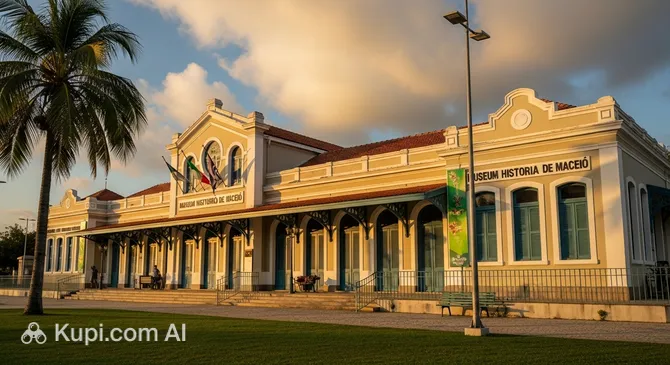
Natural History Museum
Natural History Museum. Иллюстрация. Источник: Kupi.com AI

Located in the historic Prado district, this museum serves as home to extensive collections that tell the story of the inhabitants of lagoons, coastal ocean waters, and tropical forests. Here, visitors can see rare minerals, unique herbaria, and a vast entomological collection, making it a must-visit for anyone who appreciates ecological tourism.

Thanks to its high ranking and important educational role, the museum attracts not only students and scientists but also curious travelers. It is a place where science meets the beauty of Alagoas's pristine nature, offering city guests a meaningful and informative getaway from the bustling beaches.

Contacts

To find current information on special exhibitions or educational programs, you can use the institution's official contact details.

How to contactContact
AddressAv. Amazonas, s/n - Prado, Maceió - AL, 57010-060, Бразилия
Websitemhn.ufal.br

What to Do

Inside the museum's halls, a true panorama of life in the state of Alagoas unfolds before visitors. Here, you can examine in detail taxidermy collections representing the local fauna and study herbaria of rare tropical plants. Of particular interest are the insect display cases, which gather the most bizarre inhabitants of regional ecosystems.

In addition to biological exhibits, the museum offers a look into the geological past of these lands. You will see unique minerals mined in the region and learn how the coastal landscape was formed. Information panels provide detailed accounts of the structure of coral reefs and mangrove forests, helping visitors understand the fragile balance of local natural zones.

For family tourists, the museum has prepared educational tours that will be especially interesting for children. Photography of the exhibits is allowed, so you can capture the most impressive specimens. Visiting the museum is an excellent opportunity to take a break from the beach and broaden your horizons with knowledge about the ecology of the South American continent.

Getting There

Reaching the museum building in the Prado district is quite easy. If you prefer public transport, city buses No. 1, No. 2, and No. 10 run from the central part of Maceió (for example, from popular beaches). You should get off at the "Museu de História Natural" or "UFAL Prado" stop. The trip takes about 15–30 minutes, and the fare is approximately 4–5 reals.

For those who value comfort, Uber or a taxi is the best option. A trip from Maceió Airport (MCZ) will take about 20–30 minutes depending on traffic. If you are traveling by rental car, there are parking spaces near the museum, and the Prado district itself is considered quite safe for walking during daylight hours.

Ближайший город: Maceio

History & Facts

The history of this scientific center is closely intertwined with the annals of the city itself, which was founded in 1815. The name Maceió has indigenous roots and translates as "natural springs of water emerging from the ground." This deep connection with the element of water and the unique landscape of the lagoons formed the basis of the museum's first collections.

As part of the Federal University of Alagoas (UFAL), the museum continues the research traditions established back in the 19th century. During that time, the region was actively developing as a cultural and agricultural hub, which required the systematization of knowledge about the state's rich natural resources. Scientists of that era sought to document every species of plant and animal encountered by colonizers and explorers.

Today, the museum's exhibits serve as a living monument to the region's biodiversity. They reflect Maceió's transformation from a small settlement into a modern state capital, where science and the preservation of natural heritage hold a place of honor. Every exhibit here is a piece of history from the development of these lands, from ancient minerals to rare species of tropical birds.

Time Needed

A standard tour of all the museum halls typically takes 1 to 2 hours. This is usually enough time to leisurely explore the main mineral collections, examine the insects, and see the local flora exhibition.

If you are planning a visit with children or have a deep interest in biology, it is worth setting aside about 2.5 hours. The educational panels and detailed displays about the life of coral reefs and mangrove forests can captivate young researchers and nature lovers for a long time.

Working Hours

Currently, the exact operating schedule of the institution is not published in open sources. To ensure a successful visit, we recommend confirming the hours in advance on the museum's official website or through the information services of the Federal University of Alagoas.

Usually, scientific centers like this in Maceió are open to the public on weekdays; however, operating hours on weekends and holidays may vary.

Nearby

The Prado district and its surroundings offer tourists many interesting locations to help dive deeper into the city's atmosphere and learn about its unique characteristics. Exploring this part of the city is a great addition to a museum visit, especially if you are interested in biology or historical architecture.

NameDistance
Casa dos Aquários0.5 km
Floriano Peixoto Palace Museum1.1 km
Metropolitan Cathedral of Maceió1.1 km
Martírios Square1.2 km
São Gonçalo Lookout1.5 km
Republic Memorial1.7 km
Jaraguá Chapel2.2 km

Reached the end of the page?

That means the route is fully explored