Support

Catedral Metropolitana de Porto Alegre

About

In the very heart of the historical part of Porto Alegre stands the majestic Metropolitan Cathedral, also known as the Cathedral of Our Lady Mother of God. This cathedral is the main Catholic church of the archdiocese and one of the key spiritual landmarks adorning the southern part of Brazil.
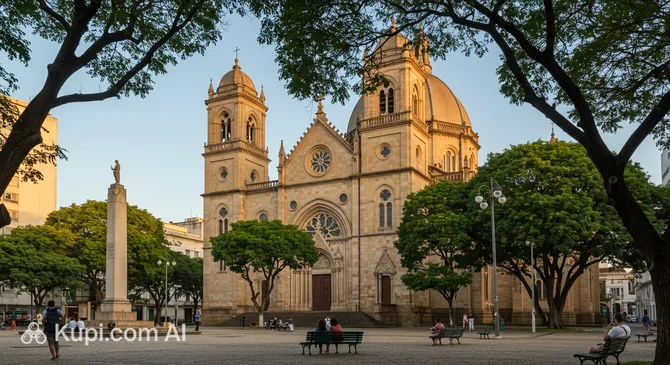
Metropolitan Cathedral of Porto Alegre
Metropolitan Cathedral of Porto Alegre. Иллюстрация. Источник: Kupi.com AI

The cathedral is an outstanding architectural and religious monument, serving as the central hub of spiritual life in the state of Rio Grande do Sul. Its monumental forms and rich history attract not only pilgrims but also art lovers who appreciate the grandeur of religious structures.

As a significant cultural site, the temple serves as a beautiful example of how history and religion intertwine in an urban environment. A visit to the cathedral offers tourists a chance to touch the region's heritage and enjoy a moment of silence amidst the busy city streets.

Contacts

To contact the cathedral administration or obtain up-to-date information on the service schedule, you can use the official channels. Below are the contact details for your convenience in planning your visit.

How to contactContact
AddressR. Duque de Caxias, 1047 - Centro Histórico, Porto Alegre - RS, 90010-282, Brazil
Phone+55 51 3517-4679
Websitewww.catedralpoa.com.br

What to Do

When visiting the Metropolitan Cathedral, be sure to pay attention to its interior decoration. Guests can explore the magnificent interiors, study the architectural features of the vaults, and get acquainted with the unique religious art that adorns the walls and altars of the temple.

For those who want to experience the living atmosphere of the cathedral, there is the opportunity to attend Catholic services and masses. The cathedral remains an active religious center, and participating in a service allows you to witness local traditions in a solemn and majestic setting.

Photography enthusiasts should definitely capture both the grand facade of the building and the play of light on the religious artifacts inside. The cathedral's excellent location makes it a perfect starting point for a walk through the historical center, allowing you to combine a visit to the church with an exploration of the city's ancient squares.

Getting There

The Metropolitan Cathedral is located in the heart of the Centro Histórico (Historical Center) at R. Duque de Caxias, 1047. Thanks to its central location, the church is easily accessible from any part of the city.

If you are already in the center, a pleasant walk through the historical streets will lead you straight to the cathedral doors. For those traveling from more distant neighborhoods, it is most convenient to use a taxi or popular ride-hailing apps. This ensures a quick and comfortable journey to the main entrance.

The area is also well-served by a public transport network. There are many bus stops within walking distance of the cathedral, with major routes connecting the center to the rest of the metropolis.

Ближайший город: Porto Alegre

History & Facts

The history of the Metropolitan Cathedral is inextricably linked to the development of the Catholic Church in Southern Brazil. The official history of the local archdiocese began on May 7, 1848, when Pope Pius IX issued a special bull granting the region a new spiritual status.

The Cathedral of Our Lady Mother of God quickly became the seat of the archdiocese and a true symbol of faith for the people of the region. Today, it serves as the center of life for the archdiocese, currently led by Cardinal Jaime Spengler. The influence of this religious institution is vast, with several suffragan dioceses, including Caxias do Sul and Novo Hamburgo, under its jurisdiction.

The figures speak for themselves: the archdiocese covers an area of over 18,000 km² with a population of over 3.3 million people. Approximately 75% of local residents identify as Catholic, making the cathedral one of the most significant and visited sites in the entire state of Rio Grande do Sul.

Over the years, the cathedral has witnessed numerous historical events and cultural transformations. Combining traditions of the past with the active life of 177 modern parishes, it remains a living monument to history that continues to unite the faithful today.

Time Needed

For a standard tour of the Metropolitan Cathedral, most visitors need from 45 minutes to 1 hour. This is ample time to leisurely study the architectural details of the facade, step inside, and view the religious artifacts and artistic interior decoration.

If you plan to stay for a religious service or wish to delve deeper into the historical facts and religious art presented in the temple, it is worth allocating about 1.5–2 hours for your visit. This will allow you to fully immerse yourself in the peaceful atmosphere of the place without feeling rushed.

Working Hours

The Metropolitan Cathedral of Porto Alegre is open to parishioners and tourists daily. The schedule allows you to plan your visit for either the morning or afternoon; however, please note there is a short break on weekends.

Visiting hours:

  • Monday — Friday: 08:30 – 19:00
  • Saturday — Sunday: 08:30 – 12:00 and 14:00 – 19:00
DayWorking hours
Понедельник8:30 – 19:00
Вторник8:30 – 19:00
Среда8:30 – 19:00
Четверг8:30 – 19:00
Пятница8:30 – 19:00
Суббота8:30 – 12:00, 2:00 – 19:00
Воскресенье8:30 – 12:00, 2:00 – 19:00

Nearby

Exploring the surroundings of the Metropolitan Cathedral can significantly enrich your travel experience. Its location in the city's historical core allows you to combine a spiritual visit with a trip to many interesting entertainment venues and recreation areas.

Below is a list of attractions and popular spots that can be reached from the cathedral in a short time:

NameDistance
Arena Theater0.2 km
AquaPet Aquarium0.4 km
Mario Quintana House of Culture0.5 km
Rio Grande do Sul Museum of Art0.5 km
Our Lady of Sorrows Basilica0.5 km
Military Museum of the Southern Military Command0.6 km
Embarcadero Pier1 km

Reached the end of the page?

That means the route is fully explored