Support

Monumento ao Ginete

About

At a busy crossroads where travelers' paths meet, the Rider Monument (Monumento ao Ginete) stands proudly—one of the most recognizable symbols that Brazil is proud of. This impressive sculpture, located in the city of Vacaria, is dedicated to the brave riders and the rich traditions of Gaucho culture, which are the heart of this region.
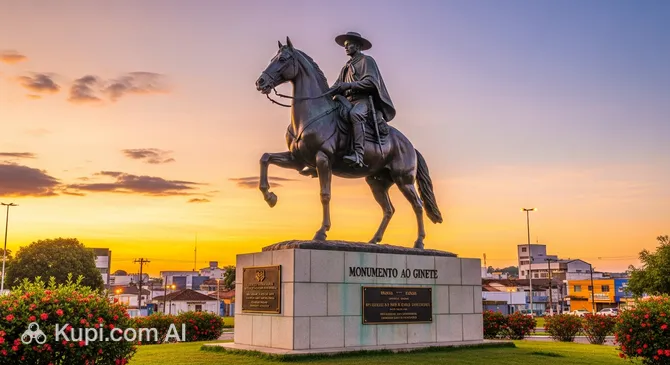
Horseman Monument
Horseman Monument. Иллюстрация. Источник: Kupi.com AI

The monument is a dynamic composition made of concrete, iron, and rebar. Sculptor José Cristovão Batista managed to convey incredible energy: the rider on a rearing horse seems frozen for a moment, demonstrating strength, skill, and the unbreakable bond between man and animal. The realistic style highlights every detail—from the tension in the horse's muscles to the determined look of the rider, symbolizing the spirit of the International Crioulo Rodeo.

Installed at the intersection of federal highways BR-116 and BR-285, the monument serves as a kind of "gateway" to the city and a reminder that Vacaria is the capital of the largest rodeo in Latin America. In 2018, the rider's appearance was updated and covered with bronze paint, giving it an even more solemn and majestic look that catches the eye of all passing tourists.

Contacts

To clarify information about the current state of the monument or events held in its vicinity, you can refer to the city's official resources.

How to contactContact
Addresss/n - BR-116 - Monte Claro, Vacaria - RS, 95200-000, Бразилия
Phone+55 54 99973-1820
Websitewww.vacaria.rs.gov.br

What to Do

Visiting the Rider Monument is, above all, an opportunity to touch the living history and culture of the state of Rio Grande do Sul. The main reason to stop here is for a photoshoot. The sculpture is so massive and dynamic that photos against the backdrop of the rearing horse and the stoic gaucho will be a great reminder of your trip through southern Brazil. Take a close look at the details of the monument: the masterfully conveyed expression and power literally bring the concrete and metal to life.

For road trippers, this is an ideal spot for a short break. You can get out of the car, stretch your legs, and be inspired by the atmosphere of a region that lives by rodeo traditions. If you have a little more time, it's worth checking out the surroundings: cozy restaurants are nearby, such as Recanto Restaurante, where you can try Italian cuisine, or establishments with traditional Brazilian flavor.

Many tourists combine a visit to the monument with a tour of other city attractions. A couple of kilometers from the interchange is the majestic Nossa Senhora de Oliveira Cathedral, built of stone, and the Municipal Museum, where you can dive deeper into the history of this land. The Rider Monument serves as an excellent starting point for getting to know Vacaria, setting the right mood for further exploration of gaucho traditions.

Getting There

Finding the Rider Monument is easy: it is located right at the intersection of major federal highways BR-116 and BR-285. This transport hub is situated in the Monte Claro district, about a 5–10 minute drive north of the city center of Vacaria. Thanks to its location on a roundabout, the monument is clearly visible from a distance to all passing motorists.

For those traveling by private or rental car, this is the most convenient stopping point—there are spots near the interchange (opposite the hotel) where you can safely park. If you are planning a trip from neighboring states or major cities like Porto Alegre or Lages, federal highway BR-116 will lead you straight to your destination.

You can also reach it from the city center by taxi, which saves you the trouble of finding parking on a busy highway. Although intercity buses pass through this area, pedestrian access to the interchange itself requires caution due to heavy traffic, so motor vehicle remains the preferred option for visiting this regional symbol.

Ближайший город: Vacaria

History & Facts

The history of this majestic monument is inextricably linked to the desire of the residents of Rio Grande do Sul to immortalize their roots. The idea for the monument belonged to Lenino Pagotto, who served as the municipal secretary at the time. His goal was to create a visual symbol that would welcome guests to the city and serve as a reminder of the International Crioulo Rodeo—a grand event that made Vacaria famous throughout Latin America.

The sculpture was created by self-taught master José Cristovão Batista from the state of Santa Catarina. His talent for translating historical and traditional themes into concrete and metal allowed him to create the dynamic and expressive figure of the rider, which is today considered one of the artist's most recognizable works. The monument was designed to emphasize the strength and grace of the gaucho, whose life was historically tied to the vast pastures known as "vacarias."

In 2018, the monument found a new lease on life. Thanks to an initiative by the cultural organization CTG Porteira do Rio Grande and the support of the city hall, a restoration was carried out. Artists Ariovaldo Telles and Pedro Borges applied a special bronze coating to the sculpture. This not only improved the aesthetic appeal of the rider, giving it a noble luster, but also provided additional protection for the structure against environmental factors, preserving this important cultural site for future generations.

Time Needed

To fully appreciate the scale and detail of this sculpture, you won't need much time. Most travelers spend between 15 to 30 minutes at the monument. This is quite enough to observe the rider's dynamic pose, take a few impressive photos, and read the information plaques, if available.

Since the site is located at a traffic interchange, it perfectly fits the "quick stop" format during a long journey. You won't have to spend hours in lines or take long walks—the impressive sight opens up as soon as you step out of your car. Overall, plan for no more than one hour for this visit, including time for parking and a short break.

Working Hours

The Rider Monument is an open-air site located on public property. This means it is available for viewing 24 hours a day, seven days a week. It has no gates or ticket booths, so you can plan a stop here at any time convenient for you—whether it's early morning, when the sun's rays beautifully highlight the bronze coating, or late evening.

Despite 24-hour access, visitors are advised to exercise caution after dark due to the proximity of busy federal highways. Special lighting may be insufficient for a detailed inspection in deep darkness, so the best time for a visit is during daylight hours, when you can appreciate all the plasticity and skill of the sculptor.

Круглосуточно

Nearby

After seeing the monument, it’s worth spending some time visiting other interesting spots in the city. The area around the Rider Monument offers travelers a chance to explore local cuisine and cozy establishments where you can rest after your journey and soak in the atmosphere of southern Brazil.

Below are some nearby locations that may be of interest to tourists:

NameDistance
Chapão Sabor Gaúcho1.4 km
La Vecia Galeteria1.5 km
Red Hot Food House1.6 km
Cathedral of Our Lady of Oliveira1.7 km
General Daltro Filho Square1.7 km

Reached the end of the page?

That means the route is fully explored