São João del Rei is a true treasure for connoisseurs of colonial architecture and those seeking a peaceful, thoughtful getaway. Nestled among the green hills and picturesque valleys of the state of Minas Gerais, this city charms travelers with its narrow cobblestone streets, ancient churches adorned with exquisite plasterwork, and houses with bright facades overflowing with flowers. Located in the heart of such a colorful country as Brazil, it offers a unique blend of natural beauty and a deep immersion into the atmosphere of past centuries.
Sao Joao del Rei. Illustration.
Source: Kupi.com AI
The city was one of the key points on the famous "Golden Path" (Estrada Real) during the gold rush era, and this spirit of adventure can still be felt here today. The fascinating history of São João del Rei permeates every corner, from majestic temples to small squares. Today, it is home to about 90,000 people, making the city an important cultural center for the region. At the same time, it is not as overcrowded with tourists as neighboring Ouro Preto or Tiradentes, allowing visitors to enjoy an authentic atmosphere without unnecessary hustle and bustle.
In São João del Rei, the old and the new intertwine harmoniously: colorful festivals take place against the backdrop of historical buildings, and locals are always happy to welcome guests in numerous cozy cafes. Coming here is like stepping into a vibrant Brazilian fairytale, where you can stroll leisurely, study Baroque art, and feel like a discoverer of true treasures.
Weather Overview
The climate in São João del Rei can be described as pleasant and temperate, typical of the mountainous regions of Minas Gerais. There is a clear seasonality that influences trip planning: the year is divided into a warm, humid period and a cooler, dry time.
Summer months, from December to March, bring the highest amount of moisture: in January and December, up to 22 rainy days per month are recorded. Despite the frequent rainfall, the temperature remains comfortable, rarely exceeding 26-27°C during the day. Winter (June–August), by contrast, is characterized by clear skies and minimal chance of rain — there might be only one rainy day in July. However, nights during this period become brisk, with temperatures dropping to 11-12°C. Expect a warm summer with frequent precipitation and cool, dry winters.
The shoulder seasons, especially April and September, offer an excellent balance with moderate heat and reduced rainfall. To choose the perfect dates for your trip, we recommend checking the current weather in São João del Rei before you leave.
Average monthly temperature
Average monthly precipitation
Interesting Facts
Beyond its main attractions, São João del Rei holds many fascinating secrets and historical details that make it unique even among other colonial cities. Here are a few facts to help you better understand the spirit of this place:
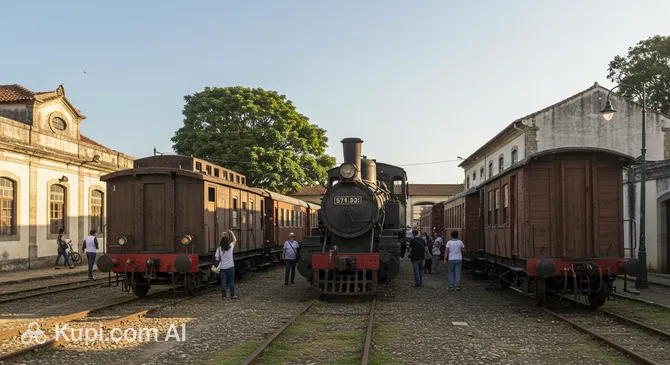
Time travel on a steam locomotive. The city is known for its operating railway, where an ancient train affectionately called "Maria Fumaça" runs. This is a true open-air museum where you can experience the atmosphere of past centuries. To dive deeper into this topic, visit the São João del Rei Railway Museum, which preserves the history of transportation development in the region.
The legacy of the genius Aleijadinho. The architectural appearance of the city is largely shaped by the works of the famous sculptor Aleijadinho, whose art is considered the pinnacle of Brazilian Baroque. His mastery can be appreciated by examining the details of the facades and interiors of local temples, most notably the Church of Saint Francis of Assisi.
Strategic center of the "Golden Path." Founded in the early 18th century, the city quickly became a key hub on the route for transporting gold to the coast. It was the wealth accumulated during the gold rush era that allowed for the construction of dozens of luxurious buildings that have survived to this day.
City of Presidents. São João del Rei is proud to be the birthplace of Tancredo Neves, a crucial figure in the history of Brazilian democracy. He was born here, and his mausoleum, a significant site for the country's citizens, is also located here.
São João del-Rei Railway Museum. Illustration.
Source: Kupi.com AI
Traveler photos:
How to Get There
When planning a trip through the historic cities of the state of Minas Gerais, it is important to think about logistics in advance and find out how to get to São João del Rei in the most convenient way. Since the city itself does not have an active passenger airport, most tourists arrive via the major transport hubs of neighboring metropolitan areas and then transfer to land transport.
One of the most popular options is a flight to Tancredo Neves International Airport (CNF), located in the city of Belo Horizonte. This is the largest airport in the region, handling numerous flights. It is located approximately 169 km from São João del Rei. A taxi or transfer from here takes approximately 4 hours and 30 minutes.
Another popular route is via Rio de Janeiro, home to Galeão International Airport - Antônio Carlos Jobim (GIG). The distance to the destination is about 212 km, and the driving time is approximately 5 hours and 40 minutes. This option is convenient for those who want to combine a visit to the colonial city with a holiday on the coast.
It is also worth considering Zona da Mata Airport (IZA) in the city of Juiz de Fora. This is the closest regional airport to São João del Rei, located 120 km away. The journey from there takes about 3 hours and 20 minutes, making it an attractive alternative for domestic flights.
For clarity, here is a summary of the main airports:
Rail connections in Brazil are poorly developed and used primarily for freight or tourist purposes. There is no station for long-distance passenger trains in São João del Rei, so the main way to travel between cities remains comfortable intercity buses and cars. The city's bus station receives flights from Belo Horizonte, Rio de Janeiro, and São Paulo, providing a reliable link to the outside world.
Main Attractions
The city's historic center is a real open-air museum, where every stone breathes history. A tour of the sights should begin with the region's hallmark — a temple considered one of the masterpieces of Brazilian Baroque. The Church of Saint Francis of Assisi attracts tourists with its unusual architecture and elegant lines, crafted with the involvement of the famous master Aleijadinho. The building, surrounded by tall palm trees, looks particularly majestic against the blue sky, and inside you can see unique carvings and ancient altars.
Church of Saint Francis of Assisi. Illustration.
Source: Kupi.com AI
Traveler photos:
No less impressive is the Cathedral Basilica of Our Lady of the Pillar. This temple is famous for its luxurious interior, which literally dazzles visitors with an abundance of gold. It is considered one of the richest decorated churches in Brazil, where every centimeter of space is adorned with intricate ornaments and religious motifs. A visit to the cathedral allows you to fully experience the grandeur of the colonial era and the skill of the artists of that time.
Sacred architecture enthusiasts should also pay attention to the Church of Our Lady of Mount Carmel. It is interesting for its facade, which combines elements of late Baroque and Rococo, as well as the fact that construction spanned many decades, which is reflected in its mix of styles. The interior of the church is characterized by elegance and restrained nobility, creating an atmosphere of peace for all who enter.
For those who want to diversify their cultural program and learn more about the country's military history, the FEB Museum (CESC) is open. The exhibition is dedicated to the participation of the Brazilian Expeditionary Force in the Second World War. It houses photographs, uniforms, documents, and personal belongings of soldiers, telling the story of the Brazilians' contribution to global historical events. This place offers a different perspective on the history of the city and the country, moving beyond the colonial heritage.
Local Cuisine
The gastronomy of São João del Rei is a real feast for foodies wishing to get acquainted with the authentic culinary traditions of the state of Minas Gerais. Local cuisine is famous for its soulful simplicity, rich flavors, and the wide use of fresh farm products. Many treats are based on ancient recipes carefully preserved in families, making the food here always feel homey and warm.
Travelers should definitely try the hearty dishes that have become the hallmark of the region. First and foremost is "tutu de feijão" — a thick bean paste with cassava flour and smoked meats, as well as the legendary "feijoada" — a rich stew of black beans and various types of meat. For a light snack, the famous "pão de queijo" cheese buns or a slice of fresh local queijo minas cheese are perfect. Those with a sweet tooth should not leave without tasting "doce de leite" — a delicate milk caramel often served with a slice of cheese.
Villeiros Restaurant. Illustration.
Source: Kupi.com AI
Traveler photos:
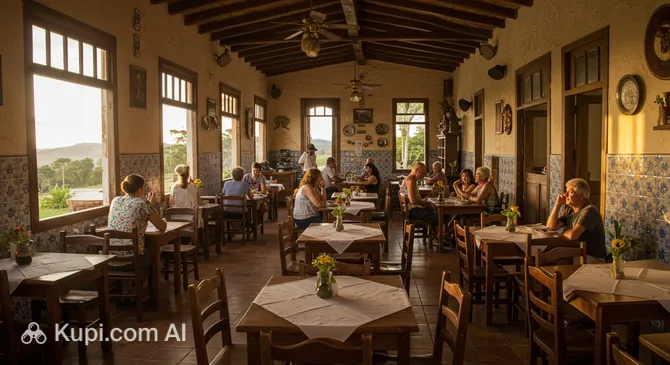
Among drinks, a special place is held by the aromatic coffee grown on plantations in the surrounding valleys and traditional Brazilian cachaça, which locals know how to make with particular skill. You can try local delicacies almost everywhere: from street markets with their mouth-watering "pastel" pastries to established restaurants. For example, to appreciate a classic presentation and atmosphere, you can visit the Villeiros Restaurant, which is popular with city guests.
The dining culture in São João del Rei encourages leisurely socializing. Locals love to gather at the table, discussing news and enjoying food. If you are looking for a place with a creative approach and a colorful setting, it's worth visiting Taverna d'Omar — Artisanal Cuisine. The city's gastro scene is surprisingly diverse and especially blooms during culinary festivals, when the streets are filled with enticing aromas.
Travel Tips
Preparing for your trip to São João del Rei will help you avoid minor inconveniences and fully focus on the beauty of colonial architecture. Here are some proven recommendations to make your journey through the heart of Minas Gerais comfortable and safe.
Clothing and Footwear. The most important tip for this city: forget about heels and unstable shoes. The historic center is paved with uneven cobblestones, and the city's terrain is hilly, so comfortable sneakers or flat shoes are your best choice. The climate here is changeable: it can be hot during the day, and cool in the evening, especially in winter, so bring a light jacket or sweater. Modest clothing covering shoulders and knees is required for visiting active churches.
Transport. The historic center is best explored on foot so as not to miss interesting details. For long-distance trips, it is convenient to use taxi apps (such as Uber or 99), which work well here and are inexpensive. Renting a car is only worth it if you plan trips to neighboring cities (for example, to Tiradentes), as parking on the narrow streets of the center can be a problem.
Finance. The official currency is the Brazilian Real. Cards are accepted in most restaurants and hotels, but you will definitely need cash. It is needed for paying entrance fees to some museums and churches, buying souvenirs at street fairs, or having a snack in small shops. ATMs are available in the center, but it's better to withdraw some money in advance. A 10% tip is usually already included in the bill.
Health and Safety. São João del Rei is a quiet city and much safer than the country's major metropolises. However, basic precautions should be followed: do not leave your belongings unattended and avoid unlit streets at night. Pharmacies (farmácias) are common, many staying open until late evening. Given the hilly terrain and heat, always carry water with you to avoid dehydration.
Communication. The primary language is Portuguese. English is not understood everywhere, mainly only in major hotels or tourist offices. We recommend downloading an offline translator and learning a few phrases, such as "Obrigado" (thank you). Local operator SIM cards (Vivo, Claro, TIM) can be bought in communication stores or pharmacies by presenting your passport. Wi-Fi is available in almost all cafes and hotels.
Local Etiquette. Residents of the state of Minas Gerais ("mineiros") are famous for their hospitality and friendliness. It is customary to say hello when entering a shop or elevator ("Bom dia" or "Boa tarde"). Don't be surprised if a stranger talks to you on the street — it's part of the local culture. Be polite and smiling, and you will be treated the same way.
What to Avoid. Do not speak loudly or behave provocatively inside churches, especially during services — locals are very religious. Also avoid flash photography inside temples where it is prohibited, so as not to damage ancient paintings or disturb worshippers.
Unique Feature. São João del Rei is called the "Land of Bells." There is a unique "language" of bell ringing here that informs residents of different events. If you hear the chiming, stop and listen — it's a living tradition preserved since the 18th century.
By following these simple tips, you can easily blend into the rhythm of life in São João del Rei and get the most out of its unique atmosphere. May your journey be full of pleasant discoveries and warm encounters!
Entertainment & Nightlife
Entertainment and Nightlife:
São João del Rei stands out from many neighboring historic cities with its lively and youthful atmosphere. Thanks to the presence of a large federal university, the nightlife here doesn't stop at sunset but takes on a special bohemian charm. Evening leisure in the city is less about flashy clubs and more about cozy bars, "botecos" (traditional Brazilian pubs), and restaurants with live music, where locals and students discuss the day's events right at sidewalk tables.
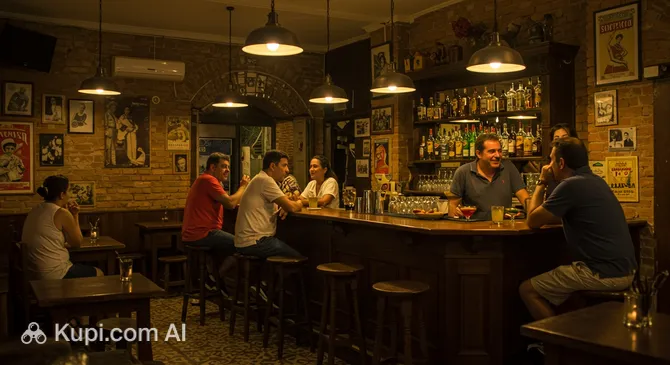
The epicenter of evening activity is the historic center (Centro Histórico). Here, among colonial mansions, the city's best venues are hidden. The atmosphere in most places is extremely democratic and relaxed: there is no dress code, and the best outfit would be jeans and comfortable shoes. If you are looking for a place with a soulful atmosphere and a creative approach to drinks, be sure to stop by Taverna d'Omar — Artisanal Cuisine. This is an excellent example of how the city combines tradition with modern gastronomic trends.
Taberna d'Omar - Artisanal Kitchen. Illustration.
Source: Kupi.com AI
Traveler photos:
For those who prefer a heartier dinner in a colorful setting, the Trilhos de Minas Restaurant is worth considering. The name translates as "Rails of Minas," highlighting the establishment's connection to the region's history. You can often hear live performances of MPB (Brazilian Popular Music) or soft rock here, creating the perfect backdrop for an evening of relaxation after long walks.
For those who prefer a more modern entertainment format or want to catch a movie, Pátio Matosinhos serves as a point of attraction. This is a shopping complex where you can not only shop but also spend an evening at the food court or watch a film premiere. It is a popular meeting spot for local youth, especially on weekends.
Speaking of daytime entertainment, the cultural component cannot be ignored. Besides touring churches, you can visit the São João del Rei Railway Museum. This is not just an exhibition, but an entire complex preserving the memory of transportation development in Brazil, which will be interesting for both adults and children.
Practical Tips and Safety: Nightlife in the city begins to come alive after 8:00 PM, with the peak of fun falling on Thursday, Friday, and Saturday. Prices in the bars of São João del Rei will pleasantly surprise tourists: they are noticeably lower than in Rio de Janeiro or São Paulo. The city is considered quite safe for evening walks, especially in the busy areas of the center. However, for returning to your hotel late at night, it is recommended to use official taxis or mobile apps (Uber, 99) to avoid wandering through deserted alleys.
Parks & Museums
São João del Rei is a city where history is harmoniously intertwined with picturesque nature. In addition to the famous churches, there are excellent opportunities for outdoor recreation and deep cultural immersion through unique museum collections. The green hills surrounding the historic center invite strolls, while the city's exhibitions tell the story of technical progress and Brazil's prominent figures.
The main natural gem of the region is the majestic Serra de São José mountain range. This ecological reserve serves as the city's natural boundary and offers tourists many routes for ecotourism. Here you can walk along ancient trails paved with stone back in the colonial era and enjoy breathtaking panoramas of the valley. The reserve is famous for its rich biodiversity: rare species of birds and plants characteristic of the Atlantic forest and cerrado zones can be found here. For a more peaceful holiday within the city, the shaded Praça Frei Orlando is perfect, offering a place to hide from the midday heat among ancient trees.
Among cultural institutions, the São João del Rei Railway Museum holds a special place. Located in the historic station building, it is considered one of the most complete railway museums in the country. The collection's pride is the old rotunda and roundhouse, where steam locomotives from the late 19th and early 20th centuries are on display, including the famous "Maria Fumaça." The exhibition allows you to trace the history of the "West of Minas Railroad," which played a key role in the region's economic rise.
FEB Museum (CESC). Illustration.
Source: Kupi.com AI
Traveler photos:
Another important page of history unfolds in the FEB Museum (CESC). The abbreviation FEB stands for Força Expedicionária Brasileira (Brazilian Expeditionary Force). The exhibition is dedicated to the participation of Brazilian soldiers in the Second World War on the battlefields of Italy. It houses an impressive collection of uniforms, weapons, medals, and trophies carefully preserved by veterans and their descendants. This is a small but very touching museum, reminding us of the global contribution of the residents of this cozy town to world history.
For those interested in the country's political history, the Tancredo Neves Memorial is a must-visit. The museum is dedicated to the life and legacy of the city native who became one of the most significant figures in 20th-century Brazilian politics. Modern halls display documents, photographs, and personal belongings of the president, telling the story of his journey and fight for democracy.
Insider Tip: If you have time, visit Balneário de Águas Santas, located just 10 km from the center at the foot of the mountains. This is a resort area with thermal springs where you can relax in warm pools of mineral water. Locals love this place for the opportunity to recharge and have a picnic in nature.
Getting Around
The transport system of São João del Rei is quite simple and compact, which is typical for cities of this size. There is no metro or trolleybus, and the main form of public transport is city buses. They run throughout the city, connecting the historic center with residential areas and the outskirts. The buses are in good condition, but the schedule may not always be followed to the minute, so tourists should allow a little extra time for waiting.
The payment system on buses is cash-oriented, which is important for travelers to keep in mind. In most cases, you enter through the front door and pay the fare to the conductor (or the driver if there is no conductor), then pass through a turnstile into the cabin. The ticket price is fixed and is a small amount in local currency. It is recommended to always carry small bills or coins, as change from large banknotes may not be available. Electronic transport cards are mainly used by locals and are usually not required for short-term tourist visits.
The most convenient and popular alternative to public transport is taxi services ordered via mobile apps such as Uber and 99. They work perfectly in the city, providing quick car arrivals and transparent pricing, which eliminates language barrier problems when explaining the route. Official taxi stands can also be found in the main squares and near the bus station, which operate by the meter.
A unique feature of the city's transport infrastructure is the historic railway, where the famous steam locomotive "Maria Fumaça" runs. Although this form of transport is not used for daily commuting, it performs an important function, connecting São João del Rei with the neighboring historic town of Tiradentes. A trip on this train is not just a transfer, but a real journey through time, which only runs on weekends and holidays. Tickets for it should be purchased in advance at the station ticket offices.
Getting around the historic center is best done on foot, as many streets are narrow and paved with old cobblestones. Bike rental is poorly developed in the city due to the hilly terrain, which requires good physical fitness. If you plan to arrive in or leave the city, your main transport hub will be the city bus station (Rodoviária), where comfortable intercity buses depart for major metropolises and neighboring regions.
Accommodation
The choice of accommodation in São João del Rei will pleasantly surprise travelers with its character. Unlike large metropolises with their faceless chain hotels, the backbone of the hospitality sector here consists of pousadas — traditional Brazilian guest houses. They are often located in restored colonial mansions from the 18th and 19th centuries, allowing guests to literally live inside history. The range of options varies from simple and budget-friendly hostels for backpackers to cozy mid-range boutique hotels with antique furniture and garden courtyards.
The most popular and atmospheric area to stay is the Historic Center (Centro Histórico). By staying here, you will be within walking distance of the main attractions, restaurants, and shops. This is an ideal choice for those who want to hear the bells of ancient churches from early morning and stroll along cobblestone streets. However, keep in mind that the center can be noisy during holidays, and the cobblestones can be inconvenient when moving with heavy suitcases. For those seeking quiet and more affordable prices, the neighborhoods adjacent to the center are suitable, from which the main sites can be reached in 10–15 minutes on foot or by taxi.
An important booking tip: São João del Rei is a city with rich religious and cultural traditions. During periods of major events, such as Holy Week (Semana Santa), Carnival, or winter festivals, demand for accommodation skyrockets, and prices can increase several times over. If your trip coincides with these dates, we strongly recommend booking a room several months in advance. In ordinary times, you can find a free room even a couple of days before arrival.
The price range in the city can be described as moderate. It is difficult to find ultra-luxury five-star resorts here, but the high-quality middle segment is widely represented, offering excellent service for reasonable money. Most accommodation properties are available on popular international booking platforms, but many small family-run pousadas also take orders directly through their websites or messaging apps, which sometimes allows for a small discount.
Nearby Cities
For those who want to explore the surrounding area, São João del Rei serves as an excellent starting point for day trips to several interesting nearby places:
One of the most impressive destinations for a short trip is Congonhas. This city is world-famous for the Sanctuary of Bom Jesus de Matosinhos, which is listed as a UNESCO World Heritage site. The main attraction here is the famous sculptures of the twelve prophets, carved out of soapstone by the great master Aleijadinho. This place allows you to experience the pinnacle of Brazilian Baroque and feel the grandeur of the colonial era.
Lovers of a more peaceful holiday and nature should consider the city of Barbacena, located just an hour's drive away. It is often called the "City of Roses" due to its developed flower industry and many gardens. A pleasant cool climate prevails here, and the streets are decorated with historic mansions and churches, making a walk through the city both peaceful and educational.
City
Population
Distance
Resende Costa
10 913
24 km
Dores de Campos
9 299
25 km
Barroso
19 599
30 km
Lagoa Dourada
12 256
31 km
Sao Tiago
10 561
36 km
These nearby destinations provide an insight into the diverse culture and landscapes of the region.
Shopping & Souvenirs
Shopping in São João del Rei is a fascinating immersion into the world of traditional crafts and the authentic culture of the state of Minas Gerais. Unlike metropolises with their endless rows of brand boutiques, this city is famous for its unique handmade products. São João del Rei holds the unofficial title of the "tin capital" of Brazil, so it is here that you can find exquisite interior items and tableware made from this metal, crafted by local artisans with incredible precision and love.
The heart of the city's commercial life is its Historic Center. Strolling through ancient cobblestone streets, such as Rua Marechal Deodoro and Rua Getúlio Vargas, you will discover many small shops, antique stores, and art studios. Here, in an atmosphere of colonial architecture, it is a pleasure to choose memorable gifts, peering into windows displaying the work of local craftsmen — from wooden sculptures to embroidery.
While the city preserves its old-world spirit, there are also modern spaces for shopping. The main shopping complex is Pátio Matosinhos. This is a convenient place where you can find clothing, shoe, and electronics stores, as well as take a break in the food court area. The center is popular with both locals and tourists looking to purchase travel essentials in a comfortable environment.
Pátio Matosinhos. Illustration.
Source: Kupi.com AI
Traveler photos:
A special flavor of local trade can be experienced at the street markets. The most famous is the Sunday Fair (Feira de Domingo), which unfolds in the morning on Avenida Tancredo Neves. It is a bustling and colorful place where farmers sell fresh fruit, cheeses, and homemade sweets, and artisans offer their products at very attractive prices. Visiting the market is a great way to feel the real rhythm of city life.
When choosing souvenirs, pay attention to the following goods for which the region is famous:
Tin products (Estanho): The city's hallmark. These can be candlesticks, trays, goblets, or jewelry. The quality of local tin is considered among the best in the world.
Textiles: Hand-woven rugs, bedspreads, and tablecloths with traditional Minas Gerais patterns.
Gastronomy: Be sure to bring home a jar of doce de leite (milk caramel), local "Minas" cheese, or a bottle of high-quality cachaça produced on nearby fazendas.
Religious art: Figurines of saints and carved wooden items in the Baroque style.
Most shops in the city center are open Monday through Friday from 09:00 AM to 06:00 PM, and on Saturdays until 01:00 PM. Shopping centers usually stay open longer, until 10:00 PM, including weekends. Credit and debit cards are accepted almost everywhere, but for purchases at markets or in small souvenir shops, it is recommended to carry cash Reais.
The Tax Free refund system for tourists in Brazil, and particularly in small towns like São João del Rei, is not common. The prices shown on tags are final, but when buying several items at a market or a private shop, it is quite appropriate to politely ask for a small discount.