Support

Palácio Anchieta

About

In the heart of the city of Vitória stands the magnificent Anchieta Palace—one of the oldest government residences that Brazil has ever seen. This historic building, located across from the port, serves as the seat of the executive power of the state of Espírito Santo and is a true symbol of the region.
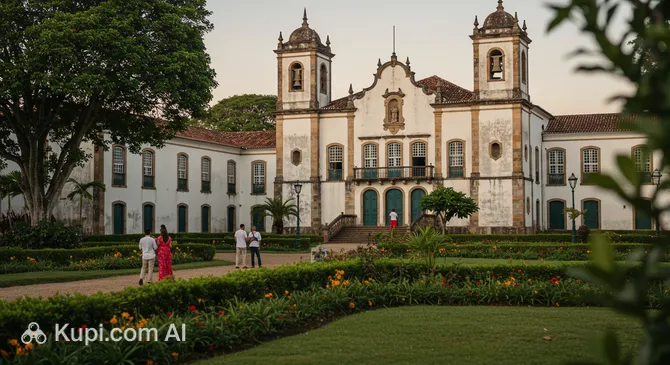
Anchieta Palace
Anchieta Palace. Иллюстрация. Источник: Kupi.com AI

Founded by Jesuits in the 16th century as the College of São Tiago and the Church of Saint James, the complex is a unique architectural fusion. Here, stark colonial lines sit alongside exquisite Eclectic elements from the early 20th century. Of particular value is the sgraffito technique—a decorative plaster used to adorn only a few buildings in the entire country.

Today, Anchieta Palace is not just an administrative building but also an important cultural center. Within its walls is a fragment of the tibia of Saint José de Anchieta, after whom the complex is named, as well as priceless art collections available for tourists to view.

Contacts

If you are planning a visit and wish to clarify tour details, you can use the city's official resources. Despite being an active government building, it is open to tourists.

Below are the main contact details for communication and navigation:

How to contactContact
AddressPraça João Clímaco, s/n - Centro, Vitória - ES, 29015-110, Brazil
Websitewww.vitoria.es.gov.br

What to Do

A visit to the palace is an opportunity to touch centuries of history. Inside, you will find luxurious halls housing Jesuit-period artifacts and works of art of immense value to the state. Be sure to visit the symbolic tomb of Father José de Anchieta, where a sacred relic is kept, attracting both pilgrims and historians.

Architecture enthusiasts should carefully study the building's facades. Here, you can see the sgraffito technique, rare for South America, and examine details remaining from the original 16th-century construction. The palace's inner courtyard is an oasis of silence where it is easy to imagine how the lives of missionaries unfolded hundreds of years ago.

Don't forget to have your camera ready: João Clímaco Square and the terraces adjacent to the palace offer panoramic views of the port and Vitória Bay. After exploring the interiors, a walk through the Cidade Alta historic district is a logical conclusion to the tour, allowing you to fully immerse yourself in the colonial-era atmosphere.

Getting There

The palace is located at Praça João Clímaco, s/n, right in the historic heart of the city. Finding it is easy: the building is situated across from the port, at the entrance to the oldest district, Cidade Alta. If you are already walking through the city center, the palace is easily accessible on foot, identifiable by its majestic facade.

For those who prefer public transport, buses going to the Praça João Clímaco or Centro stops are ideal. The city's transport network is reliable, and the fare is approximately 4 reals. From Vitória's main bus station, a trip on bus No. 10 or 20 will take no more than 15–20 minutes.

If you are arriving from Eurico de Aguiar Salles Airport, located about 10 kilometers away, taking a taxi is most convenient. The ride will cost between 50 and 70 reals and take about 20–30 minutes depending on traffic. Travelers with their own cars should note that parking at João Clímaco Square can be crowded, so it is best to plan your visit for the morning hours.

Ближайший город: Vitoria

History & Facts

The history of this site began back in 1551, when Jesuits led by Father Afonso Brás began constructing a complex that would later become the College of São Tiago. For over two centuries, this building served as the primary educational center for the state of Espírito Santo. One of the most significant figures in the palace's history was Father José de Anchieta, who in 1587 completed the first wing facing the modern-day square.

The building's fate was full of trials: in the late 18th century, a devastating fire virtually destroyed the interiors of the old church, after which the complex was confiscated and transferred to secular authorities. Since 1798, it has officially served as the state government's residence, making it one of the oldest government residences in all of Brazil. In 1860, it even hosted the imperial couple—Pedro II and Empress Teresa Cristina.

The palace acquired its current Eclectic-style appearance in the early 20th century during a major renovation. The facades were updated, the roof was raised, and windows overlooking the bay were added to the architecture. In 1945, the building was named Anchieta in honor of the saint, a fragment of whose relics is still preserved within these walls. In 1983, the palace was designated a cultural heritage site and underwent a thorough restoration in the early 2000s.

Time Needed

To explore Anchieta Palace at a leisurely pace, 1.5–2 hours is usually sufficient. This timeframe allows you to participate in an organized tour of the interior halls, see unique artworks, and pay your respects to the saint at the symbolic tomb.

If you only plan for an exterior viewing of the facades and a walk around João Clímaco Square for beautiful photos of the port, 30–40 minutes will suffice. However, we recommend going inside, as the interiors reveal the true grandeur of this historic complex.

Working Hours

When planning your visit to Anchieta Palace, please take note of the operating schedule. The building is open to visitors six days a week, though it closes an hour earlier on weekends.

Visiting Hours:

  • Tuesday – Friday: 09:00 AM – 05:00 PM
  • Saturday – Sunday: 09:00 AM – 04:00 PM
  • Monday: Closed

DayWorking hours
ПонедельникЗакрыто
Вторник9:00 – 17:00
Среда9:00 – 17:00
Четверг9:00 – 17:00
Пятница9:00 – 17:00
Суббота9:00 – 16:00
Воскресенье9:00 – 16:00

Nearby

Exploring the surroundings of Anchieta Palace will allow you to dive deeper into the colonial past and modern life of the state capital. The city's historic center is filled with iconic landmarks, all reachable within just a few minutes' walk.

A stroll through the Cidade Alta district will reveal views of ancient squares and monuments, each telling its own chapter of the region's history. Below are the most interesting places within walking distance or a short drive:

NameDistance
Capixaba Museum of Black Culture0.2 km
Casa de Bamba0.3 km
Metropolitan Cathedral of Our Lady of Victory0.3 km
Moscoso Park0.3 km
Rua 70.5 km
Vale Museum0.8 km
Gruta da Onça Municipal Nature Park1.2 km

Reached the end of the page?

That means the route is fully explored