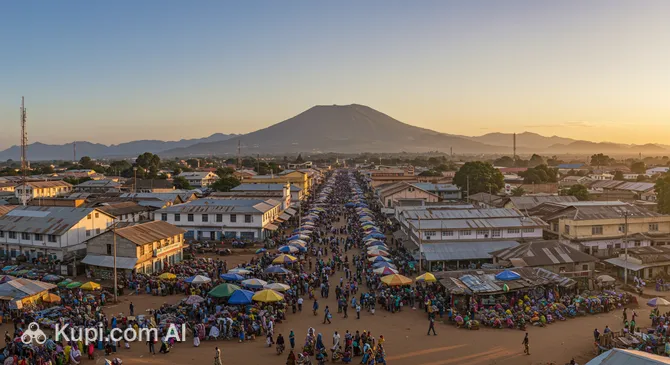
Maroua is widely regarded as the cultural and artistic capital of the Far North Region, offering a fascinating blend of natural beauty and deep-rooted heritage. While it may not feature manicured botanical gardens in the western sense, the city itself acts as a living green space, while its museums and historical sites provide a profound insight into the diverse civilizations of this part of Cameroon.
The "Green City" Avenues serve as Maroua's most significant natural feature. Unlike other Sahelian cities that can feel arid and exposed, Maroua is famous for its abundant Neem trees that line almost every major street. These trees form a lush, continuous canopy that functions as a sprawling urban park, providing essential shade and a cool microclimate. Walking beneath these green tunnels offers a refreshing escape from the sun and is a defining experience of the city's atmosphere.
The banks of the Mayo Kaliao and Mayo Tsanaga rivers act as the city's dynamic natural playgrounds. Although these rivers are seasonal, their wide, sandy beds during the dry season transform into bustling social spaces where children play football and families gather. In the rainy season, the returning waters bring a burst of life and greenery to the riverbanks, offering picturesque spots for locals and visitors to enjoy the cooler air and the scenic views of the distant Mandara Mountains.
For a dive into the region's history, the Regional Museum of Maroua is an essential stop. Located near the lively market district, this museum houses an impressive collection of artifacts that trace the history of the diverse ethnic groups in the Far North, including the Fulani, Moundang, and Toupouri peoples. Exhibits include traditional agricultural tools, musical instruments, ancient weaponry, and ceremonial costumes, providing a comprehensive overview of the cultural tapestry that defines the Sahel.
While often categorized as a market, the Maroua Craft Center functions as the city's premier art gallery. It showcases the finest examples of local craftsmanship, effectively serving as a living museum of Sahelian art. Here, you can observe the intricate details of hand-painted pottery, woven cotton textiles, and the region's famous leatherwork. It is a place to appreciate the skill and artistic heritage that has been passed down through generations of artisans.
A major historical landmark is the Lamidat of Maroua, the palace of the traditional ruler, or Lamido. This site is the custodian of the city's Islamic heritage and traditional authority. The architecture typically features high mud-brick walls and grand entrance gates, reflecting the classic Sudano-Sahelian style. Visitors can often learn about the complex social hierarchy and the enduring traditions that continue to influence daily life in the city.
Another architectural gem is the Grand Mosque of Doualaré. With its towering minarets and spacious courtyards, it stands as a testament to the spiritual importance of the city. The mosque is not only a place of worship but also a center for community gathering, and its design offers a beautiful example of how religious architecture has adapted to the local environment and materials.
For a truly authentic experience, seek out a local tannery in the older quarters of the city. Unlike the polished displays at the Craft Center, visiting the tanneries allows you to witness the raw, centuries-old process of turning hides into the famous Maroua red leather. It is a sensory experience—often strong-smelling but visually striking—that connects you directly to the city's most famous industry.