Support

Kaschechewan

About the Airport

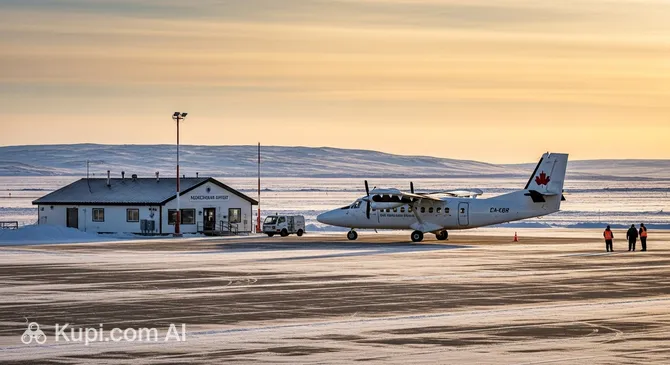
Kaschechewan. Source: Kupi.com Binoculars

Kashechewan Airport is not merely a transport hub, but a true "lifeline" for the settlement of the same name located on the banks of the Albany River, right by James Bay. Here, in the heart of the rugged Canadian North, where roads only exist in winter as "ice roads", this small airfield becomes the primary link to the outside world. There is none of the hustle and bustle of giant terminals here: everything is imbued with an atmosphere of northern tranquillity, and the journey here is already the start of an adventure through the wild lands of Ontario.

IATA Code ZKE
ICAO Code CZKE
City Kashechewan
Distance to Centre ~2 km
Status Domestic (Regional)
Annual Passengers Limited passenger flow (serves local flights)
Schedule Schedule available on official carrier websites

Airport Features and Highlights:

Kashechewan Airport plays a critical role in the life of the community, ensuring the delivery of food, mail, and medicine, as well as providing air ambulance services. The runway here is gravel, which is typical for remote northern airports, and is capable of handling turboprop aircraft such as the Dash-8 and King Air.

The main advantage for the traveller is the speed of service. Thanks to the compact size of the terminal, all pre-flight procedures take just a few minutes. The airport is located in immediate proximity to the village (just a 5-minute drive), making logistics as simple as possible. However, it is worth remembering that the operation of this air harbour depends heavily on weather conditions, especially during the spring ice break-up and winter blizzards.

Contact Information

  • Official Airport Website: There is no separate website. The airport is managed by the Ministry of Transportation of Ontario (MTO); basic information can be found on their official resource.
  • Information Desk Phone: +1 705-275-4457 (Airport Administration). Please note that this is a direct office number, and staff may be busy handling flights.
  • Airport Address: General Delivery, Kashechewan, ON P0L 1S0, Canada. The terminal is located approximately 2–4 km from the main settlement.
  • Email: There is no public email address for passengers. General inquiries can be directed to the Ministry of Transportation of Ontario.
  • Airport Social Media: Official accounts are not maintained. Current news is best found on the airlines' pages.
  • Lost Luggage Information: There is no separate lost and found service at the airport. Responsibility lies with the air carriers, so if items are lost, you must immediately contact your airline representative.
  • Passenger Support Contacts: For questions regarding booking, schedules, and luggage, contact the airlines operating flights to Kashechewan directly:
    • Air Creebec: +1 800-567-6567 (toll-free within Canada).
    • Thunder Airlines: +1 800-803-9943.

How to Get to the Airport

Transport logistics in Kashechewan have a unique character, dictated by the remoteness of the region and the compact nature of the settlement itself. Since Kashechewan Airport is located just 2–3 kilometres from the residential zone, the concept of a "transfer" is perceived differently here than in major metropolises. The road to the terminal takes minimal time, and traffic jams are a phenomenon that simply does not exist here.

Taxi and Private Transfer

This is the main and most reliable way to get to the airport. There are no branded taxi services with signs in the village, but local private carriers operate here. Usually, a ride is arranged in advance by phone or through your place of accommodation (guesthouse, lodge).

  • Cost: A fixed fee often applies for trips within the settlement (usually from 10 to 20 CAD); payment is made in cash.
  • Travel Time: The trip from the village centre to the terminal takes about 5–10 minutes.
  • Recommendation: If you are visiting for work or as a guest, the host party usually meets guests with personal transport (pickups or SUVs).

Public Transport and Car Rental

It is important to understand that familiar urban infrastructure is absent here:

  • Buses and Metro: There are no route buses or railway connections within the village of Kashechewan.
  • Car Rental: There are no counters for international rental agencies (Hertz, Avis, etc.) at the airport. Renting a car on the spot for independent travel is practically impossible, so plan your logistics in advance.

Parking at the Airport

A small open area for vehicle parking is equipped near the terminal building. Parking is generally free. It is used mainly by those dropping off or picking up passengers, as well as airport staff. Leaving a car for a long period without supervision is not recommended, especially in winter due to the need for snow clearing.

Winter Roads and Connections to Neighbours

In the winter months, when rivers and swamps freeze, "winter roads" (ice roads) function, connecting Kashechewan with neighbouring settlements. This is an alternative way to get to the airport for residents of nearby communities.

The nearest neighbour is Fort Albany, located just 9 km away on the other bank of the river. In summer, you can get there only by boat (followed by a transfer to a car) or by plane, and in winter — across the ice.

Nearest Transport Hubs

A journey to Kaschechewan is often a connecting one and passes through major regional hubs. If weather conditions do not allow for landing in Kaschechewan, alternate airfields may serve as backups:

  • Moosonee (132 km) — The "Gateway to the North", the terminus of the Ontario Northland railway, from where flights frequently depart to coastal communities.
  • Attawapiskat (88 km) — Another important settlement on the coast with regular air service.
  • Victor M. Power Airport (Timmins) (413 km) — A major regional centre from where the majority of flights to the north originate.
  • For long-haul flights, Kuujjuarapik Airport is sometimes used, although it is located in the neighbouring province of Quebec (over 420 km away).

Terminals and Map

The Kashechewan Airport terminal is a model of northern practicality. There are no architectural extravagances typical of international hubs, but there is everything necessary for safe and quick passenger service in subarctic climate conditions. The compactness of the building works in the traveller's favour: the path from the entrance door to the aircraft steps takes mere minutes.

Structure and Number of Terminals

The airport consists of a single passenger terminal. It is a small one-storey structure combining departure and arrival zones. Inside, there is no complex division into sectors: all processes take place in one common hall, creating an almost home-like atmosphere. The terminal serves only domestic regional flights, so customs and border control zones are absent.

Layout and Navigation Inside

It is impossible to get lost in Kashechewan Airport — the entire space is visible at a glance. The layout is extremely simple:

  • Check-in Zone: Located immediately at the entrance. Airline counters (Air Creebec, Thunder Airlines) are found here. The queue is usually shared, and staff often know frequent passengers by face.
  • Waiting Hall: A small heated space with seats. This is critically important in winter when the temperature outside drops extremely low. Passengers wait here for the boarding call.
  • Information Announcements: There may be no electronic boards. All information about flight status, delays, or the start of boarding is announced by staff via voice directly in the hall.

Security Screening Features

Unlike major airports, there is no in-depth pre-flight screening zone with metal detector frames and scanners (CATSA) here. The security procedure is maximally simplified:

  • Document checks and verification against passenger lists are conducted.
  • Visual inspection of luggage and hand carry is performed.
  • Important: If you are flying in transit through a major hub (e.g., Timmins) further across Canada, you will have to undergo full security screening at the transfer airport before boarding your next flight.

Arrival and Departure Zones

The airport is not equipped with jet bridges or apron buses. Interaction with the aircraft follows a classic northern scheme:

  • Boarding the Plane: After the announcement, passengers exit the terminal and walk to the plane across the apron. Be careful: in winter, the surface can be slippery, and the wind strong.
  • Luggage Collection: Upon arrival, you also walk to the building. There is no baggage carousel here. Items are either unloaded onto a special area in front of the entrance or brought inside and handed over personally/placed against the wall. The process takes minimal time.

Procedure Times

The absence of complex bureaucracy and queues is the main plus of a small terminal. However, the specifics of small aviation dictate their own rules:

  • Check-in: Opens one hour before departure. It is recommended to arrive at the airport no later than 45 minutes before departure.
  • Why punctuality is important: Despite quick passenger service, pilots and ground crews need time to precisely calculate the weight of cargo and luggage, which is critical for flight safety on small aircraft.
  • Screening: Formalities take literally a couple of minutes.

Recommendations for Passengers

Since transitions between zones are non-existent, the main rule of navigation is to stay close to the airline representative. If a flight is delayed due to bad weather (a frequent occurrence in this region), it is better not to leave the terminal building so you can react quickly to schedule changes. The waiting hall is usually warm, but keeping a warm jacket handy is worth it even when inside, as doors open frequently for entry and exit.

Airport History

The history of Kashechewan Airport (ZKE) is inextricably linked with the history of the settlement itself, which is one of the youngest in the James Bay region. Unlike old airfields that emerged at the dawn of aviation, this air harbour appeared as a vital necessity in the second half of the 20th century, when the Cree community separated from neighbouring Fort Albany and settled at the current location.

Establishment and Development

The official starting point in the history of local aviation can be considered 1957, when the settlement of Kashechewan was founded. In those years, aviation in Northern Ontario was experiencing rapid growth, linked both to resource development and the creation of the Mid-Canada Line radar stations. Initially, the landing site was a primitive dirt strip accepting light utility aircraft and floatplanes that landed on the river during the summer.

An important stage was the transfer of the airfield to the jurisdiction of the Ministry of Transportation of Ontario (MTO). This event transformed the "wild" strip into a certified regional airport. In the 1970s and 80s, large-scale work was carried out to strengthen the gravel surface, which allowed for the reception of heavier turboprop aircraft, ensuring year-round connection (except for periods of severe storms) with the "mainland".

Airport as a Centre for Rescue Operations

In recent history, Kashechewan Airport has gained fame as a true "outpost of hope". Due to its geographical location, the village is subject to annual spring flooding of the Albany River. The airport has become a key link in regular evacuation operations for the population. During such periods (for example, during the massive floods of 2005, 2008, and subsequent years), the quiet provincial airfield turns into one of the busiest hubs in the region:

  • Take-offs and landings occur every 15–20 minutes.
  • The runway accepts not only civil flights but also military transport aircraft (e.g., C-130 Hercules) involved in relief operations.
  • The coordinated work of dispatchers and ground services in such extreme conditions has become a record of efficiency for small northern airports.

Modernisation and Present Day

Despite its remoteness, the airport is constantly being modernised to meet modern safety standards. Significant works were carried out in the 2000s and 2010s, when the runway lighting equipment was updated. This is critically important for a region where the daylight period in winter lasts only a few hours. The implementation of modern GPS approach systems has allowed pilots to operate confidently in conditions of low cloud cover and fog, characteristic of the James Bay coast.

Interesting Facts

  • Gravel Heritage: The airport intentionally maintains a gravel runway surface. In conditions of permafrost and extreme temperature fluctuations, asphalt deteriorates quickly and requires expensive repair, whereas gravel is easier to maintain and level using local machinery.
  • Proximity to Neighbour: Historically, Kaschechewan Airport is located just a few minutes of flight time from Fort Albany Airport. This is one of the shortest scheduled air routes in Canada, often flown "on demand" or as part of shuttle flights.
  • Social Role: The airport's history contains many cases where the prompt work of air ambulance services (Ornge) saved the lives of local residents, as the nearest full-fledged hospital is hundreds of kilometres away, and the "air ambulance" is the only chance for rapid assistance.

Services and Amenities

The infrastructure of Kashechewan Airport (ZKE) is dictated by its location and functional purpose. It is a small regional airfield providing basic needs for passengers in the harsh conditions of the North. Travellers should note that the level of service familiar to international hubs is absent here, and the list of available services is reduced to the necessary minimum.

Restaurants, Cafés, and Shops

There are no cafés, restaurants, or catering points in the terminal building. There are also no shops, including souvenir stalls and Duty Free. Vending machines with food and drinks appear and disappear situationally, so one should not rely on them.

  • Tip for Tourists: It is strongly recommended to purchase water, sandwiches, and snacks in advance in the village (for example, at the Northern Store) before leaving for the airport, especially if you are travelling with children.

Waiting Lounges and VIP Service

The airport has one general waiting hall. There is no division into economy and business class, nor are there separate VIP lounges. The hall is small but heated, which is the most important amenity in winter. There are usually enough seats to accommodate all passengers of a single flight (aircraft flying here have a small capacity).

Wi-Fi and Charging Stations

A centralised free Wi-Fi network for passengers in the terminal may be absent or work intermittently. Mobile reception in the airport area works, but signal quality depends on your operator (major Canadian providers usually ensure coverage).

  • Device Charging: There are no dedicated stands with USB ports. However, standard wall outlets can be found in the waiting hall. If you need to charge your phone before the flight, it is recommended to have a charger and possibly an extension cord with you, as outlets may be occupied.

Banks and Currency Exchange

There are no ATMs, currency exchange points, or bank branches at the airport.

  • Important: Kashechewan is an isolated community. Although cards are accepted in main places, having cash Canadian Dollars (CAD) in small denominations is mandatory for paying for taxis or minor services. You can only withdraw money in the village (usually there is an ATM in the Northern Store), so ensure you have cash before arriving at the airport.

Medical Services

There is no medical post or pharmacy in the terminal building. A basic first aid kit is held by airport staff. In case of serious health problems, medical services are called from the village, or air ambulance (Ornge) is utilised for evacuation to major medical centres (Timmins or Kingston).

Services for Passengers with Children

Specialised mother-and-child rooms or play areas are not provided in the terminal. Given the short waiting time for flights, this rarely becomes a problem. Toilets are located inside the building; they are clean and heated.

Services for Passengers with Reduced Mobility

The airport is single-storey, which facilitates movement for passengers with reduced mobility — there are no stairs or escalators. The entrance to the terminal is equipped with a ramp or is at ground level.

  • Boarding the Aircraft: Since there are no jet bridges, boarding takes place from the apron. Airline staff always provide assistance when climbing the aircraft steps for passengers in wheelchairs or elderly people. It is recommended to notify the airline of the need for assistance when booking your ticket.

Hotels and Accommodation

There are no hotels on the airport territory or within walking distance. The terminal building closes at night, so sleeping inside is not permitted.

  • Accommodation in the Village: The nearest lodging is in Kashechewan itself (about 3 km from the airport). Accommodation options are extremely limited (usually guesthouses for business travellers or rooms at the store). Booking overnight stays must be done well in advance, as there may simply be no vacancies.

Conference Rooms and Business Services

The airport is not designed for business meetings. Conference rooms, printing, or fax services are absent. If you need to work before departure, rely only on your own laptop and mobile internet.
Where to Eat

Catering arrangements at Kashechewan Airport (ZKE) have their own specifics, directly related to the remoteness of the location and the compactness of the terminal. Travellers should be prepared for the fact that the gastronomic infrastructure familiar to major international hubs is completely absent here. The airport performs a strictly transport function, so finding a restaurant, a cosy coffee shop, or a bar here is impossible.

Restaurants and Cafés

In the sole passenger terminal of the airport, there are no operating catering outlets. This applies to both the public zone (before check-in) and the departure lounge. You will not find chain coffee shops, fast food, or canteens here.

  • Advice: Plan your meals in advance. It is strongly recommended to eat a substantial meal in the village before leaving for the airport.
  • In-flight Service: Flights from Kashechewan are usually short (regional airlines Air Creebec or Thunder Airlines). On board, they most often offer only light snacks (biscuits, crisps) and drinks (water, coffee, juice). There are no full hot meals on aircraft on these routes.

Where to Buy Food: Shops and Vending

Opportunities to buy food directly in the terminal building are extremely limited:

  • Vending Machines: Periodically, a machine with fizzy drinks, chocolate bars, or crisps may be present in the waiting hall. However, the availability of stock and the functionality of the machine are not guaranteed. Relying on it as the sole source of food is not advisable.
  • Shops: There are no kiosks with newspapers, souvenirs, or food (snacks) in the terminal.

Recommendations for Food and Supplies

The only reliable option to avoid going hungry is to take care of provisions yourself before arriving at the airport. The main (and practically the only) place to purchase groceries in Kashechewan is the general store, Northern Store.

What to Bring (Local Tips):

  • For a Quick Snack: Buy bottled water, sandwiches, nuts, or dried fruits in the village. Prices at the Northern Store will be higher than in southern Canada (so-called "northern prices"), but this is the only opportunity to have a snack on the road.
  • Local Flavour: If you have acquaintances in the community, you might be treated to homemade bannock (traditional indigenous bread). It is hearty and tasty food that is excellent for travel, but it is impossible to buy it at the airport.

Dietary Requirements (Halal, Vegetarian, Gluten-Free)

Due to the absence of cafés, the issue of choosing meals according to dietary preferences falls entirely on the passenger. If you follow a strict diet (Vegan, Gluten-Free, or Halal), you must bring suitable food with you as there are no facilities to purchase these specific items at the terminal.

Drinking Water

Drinking water fountains may not be available in the terminal. Considering that there is no full security screening with a ban on carrying liquids (as in major airports) here, you can usually bring your own bottle of water or a thermal mug with hot tea/coffee brought from home into the waiting hall.

Traveller Tips

Travelling to Northern Ontario is a unique experience that differs significantly from flights between major metropolises. Kashechewan Airport lives by its own rules, dictated by the harsh climate and distance from civilisation. To ensure your trip goes smoothly, use the following recommendations.

Optimal Arrival Time

Although the airport is very small and there are no long queues, being late is categorically not an option. It is recommended to arrive at the terminal 45–60 minutes before departure. Check-in counters close strictly (usually 30 minutes prior), as pilots need to calculate the aircraft's balance and fuel weight in advance. If you arrive at the last moment, you may be denied boarding, even if the plane is still on the apron.

Check-in and Security

The screening procedure here is simplified but has its nuances:

  • Documents: Keep your identification (passport or Canadian ID) close at hand. Electronic boarding passes may not work here; paper passenger lists are often used.
  • Manual Search: Be prepared for staff to ask you to open your bags for visual inspection. There are no X-ray scanners for luggage here, so checking is done manually.
  • Footwear and Clothing: You will not have to remove your shoes or belt, as in large airports, unless a security officer specifically requests it.

Choosing a Seat on the Plane

On flights to Kashechewan, a "free seating" system often applies — seats are not specified on the ticket, and passengers take any available seats upon boarding.

  • For Best Views: Try to take a window seat. The flight over the taiga, the Albany River, and the James Bay coast reveals stunning panoramas, especially at sunset or sunrise.
  • Noise: Turboprop aircraft (Dash-8, King Air) are quite noisy. If you are sensitive to sound, choose seats in the rear of the cabin, further away from the propellers.

Hand Luggage: What to Consider

Overhead bins in regional aircraft are very narrow and do not accommodate standard carry-on suitcases (cabin size).

  • Valet Check (Skycheck): Large hand luggage will be taken from you right before entering the plane and placed in the luggage compartment. Upon arrival, your bag will be returned to you immediately after exiting the plane onto the apron.
  • Valuables: Be sure to remove all fragile items, documents, electronics, and medication from the bag you hand over at the steps. Take them into the cabin in a small soft bag or backpack.
  • Strict Prohibitions: Kashechewan is a "dry community". The possession and transport of alcohol and narcotics into the reservation territory is strictly prohibited and monitored by local police. Luggage may be inspected upon arrival for contraband.

For Transit Passengers

Most travellers fly in transit through Timmins or Moosonee.

  • Re-screening: If you are flying further to major cities (Toronto, Ottawa), at the transit airport (usually in Timmins), you will have to undergo full CATSA security control with frames and scanners. Take this into account when packing liquids (the 100 ml rule will apply there).
  • Through Check-in: Clarify at the counter in Kashechewan if your luggage is checked through to the final destination. Most often on flights of the same airline (e.g., Air Creebec), luggage is transferred automatically.

Saving Time and Money

  • Cash: Always have cash Canadian Dollars (small bills) with you to pay for the taxi to the airport. Drivers do not accept cards.
  • Food: Food is not sold at the airport. The most economical option is to buy sandwiches and water at the local Northern Store in the village. Prices in the north are high, so if you are flying to the "mainland", wait to make purchases until arriving in Timmins.
  • Booking: Tickets for northern destinations are very expensive and rarely drop in price. Purchase them as far in advance as possible.

If the Flight is Delayed

Weather in the James Bay region is unpredictable, and flight delays are a common occurrence, especially in winter and the off-season.

  • Stay in Touch: Do not wander far from the terminal building. The situation can change quickly: as soon as a "weather window" appears, pilots will make a decision to depart.
  • Entertainment: There is no Wi-Fi or entertainment at the airport. Be sure to download films, music, or books to your devices in advance. Bring a power bank, as there may not be enough outlets for everyone.
  • Warm Clothing: Even if you are flying in summer, have a jacket or sweater with you. It can be cool in the waiting hall, and boarding always involves going outside.

Reached the end of the page?

That means the route is fully explored