Support

New Brunswick Museum

About

Imagine a place where the history of the Maritime provinces and the majesty of the ocean come to life. The New Brunswick Museum is the oldest museum in the region, located in the picturesque city of Saint John. As the primary guardian of the cultural heritage that Canada preserves on its east coast, it offers guests a grand journey through the centuries across more than 6,000 square meters.
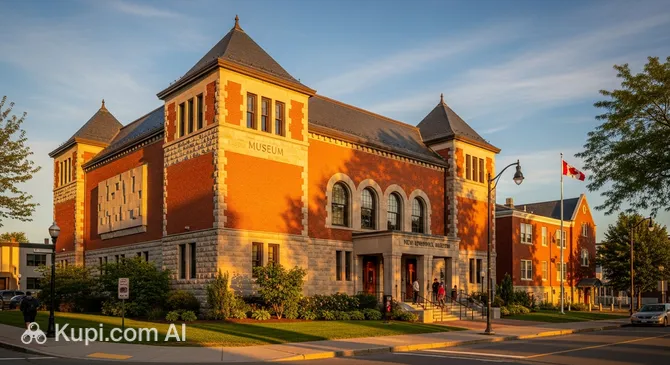
New Brunswick Museum. Source: Kupi.com AI

It is not just an exhibition space, but a true scientific and educational center. Within the three-story building lie rich collections of 19th-century applied arts, rare geological finds, and biological specimens. The museum prides itself on its mission to study and preserve the province's unique heritage, making it accessible and engaging for every traveler.

One of the museum's primary highlights is the famous Hall of Whales. Here, visitors can come face-to-face with the giants of the deep and learn fascinating facts about the fauna of the Bay of Fundy and the Gulf of St. Lawrence. The museum harmoniously combines art, history, and science, turning a simple stroll into a captivating exploration.

Contacts

To find the latest information on special exhibitions or educational programs, you can contact the museum administration directly. The museum is conveniently located and easy to find by following the city's navigation signs.

Address277 Douglas Ave, Saint John, NB E2K 1E5, Canada
Phone+1 506-643-2300
Official websitewww.nbm-mnb.ca

What to Do

Once inside, be sure to head to the Hall of Whales. This impressive space allows you to appreciate the scale of the marine life from the Bay of Fundy and the Gulf of St. Lawrence. Interactive elements and detailed whale skeletons make this part of the exhibition particularly popular with families and nature lovers.

Art lovers should dedicate time to the 19th-century applied arts collection. It features rare examples of furniture, fine ceramics, and paintings that tell the story of the daily life and aesthetic preferences of Maritime residents from centuries past. Each piece is a living testament to the craftsmanship of that era.

For those interested in the mysteries of our planet, the museum offers extensive geological and biological galleries. Here, you can trace the evolution of life in the region, see ancient fossils, and learn how New Brunswick's landscape was shaped over millions of years. The variety of galleries across three floors ensures that everyone will find something truly fascinating.

Getting There

Getting to this cultural landmark in Saint John is easy. The museum is located at 277 Douglas Ave, in close proximity to the historic center and the scenic Bay of Fundy. If you are traveling through a country as vast as Canada, a visit to this historic museum is a great addition to an East Coast itinerary.

For those who prefer public transport, city buses in Saint John run past Douglas Avenue. You can also always use a taxi or ride-sharing service from the downtown area—the trip takes only a few minutes.

If you enjoy walking, the route from the main streets to the museum allows you to enjoy the city's architecture, though keep in mind the path may be uphill. Parking spaces are available near the main building for those traveling by car.

History & Facts

The history of this place began back in 1842 when the prominent geologist and inventor Abraham Gesner founded the Museum of Natural History. Initially, the collection of rare rocks and minerals was housed in a small room at the Mechanics' Institute. Remarkably, this modest collection laid the foundation for one of the oldest museum institutions in the country.

The organization received its official status as a provincial museum and its current name—the New Brunswick Museum—in 1929. A year later, in the 1930s, the museum officially opened its doors in a purpose-built building on Douglas Avenue, which remains an important architectural and scientific landmark today.

In the early 1990s, due to the constant growth of the collections and visitor numbers, the museum significantly expanded its exhibition space. Today, it is recognized as one of the pioneers of museology in North America, playing a key role in preserving the cultural and natural heritage of the region for many generations of researchers.

Time Needed

To explore all three floors at a leisurely pace and immerse yourself in the region's history, a typical visitor will need about 2–3 hours. This is enough time to explore the main art galleries and get acquainted with the natural science exhibits.

If you plan to study the applied arts collections in detail or are visiting with children who will likely want to spend more time in the Hall of Whales, it is worth setting aside half a day for your visit. The museum encourages thoughtful observation, so you won't want to rush.

Working Hours

The museum's operating hours may vary depending on the season, special events, or public holidays. To ensure your trip goes perfectly, we recommend checking the information on the official website before your visit.

Generally, the museum follows standard daytime hours, but schedules may be extended during the summer or for temporary exhibitions. Checking in advance will help you plan your day in Saint John properly.

Nearby

A visit to the museum can easily be combined with exploring other interesting sites that Saint John has to offer. Exploring the surrounding area will help you dive deeper into the atmosphere of this port city and learn more about its fortifications and historic architecture.

NameDistance (km)
Place Fort LaTour0.8
Fort Howe National Historic Site1.4
Old City Hall of Saint John1.6
Prince William Streetscape Marker1.6
Three Sisters Lamp1.7
Carleton Martello Tower National Historic Site2.0
Historic Saint John County Court House2.1
Barrack Green Armories2.3
Courtenay Bay Breakwater Lighthouse3.2
Howe’s Cave3.8

Reached the end of the page?

That means the route is fully explored