Support

Whitehorse Airport

About the Airport

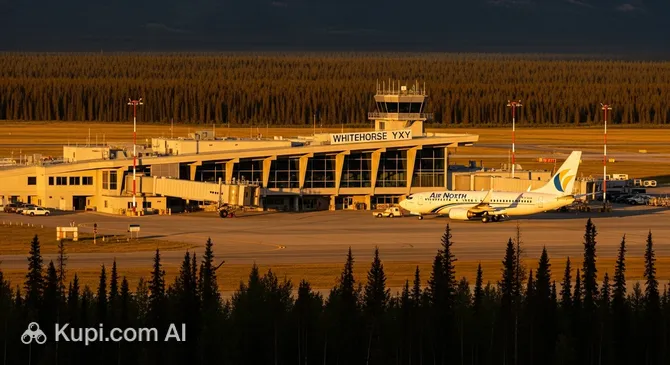
Whitehorse Airport. Source: Kupi.com Binoculars

Erik Nielsen Whitehorse International Airport (YXY) is not merely an air harbour, but a true gateway to the wild and majestic nature of the Yukon. Built in the 1940s as part of the Northwest Staging Route, today it serves as the territory's main transport hub, welcoming travellers from all over the world. The airport combines modern functionality with a cosy atmosphere that reflects the spirit of the Canadian North, serving as the starting point for unforgettable adventures.

IATA Code YXY
ICAO Code CYXY
City Whitehorse
Distance to centre 6 km
Status International
Annual Passengers Over 400,000
Popular Airlines Air North, Air Canada, WestJet
Schedule "Whitehorse Airport" Online Board

Despite its relatively small size, Whitehorse Airport possesses everything necessary for a comfortable journey. It is a key hub for Air North, which connects the Yukon capital with remote settlements and major cities across Canada. For the convenience of passengers, car rental services and taxis operate here, and there are transport links to the city via public transport. This makes Erik Nielsen Airport a convenient and efficient launchpad for exploring this unique northern region.

Contact Information

Below you will find contact details for Erik Nielsen Whitehorse International Airport (YXY), which will assist you in planning your trip and resolving any queries.

  • Official Website: yukon.ca/en/whitehorse-international-airport — here you will find the most up-to-date information on flights, services, and airport regulations.
  • Information Desk Phone: +1 867-667-8440. This number is used for general enquiries and contacting the airport administration.
  • Airport Address: 75 Barkley-Grow Crescent, Whitehorse, Yukon, Y1A 0M3, Canada.
  • Email: An official email address for general enquiries is not published. It is recommended to use the contact form on the website or the telephone for communication.
  • Social Media: You can follow news and airport updates on its official Facebook page.
  • Lost Luggage Information: If your luggage has been lost or damaged, you should contact your airline's representative directly. Airport staff do not handle the tracking of checked baggage.
  • Lost & Found (items lost in the terminal): For personal items left within the airport building (excluding the aircraft), please contact security via the main phone number.

How to Get to the Airport

Erik Nielsen Whitehorse International Airport (YXY) is located just a few kilometres from the city centre, making it easily accessible for travellers. You can reach the terminal in several ways, each with its own features.

Taxis and Transfers

The simplest and fastest way to reach the airport is by taxi. A trip from the centre of Whitehorse will take approximately 10–15 minutes. The cost of the journey is usually between 20–25 Canadian dollars. This is a particularly convenient option if you are travelling with a large amount of luggage. Furthermore, many hotels in the city offer paid or complimentary shuttles for their guests — we recommend checking this possibility in advance.

Public Transport

There is no direct bus route that enters the airport grounds in Whitehorse. Some city buses travel along the Alaska Highway, which passes near the airport, but you would have to walk about 15-20 minutes from the nearest stop to the terminal. This option may be inconvenient, especially with suitcases or in poor weather, so for most tourists, it is not the optimal choice.

Car Rental and Parking

If you have been exploring the vastness of the Yukon in a rental car, you can return it directly before your flight. Most major rental agencies have counters within the airport building. For those arriving at the airport in their own vehicle, convenient parking is provided. There are zones for both short-term and long-term parking, and finding a free space is usually not difficult. Travelling around Canada by car is a popular choice, and the airport infrastructure caters to this.

Terminals and Map

Whitehorse Airport (Erik Nielsen Whitehorse International Airport) is a modern and compact aviation hub serving the Yukon capital and surrounding territories. Its structure is extremely simple and intuitive, making it very convenient for travellers.

The airport has just one main terminal, which handles both domestic and international flights. The terminal building is single-level, so you will not need to move between floors with luggage. All key zones are located in a logical sequence, eliminating the possibility of getting lost. Transfers between terminals do not exist as they are unnecessary.

The terminal layout is very straightforward:

  • Departure Zone: Upon entering the terminal, you immediately find yourself in the check-in hall, where airline counters are located. After completing check-in and dropping off luggage, you proceed to the centrally located security screening point. Beyond that, you will find yourself in a comfortable waiting lounge with boarding gates.
  • Arrival Zone: The hall for arriving passengers is in another part of the building. The baggage claim belt and customs control counters for international flights are located here. Immediately after collecting your suitcases, you exit into the general hall, where car rental offices and the exit to the car park are found.

Despite its modest size, the Whitehorse Airport terminal has its own unique features. Interesting exhibits dedicated to the region's history are displayed inside the building, including a historic locomotive from the White Pass & Yukon Route company. The airport's main "signature feature" is a Douglas DC-3 aircraft mounted on a pedestal which acts as a weather vane — it is one of the largest weather vanes in the world.

Check-in and screening procedures at Whitehorse Airport usually proceed very quickly due to the low passenger traffic. Nevertheless, it is recommended to arrive at the airport at least 90 minutes before a domestic flight and 2-3 hours before an international one. This time will be more than sufficient to complete all formalities without rushing, enjoy a coffee, and view the local art objects.

Airport History

The history of Erik Nielsen International Airport in Whitehorse (YXY) is closely intertwined with key events of the 20th century in North America. The airport was built in 1941-1942 and was initially a crucial link in the Northwest Staging Route. Its primary task was servicing military aircraft that Canada and the USA were ferrying to Alaska and further to the Soviet Union under the Lend-Lease programme during the Second World War.

The construction of the airport proceeded in parallel with the laying of the famous Alaska Highway. The airfield served as a vital supply base for thousands of workers and engineers creating this strategic road. After the war ended, in 1946, the airport was transferred from the military department to the jurisdiction of Transport Canada, marking the beginning of its civil era. It quickly transformed into the main transport hub connecting the Yukon with the rest of the country and the world.

Throughout its history, the airport has been modernised repeatedly. In 1985, a new, more modern terminal building was opened to cope with growing passenger traffic caused by the development of tourism and the mining industry. In 2010, the terminal was expanded and renovated again. The runway was also lengthened to accommodate larger jet aircraft, such as the Boeing 737, which regularly operate flights to Whitehorse today.

Among interesting facts from the airport's history, it is worth noting that in 2008 it was officially renamed in honour of Erik Nielsen, who long represented the Yukon in the Canadian Parliament. Furthermore, the Yukon Transportation Museum is located on its grounds, where one can see unique exhibits recounting the history of transport in this harsh but beautiful land, including an aircraft from the Second World War era.

Services and Amenities

Despite its relatively small dimensions, Whitehorse International Airport (YXY) offers passengers the necessary range of services for a comfortable wait for their flight. The terminal features a restaurant where one can have a snack or a full meal, as well as a gift shop offering locally produced goods, books, and essential items.

For the convenience of travellers, free Wi-Fi is available throughout the airport. If you need to recharge your gadgets, special charging stations are provided in the waiting lounges. Financial services are represented by ATMs. It is worth noting that currency exchange points may be absent, so it is better to exchange money in the city beforehand.

Whitehorse Airport is well-equipped for all categories of passengers. There are baby care rooms for travellers with children. The terminal is fully accessible for passengers with reduced mobility: there are ramps and specially equipped restrooms, and staff are always ready to provide necessary assistance. In case of feeling unwell, one can seek basic medical aid.

Although there are no VIP lounges or hotels within the airport itself, several hotels are located in the immediate vicinity and often provide complimentary transfers for their guests. Specialised conference rooms or business centres are absent in the terminal, so for conducting business events, it is better to utilise venues in hotels or in the city of Whitehorse itself.

Where to Eat

Whitehorse Airport (YXY) is a small regional airport, so the choice of dining establishments here is limited but quite capable of satisfying travellers' needs. The main opportunities for a snack and a full lunch are concentrated in the main terminal building, in the area accessible to all visitors before passing security control (landside).

The main and, in fact, the only establishment in the airport is the Yukon Provisions cafe. This is a cosy place that focuses on using local produce, providing an excellent opportunity to get acquainted with Yukon gastronomy right before departure. Here you can order freshly brewed coffee, tea, pastries, sandwiches, salads, and soups. The menu often features dishes with local flair, for example, pastries with berries or sandwiches with local meat delicacies. Prices here are moderate, standard for Canadian airports.

For those looking for a quick bite, ready-made sandwiches, yoghurts, or fresh pastries are perfect. If you have time for a full lunch, pay attention to the hot soups of the day or hearty sandwiches prepared on site. Regarding dietary restrictions, vegetarian options, such as salads or sandwiches with vegetables, are usually found in the cafe. It is best to check with the staff regarding the availability of gluten-free or specific dietary options (such as Halal). The cafe's opening hours are tied to the flight schedule and usually cover all departures and arrivals.

It is important to remember that the main restaurant is located before the screening zone. After passing security control (airside), opportunities to purchase food and drinks may be limited to a few vending machines with snacks and beverages. Therefore, if you wish to eat properly, it is better to do so before you head to the departure zone.

Tips for Travellers

To ensure your journey through Whitehorse Airport goes smoothly and without unnecessary worry, take advantage of our tips. This small but important transport hub of Northern Canada has its own features, knowing which will help you save time and nerves.

Arrival Time: Despite not being the busiest airport in the world, it is recommended to arrive in advance. For domestic flights, allow 1.5-2 hours before departure, and for international ones — at least 2-3 hours. This time will be sufficient for a calm passage through all procedures.

Check-in and Security: The simplest way to save time is to complete online check-in for your flight, which usually opens 24 hours before departure. Security control points here operate according to standard rules: have your boarding pass and ID ready in advance, and remove electronics and liquids from your hand luggage.

Seat Selection: Do you want to enjoy breathtaking views of the endless Yukon expanses from a bird's eye view? Definitely choose a window seat. If freedom of movement around the cabin is more important to you, then your ideal seat is by the aisle.

Hand Luggage: It is prohibited to take sharp objects and liquids in containers exceeding 100 ml in hand luggage. All liquids must be packed in a single transparent bag. Electronics, power banks, and valuables should always travel with you in the aircraft cabin, not in checked luggage.

Transfer Passengers: If you have a connecting flight, check with the airline in advance whether your luggage will be automatically checked through to the final destination. In most cases in small airports like Whitehorse, you will not have to walk far to the next boarding gate.

Customs Control: Upon arrival on an international flight, you will have to pass customs control. Keep your passport, visa (if necessary), and completed declaration card ready. Be prepared to answer standard questions about the purpose of your visit and the duration of your stay.

Saving Time and Money: Travel light to avoid excess baggage fees. Take an empty reusable water bottle with you — you can fill it after passing security control. You can also bring a light snack to avoid spending money in the airport cafe.

Flight Delays: In case of a flight delay or cancellation, first contact your airline representative for up-to-date information. Find out about your rights to the provision of meals or accommodation. Although the airport is small, there are cafes and waiting areas where you can pass the time.
Reached the end of the page?

That means the route is fully explored