Support

Wunnummin Lake Airport

About the Airport

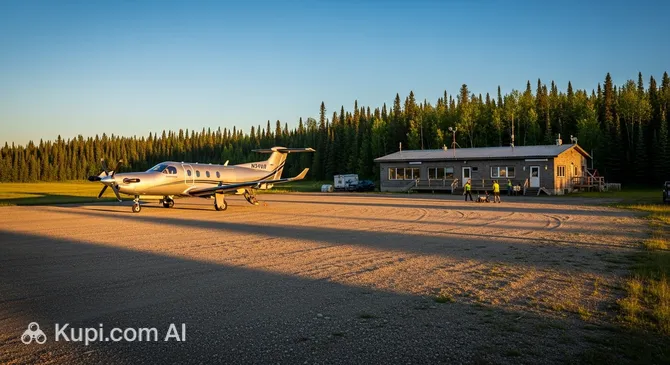
Wunnummin Lake Airport. Source: Kupi.com Binoculars

Wunnummin Lake Airport (WNN) is not merely a transport hub, but a true "lifeline" for the First Nations community of the same name in the heart of Northern Ontario. No familiar high-speed highways lead here, so this modest air harbour serves as the main window to the world, ensuring a reliable connection with the "mainland" amidst the boundless forests and lakes of the Canadian Shield. Arriving here offers an opportunity to witness the harsh yet captivating beauty of the wild nature from a bird's-eye view, as the plane lands on a gravel strip surrounded by untouched boreal forest. For local residents, this airport is a symbol of reliability and the only year-round means of communication with the outside world.

IATA Code WNN
ICAO Code CKL3
City Wunnummin Lake
Distance to centre ~4 km
Status Regional
Passengers per year Data unavailable (small aviation)
Schedule Check with air carriers

Airport Features and Highlights

Wunnummin Lake Airport plays a critically important role in the life of the region. It ensures the delivery of food, medicine, and mail, and provides access to emergency services for residents of remote territories.

  • Compactness and speed: There are no queues or complex security procedures typical of metropolises here; boarding and disembarking take mere minutes, often literally a few steps from the terminal.
  • Scenic views: The approach for landing offers passengers unique views of the complex system of lakes and dense forests of Northern Ontario, making the flight a memorable event for any traveller.
  • Northern aviation atmosphere: The airport primarily services reliable turboprop aircraft, specially adapted for flying in harsh northern conditions, which adds a special flavour to the journey.

Contact Information

  • Official Airport Website: There is no separate web resource. Brief technical information is available on the website of the Ministry of Transportation of Ontario (the airport operator) or on the Wunnummin Lake community portal.
  • Inquiry Service Phone: +1 (807) 632-5491 (Airport Manager), +1 (807) 442-2559 (Community Administration).
  • Airport Address: Wunnumin Lake Airport, Wunnumin Lake, Ontario P0V 2Z0, Canada (located approximately 3.7 km south of the settlement).
  • Email: There is no general address for passenger inquiries (calling by phone is recommended).
  • Airport Social Media: There are no official communities on social networks.
  • Lost Luggage Information: The airport does not have its own lost and found service. For issues regarding delayed or lost luggage, you must contact the air carrier directly (the main operator is Wasaya Airways).
  • Passenger Support Contacts: To resolve issues regarding booking and flight status, please contact Wasaya Airways (tel. +1 877-492-7292).

How to Get to the Airport

Transport accessibility to Wunnummin Lake Airport (WNN) has unique features dictated by its location in a remote part of Northern Ontario. Since the settlement is not connected to the provincial road network by year-round highways, familiar urban schemes do not work here. Travellers should take care of the logistics of moving from the runway to their destination in advance.

Transfers and Taxis

In Wunnummin Lake, there are no familiar taxi services (like Uber or city taxi fleets) or transfer booking desks in the terminal. The distance from the airport to the community centre is about 4 kilometres along a gravel road.

  • Arrangement with the host: This is the most reliable and common method. If you are flying at the invitation of the community, for work, or to visit local institutions, the transfer is usually organised by those meeting you. Be sure to coordinate this before departure.
  • Private rides: Local residents often help with transport for a small fee. The cost of such a trip is negotiable and may be approximately 20 to 40 CAD.
  • Travel time: The trip by car takes about 10–15 minutes.

Public Transport

Due to the small size of the settlement and its isolation, public transport (buses, trains, metro) is completely absent here. Small aviation remains the only link to the outside world for passengers.

Car Rental

There are no offices of international rental companies (Hertz, Avis, etc.) at Wunnummin Lake Airport. It is impossible to rent a car on arrival. Vehicles only reach the settlement via the winter road or cargo flights, so all cars here are privately or municipally owned.

Parking at the Airport

There is a small open parking area near the airport building. It is not equipped with barriers or video surveillance systems.

  • Cost: Parking is generally free of charge.
  • Features: Local residents often leave their cars, snowmobiles, or ATVs here before flying to other cities.

Winter Roads and Alternative Routes

It is important to know that during the winter period (usually from late January to March), a temporary road over ice and snow (the "winter road") functions, linking Wunnummin Lake with southern cities. However, this path is intended for experienced drivers and cargo transport, not for ordinary tourist transit.

The main transfer hub for flights to this region is Sioux Lookout Airport. It is from there that most flights to remote northern communities originate. If you are planning a complex route through the region, information about other nearby airports may also be useful to you:

When planning your trip, always consider weather conditions, as fog or blizzards can make adjustments to flight schedules and transfers.

Terminals and Map

Structure and Features of Terminals

Wunnummin Lake Airport (WNN) represents a typical air hub for remote northern regions of Canada. There are no complex architectural solutions or multi-level walkways here. All airport infrastructure is concentrated in one small passenger terminal. It is a single-storey building serving as a shelter for passengers and a workspace for airport and airline staff.

Layout and Navigation

Orienting yourself at Wunnummin Lake Airport is extremely simple. Thanks to the compact size of the building, navigation here is intuitive, and it is impossible to get lost.

  • Check-in Zone: The check-in counter is located directly in the main hall, immediately after entering the building.
  • Waiting Area: This is a small common space with seating where passengers wait for boarding. The windows offer a view of the apron and the runway.
  • Restrooms: Washrooms are located inside the terminal and are accessible to all visitors.

Departure and Arrival Zones

Unlike large international airports, there is no strict separation of flows into different floors or wings of the building here. All processes take place in a single space, creating an almost home-like atmosphere.

  • Departure: After passing check-in, passengers wait for the boarding announcement in the general hall. The boarding gate is a simple door leading directly onto the airfield.
  • Arrival: Passengers arriving at Wunnummin Lake descend the aircraft stairs and walk to the terminal building. The distance from the plane to the entrance is only a few dozen metres.
  • Baggage Claim: There are no conveyor belts here. Luggage is unloaded by airport staff manually and handed to passengers either at a designated area near the entrance or brought into the building if there is severe frost outside.

Transfers Between Terminals

Since the airport consists of just one terminal, no walkways, shuttles, or underground trains exist here. All necessary services are within walking distance of each other.

Processing Times

The absence of long queues and complex security systems makes the departure process very quick. However, considering the specifics of northern transport, it is recommended to adhere to the following rules:

  • Check-in: Usually begins 1 hour before and ends 30–45 minutes prior to departure. Airlines ask passengers not to be late, as the flight schedule can be tight.
  • Security Screening: The screening procedure here is simplified compared to hubs like Toronto, but basic safety rules are observed. Document checks and luggage weighing take literally a few minutes.

Recommendations for Passengers

The main feature of the terminal is its utilitarian nature. There are no Duty Free shops, cafes, or ATMs here. While waiting for a flight, consider several points:

  • Dress for the weather: Boarding and disembarking are done outdoors. In winter, temperatures can be extremely low, and the wind on the open space of the airfield feels stronger.
  • Stock up on snacks: If your flight is delayed (which happens due to weather), there will be nowhere to buy food in the terminal. It is recommended to carry water and light snacks with you.
  • Connectivity: Mobile coverage is usually available in the terminal building, but the availability of public Wi-Fi is not guaranteed.

Airport History

History: From Ice Landings to a Reliable Air Harbour

The history of aviation in the Wunnummin Lake region began long before the construction of the modern terminal. In the mid-20th century, when the development of the Canadian North was just gaining momentum, pilots of so-called "bush flying" used natural terrain. In summer, floatplanes landed directly on the lake water, mooring at wooden docks, and in winter, ski landing gear allowed the use of the frozen surface as an ideal runway.

Stages of Formation and Development

The full-fledged history of Wunnummin Lake Airport (WNN) as a ground infrastructure facility began during the implementation of the Ontario government programme to ensure accessibility to remote settlements (Remote Northern Transportation Office).

  • Runway Construction: A key moment was the decision to build a permanent gravel runway. This allowed the community to break dependence on seasonality (periods of freezing and thawing ice), when the community was completely cut off from the outside world.
  • Transfer of Management: The airport joined the network managed by the Ministry of Transportation of Ontario (MTO). This event guaranteed that the facility would receive regular funding and maintenance corresponding to Canada's federal safety standards.
  • Technical Equipment: An important stage of modernisation was the installation of navigational lighting equipment. The appearance of lights on the runway allowed for the reception of medical evacuation flights (Medevac) during dark hours, which has saved many lives.

Significant Events and Role in Region's Life

The airport has repeatedly become the centre of dramatic events related to natural disasters. Located in a zone of dense boreal forests, the region is prone to seasonal fires.

In the history of the air harbour, there were several critical moments when it worked at the limit of its capabilities, organising mass evacuations of the population. During such periods, the modest gravel strip received one aircraft after another, evacuating women, children, and the elderly to safe cities (Thunder Bay or Sioux Lookout). These operations cemented the airport's status as a strategically important civil protection facility.

Records and Achievements

Although Wunnummin Lake Airport cannot boast the passenger traffic of metropolises, it has its own unique achievements:

  • Uninterrupted operation in extreme conditions: The airport maintains operational activity at temperatures dropping below -40°C. Technical services and staff demonstrate true heroism, clearing the runway of snow drifts, the height of which can reach several metres over the winter.
  • Logistical Hub: The airport holds a record for importance to the local economy — practically 100% of perishable products and urgent cargo are delivered to the community through these air gates.

Interesting Historical Facts

The existence of an airport in such a remote place has given rise to a number of unique features that have become part of its history:

  • Loyalty to Gravel: Throughout its existence, the runway has never been paved with asphalt. The use of specially compacted gravel is a conscious engineering choice. Such a surface better withstands ground movements in permafrost conditions and extreme temperature changes than rigid asphalt, which would quickly become covered in cracks.
  • Fuel Expedition: Historically, the supply of aviation fuel for the airport is brought in only once a year. This happens in winter when the temporary ice road ("winter road") opens. Over several weeks, convoys of trucks deliver the annual supply of kerosene, on which the airport's operation depends for the entire subsequent 12 months.
  • Local Staff: Traditionally, the majority of airport staff are residents of the Wunnummin Lake community itself. Knowledge of local weather conditions and landscape features is passed down from generation to generation, which helps ensure flight safety better than any manuals.

Services and Amenities

Terminal Services and Infrastructure

For passengers planning a flight through Wunnummin Lake Airport (WNN), it is important to remember: this is a remote northern outpost, not a commercial tourist hub. The level of comfort and range of services here are minimal and correspond to the harsh conditions of the region. The terminal is designed exclusively for short-term flight waiting and protecting people from bad weather, so amenities familiar to urban airports are absent here.

Dining and Shops

Gastronomic infrastructure in the terminal building is completely absent. You will not find cafeterias, restaurants, coffee shops, or vending machines with snacks here.

  • Recommendation: It is strongly recommended to arrange food and drinks in advance. If you have a flight, be sure to take bottled water, a thermos with tea, and snacks (sandwiches, energy bars) with you, especially if travelling with children. The nearest grocery store (Northern Store) is located in the settlement itself, approximately 4 km from the runway.
  • Shops: There are no souvenir shops, clothing stores, or newsstands at the airport. Essential goods can only be purchased in the village before arriving at the airport.

Connectivity and Finances

Regarding communication and financial operations, travellers should also count on autonomy.

  • Wi-Fi and Internet: Public Wi-Fi is not officially provided in the terminal. Internet access may be unstable or absent altogether.
  • Charging Devices: There are no specialised charging stations for gadgets. A few standard power outlets may be found in the waiting area, but their availability is not guaranteed. It is recommended to carry a fully charged portable battery (Power Bank).
  • ATMs and Currency Exchange: There are no ATMs or currency exchange points in the airport building. Payment for taxi services (private rides) is usually made in cash. Ensure you have a sufficient supply of Canadian dollars (CAD) in small denominations before arriving in the region.

Comfort and Waiting

The concept of "VIP service" is not applicable in Wunnummin Lake. The airport is democratic and simple.

  • Waiting Halls: The terminal has one general waiting hall. It is heated, equipped with simple seats, and provides protection from wind and cold. There are no business lounges or zones of enhanced comfort.
  • Business Services: Conference rooms, printing, or fax services are absent at the airport. If you need a workspace, it should be sought in the administrative buildings of the community by prior arrangement.

Special Categories of Passengers

Airport staff are known for their responsiveness and readiness to help, which compensates for the lack of automated systems.

  • Passengers with reduced mobility: The terminal building is single-storey, which facilitates movement in wheelchairs (no stairs or elevators). However, boarding the aircraft is carried out from ground level via built-in stairs. There are no special ambulifts, so the boarding of passengers with reduced mobility is carried out with the help of airport and airline staff. It is recommended to notify the carrier of the need for assistance at least 48 hours before departure.
  • Passengers with children: There are no mother and child rooms or play areas in the terminal. Toilets are of basic configuration. Parents should plan entertainment for children in advance for the duration of the wait.
  • Medical Assistance: There is no medical centre or pharmacy at the airport itself. First aid can be provided by staff (first aid kit available). Full medical service (Nursing Station) is available only in the village.

Accommodation (Hotels)

Wunnummin Lake Airport does not have its own hotel or capsule hotel. The nearest accommodation options are located exclusively in the settlement itself and are specific in nature.

  • At the Airport: Overnight stays in the terminal are not provided; the building may close at night after servicing the last flight.
  • In the Village: There are no chain hotels in Wunnummin Lake. Accommodation is possible only in community guest houses or special premises for visiting specialists (teachers, doctors).

Important: Booking accommodation through popular online aggregators (Booking, Expedia) is impossible here. The issue of overnight stays must be resolved in advance through the host party or the Community Administration (Band Office) by phone. Arriving without a confirmed place of residence is extremely risky.

Where to Eat

Restaurants and Cafes: The Reality of the Remote North

Travellers arriving at Wunnummin Lake Airport (WNN) or departing from it must realistically assess the capabilities of the local infrastructure. The airport terminal represents a small waiting point where catering outlets are completely absent. There are no amenities familiar to city dwellers here, so the issue of food and drinks requires prior planning.

In the terminal building (both in the check-in area and the waiting area), you will not find:

  • Cafes, restaurants, bars, or fast food.
  • Coffee shops or bakery kiosks.
  • Vending machines with snacks, water, or soda.

Local Cuisine and Delicacies

Since there are no dining establishments at the airport itself, it is impossible to try local dishes right before departure. However, the region possesses unique gastronomic traditions that you can experience if you are a guest in the community.

If you are invited to the table by local residents, you might try:

  • Bannock: Traditional bread of Indigenous peoples, fried in a pan or baked. It is a hearty and simple dish, often served with jam made from local berries.
  • Gifts of Nature: The region's cuisine is based on seasonal hunting and fishing. Freshly caught walleye or game dishes are what Northern Ontario is famous for, but this can only be found in home kitchens, not in public catering.

Dietary Requirements and Special Requests

In conditions of the airport's complete isolation from catering services, concepts such as "vegan", "gluten-free", or "Halal" menus are not applicable to the terminal service.

Critically Important: Travellers with strict dietary restrictions, allergies, or special needs (for example, Halal or baby food) must bring their entire supply of products with them. Even in the village's only store, the assortment of specialised goods (lactose-free milk, gluten-free bread) may be absent or very expensive.

Recommendations: How to Organise Meals

To ensure your flight and waiting time pass comfortably, we recommend following a strategy of complete autonomy:

  • Basic Supply: Always have an "emergency kit" in your carry-on luggage: a bottle of water, energy bars, nuts, crackers, or chocolate. Remember that small aviation flights may be delayed due to weather, and there will be nowhere to buy food.
  • Hot Drinks: It can be cool in the terminal. A good thermos with hot tea or coffee, filled in advance, will be your best friend while waiting for boarding.
  • Full Meal: Plan your meal before arriving at the airport. If you are flying in transit through Sioux Lookout Airport, it is strongly recommended to eat or buy sandwiches for the road there, as it is the last point with developed service on the route.

Tips for Travellers

Recommendations on Arrival Time

Despite the fact that Wunnummin Lake Airport (WNN) is very small and there are no long queues, being late for a flight is categorically unacceptable. Flight schedules in northern regions are often tight, and pilots strive to use "weather windows" as efficiently as possible.

  • Optimal Time: Arrive at the airport 45–60 minutes before departure. This time is quite sufficient to check in and drop off luggage without rushing.
  • Check-in Closure: Remember that airline check-in counters (most often Wasaya Airways) close strictly 30 minutes before departure. If you are late, the plane will not wait, and the next flight might only be tomorrow.

Check-in and Screening Features

Procedures at WNN differ from those passengers are used to in Toronto or Montreal. Everything is simpler here, but weight requirements are stricter.

  • Weighing: Be prepared for the fact that not only your luggage will be weighed, but you yourself (along with your carry-on baggage). This is a standard safety procedure for small aviation, necessary for the correct balancing of small aircraft.
  • Documents: Keep your identification (passport or Canadian ID) handy. Verification is carried out manually by an airline employee.
  • Security: There are no metal detector frames or body scanners here. Screening is often conducted visually. However, this does not mean rules can be violated: any prohibited items will be confiscated.

Seat Selection on the Plane

Flights to Wunnummin Lake are operated on turboprop aircraft (for example, Dash 8, Beechcraft 1900, or Pilatus PC-12). Online check-in with seat selection is usually unavailable.

  • Free Seating: Often the principle of "first come, first served" applies. If you want to choose the best seat, be at the start of the boarding queue.
  • Balancing: Sometimes the crew may ask you to move to a specific seat for even weight distribution throughout the cabin. Follow instructions unquestioningly.
  • Best Views: Try to sit by the window. Flying over the taiga, hundreds of lakes, and winding rivers of Northern Ontario is a free and breathtaking excursion.
  • Noise: It is quite noisy in turboprop aircraft. If you are sensitive to sounds, bring earplugs or noise-cancelling headphones. Noise is usually felt less in the tail section.

Carry-on Baggage: Dos and Don'ts

The main limitation is the size of the overhead bins. In small planes, they are tiny or absent altogether (in this case, carry-on luggage is placed under the seat in front).

  • Soft Bags: It is better to use a backpack or a soft bag rather than a rigid "cabin size" suitcase. Soft luggage is easier to fit into limited space.
  • Valet Service: Often carry-on luggage is taken at the aircraft stairs (SkyCheck) and returned immediately after landing. Do not leave fragile items, documents, or electronics in it.
  • Prohibitions: It is strictly forbidden to carry bear spray, flammable liquids, and hunting knives in the cabin. All this must be checked in as luggage or sent via cargo flight.

Tips for Transit Passengers

Wunnummin Lake is a destination point, not a transit hub. However, almost all passengers fly here with a transfer, most often through Sioux Lookout Airport or Thunder Bay.

  • Allow Extra Time: When buying tickets with a transfer to the "mainland," leave at least 3–4 hours between flights. Weather in the north is unpredictable, and a departure delay from WNN of a couple of hours is a common occurrence.
  • Single Ticket: Try to book the flight on a single ticket. In case of a no-fly situation due to weather, the airline will be obliged to rebook you on the next flight for free.

Customs Control

The airport serves only domestic flights. There is no border or customs control here.

If you are an international tourist, you will go through all customs formalities at the first international airport of arrival in Canada (Toronto, Vancouver, Winnipeg). At Wunnummin Lake upon arrival, you simply collect your things and exit.

How to Save Time and Money

  • Cash: There are no ATMs. Withdraw cash in the departure city in advance. You will need it to pay for a private transfer to the village (20-40 CAD).
  • Food Autonomy: Food prices in northern settlements are very high due to complex logistics. Bring a supply of snacks, tea, and coffee with you — this will save you a significant amount.
  • Transfer: Arrange a meeting in advance through the host party or acquaintances in the community. Finding a car "on the spot" can take a lot of time, as taxis do not wait at the terminal.

What to Do in Case of Flight Delay

Delays due to weather conditions (fog, blizzard, low cloud cover) happen often. Infrastructure for comfortable waiting is minimal, so be prepared:

Action Plan:

  1. Clarify Information: Contact the airline representative. There may not be a permanent employee at the counter in the airport, so keep the carrier's hotline number handy.
  2. Entertainment: Wi-Fi might not work. Download movies, music, or take a paper book in advance.
  3. Warmth: If the flight is delayed in winter, do not go outside unnecessarily. The terminal is heated, but doors open frequently. Keep a warm jacket handy, even if you are inside.
  4. Food: As mentioned earlier, there is nowhere to buy food. Your personal supply of water and sandwiches will be a lifesaver if you have to wait for departure for several hours.

Reached the end of the page?

That means the route is fully explored