Support

Sachigo Lake Airport

About the Airport

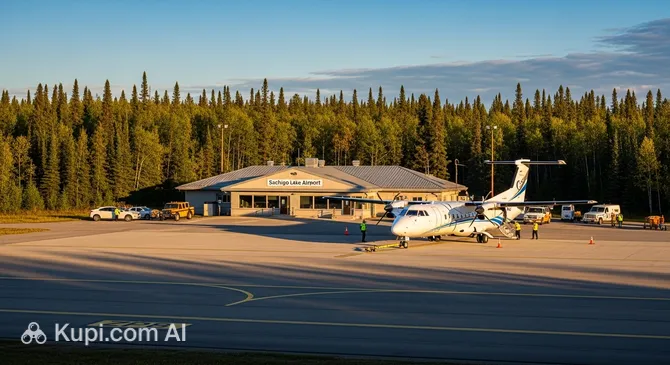
Sachigo Lake Airport. Source: Kupi.com Binoculars

Sachigo Lake Airport is not merely a transport hub, but a true "lifeline" for a remote community in the harsh forests of Northern Ontario. Hidden among the endless lakes and taiga of the Canadian Shield, this small airfield provides the settlement's only reliable year-round connection to the rest of the world. There are no glass terminals or crowds of thousands here: arriving here offers a unique sense of solitude and immersion in Canada's pristine nature.

IATA Code ZPB
ICAO Code CZPB
City Sachigo Lake
Distance to Centre ~3 km
Status Domestic
Annual Passengers Low passenger flow (serves local flights)
Schedule Check with the airline

Airport Features and Highlights:

The airport plays a critically important role for the region, receiving flights with food, medicine, and passengers, especially during periods when winter roads (ice roads) are inaccessible. The runway here is gravel, which is typical for northern aviation, and requires special skill from pilots, particularly during the winter season.

Travellers should note that Sachigo Lake is a "dry" community, so strict luggage screening rules regarding alcohol are in effect at the airport. Despite the modest size of the terminal, the staff is known for their hospitality, and the views during the approach over the Ontario lakes are mesmerizing in their beauty.

Contact Information

  • Official Airport Website: There is no separate website. Reference information can be found on the official resource of the Ministry of Transportation of Ontario.
  • Information Service Phone: +1 807-595-2527 (Community Administration / Band Office)
  • Airport Address: Sachigo Lake Airport, Sachigo Lake, ON P0V 2P0, Canada (approximately 3 km from the settlement).
  • Email: There is no direct address for the terminal. For administrative questions, it is recommended to contact the Sachigo Lake First Nation community office.
  • Airport Social Media: Official pages are absent. Current news about flights is published on the accounts of airlines serving the region (Bearskin Airlines, North Star Air).
  • Lost Luggage Information: Tracing items is handled by the air carriers. It is recommended to contact the representative of the airline with which the flight was operated.
  • Passenger Support Contacts: Support is provided through the airlines or the community administration by phone at +1 807-595-2527.

How to Get to the Airport

Transport logistics in Sachigo Lake differ significantly from the usual urban environment. Since the airport serves a small, isolated Indigenous community, there are no standard taxi services with meters, bus stops, or car rental offices here. Planning a trip from the terminal to your destination requires advance preparation.

Transfers and Taxis

The most reliable way to get from the airport to the settlement (the distance is about 3 km) is by personal arrangement. There is no official taxi service or apps like Uber in the community. Usually, guests are met by representatives of the hosting party: employees of the local administration (Band Office), school workers, medical station staff, or relatives. If you are flying for work or by invitation, be sure to inform your contacts of your arrival time in advance — you will be met right at the ramp or the exit of the small terminal building.

Sometimes local residents may give travellers a lift for a nominal fee or by agreement, but one should not count on this as a guaranteed option. The travel time to the centre of the settlement by car takes only 5–7 minutes.

Public Transport and Car Rental

Public transport is completely absent in Sachigo Lake: there are no buses, trains, or fixed-route taxis here. Also, there are no counters for international car rental companies at the airport. The road network is local and limited to the community territory (except during the winter period when ice roads function), so the need for car rental for tourists is minimal here. Movement around the village is most often done on foot or by hitching a ride.

Parking

A small open area for parking is equipped next to the airport building. It is unguarded and has no barriers or parking meters. Typically, parking here is free. It is used by local residents flying to other cities, or those meeting passengers. There is usually enough space, given the low passenger flow.

Nearest Airports

Given the remoteness of the region, "neighbouring" airports are located at a significant distance. They may be useful when planning complex routes across Northern Canada or in case an alternative landing is necessary:

Terminals and Map

Terminal Structure

Sachigo Lake Airport (ZPB) represents a classic example of small aviation in Northern Canada. The entire airport complex consists of one small passenger terminal. It is a single-storey functional building that serves as shelter from harsh weather conditions for passengers and staff. There are no aerobridges or complex multi-level transitions here — boarding and disembarking are carried out on foot, directly on the apron.

Layout and Navigation

Orienting oneself in the airport is extremely simple, as it is impossible to get lost here. The internal space of the terminal is organised as compactly as possible:

  • Check-in Zone: The flight registration counter is located immediately at the entrance. Here, airline representatives (usually Bearskin Airlines or North Star Air) check documents and accept luggage.
  • Waiting Hall: A small space with seats where passengers await boarding. The main feature of this room is a reliable heating system, which is critically important during the winter months.
  • Boarding Gate: A single door leads directly onto the runway to the aircraft.

Arrival and Departure Zones

Due to the small size of the building, arrival and departure zones in Sachigo Lake are effectively combined. Passenger flows are separated by time: arriving passengers are served first, then the boarding of departing passengers begins.
Arrival: After landing, passengers walk independently from the aircraft to the terminal building, where they can collect their luggage. There is no baggage claim belt — items are usually unloaded by staff and handed to passengers in the claim area or directly at the aircraft side (depending on the weather).
Departure: After check-in, passengers wait for the boarding call in the general hall.

Procedures and Timings

Despite the miniature size of the airport, pre-flight procedures should be taken seriously:

  • Check-in: It is recommended to arrive at the airport 45–60 minutes before departure. Check-in usually closes 30 minutes before the flight leaves.
  • Security Screening: Since Sachigo Lake is a "dry" community, special attention is paid to luggage screening for alcohol and prohibited substances. Checks can be thorough. Standard scanning equipment, like in major hubs, may not be present, so screening is often conducted manually.

Recommendations for Passengers

There are no cafes, shops, or ATMs in the terminal. Travellers should ensure they have water and a light snack in advance if a wait is expected. There are toilets in the building, but their facilities are basic. The main advice for navigation is to keep airline staff in sight and follow their instructions, as voice announcements may not be duplicated over a public address system.

Airport History

The history of Sachigo Lake Airport is inextricably linked with the development of the Canadian North and the improvement of transport accessibility for Indigenous peoples. Unlike major international hubs, the chronicle of this airfield is measured not by the opening of giant terminals, but by decades of uninterrupted service in harsh climatic conditions.

Before the appearance of full-fledged infrastructure, aviation connections with the community were seasonal. The region's first "air gates" were natural: in summer, pilots of light aircraft (the famous Canadian bush pilots) used the water surface of Sachigo Lake for landing seaplanes, and in winter, they landed on specially prepared ice. The construction of a permanent gravel strip and the transfer of the facility to the management of the Ministry of Transportation of Ontario became key stages of development. This event moved air travel from the realm of extreme adventures to the category of reliable regular transport, accessible all year round.

Throughout its history, the airport has not undergone massive architectural restructuring, but it has passed through important stages of technical modernisation. The main efforts of the authorities were directed at increasing flight safety in northern conditions. Significant improvements include the installation of modern runway lighting systems, which is critically important for a region with short daylight hours in winter, as well as the improvement of gravel surface maintenance technologies to withstand temperature fluctuations.

Interesting facts from the past and present:

  • Road of Life: Historically, the airport became the only salvation for the community during periods of thaw when winter roads (ice roads) melt, and land travel becomes impossible.
  • Unique Status: The airport has always functioned not just as a transport hub, but as a supply centre. Historically important deliveries of equipment for the construction of the school and medical centre in the settlement passed through it.
  • School of Mastery: For many Canadian pilots, flights to Sachigo Lake became part of their professional development. Landing on a short gravel strip (just over 1000 metres) in crosswind conditions requires exceptional skills that have been honed here for decades.

Today, ZPB continues to write its history, remaining a reliable outpost of civilisation amidst the wild nature and a symbol of the resilience of local residents.

Services and Facilities

Services and amenities at Sachigo Lake Airport (ZPB) correspond to the status of a small remote airfield serving an isolated northern community. Passengers should be prepared for an ascetic environment: there is no commercial zone or entertainment infrastructure familiar to urban travellers here. The terminal performs a strictly utilitarian function — providing warmth and a roof overhead before departure.

Restaurants, Cafes, and Shops

Dining outlets and shops are completely absent in the airport terminal building. You cannot buy coffee, hot food, or souvenirs here.
Important: Since flights can be delayed due to weather, it is strongly recommended to bring a supply of water and food (snacks, sandwiches) with you in advance. Also, bear in mind that Sachigo Lake is a "dry" community, so the sale of alcohol is prohibited here, and it is impossible to buy it at the airport or in the settlement.

Waiting Lounges and VIP Services

The airport features one general waiting hall for all categories of passengers. Separate VIP lounges or business lounges are not provided. The space is small but heated, with a basic number of seats. The atmosphere here is usually calm and informal.

Wi-Fi and Communication

Public Wi-Fi in the terminal may be absent or work with interruptions characteristic of northern regions. Mobile reception in the airport area is usually available, but coverage depends on the operator.
Charging Devices: There are no specialised stands for charging gadgets (charging stations). In the waiting hall, you may find a few ordinary wall sockets, but one should not count on their availability during large gatherings of people. It is recommended to fully charge devices before travelling to the airport.

Financial Services

There are no ATMs or currency exchange points in the terminal. Bank branches are also absent on the airport territory. Travellers need to have a sufficient amount of cash Canadian dollars with them, as opportunities to withdraw money or pay by card may be extremely limited even in the settlement itself.

Medical Services

A first aid post is not equipped in the airport building. There is also no pharmacy kiosk. In emergency cases, first aid can be provided by airline staff who have undergone basic training. Full medical service is available only at the settlement clinic (Nursing Station), located a few kilometres from the airfield.

Services for Passengers with Children

Specialised infrastructure for families with children (mother and child rooms, play areas) is absent. Parents should take care of food, hygiene products, and entertainment for young travellers in advance, especially considering possible waiting times for departure.

Accessible Environment

Thanks to the single-storey construction, the terminal is relatively convenient for citizens with reduced mobility — there are no stairs or lifts. However, since boarding the aircraft is done from the apron, there are no aerobridges.
Assistance with Boarding: Passengers with disabilities must notify the airline (Bearskin Airlines or North Star Air) of their needs in advance. Staff will help traverse the path from the terminal to the aircraft and board via the ramp.

Hotels and Accommodation

There are no hotels on the airport territory or in its immediate vicinity.
In the Settlement: Sachigo Lake is not a tourist centre, so there are no hotels in the usual sense (chain hotels or hostels available on booking sites) here. Accommodation is possible only by prior arrangement in guest rooms at the community administration or other institutions. For those arriving without an invitation or prior booking, finding lodging will be practically impossible.

Business Services

Conference rooms, business centres, printing, or fax services are not provided at the airport. If your trip is of a business nature, all necessary communications and meetings should be planned at the premises of the hosting organisation in the settlement.
Where to Eat

The issue of dining at Sachigo Lake Airport (ZPB) requires special attention when planning a trip. Unlike major transport hubs where passengers are accustomed to food courts and coffee shops, this small northern airfield functions in conditions of full autonomy and minimalism.

Restaurants, Cafes, and Bars

Passengers should be prepared for the fact that the single terminal building is completely devoid of any catering establishments.
There are no:

  • Restaurants or cafes;
  • Bars or pubs;
  • Coffee stands;
  • Vending machines with snacks or drinks.

The terminal is intended solely for waiting for a flight in warmth, so gastronomic infrastructure is not provided here.

Alcohol and Community Rules

It is important to remember that Sachigo Lake is a "dry" community. This means a complete prohibition on the sale and consumption of alcohol within the settlement and the airport. Accordingly, there are no bars or Duty-Free shops with alcoholic products here. An attempt to transport alcohol may lead to confiscation and fines.

Dining Recommendations: Snacks and Lunch

Since it is impossible to buy food on-site, the only strategy for the traveller is "bring everything with you".
For Departures: If you are departing from Sachigo Lake, be sure to eat before leaving your home or place of stay. It is recommended to take a light snack (sandwiches, nuts, energy bars, fruit) in your carry-on luggage, especially if a transfer is expected at another northern airport.
For Arrivals: If you are flying to Sachigo Lake from major hubs (for example, Thunder Bay or Sioux Lookout), it is strongly recommended to buy food and water at the departure airport. Flights in the north are often delayed due to weather conditions, and having a supply of provisions will make the wait much more comfortable.

Dietary Requirements (Halal, Vegetarian, Gluten-Free)

As there are no sales points at the airport, the responsibility for maintaining a diet lies entirely with the passenger. Travellers with specific dietary needs (vegans, those with allergies, or those observing Halal) must prepare appropriate products in advance and bring them in containers. There are usually no restrictions on carrying solid food on domestic flights, but liquids must comply with security standards.

Drinking Water

A water cooler or drinking fountain may be available in the terminal, but their presence and functionality are not 100% guaranteed. Experienced travellers in Northern Canada always carry an empty reusable bottle that can be filled, or a supply of bottled water brought with them.

Travel Tips

Travelling through Sachigo Lake Airport is a unique experience that differs greatly from habitual flights through major international hubs. Here, in the heart of the northern taiga, unwritten laws dictate procedures, driven by the harsh climate and remoteness from civilisation. To ensure your trip goes as smoothly as possible, we have prepared a number of practical tips.

Optimal Arrival Time

Although the airport is quite small, punctuality should not be neglected. It is recommended to arrive at the terminal 60 minutes before departure. Check-in counters usually close strictly 30–45 minutes before departure. Since passenger lists are often generated manually, and loading luggage requires precise weight calculation for small aircraft, early arrival will help avoid rushing and guarantees your place on board.

Check-in and Security: What to Expect

The control procedure here has its own peculiarities:

  • Manual Screening: Be prepared for your luggage and carry-on to be searched manually. The absence of scanners is compensated by the vigilance of the staff.
  • Alcohol Check: The most important nuance is the strict ban on importing alcohol. Staff have the right to check bags for the presence of alcohol. Any drinks found will be confiscated, and the passenger may be refused carriage. Please treat this with understanding and respect for local regulations.
  • Weighing: Not only suitcases are weighed, but often carry-on luggage, and sometimes the passengers themselves. This is a standard safety procedure for small aviation, necessary for the correct balancing of the aircraft.

Seat Selection on the Plane

Flights to Sachigo Lake are usually operated by small turboprop aircraft (for example, Beechcraft 1900, Fairchild Metro, or Pilatus PC-12).
Selection Tips:

  • For Photographers: Try to take a window seat. The flight takes place at a relatively low altitude, and the views of the endless lakes and forests of Northern Ontario are stunning.
  • For Comfort: There may be slightly more vibration and noise in the tail of the plane. If you are prone to motion sickness, choose seats closer to the cockpit or the wing.
  • Free Seating: Often specific seats are not indicated on the boarding pass, and passengers occupy any available seats. In this case, it is worth proceeding to board among the first.

Carry-on Luggage: Do's and Don'ts

The main rule is compactness. Overhead bins in small planes are very narrow and do not accommodate standard "cabin size" suitcases.

  • Soft Bags: It is better to use backpacks or soft sports bags that are easier to place under the seat.
  • Valet Check (Gate Check): If your carry-on does not fit in the cabin, it will be taken at the ramp before entering the plane and returned immediately after landing. Do not leave fragile items, documents, or electronics in such a bag.
  • Prohibitions: Besides standard bans on weapons and dangerous substances, remember the total ban on any alcohol.

Tips for Transit Passengers

Most flights to Sachigo Lake are performed with transfers in major regional centres (Thunder Bay, Sioux Lookout, Winnipeg).
Allocate Time: The weather in the north is unpredictable. A flight may be delayed due to fog or snowfall. It is recommended to leave a buffer of at least 2–3 hours between connecting flights. If you are flying with different airlines, luggage will likely have to be collected and checked in again.

Customs Formalities

The airport serves only domestic Canadian flights, so there is no border or customs control in the classic sense. Passport control is absent, but identification (ID) will be required at check-in. The function of "customs" is performed by checking luggage for goods prohibited for import into the community (alcohol and narcotic substances).

How to Save Time and Money

  • Book in Advance: Prices for flights to remote northern regions are very high. Purchasing tickets several weeks ahead can save a significant amount.
  • Bring Food: Since there are no cafes at the airport, and food prices in northern stores can be 2–3 times higher than in the city, bring snacks and an empty water bottle with you. This will save both your budget and your nerves.
  • Watch the Weight: Luggage allowances here are stricter, and the surcharge for excess weight is very high (air freight rates). Weigh your bags at home.

What to Do in Case of Flight Delay

Delays and cancellations due to weather are common for Northern Ontario.
Action Plan:

  1. Stay Informed: Listen carefully to the announcements of the airline representative (there are no information boards here).
  2. Charge Gadgets: Save your phone battery or keep a power bank handy, as there are few sockets in the waiting hall.
  3. Accommodation: If the flight is cancelled, immediately contact the hosting party in the settlement. There are no hotels at the airport, and you will need the help of local residents or the administration to organise a place to sleep.
  4. Patience: Remember that pilots and staff are doing everything possible for your safety. Calmness and friendliness are your main helpers in any situation in the north.

Reached the end of the page?

That means the route is fully explored