Support

Poplar Hill

About the Airport

Poplar Hill. Source: Kupi.com Binoculars

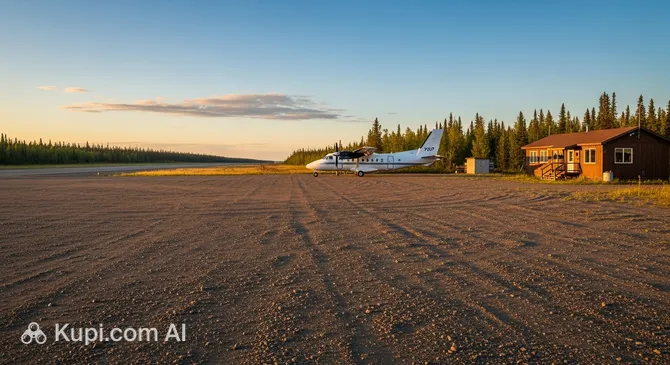
Poplar Hill Airport is not merely a transport hub, but a true "lifeline" for the First Nation community of the same name located in the rugged forests of Northern Ontario. You will not find massive glass terminals or endless queues here; this is a place where aviation returns to its roots, providing a vital link to the outside world. Landing on a gravel strip amidst the boundless boreal forest and lakes offers travelers a unique sense of adventure even before they leave the aircraft.

AirportPoplar Hill
IATAYHP
ICAOCYHP
CityPoplar Hill
TimezoneAmerica/Winnipeg
ScheduleOnline board

Airport Features and Highlights:

The main feature of Poplar Hill Airport is its critical importance to the local indigenous community. Since there are no year-round roads in this region, the air harbour serves as the primary channel for delivering food, mail, and medicine, as well as for passenger transport.

The airport is equipped with a gravel runway approximately 1 kilometre long. This adds a special character to the flight: passengers can observe breathtaking views of the wild Canadian nature during descent, and the absence of complex security procedures typical of metropolises makes the journey fast and stress-free.

Contact Information

  • Official Airport Website: There is no dedicated website. Information about flights and services must be verified on the official resources of the operating airlines (primarily Wasaya Airways and North Star Air).
  • Inquiry Service Phone: There is no direct telephone line in the terminal. It is recommended to call the carrier call centers:
    • Wasaya Airways: +1 877-492-7292
    • North Star Air: +1 844-633-6294
  • Airport Address: Poplar Hill Airport, Poplar Hill, Ontario, Canada (the airport is located within the settlement limits).
  • Email: Not provided. Please use the email addresses of the airlines for communication.
  • Social Media: There are no official airport pages. Current regional news can be found in Poplar Hill First Nation community groups.
  • Lost Luggage Information: Due to the lack of a separate baggage tracing service, if items are lost, you should immediately contact the pilots or representatives of the airline that operated the flight.
  • Passenger Support Contacts: Support is provided exclusively through the customer service departments of the air carriers.

How to Get to the Airport

Transport accessibility to Poplar Hill Airport has its own unique specifics due to the remoteness and isolation of the community itself. The usual rules of metropolises do not apply here: you will not find bus schedules or international car rental desks. Logistics in this corner of Northern Ontario are built on personal agreements, seasonality, and the mutual assistance of local residents.

Public Transport

In the conventional sense, public transport (buses, trains, or metro) is absent in Poplar Hill. The settlement is too compact, and there is no need for routed transport. The airport is located in immediate proximity to residential homes and administrative buildings, effectively being part of the village.

Transfers and Taxi

There are no official taxi services or apps like Uber here. Transport connection between the runway and the residential zone is carried out in the following ways:

  • Meeting by the host: If you are flying to Poplar Hill by invitation, for work, or to visit, you will certainly be met by private transport. This is the most reliable way to reach your destination.
  • Walking distance: Considering the distance to the community center is about 1 kilometre, in good weather, the path can be covered on foot in 10–15 minutes.
  • Seasonal transport: In winter, snowmobiles are a popular means of transport, while in summer, it is ATVs (quad bikes) and pickup trucks.

Car Rental

Car rental points are absent at the airport or in the village itself. The road network is local and limited to the community territory. Connection with the "mainland" by land is possible only during the winter period (usually January–March) via temporary winter roads ("ice roads"). At other times of the year, a car is needed here only for local trips, and tourists typically do not bring or rent transport on-site.

Parking

Near the runway, there is a small open area serving as parking. It is free and not guarded by specialized services. Locals leave their vehicles (cars or snowmobiles) here while meeting flights or for short-term departures.

Travel Time and Cost

The journey from the "terminal" (usually just the spot where the plane stops) to any house in the village takes from 2 to 5 minutes by car. The fare is usually not tariffed: it is either a friendly favor or an agreement to compensate for fuel costs.

Nearest Transport Hubs

Since Poplar Hill is an isolated point, it is useful to know about neighboring airports that can serve as transit points or alternative destinations in the Kenora region:

  • Pikangikum (YPM) — the nearest neighboring airport, located just 38 km away.
  • Red Lake Airport (YRL) — an important regional hub located 120 km to the south. Connecting flights from major cities are often routed through here.
  • Island Lake Airport (YIV) — located 196 km away.
  • Round Lake Airport (ZRJ) — situated at a distance of 220 km.
  • Sachigo Lake Airport (ZPB) — another northern airfield 241 km from the settlement.

Recommendations for Travelers:

The main advice when planning a trip to Poplar Hill is to arrange a meeting in advance. In conditions of a harsh climate and the absence of hotels or stations, having a person meet you with transport is the key to your safety and comfort immediately after landing.

Terminals and Map

The infrastructure of Poplar Hill Airport (YHP) differs radically from typical city air terminals. There are no confusing corridors, multi-level parking lots, or gate systems here. The terminal is designed exclusively to perform basic functions: ensuring flight safety and protecting passengers from the harsh weather conditions of Northern Ontario.

Terminal Structure

The airport has one small passenger building. It is a single-story structure acting as a waiting room, check-in area, and administrative block simultaneously. There is no division into different terminals (A, B, C, etc.) here.

Layout and Navigation

It is impossible to get lost at Poplar Hill Airport. All navigation is intuitive:

  • Entrance: The single door leads from the street (from the access road side) into the building.
  • Check-in Zone: The counter for ticketing and baggage acceptance is located immediately upon entry. Often, this is simply the desk of the airline representative.
  • Waiting Hall: A small space with seats where passengers await boarding. In winter, this is the most important place, as the building is heated.
  • Boarding Exit: A door leading directly onto the apron to the aircraft.

Departure and Arrival Zones

Due to the compactness of the airport, the flows of departing and arriving passengers often intersect, but this does not create inconvenience due to the low number of flights.

  • Arrival: Passengers descend the aircraft stairs directly onto the gravel ground and walk either to the terminal building (if they need to collect cargo or warm up) or straight to the meeting transport. Baggage claim is manual: pilots unload bags from the plane and hand them to passengers by the aircraft or bring them into the room.
  • Departure: After a brief check-in procedure, passengers await the pilot's command, after which they walk to the aircraft.

Features and Amenities

The terminal in Poplar Hill is a utilitarian facility. Travelers should consider the following nuances:

  • Minimalism: There are no Duty Free shops, cafes, ATMs, or currency exchange points. Food and drinks must be brought with you.
  • Sanitary Conditions: Generally, a basic toilet is available, but the level of comfort may be limited.
  • Connectivity: Wi-Fi may be absent or unstable. Mobile reception in the airport area usually picks up a signal, but quality depends on the operator.

Check-in and Screening Procedures

Checking in for a flight here is much faster and more lenient than in major hubs:

  • Arrival Time: Airlines recommend arriving at the airport 30–45 minutes before departure. This time is sufficient for weighing luggage and checking documents.
  • Screening: Classic metal detector frames and body scanners are usually absent here. Screening is conducted visually by airline representatives. However, safety rules remain strict: prohibited items and dangerous substances are not allowed for transport.
  • Documents: Be sure to keep your identification with you, as passenger lists are strictly verified.

Navigation Recommendations

The main advice for passengers at Poplar Hill is to maintain visual contact with the pilot or ground staff. Since voice announcements over a PA system may be absent, the invitation to board often happens personally. In winter, be extremely careful when walking from the terminal to the plane: the apron surface may be slippery and snow-covered.

History of the Airport

The history of Poplar Hill Airport (YHP) is inextricably linked with the history of developing transport accessibility for remote regions of Northern Ontario. Unlike capital hubs built as commercial projects, this airfield was created as a vital necessity to ensure the safety and survival of the local First Nation community.

From Floatplanes to a Gravel Strip

Before the appearance of a proper airfield, the settlement's connection with the outside world was carried out primarily via floatplanes in summer and ski-equipped planes in winter, which landed on the frozen surface of lakes. During periods of freezing and thawing ice, the community found itself in total isolation. The construction of a land-based runway became a turning point, ensuring year-round access to medical care and supplies.

Development under Provincial Auspices

The airport developed within the framework of the Ministry of Transportation of Ontario (MTO) program to create a network of remote northern airports. The main stages of establishment included:

  • Runway Construction: Laying a gravel runway in conditions of difficult terrain and permafrost required significant effort. This allowed for the reception of medium-class wheeled aircraft.
  • Electrification and Navigation: An important stage of modernization was the installation of lighting equipment systems. This allowed flights to be conducted during dark hours, which is critically important for emergency medical evacuation (Medevac) during long winter nights.
  • Infrastructure Renewal: Work is periodically carried out to level the gravel surface and update navigation signs to meet Transport Canada standards.

Historical Events and Role in Emergencies

Although the airport has not hosted Olympic delegations or supersonic liners, it has become the center of dramatic events on a regional scale. YHP plays its most significant role during the forest fire season.

One of the most intense periods was the 2021 evacuation, when forest fires came dangerously close to the Poplar Hill settlement. The airport operated at the limit of its capacity: military and civilian aircraft made dozens of sorties, transporting residents to safe areas (Thunder Bay and other cities). It was the reliable operation of the airfield and the coordinated actions of the pilots that allowed for the complete evacuation of the population without casualties.

Interesting Facts

  • Weather as the Main Dispatcher: In the airport's history, there have been periods when flights were canceled for several days in a row due to blizzards or fog. Locals are accustomed to the fact that a schedule here is a tentative concept.
  • Staff Versatility: Historically, the functions of dispatcher, loader, check-in agent, and runway caretaker are often performed by the same people living in the village.
  • "Dry Port" Status: Since strict rules regarding the importation of alcohol and certain substances apply within the community itself, the airport historically functions as a checkpoint, helping elders and police maintain order within the reservation territory.

Services and Facilities

Services and amenities at Poplar Hill Airport (YHP) fully correspond to its status as a remote northern airfield. Passengers accustomed to the comfort of international hubs should prepare in advance for ascetic conditions. Infrastructure here is reduced to the necessary minimum, ensuring basic safety and shelter from bad weather before departure.

Dining and Shops

There are no food service or retail points on the airport territory:

  • Restaurants and Cafes: There are no coffee shops, buffets, or vending machines here.
  • Shops: Souvenir shops, Duty Free stores, or newsstands are not provided.

Tip for tourists: Be sure to bring a supply of water and food (sandwiches, snacks) with you, especially if traveling with children. The nearest store is located only in the village itself, and getting there on foot with luggage can be problematic.

Finance and Connectivity

  • ATMs and Currency Exchange: There are no bank branches or ATMs in the terminal. Paying by card for services (e.g., for excess baggage) may be difficult due to possible connection interruptions. It is strongly recommended to carry cash in Canadian dollars.
  • Wi-Fi and Charging Devices: Public Wi-Fi is not officially provided. The ability to charge a phone or laptop depends on the availability of free power outlets in the waiting room, but there are no dedicated charging stations. It is recommended to have a fully charged power bank.

Waiting Lounges and Comfort

The airport has one general waiting room. There is no separation into economy and business classes, nor are there separate VIP lounges. The hall is a small heated room with seating where passengers can warm up while waiting for boarding.

Medical Services

There is no medical post or pharmacy in the airport building. The airfield is often used for air ambulance services (Medevac); however, emergency care is provided by medics arriving on board or by staff at the village clinic. A first aid kit can be requested from airline employees.

Services for Passengers with Children

Specialized mother-and-child rooms or play areas are absent. Given the short waiting time for flights, this usually does not cause serious problems, but parents should think about entertainment and food for little ones in advance.

Passengers with Reduced Mobility

The infrastructure has its own features:

  • Terminal Access: The building is single-story, which facilitates access for people with reduced mobility (no stairs or elevators).
  • Boarding the Plane: Boarding takes place from the ground via the aircraft stairs. There are no jet bridges or ambulifts.
  • Assistance: Primary assistance during boarding and disembarking is provided by pilots and ground staff. When booking a ticket, it is mandatory to notify the airline (Wasaya Airways or North Star Air) about the need for special assistance.

Accommodation and Hotels

There are no hotels or inns on the airport territory or in its immediate vicinity. Poplar Hill is a small community, and classic tourist infrastructure is not developed here. Accommodation is possible only by prior private arrangement with the host party or in guest rooms at the settlement administration (Band Office), if available.

Business Services

Conference rooms, business centers, or printing/faxing services are not available at the airport. This place is intended exclusively for transit, not for business meetings.

Where to Eat

The issue of food at Poplar Hill Airport (YHP) requires special attention and preliminary planning. Since the airport is a remote transport node with minimal infrastructure, passengers should not count on the service typical of international terminals.

Restaurants, Cafes, and Bars

Public catering establishments are completely absent on the airport grounds. There are no:

  • Cafeterias or coffee shops;
  • Full-service restaurants;
  • Bars or pubs (alcohol in public places is also often restricted by community rules);
  • Vending machines with snacks or drinks.

The terminal building is designed exclusively for short-term waiting and protection from weather conditions, so commercial spaces for a food court are not provided.

Dining Recommendations: "Bring Your Own" Strategy

Given the lack of points of sale, the only reliable option remains self-preparation. Experienced travelers heading to or flying from Poplar Hill adhere to the following rules:

  • For those departing from Poplar Hill: Stock up on food in advance in the village. The only place where you can buy groceries is the local general store (Northern Store). However, note that it is located at some distance from the airstrip, and stopping there "on the way" without transport will be difficult.
  • For those arriving: If you are flying from hubs like Thunder Bay, Sioux Lookout, or Red Lake, be sure to buy sandwiches, water, and snacks at the departure airport.

Dietary Requirements (Vegetarian, Halal, Gluten-Free)

Since centralized catering is absent, passengers have full control over their diet only through their own luggage. If you adhere to a specific diet (Vegan, Gluten-free, or Halal), it is critically important to bring the necessary food supply with you. Finding specialized dietary products in the settlement itself can be extremely difficult or impossible due to the limited assortment of northern supplies.

Drinking Water

A drinking fountain may be absent in the terminal. Tap water in remote communities sometimes requires boiling (follow local Boil Water Advisory recommendations if they are in effect). It is strongly recommended to carry bottled water purchased in advance.

Local Cuisine

Although you cannot buy food at the airport itself, guests of the community may get acquainted with the traditional cuisine of the Oji-Cree people if invited to the table by locals. This may include:

  • Bannock: Traditional fried or baked bread, which is convenient to take on the road.
  • Dried meat or fish: Local delicacies prepared by drying/curing; they store well and are suitable for a snack while waiting for a flight.

Important: These are not commercial offers, but part of cultural hospitality, which is not a guaranteed airport service.

Price Range

As catering services are not provided, costs depend exclusively on prices in the village grocery store, which are usually 2–3 times higher than in southern Canadian cities due to the complex logistics of delivering products by plane.
Travel Tips

Traveling to remote corners of Northern Ontario is a unique experience that differs greatly from flights between major metropolises. Poplar Hill Airport lives by its own rules, dictated by the harsh climate, types of aircraft, and the community's way of life. To ensure your visit goes smoothly, we have prepared a list of practical tips.

Optimal Arrival Time

Unlike major hubs, you do not need to arrive 2–3 hours early here. However, being late is not an option either. It is recommended to arrive at the "terminal" (airport building) 45–60 minutes before departure. This time is needed not so much for queues, but for weighing and cargo processing procedures, which are done manually and require staff attention.

Check-in and Screening: Be Prepared to be Weighed

The main feature of checking in for small aviation flights (e.g., on Pilatus PC-12 or Cessna Caravan aircraft) is strict weight control.

  • Weighing Passengers: Do not be surprised or embarrassed if you are asked to step on the scales together with your hand luggage. This is critically important for calculating the aircraft's center of gravity and flight safety.
  • Security: There are no shoe scanners or metal detector frames here. Screening is conducted visually or manually. Be ready to show the contents of your bags upon the pilot's request.

Choosing a Seat on the Plane

In most cases, flights to Poplar Hill operate on a "free seating" rule, or seats are assigned by the pilot before departure.

  • Balance is more important than comfort: The pilot may ask you to move to a specific seat for even weight distribution. This is not open for debate.
  • Best Views: If there is a choice, sit by the window. Flying over the endless forests and lakes of Ontario at a low altitude is a breathtaking excursion.
  • Noise: It is quite noisy in small turboprop planes. If you are sensitive to sounds, bring earplugs or noise-canceling headphones.

Hand Luggage and Baggage: Softness Wins

Forget about rigid XL-sized plastic suitcases. The luggage compartments of local planes have non-standard shapes and limited volume.

  • Bag Type: The ideal choice is a soft sports bag, backpack, or duffel bag. They are easier to stow in the cargo hold.
  • Hand Luggage: There is practically no space for "cabin size" suitcases in the cabin. All large items, even if they are considered hand luggage on big airlines, will likely have to be checked in as baggage upon boarding. Take only the most valuable items into the cabin in a small bag.
  • Prohibited Items: Rules for carrying liquids, knives, and aerosols apply just as strictly as everywhere else. Hunting weapons and ammunition require prior declaration and special packaging.

Transit and Connections

Flights to the north often depend on the weather, so connections require special planning.

  • Allow extra time: If you plan to transfer in Thunder Bay or Sioux Lookout to a major airline flight (e.g., Air Canada or WestJet), leave a minimum of 3–4 hours between flights. Delays due to fog or snow in the north are common.
  • Separate Tickets: Often, flights to Poplar Hill and subsequent flights are booked on separate tickets. This means luggage will not be transferred automatically, and you will have to collect it and check it in again.

Customs and Local Rules

Poplar Hill is a domestic airport, so there is no customs control in the classical sense. However, important local restrictions exist.

  • Alcohol and Substances: Poplar Hill is a "dry community". Bringing alcohol and narcotic substances onto the reservation territory is strictly prohibited. Your luggage may be checked by local police or security upon arrival. Violation of this rule entails confiscation and fines.

Saving Time and Money

  • Food with you: As mentioned earlier, it is impossible to buy food at the airport, and prices in the local store are very high. Bring snacks and sandwiches from the "mainland" — this will save you a significant amount.
  • Cash: Always carry Canadian dollars in small bills. They may be needed to pay for unforeseen expenses (e.g., private transfer), as payment terminals may not work due to lack of signal.

Actions During Flight Delays

Delays and cancellations are part of the reality of northern aviation. The main advice: stay calm and have a Plan B.

  • Contacting those meeting you: If the flight is delayed, immediately inform those meeting or seeing you off. There are no display boards at the airport, and information is passed "by word of mouth".
  • Where to wait: If the delay is long, it is better to wait in the village (at the host's house or administration), as the terminal can be cold and uncomfortable.
  • Weather: If you see the weather deteriorating (strong wind, blizzard, low clouds), be mentally prepared to stay in Poplar Hill or at the departure point for another day. This is not a reason for panic, but a reason to enjoy the unhurried rhythm of the north.

Reached the end of the page?

That means the route is fully explored