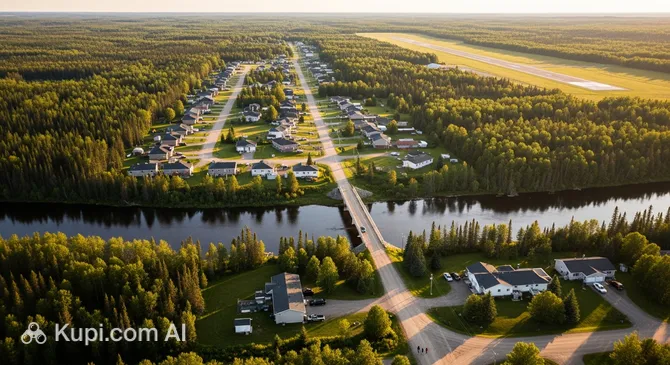
In Poplar Hill, the concepts of "parks" and "museums" are redefined by the landscape and the lifestyle of its people. You will not find manicured city gardens, ticketed art galleries, or glass-walled exhibitions here. Instead, the entire region functions as a vast, open-air sanctuary where the pristine Boreal forest serves as the park, and the rich, living traditions of the Anishinaabe people replace static museum displays. For visitors, the experience is about immersing oneself in an environment where nature and culture are inextricably linked.
The Poplar River Shoreline acts as the community's central natural gathering space, offering a rugged beauty that rivals any designed parkland. Without paved paths or fences, the riverbanks provide a raw and tranquil setting for walking and reflection. In the summer, the grassy verges and rocky outcrops are perfect for observing the flow of the water, which has been the lifeblood of the region for centuries. It is a place to watch bald eagles circle overhead or simply enjoy the fresh, pine-scented air, offering a peaceful retreat that connects visitors directly to the rhythm of the land.
Surrounding the settlement is the Boreal Wilderness, which can be thought of as an unbounded national park without borders. This immense stretch of forest offers endless opportunities for exploration for those experienced in the outdoors. Unlike urban parks with designated picnic spots, this is wild terrain characterized by dense spruce trees, moss-covered ground, and natural game trails. It is a paradise for those who appreciate nature in its most authentic form, offering a chance to see wildlife in a habitat that has remained largely unchanged for millennia.
While there are no brick-and-mortar museums in Poplar Hill, the community itself is a Living Repository of Ojibway Culture. History here is not stored in archives but is kept alive through the oral traditions of the Elders. The stories, legends, and knowledge of the land are passed down through generations, making every conversation a potential lesson in history. Visitors who approach with respect and a willingness to listen may find that the most profound "exhibits" are the memories shared by the residents, covering everything from traditional trapping methods to the spiritual significance of the local geography.
Similarly, there are no commercial art galleries, but the Local Arts and Crafts scene is vibrant and deeply personal. Many residents are skilled artisans, practicing traditional crafts such as intricate beadwork, leather tanning, and moccasin making. These artistic expressions are often created within homes rather than studios. The "gallery" experience here is informal; you might see beautiful handmade items worn by locals or displayed at community gatherings. These pieces reflect a deep connection to heritage and are far more meaningful than mass-produced souvenirs.
For a truly authentic insight, keep an eye out for community gatherings or feasts. These events often serve as temporary cultural hubs where food, drumming, and storytelling converge. Being invited to such a gathering offers a glimpse into the heart of the community that no guidebook can provide. Additionally, simply observing the seasonal activities—whether it is fishing in the summer or preparing wood for the winter—reveals the living history of survival and adaptation in the North.