Support

Winnipeg James Armstrong Richardson International Airport

About the Airport

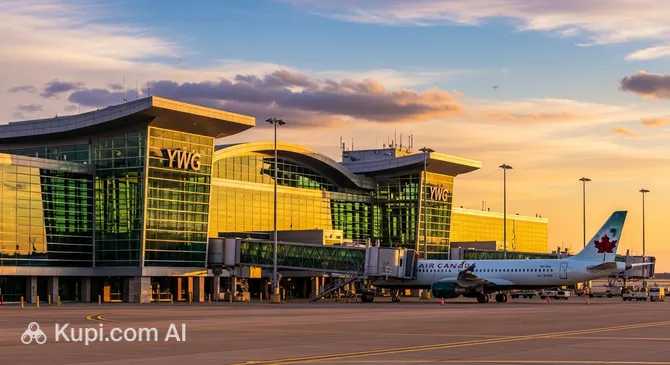
Winnipeg James Armstrong Richardson International Airport. Source: Kupi.com Binoculars

Winnipeg James Armstrong Richardson International Airport (YWG) is not merely an air gateway to the province of Manitoba, but a true architectural masterpiece and a key transport hub for the central part of Canada. The main terminal, designed by the world-renowned architect César Pelli, welcomes travellers with spacious, light-filled halls, symbolizing the vast prairies and the clear skies of the region. As the country's seventh-busiest airport, it serves as a vital connection point for extensive territories, including neighbouring Northwestern Ontario and Nunavut.

IATA Code YWG
ICAO Code CYWG
City Winnipeg
Distance to Centre About 8 km
Status International
Passengers per Year Over 3 million (3,031,113 in 2022)
Popular Airlines WestJet, Air Canada, Flair Airlines.
Schedule Online Schedule "Winnipeg James Armstrong Richardson International Airport"

Winnipeg Airport prides itself on its efficiency and passenger convenience. It consists of a single modern main terminal, which significantly simplifies navigation — you will not have to search long for your boarding gate or wander through walkways. Inside, you will find everything necessary for a comfortable wait for your flight: from various cafes and shops, including Duty Free, to free Wi-Fi throughout the area. Thanks to its status as the first international airport in Canada's history, opened back in 1928, YWG combines rich history with the most modern service standards, ensuring a pleasant start and conclusion to your journey.

Contact Information

  • Official Website: www.waa.ca
  • Information Service Phone: +1 204-987-9402
  • Address: 2000 Wellington Ave, Winnipeg, MB R3H 1C2, Canada
  • Email: To contact the administration, you can use the address info@waa.ca or the contact form on the official website.
  • Social Media: Get the latest information and airport news on the official pages on X (Twitter) and Facebook.
  • Lost Luggage Information: If your luggage has been lost or damaged, you should contact the baggage tracing service of your airline directly. Contact details can be found on the carrier's website.
  • Passenger Support Contacts: Information desks to assist passengers are located in the arrivals and departures halls. You can also call the general information service phone number.

How to Get to the Airport

Getting to Winnipeg James Armstrong Richardson International Airport (YWG) from the city centre is quite simple, as it is located just 8-9 kilometres west of downtown. Depending on your budget, time, and preferences, you can choose one of several convenient methods.

The most economical option is to use public transport. Winnipeg Transit buses run regularly between the city and the airport. The main routes serving the terminal are No. 15 (Sargent/Mountain) and No. 20 (Academy/Watt). A bus trip from the centre will take approximately 30-40 minutes, depending on the number of stops and traffic. This is an excellent choice for budget-conscious travellers or those travelling light.

For maximum comfort and speed, you can order a taxi or use ride-hailing apps (such as Uber or Lyft), which operate officially in Winnipeg. A car journey from the city centre to the terminal usually takes about 20-25 minutes. This is an ideal option if you have a lot of luggage, are travelling with family, or simply wish to reach your destination without transfers. The cost will be significantly higher than the bus, but it is compensated by convenience and speed.

If you plan to explore the surroundings, renting a car might be the best solution. Counters of all major rental companies are located directly within the terminal building. For those arriving at the airport in a private car, several parking options are available: the convenient covered Parkade for short-term and long-term parking directly opposite the terminal, and the more budget-friendly open Economy Lot, from which a free shuttle runs to the airport building.

To sum up, the choice of transport to the airport in Winnipeg depends on your priorities. For a budget trip, feel free to choose the bus; for speed and convenience, choose a taxi. Car rental is suitable for those who value mobility during their journey across Canada. In any case, we recommend allowing a little extra time for the journey, especially if your departure falls during rush hour.

Terminals and Map

Winnipeg James Armstrong Richardson International Airport (YWG) is distinguished by a modern and well-thought-out structure that makes it very convenient for travellers. The airport consists of one main passenger terminal serving all domestic and international flights. Such an organization significantly simplifies navigation and eliminates the need to move between different buildings.

The terminal layout is intuitive and divided into two main levels. The Second Level (Departures) is entirely dedicated to departures. Here, airline check-in counters, self-check-in kiosks, and baggage drop-off points are located. After passing through the centralized security screening point, passengers enter a spacious common area with boarding gates, various shops, cafes, and restaurants.

The First Level (Arrivals) is designed for arriving passengers. On this floor, baggage claim belts, the customs control zone for those arriving from abroad, and car rental company offices are located. Exits to public transport stops, taxi ranks, and parking lots are also located here, ensuring convenient access to ground transport.

Since all operations are concentrated in one building, transfers between flights are as simple as possible. Transit passengers do not need to leave the terminal or use additional transport — it is enough to follow the signs to the required boarding gate. One of the key features of the airport is the presence of a U.S. Preclearance zone, which allows passengers flying to the United States to pass all border formalities while still in Canada, saving time upon arrival.

To comfortably complete all procedures, it is recommended to arrive at the airport in advance. For domestic flights, 90 minutes before departure is usually sufficient. If your flight is international or heading to the USA, it is better to arrive 2-3 hours early. Navigation inside the terminal causes no difficulties thanks to numerous signs and electronic boards, but always check your flight information to stay aware of the gate number and boarding time.

Airport History

The history of Winnipeg James Armstrong Richardson International Airport is a fascinating journey from a modest airfield to a modern transport hub. Its story began in 1928 with the opening of Stevenson Field, which quickly became an important point on Canada's aviation map. During the Second World War, the airfield played a strategic role as a base for the Royal Canadian Air Force, which contributed to its development and infrastructure expansion.

A significant step forward was the opening of the first full-fledged terminal in 1964. This building, serving as the main passenger complex for almost half a century, marked a new era in the development of air travel for the province of Manitoba. In 2006, the airport was officially renamed in honour of James Armstrong Richardson — a businessman from Winnipeg and a pioneer of commercial aviation in Canada, who founded one of the country's first airlines. This gesture highlighted the city's deep connection with the history of aviation.

The most massive transformation in the airport's history occurred in 2011, when a new, modern terminal designed by the world-renowned architect César Pelli was opened. This building not only changed the face of the airport but also set a new standard for the entire country, becoming the first airport terminal in Canada to receive the prestigious LEED (Leadership in Energy and Environmental Design) certification for its environmental friendliness and energy efficiency. Today, Winnipeg Airport is not only an important passenger hub but also one of Canada's key cargo hubs.

Services and Amenities

Winnipeg James Armstrong Richardson International Airport offers passengers a wide range of services, making the wait for a flight as comfortable and productive as possible. Regardless of the purpose of your trip, you will find everything you need here — from various cafes and shops to convenient zones for work and rest.

Numerous establishments to suit any taste are located within the terminal: from restaurants where you can have a full lunch to cosy coffee shops for a quick snack. In the shops, you can purchase both essentials and souvenirs, as well as products from famous brands, including shopping in the Duty Free zone. For those who value enhanced comfort, lounges are available, including VIP class, where you can relax in a tranquil atmosphere.

Free Wi-Fi is available throughout the airport, and numerous gadget charging stations allow you to stay connected at all times. For business travellers, business centres and conference rooms are provided where you can hold a meeting or work in silence. Financial matters are easily resolved with the help of bank branches and currency exchange points located in the terminal building.

The airport is well-prepared to receive passengers with special needs. Play areas and mother and child rooms are equipped for families with children. Passengers with reduced mobility are provided with all necessary assistance, and conditions have been created for unimpeded movement. In case of necessity, you can contact the medical centre. If you have a long layover or an early flight, several hotels offering comfortable accommodation are located right on the airport grounds and in its immediate vicinity.

Where to Eat

At Winnipeg James Armstrong Richardson International Airport (YWG), travellers will find diverse dining options, from a quick coffee to a full meal. Catering establishments are conveniently located both in the public area and in the secure area after passing security control, offering dishes for every taste and budget.

In the zone before security screening (landside), accessible to all visitors, you can find several popular chain cafes. This is an ideal place to have a snack before checking in for a flight or to have a coffee with those seeing you off. Establishments such as Tim Hortons are usually located here, where you can order famous Canadian doughnuts and sandwiches, which is an excellent option for a quick and inexpensive snack.

The majority of restaurants and dining venues are located in the departure zone (airside), after security control. Here, the selection is significantly wider. For a full lunch or dinner, you can visit restaurants with à la carte service. For example, local establishments such as Stella’s Café & Bakery offer delicious breakfasts, lunches, and fresh pastries. There are also venues where you can relax with a refreshing beverage before your flight, ordering classic dishes like burgers, salads, and wings.

For those who want to try something local, it is worth paying attention to menus featuring Canadian cuisine. Look for dishes with bison meat, pickerel fish, or classic Canadian poutine — French fries with cheese curds and gravy. Many restaurants pride themselves on using products from local farmers, which makes the taste of the dishes particularly rich.

Most establishments offer options for passengers with special dietary needs. Finding vegetarian, vegan, and gluten-free dishes will not be difficult — they are often marked on the menu. Regarding Halal or Kosher meals, it is recommended to verify their availability directly with the restaurant staff. The price range at the airport is generally slightly higher than in the city, but you can find options for both a budget snack and a more expensive dinner.

Most cafes and restaurants open early in the morning to serve passengers of the first flights and operate until the last departure. However, opening hours may change, so if you have a very late or early flight, it is better to clarify information in advance. For a quick snack, Starbucks or Tim Hortons are perfect, and for a leisurely meal with atmosphere — Stella’s Café or one of the lounges in the departure zone.

Tips for Travellers

Planning a trip through Winnipeg James Armstrong Richardson International Airport (YWG) will go smoothly if you consider a few tips. Here is what you need to know to make your journey comfortable and stress-free.

Arrival Time at the Airport: For domestic flights within Canada, it is recommended to arrive 2 hours before departure, and for international flights (including flights to the USA) — 3 hours before. The airport in Winnipeg is modern and efficient, but extra time will allow you to calmly go through all procedures, especially during peak hours.

Check-in and Screening: To save time, complete online check-in for your flight and save the boarding pass on your phone. Security screening points (CATSA) work quite quickly here. Pack all liquids over 100 ml in your checked luggage, and place containers up to 100 ml in one transparent bag. Be prepared to remove laptops and other large electronics from your carry-on luggage.

Seat Selection on the Plane: If you have a long flight ahead, an aisle seat will provide more legroom and the opportunity to stand up without disturbing your neighbours. Window seats will give you a chance to see the vast Canadian prairies or the Northern Lights from above, if you are lucky enough to fly at the right time of year and in the right direction.

Carry-on Luggage: Besides the standard restriction on liquids (no more than 100 ml per container), it is forbidden to take sharp objects, flammable substances, and other dangerous materials in carry-on luggage. We strongly recommend checking the current rules on the website of your airline and the Canadian Air Transport Security Authority (CATSA) before your trip.

Connecting Passengers: Winnipeg is a convenient transit hub. Signs in the terminal are clear and will help you easily find the necessary boarding gate. A key feature for those flying to the USA is the presence of the U.S. Preclearance zone. This means that you go through all US immigration and customs formalities right here, and upon arrival at the American airport, you exit as a domestic flight passenger, which significantly saves time.

Customs Control: Upon arrival in Canada, you will need to fill out a customs declaration (this can be done at an electronic Primary Inspection Kiosk or on a paper form). Honestly declare all goods you are bringing in. For those departing to the USA, as mentioned, control takes place in the U.S. Preclearance zone.

Saving Time and Money: To save money, bring an empty reusable water bottle with you and fill it after passing security. Prices for food and drinks at the airport are generally higher, so you can bring light snacks from home. To save on parking, book a spot online in advance. The most budget-friendly way to get to the city centre is the city bus.

In Case of Flight Delay: If your flight is delayed, remain calm. The airport has free Wi-Fi, many cafes, and shops. Follow updates on information boards or in the airline's app. For long delays, contact a representative of your airline to inquire about the possibility of receiving vouchers for food or hotel accommodation in accordance with the carrier's rules.
Reached the end of the page?

That means the route is fully explored