Support

Dryden Regional Airport

About the Airport

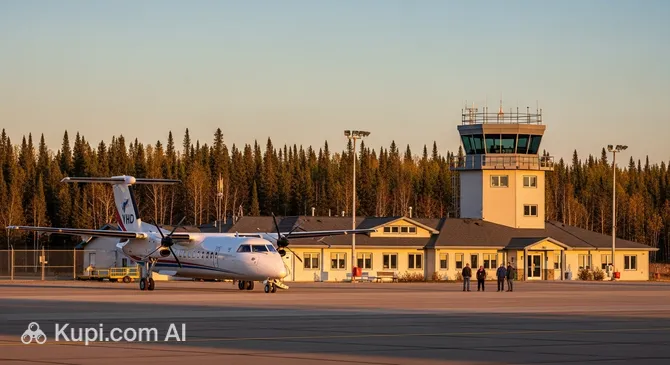
Dryden Regional Airport. Source: Kupi.com Binoculars

Dryden Airport (YHD) is not just a standard transport hub, but a true gateway to the vast wilderness of Northwestern Ontario. Located amidst dense forests and numerous lakes, this cosy air terminal immediately immerses travellers in the atmosphere of the region known as "Sunset Country". There is no hustle and bustle of giant metropolises here; instead, calmness and the feeling of the beginning of a great adventure reign, whether it be a business trip or a fishing tour.

IATA Code YHD
ICAO Code CYHD
City Dryden
Distance to centre 6 km
Status Regional
Passengers per year About 13,000
Schedule Available on the official website

Features and Advantages of the Airport

Despite its modest size, Dryden Airport plays a key role in the life of the region and possesses a number of undeniable advantages for passengers.

Speed and absence of queues. The main advantage of YHD is time-saving. Thanks to the compact terminal, the journey from the building entrance to the boarding gate takes mere minutes. Long queues for security checks are rare here, allowing you to arrive at the airport a little later than at major hubs, while maintaining peace of mind.

Access to outdoor activities. The airport serves as a strategic starting point for outdoor enthusiasts. From here, it is easy to reach numerous fishing lodges and tourist bases located on remote lakes. For many private aviation pilots and charter flights on seaplanes, Dryden is a convenient base for refuelling and parking before flights deep into the Canadian north.

Convenient logistics. Located just a 10-minute drive from the city centre and in close proximity to the Trans-Canada Highway, the airport is easily accessible. This is an ideal option for those who want to quickly find themselves in the heart of Kenora without spending hours on transfers from the more distant airports of Winnipeg or Thunder Bay.

Friendly atmosphere. The airport staff is known for their hospitality and readiness to help. Unlike impersonal international terminals, here you can often encounter a personalised approach, making the wait for a flight more comfortable and pleasant.

Contact Information

Below you will find contact information for Dryden Regional Airport (YHD), which will help you plan your trip and resolve possible questions.

  • Official website: You can find current information about flights, services, and rules on the official airport page on the City of Dryden website: dryden.ca/airport.
  • Information desk phone: For prompt information, you can call +1 (807) 937-4404.
  • Airport Address: 1 Airport Road, Dryden, Ontario, P8N 2Y4, Canada.
  • Email: A specialised email for general inquiries is not provided. It is recommended to use the telephone or contact forms on the city website for communication.
  • Social Media: The airport does not have its own official pages on social networks. News and important announcements are published on the resources of the City of Dryden.
  • Lost Luggage Information: For all questions related to lost or damaged luggage, it is necessary to contact your airline's representative office directly.
  • Passenger Support Contacts: For general questions and consultations, use the main airport telephone number: +1 (807) 937-4404.

How to Get to the Airport

Getting to Dryden Regional Airport (YHD) from the city centre is quite simple, as it is located just a few kilometres east of Dryden. A trip by car usually takes no more than 10-15 minutes, making it easily accessible for all travellers.

The most direct and convenient method is taxi or private transfer. Local taxi services know the route to the airport well, and a car can be called by phone or found at special stands in the city. This is the fastest and most hassle-free option, especially if you have a lot of luggage. The cost of the trip will be higher compared to other methods, but it guarantees arrival on time and in comfort. For additional convenience, you can book a transfer online in advance.

For tourists who want to move around freely and explore the picturesque surroundings of the region, car rental would be the best choice. You can rent a car at one of the rental agencies in the city and drive comfortably to the airport, and then leave it there if the company provides such a service. This option gives maximum flexibility and independence during your journey through Canada.

As for public transport, direct bus routes to the airport in small towns are usually absent or have a very infrequent schedule. It is recommended to check information on the local transport authority's website in advance, but one should not rely entirely on this option. In most cases, a taxi or your own vehicle will be a more reliable solution.

If you are driving to the airport in a personal vehicle, parking is available directly near the terminal at your service. Zones for both short-term and long-term parking are provided here, which is very convenient if you plan to leave the car for the duration of your trip. Rates depend on the duration of parking.

Terminals and Map

The Dryden Airport (YHD) is a small regional aviation hub in Canada, which is distinguished by a simple and clear structure. It consists of one passenger terminal serving all flights — both departures and arrivals. Thanks to its compactness, the airport is very convenient for passengers who value speed and the absence of the commotion characteristic of large aviation hubs.

The terminal layout is intuitively clear. Airline check-in counters are located immediately at the entrance. After completing registration, passengers proceed to the pre-flight security screening area, behind which there is a small waiting lounge. Departure and arrival zones are located in the same building, which eliminates the need for long walks or the use of shuttles. The baggage claim area is located not far from the terminal exit. Thanks to the thoughtful layout, navigation causes no difficulties — getting lost here is practically impossible.

Passing all pre-flight formalities, including flight check-in and security screening, at Dryden Airport usually takes significantly less time than at major airports. On average, all procedures can be completed very quickly. Nevertheless, the standard recommendation is to arrive at the airport at least 60-90 minutes before departure to check in luggage and pass control without rushing, especially during peak hours.

The main advice for navigation at Dryden Airport is simply to follow the signs. Since there is only one terminal and its area is small, you will easily find everything you need. There are no complex crossings, multi-level halls, or confusing corridors here. This makes it an ideal choice for those who prefer a calm and predictable start or end to their journey.

Airport History

The history of Dryden Regional Airport (YHD) is closely linked to the development of aviation in Canada. It was founded in the 1930s as part of the ambitious Trans-Canada Airway System project, which was intended to connect the country from west to east. During the Second World War, the airport performed a strategic function, serving as a base and transfer point for military aircraft, making it an important link in the country's defence infrastructure.

After the end of the war, the management of the airport passed to Transport Canada, and it began to actively serve civil flights, becoming an important transport hub for the city of Dryden and the surrounding region. A key stage in its modern history was the transfer of the airport to the ownership and management of the municipality of the city in 1997. This step allowed for a more flexible approach to infrastructure development and better adaptation to local needs.

One of the most tragic and simultaneously pivotal moments in the airport's history occurred on 10 March 1989 — the crash of Air Ontario Flight 1363. The aircraft crashed immediately after takeoff due to wing icing. This event led to a large-scale investigation known as the "Moshansky Commission". Its conclusions fundamentally changed the rules for aircraft de-icing not only in Canada but throughout the world, which significantly increased general aviation safety standards.

Since moving under municipal management, the airport has gone through several stages of modernisation, including the renovation of the runway and terminal equipment. Today, Dryden Airport not only receives regular and charter flights but also serves as a base for Ornge air ambulance services and is a key centre for the aviation services of the Ontario Ministry of Natural Resources and Forestry, especially during the forest fire fighting season.

Interesting fact: despite its modest size, Dryden Airport is a vivid example of how a regional airfield can fulfil a multifaceted role. It simultaneously serves as a vital transport artery for passengers, a base for emergency services, and a strategic facility for protecting the natural resources of the vast territory of Northwestern Ontario. Its history is not just a chronicle of development, but a clear lesson on the importance of constantly improving safety standards in aviation.

Services and Amenities

Dryden Airport (YHD) is a small regional air terminal providing passengers with a basic set of services necessary for a comfortable wait for their flight. The terminal is compact and easy to navigate, making the stay here convenient and predictable. Given its size, the range of amenities is focused on the key needs of travellers.

Regarding dining, the choice at the airport is limited. Typically, one can find vending machines with snacks and drinks here. For a more substantial snack or a cup of coffee, one might count on a small café, if provided for in the airport's operating schedule. Passengers have access to free Wi-Fi throughout the terminal, and there are power outlets for charging electronic devices. Their number may be small, so it is better to bring a portable power bank with you.

A general lounge is equipped for waiting for boarding. Specialised business or VIP lounges are absent. Regarding financial services, the airport usually has an ATM. It is worth noting that currency exchange points are not provided here, so it is recommended to take care of cash in the local currency in advance at one of the banks in the city of Dryden.

The airport is equipped to serve passengers with reduced mobility: ramps and accessible restrooms are available. If you require special assistance during boarding or moving around the terminal, we advise notifying your airline in advance. For travellers with small children, changing tables are provided in the restrooms.

Specialised medical points, business centres, or conference rooms are absent on the airport territory. In case of necessity, staff will provide first aid and call medical services. The nearest hotels are located in the city of Dryden, which can be reached by taxi in a few minutes.

Where to Eat

When planning a snack at Dryden Regional Airport (YHD), it is important to consider that this is a small regional air terminal serving mainly local flights. In this regard, the choice of catering establishments here is quite limited and not comparable to the assortment of major international airports.

Typically, a small café or buffet operates in the terminal building. This is the only place where one can have a snack before departure. It is located in the general area (before passing security control), so it is accessible to both departing passengers and those seeing them off. Here, travellers can purchase basic drinks, such as coffee, tea, juices, and water, as well as light snacks: sandwiches, pastries, crisps, and chocolate.

For a full lunch or dinner, it is recommended to eat at one of the restaurants in the city of Dryden itself before travelling to the airport. regarding special dietary requirements (vegetarian, gluten-free, Halal, and other dishes), their availability on the local café menu is unlikely. If you have strict dietary restrictions, it will be more reliable to bring food with you.

The establishment's opening hours are usually tied to the flight schedule: it opens shortly before departures and closes after the departure of the last aircraft. Prices correspond to the average level for small Canadian airports. Also, vending machines with drinks and snacks may be installed in the terminal building, which are available at any time.

Travel Tips

Travelling through a regional airport, such as Dryden Airport, is often calmer and faster compared to major international hubs. To ensure your trip from the city of Dryden goes smoothly, use these tips.

Arrival Time and Check-in. For domestic flights within Canada, it is recommended to arrive at the airport approximately 1.5–2 hours before departure. This time is more than sufficient to pass all procedures without rushing. To save time, use online check-in on your airline's website, which usually opens 24 hours before the flight. Thanks to the compact size of the airport, queues at check-in counters and security checkpoints are usually small.

Passing Control and Seat Selection. Security rules here are standard. Remember the restrictions on carrying liquids in hand luggage: all containers must be no more than 100 ml in volume and packed in one transparent bag. Laptops and other large electronics must be taken out of the bag. When choosing a seat on the plane, be guided by your preferences: a window seat will offer beautiful views during takeoff and landing, while an aisle seat will allow you to stand up freely without disturbing neighbours.

Hand Luggage and Baggage. It is forbidden to take sharp objects, flammable substances, and weapons in hand luggage. Always check the current rules on your airline's website, as different carriers may have their own standards for the weight and dimensions of hand luggage. If you are travelling lightly, with only hand luggage, you can significantly save time upon arrival by bypassing the baggage claim area.

Passengers with Connections and Customs. Dryden Airport is not a major transfer hub, so connections here generally happen quickly. If you have a transfer, clarify at check-in whether you will need to collect and re-register your luggage. Customs and passport control are provided only for rare international flights. The procedure is standard and, as a rule, does not take much time.

Savings and Useful Tricks. To save money, book tickets in advance and consider bringing light snacks and an empty water bottle with you, which can be filled after passing security. This is especially relevant for small airports where the choice of cafés may be limited. Also, study transport options to and from the airport in advance to choose the most beneficial one for you.

In Case of Flight Delay. In the event of a flight delay or cancellation, first contact your airline representative. They will provide current information and tell you about your rights to compensation, meals, or accommodation. Since the waiting area in regional airports can be small, it is useful to have a book, a charged power bank, and headphones with you to pass the time in comfort.

Reached the end of the page?

That means the route is fully explored