Support

Pucon

About

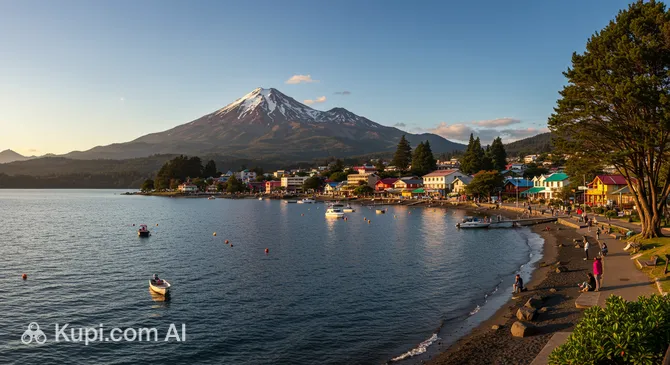
Pucón is a true gem of the Araucanía region, picturesquely situated on the shores of crystal-clear Lake Villarrica. This cozy town in southern Chile is rightfully considered the country's adventure tourism capital, attracting travelers with its breathtaking landscapes and atmosphere of freedom.

Pucón. Illustration.
Source: Kupi.com AI

The town is literally immersed in greenery, surrounded by dense forests and majestic peaks. With a population of about 29,000 people, Pucón retains the charm of a small settlement where every guest feels at home. Despite its compact size, the infrastructure is well-developed, ranging from cozy eco-hotels to modern spa resorts. The unique history of Pucón has transformed it from a modest outpost into a thriving tourist center where traditions and modern comfort are harmoniously intertwined.

The main point of attraction for tourists is the opportunity to combine extreme sports with relaxation. Here, you can climb the slopes of the active Villarrica Volcano and, in the evening, unwind in the famous thermal springs. Pucón is ideal for those seeking a balance between active recreation and peace, inviting you to enjoy the beauty of wild nature and unforgettable sunsets over the lake.

Weather Overview

Pucón's climate is characterized by a distinct change of seasons, offering travelers different conditions for relaxation. Summer here, falling in January and February, is the most favorable time for tourism: the average temperature is about 16–17°C, and during the day the air warms up to a comfortable 21–22°C. This is the driest period of the year with minimal precipitation (2–3 mm), which is ideal for climbs and walks.

Winter, on the other hand, brings coolness and high humidity. From June to August, the thermometer stays around 4–5°C, and at night it can drop to 1.5°C. This is a time of heavy rains: for example, up to 22 rainy days are recorded in June. Expect a warm summer with rare precipitation and a cool, wet winter requiring waterproof gear.

Spring and autumn serve as a mild transition when nature is particularly picturesque, but the weather can be changeable. To know exactly what to expect from the elements during your visit, we recommend checking the detailed weather in Pucón before your trip.

Average monthly temperature

Average monthly precipitation

Interesting Facts

Beyond the well-known tourist routes, Pucón holds many fascinating features and cultural secrets that are revealed only to curious travelers. This town lives in amazing harmony with the powerful forces of nature and ancient traditions, offering guests much more than just beautiful landscapes.

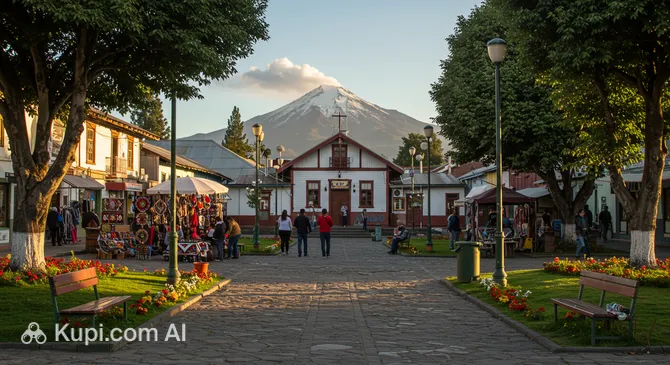
Plaza de Armas. Illustration.
Source: Kupi.com AI

Traveler photos:

  • Life by a Volcano. Pucón is located literally at the foot of Villarrica—one of South America's most active volcanoes. It is a rare place on the planet where tourists have the opportunity to climb and look directly into the smoking crater, gaining unforgettable impressions from the proximity to the elements.

  • Architecture of Thermal Springs. Local thermal baths, especially the famous Termas Geometricas, are considered some of the most beautiful in Chile. The complex is unique for its location in a gorge, where red wooden walkways are laid among lava rocks and dense ferns, creating the atmosphere of a lost world.

  • An Open-Air Art Center. The cultural heart of the town beats in the main square. The picturesque Plaza de Armas regularly becomes a stage for street concerts and art exhibitions where local masters showcase their talents.

  • Mapuche Traditions. Pucón is a place of living history where the heritage of the indigenous people is honored. At the Feria Costumbrista Kui Kui festival, travelers can immerse themselves in Mapuche culture, taste traditional dishes, and see unique artisanal products.

  • Mystical Protection. The town is shrouded in many legends. Locals believe that Mapuche shamans still perform ancient rituals to appease the spirits of the volcano and lakes, protecting Pucón from natural disasters.

How to Get There

When planning a trip to this picturesque corner of the Araucanía region, it is worth considering the logistics in advance, as the town is located far from the capital. You can find out more about how to get to Pucón by various means of transport, but the most popular way remains flying to the nearest regional centers followed by a transfer.

Since there is no airport in Pucón itself, the main hub for tourists is Temuco Airport (ZCO), also known as La Araucanía. It is located in the city of Temuco, about 70 km from your destination. This is the most convenient option: the journey by car or bus will take approximately 2 hours. The airport has a fairly high passenger flow and receives regular flights from Santiago.

An alternative option is Pichoy Airport (ZAL), located near the city of Valdivia. It is somewhat further away, approximately 104 km from Pucón. A transfer from here will take about 3 hours. This is a scenic route that suits those who want to combine the trip with exploring the surroundings of Valdivia.

It is also worth mentioning San Carlos de Bariloche International Airport (BRC). Note that it is located in Argentina, in the city of Bariloche, about 220 km from Pucón. This is a major international hub, but choosing this airport involves crossing a state border, so the travel time will be around 6 hours.

For convenience, here is summary information on the main airports:

AirportPassenger trafficDistance
Temuco Airport504 14770 km
Pichoy Airport418 000104 km
Chapelco Airport318 166115 km
Canal Bajo Airport303 209175 km
San Carlos de Bariloche International Airport2.4 mln220 km

Main Attractions

Attractions:

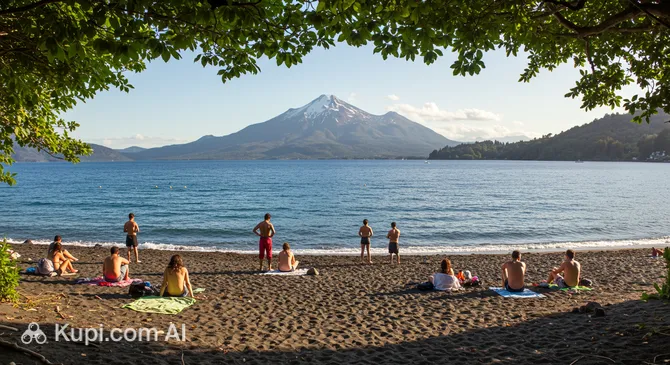
Pucón is a compact town where most interesting spots are within walking distance, making strolls through it particularly enjoyable. The main point of attraction during the warm season is the famous Playa Grande. This extensive city beach features unique black volcanic sand stretching along Lake Villarrica. People come here not just for swimming, but for the stunning views: a majestic panorama of the smoking volcano opens up right from the shore, creating a unique backdrop for relaxation and photos.

Playa Grande. Illustration.
Source: Kupi.com AI

Traveler photos:

The heart of social and cultural life is rightfully considered Plaza de Armas. This is not just an administrative center, but a real park overflowing with greenery and flowers. The square is known for its wooden sculptures made by local artisans, reflecting the Mapuche culture and the region's history. It’s a pleasant place to take cover in the shade of the trees after an active day or to observe the town's slow pace of life.

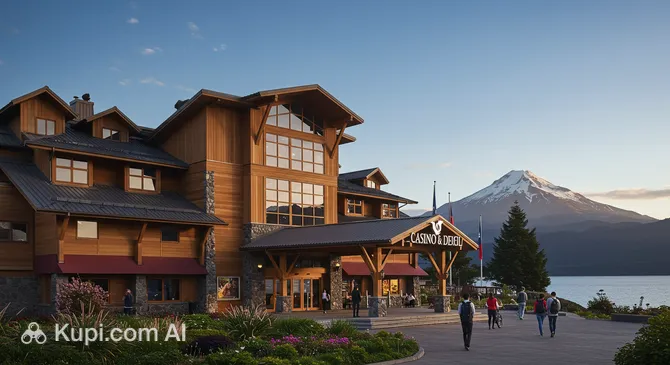
As the sun sets, the epicenter of entertainment becomes Casino Pucón. This massive building is one of the town's architectural landmarks and a popular meeting spot for tourists. Even if you are indifferent to gambling, the casino attracts visitors with its lively atmosphere, restaurants, and show programs, offering a great option for evening leisure in an elegant setting.

Fans of relaxed recreation should take note of Pucón Beach. Although it is often perceived as part of the overall shoreline, this spot is perfect for those who want to enjoy water sports or simply walk along the water's edge, breathing in the fresh lake air. To round off the evening, you can stop by Beerhouse Bar, which has a friendly atmosphere where you can sample local drinks while discussing the day's impressions.

Local Cuisine

Pucón's culinary scene is a fascinating journey where indigenous Mapuche traditions harmoniously intertwine with classic Chilean cuisine and modern culinary trends. The main pride of local restaurants is rightfully considered the lake fish. Be sure to try the delicate trout: here it is prepared with great skill—baked in leaves, grilled, or served with aromatic herbs gathered in the dense forests of Araucanía.

For those who want to get to know the authentic flavors of the region, curanto will be a real discovery. This hearty and symbolic dish is traditionally cooked in an earth oven over red-hot stones. It contains meat, various seafood, and potatoes, creating a uniquely rich flavor. In addition, menus at local establishments often feature game dishes, such as wild boar, as well as succulent lamb prepared according to ancient recipes.

The food culture in the town is not limited to restaurants. Local markets are a true paradise for gourmands, where you can find homemade cheeses, fresh bread, and famous forest berry jams. For those who like to snack on the go, it's worth checking out the popular street food—empanadas. These pastries here are made with a wide variety of fillings: from classic cheese and mushrooms to exquisite seafood.

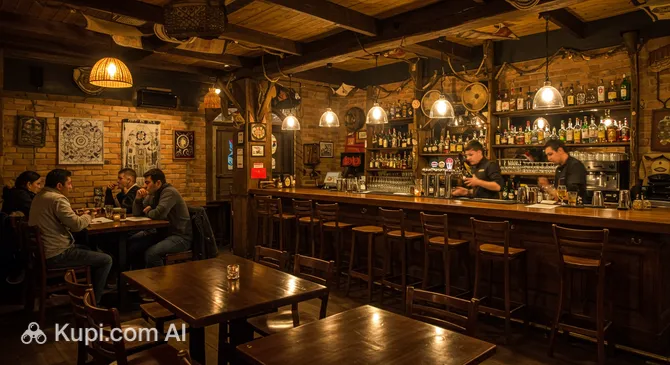
Beerhouse Bar. Illustration.
Source: Kupi.com AI

Traveler photos:

As for drinks, the region is famous not only for Chilean wines but also for its developing craft brewing culture. After a busy day, it's a great idea to visit Beerhouse Bar, where you can taste local brews in a cozy setting. Also, gastronomic festivals are regularly held in Pucón, allowing tourists to discover new facets of flavor in a festive atmosphere.

Travel Tips

Traveling to the "adventure capital" of Chile requires a little preparation so that nothing distracts you from enjoying nature. We have compiled a list of proven recommendations that will help make your vacation in Pucón as comfortable, safe, and fulfilling as possible.

  1. Clothing for all occasions. The weather in the Araucanía region is extremely changeable: bright sun can suddenly be replaced by rain and wind. Be sure to bring a waterproof membrane jacket and dress in layers. For walks in national parks and climbs, broken-in trekking shoes with good grip are necessary.
  2. Transport and logistics. The town itself is very compact and pleasant to explore on foot or by bicycle. However, the main beauties—thermal springs, waterfalls, and parks—are outside the city limits. For freedom of movement, we recommend renting a car. If you are without a car, use local shared taxis (colectivos) or book transfers at travel agencies.
  3. Finances and cash. The official currency is the Chilean peso. While major hotels and restaurants in Pucón accept cards, you will need cash at souvenir stalls, markets, and the entrances to some nature reserves. ATMs are available in the city center, but they may run out of bills in high season, so it's better to have a reserve.
  4. Sun protection. This is a critical point: in the south of the country, the ozone layer is thinner, and UV radiation levels are extremely high even in cool or cloudy weather. Always use sunscreen with a high SPF (50+), wear a hat, and high-quality sunglasses.
  5. Language barrier and connectivity. The main language of communication is Spanish. Guides and staff at large hotels understand English, but it may not help in everyday situations. Download an offline translator and learn a few phrases, such as "Hola" (Hello) and "Gracias" (Thank you). For connectivity, it's most convenient to buy a local SIM card at any kiosk.
  6. Respect for nature and etiquette. Pucón is famous for its cleanliness. Locals are very sensitive to ecology, so littering is unacceptable—always take all waste with you. When communicating, Chileans are open and friendly; don't be surprised if new acquaintances lean in to kiss you on the cheek—this is a standard form of greeting.
  7. What to strictly avoid. Never build fires in forests or on lakeshores outside of specially equipped campsites. Forest fires are a terrible threat to the region, and there are severe fines for violating fire safety rules. Also, do not attempt to climb Villarrica Volcano without a certified guide.
  8. Book in advance. January and February are the peak tourist season when Chileans themselves flock to Pucón. If you plan a trip during these months, book accommodation, car rentals, and popular excursions (especially climbs and rafting) several weeks in advance, otherwise you risk being left without a spot.

Following these simple tips, you can avoid unnecessary trouble and focus entirely on the incredible landscapes and active recreation. Pucón is a welcoming town that will give you some of the most vivid impressions in South America!

Entertainment & Nightlife

Pucón's nightlife, despite the town's modest size, will surprise you with its diversity and energy, especially during the height of the tourist season from January to February. After sunset, the town—tired from daytime climbs and activities—is transformed: the streets fill with music and the lively conversations of travelers from all over the world. The epicenter of evening activity is the intersection of the main street, Avenida O’Higgins, and the cozy Fresia Street (Calle Fresia), where most restaurants, bars, and cafes are concentrated.

For those seeking vivid impressions and excitement, the main point of attraction is Casino Pucón. This is not just a gambling establishment, but a true center of the resort's social life. Show programs and concerts are regularly held here, and there are various bars and restaurants. The dress code at the casino is quite casual, but a smart-casual style is very appropriate, especially on weekends.

Pucón Casino. Illustration.
Source: Kupi.com AI

Traveler photos:

If you prefer a more laid-back atmosphere, you should check out the craft beer culture, which is very popular here. An excellent choice for the evening is Beerhouse Bar—a colorful place with a wooden interior where you can try local brews and chat with other travelers. These pubs usually play rock or blues, and the prices for drinks and snacks remain quite affordable for Chile.

Fans of quiet evenings will enjoy a stroll through Plaza de Armas. At dusk, the square is beautifully illuminated, and street musicians often perform here, creating a romantic mood. Pucón is considered a safe town for night walks; however, if your hotel is far from the center, it's better to use an official taxi to return. The black cars with yellow roofs are easy to find at stands near the casino or large supermarkets.

During the day, the town's entertainment program is more nature-oriented, but cultural leisure is also available. In your time away from excursions, you can visit local craft markets selling unique wood and wool products, or stop by small museums that introduce the history and traditions of the Araucanía region.

Parks & Museums

Pucón is a unique place where the boundaries between the urban environment and wild nature are almost blurred. Although there aren't many classic manicured parks with flowerbeds in the town itself, it is surrounded by majestic reserves and green zones that serve as the region's main "lungs." Cultural life here is inextricably linked with the heritage of the Mapuche people, which is reflected in local exhibitions and galleries.

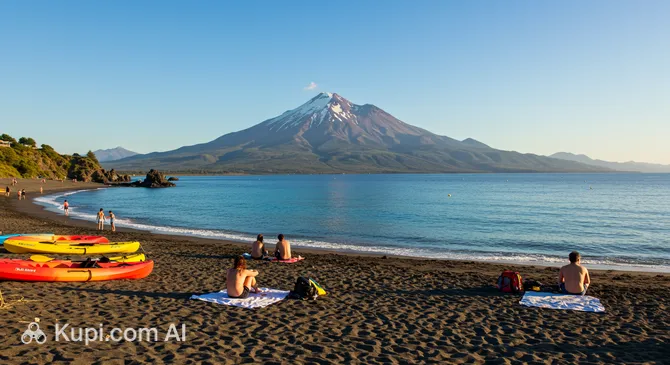
The main natural attraction within the town limits, accessible to every tourist, is Pucón Beach. This is not just a place for sunbathing, but a full recreational area with dark volcanic sand where you can relax in the shade of the trees and enjoy the view of Lake Villarrica. For a deeper immersion in nature, travelers head to the nearby Huerquehue National Park. It is famous for its ancient araucaria forests, crystal mountain lakes, and waterfalls. This is an ideal place for trekking, allowing you to see the pristine beauty of the Chilean south.

Pucón Beach. Illustration.
Source: Kupi.com AI

Traveler photos:

Another important point on the map for nature lovers is the Lake Caburgua area and the famous Ojos del Caburgua waterfalls. To reach these picturesque spots, many tourists use the Caburgua Buses—a local transport hub that has itself become a landmark for travelers. A trip to this area allows you to see turquoise waters and lush vegetation characteristic of the Valdivian rainforest.

As for museums, Pucón's cultural landscape is focused on the history of the indigenous population. A must-visit is the Mapuche Museum (Museo Mapuche Pucón). This is a private collection that carefully preserves artifacts: from traditional silver jewelry and textiles to ritual masks and stone tools. The exhibition provides a deep understanding of the cosmogony and everyday life of the people who inhabited these lands for centuries.

Also of interest is the Leandro Penchulef Museum (Museo Leandro Penchulef), located in neighboring Villarrica at a university campus. It is considered one of the best in the region due to its rich collection of ceramics and jewelry. Visiting these museums allows you to look at the Araucanía region not just as a center of extreme tourism, but as a land with a very rich historical background.

Insider Tip: If you are looking for seclusion away from popular routes, head to the El Cañi private reserve. This place is called "little Huerquehue," but there are far fewer tourists here, and the views from the observation deck of four volcanoes simultaneously are simply breathtaking.

Getting Around

Pucón's transport system is arranged quite simply and intuitively, due to the compact size of the town itself. There is no metro, trams, or complex railway network here. The town center is so cozy and small that most attractions, shops, and restaurants are within walking distance, and walking through the streets is often the most pleasant way to get around.

The main form of public transport for trips around town and the immediate surroundings are colectivos. These are black sedans with signs on the roof that run along fixed routes, similar to shared taxis. They operate faster than regular buses and cost only slightly more. To use them, just wave your hand on the street; drop-offs are also made on request at any permitted location along the way.

For trips to natural attractions, such as Lake Caburgua or the town of Villarrica, small local buses (micros) are used. The main departure points are concentrated around O’Higgins and Colo-Colo streets, as well as at private terminals, such as the Caburgua bus terminal. Schedules are generally followed, but in the high season, transport can be overcrowded, so it's better to arrive at stops in advance.

An important nuance for tourists concerns the payment system: transport cards used in the capital (such as the Bip! card) do not work here. Fares on buses and colectivos are paid exclusively in cash to the driver upon boarding. The fare for city trips is fixed and low, while the ticket price for out-of-town locations depends on the distance. We strongly recommend always having small bills and coins with you, as the driver may not have change for large banknotes.

If you plan to explore national parks and remote thermal springs at your own pace, the best alternative to public transport is car rental. This will give you the necessary freedom of movement, as many beautiful spots are located far from regular bus routes. Bike rental is also very popular in the town: thanks to the flat terrain of the central part and the presence of bike lanes, it's a great and eco-friendly way to get to the beach or the market.

Official taxis are easy to recognize by their black body and yellow roof. They usually wait for passengers at special stands near supermarkets and the main square. Taxi apps (like Uber) work in Pucón, but the number of cars may be limited, especially at night or during the peak tourist season, so it's more reliable to have a local taxi service number handy.
Accommodation

Where to stay:

Pucón, being one of the most popular resorts in Chile, offers travelers an impressive variety of accommodation options. The town's infrastructure is well-developed: you can find everything from budget hostels with a youthful atmosphere to exclusive boutique hotels or luxury lodges. A special place in the local hospitality scene is occupied by "cabañas"—cozy wooden cottages, often equipped with their own kitchen and fireplace, which are ideal for families or large groups.

When choosing an area, you should focus on your plans and mode of transport. The Town Center is the best choice for those traveling without a car: from here, it is easy to walk to restaurants, supermarkets, and the city beach. If you are looking for seclusion, silence, and total immersion in nature, look for options along the road to Villarrica or toward Lake Caburgua. Hotels in these areas often have extensive grounds and offer stunning panoramic views of the volcano, but a rental car is recommended for a comfortable stay here.

A critical planning tip: Pucón experiences a real tourist boom during the Southern Hemisphere summer months (January and February), as well as during long national holidays. During this period, demand for housing significantly exceeds supply. To guarantee a quality option at a reasonable price, it is strongly recommended to book your stay at least 2–3 months in advance.

The price range in the town is quite wide and depends on the season. Budget travelers can count on affordable campsites and hostels, the mid-range is well-represented by guest houses and apartments, and comfort seekers will find premium spa hotels with a high level of service. For booking, major international aggregators are convenient to use, but many local cabañas also actively take reservations through their websites or social media.

Nearby Cities

For those who want to explore the surroundings, Pucón serves as an excellent starting point for day trips to several interesting nearby locations:

The closest and most popular destination is Villarrica, located just 22 kilometers away. This town is often called Pucón's "older sister"; it offers a calmer and more authentic atmosphere. Villarrica is famous for its craft fairs, where you can buy wood and wool products, as well as its picturesque waterfront with magnificent views of the lake and volcano. It is an ideal place to get to know the daily life of the region without the tourist hustle.

For those interested in history and culture, a trip to Temuco—the capital of the Araucanía region—is a great option. Here, travelers can visit the Pablo Neruda National Railway Museum and immerse themselves in the Mapuche heritage at the colorful city market. Temuco allows you to see the contrast between the resort area and a large administrative center where the business life of southern Chile is in full swing.

CityPopulationDistance
Villarrica55 47822 km
Cunco15 62838 km
Panguipulli11 09151 km
Loncoche21 45858 km
Gorbea13 99063 km

These nearby destinations provide an insight into the region's diverse culture and landscapes.

Shopping & Souvenirs

Shopping in Pucón has its own unique flavor, dictated by the town's status as a hub for adventure tourism. You won't find huge malls with luxury brands here, but the town is famous for its excellent selection of outdoor gear and original artisanal crafts. Browsing the shops here is a relaxed activity that perfectly complements a rest after climbing or a day at the beach.

The main commercial activity is concentrated on the main street—Avenida O’Higgins. This is where you'll find stores of famous global trekking and sports brands, such as Patagonia or The North Face, which is not surprising given the proximity to the volcano. Perpendicular to it is Fresia Street, which, although better known for its restaurants, also offers cozy boutiques with clothing, books, and gifts.

Instead of the usual multi-story shopping centers, small shopping galleries built in a traditional style from wood and stone are common in Pucón. In such passages, you can find clothing stores, jewelry shops, and souvenir departments under one roof, while maintaining the cozy atmosphere of an Alpine town.

The true soul of local shopping is the craft markets. Be sure to visit the fairs that often set up near the central Plaza de Armas. Here, local masters sell their work directly. It's the best place to find authentic goods and chat with residents who take pride in their traditions.

As souvenirs from Pucón, it's worth bringing back woodwork, which the region is famous for: from skillfully carved flowers to kitchen utensils. Traditional silver jewelry in the Mapuche style and warm items made from natural wool are very popular. Don't forget about gastronomic gifts: the region is famous for its handmade chocolate, forest berry jams, and the spicy merquén sauce made from smoked chili peppers.

Shops in town are usually open from 10:00 AM to 8:00 or 9:00 PM, especially during the high summer season (January–February). Smaller shops may have a siesta break in the middle of the day. Credit cards are accepted almost everywhere, but for purchases at markets and kiosks, it is highly recommended to have cash pesos on hand. The Tax-Free system (VAT refund upon departure) in Chile for tourists is not common in regular shops, so you should not count on it.

Reached the end of the page?

That means the route is fully explored