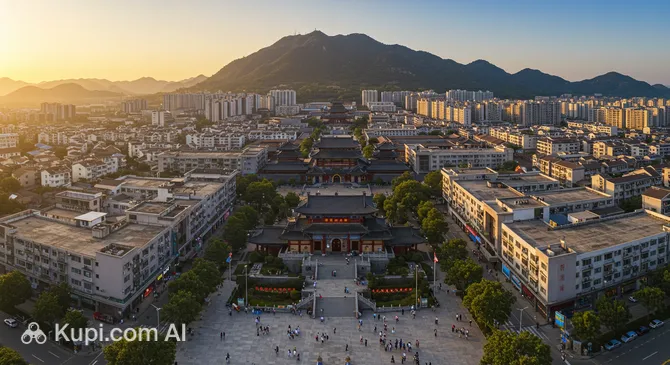
Jiexiu is an ancient city with over two thousand years of history, located in the heart of Shanxi Province in China. Although the city is a major administrative and industrial center, it retains the atmosphere of a quiet province, where modern residential developments coexist with a traditional way of life. The city's population is about 406,000, making it lively enough but without the hustle and bustle of a megacity.
Jiexiu. Illustration.
Source: Kupi.com AI
Geographically, Jiexiu occupies a favorable position, serving as an important transport hub for the region. For tourists, the city is primarily interesting as an ideal base for exploring unique cultural and natural monuments located in its surroundings. Here, you can feel the true spirit of Shanxi by immersing yourself in the daily life of the locals, which is centered around work and family values.
Among the key features of the region, the proximity to the majestic Mianshan Mountain and the mysterious Zhangbi Castle is worth highlighting. Visiting this city is an invitation to see authentic China, hidden from mass tourist routes, and to enjoy the hospitality and tranquility of this historical land.
Weather Overview
The climate in Jiexiu has a pronounced continental character, typical of northern China. Winters here are dry and cold: in January, the average temperature drops to -2.7°C, and nighttime frosts can reach -8°C and below. Summer, by contrast, is quite hot and humid—in July and August, the thermometer often rises to +30°C, and the bulk of annual precipitation falls during these same months.
When planning a comfortable trip, it is important to consider seasonal specifics and up-to-date information about the weather in Jiexiu. Spring and autumn are considered the most favorable periods for a visit, when the temperature is mild and the air becomes clear and fresh. It is worth remembering that due to the industrial profile of the region and the use of coal heating in winter, air quality in the city may temporarily deteriorate on windless days.
The terrain, particularly the proximity of Mianshan Mountain, creates a special microclimate in the city's surroundings. In the foothills, the temperature is usually several degrees lower than in the city center, providing a pleasant coolness in the height of the summer heat. When planning a trip to the mountain peaks, always bring a light jacket or windbreaker, as the weather at high altitudes can change rapidly.
Average monthly temperature
Average monthly precipitation
Interesting Facts
Jiexiu is one of the oldest cities in China, with a continuous history spanning more than 2,000 years.
It is believed that the Qingming Festival (Ancestors' Memorial Day) and the Hanshi "cold food" tradition originated in these lands.
In the immediate vicinity of the city lies Mianshan Mountain, where temples are built at extreme heights directly on sheer cliffs.
The unique Zhangbi Castle is preserved near Jiexiu, hiding an extensive network of ancient military underground tunnels beneath it.
The city is an important railway hub, with routes passing through it that connect the key cultural centers of Shanxi Province.
How to Get There
Jiexiu enjoys excellent transport accessibility, making it a convenient point on a route through Shanxi Province. The city is located just 20 kilometers from Jinzhou and a 50-minute drive from the famous ancient city of Pingyao. Travelers will find it useful to check information in advance on how to get to the city's main hubs to optimize their travel.
Although the city does not have its own airport, the nearest aviation gateway is in Taiyuan. A transfer by car or bus from Taiyuan airport takes between one and two hours, depending on traffic. During peak hours, delays on regional highways are possible, so it is worth allowing extra travel time.
Rail transport is the main and most convenient way to reach the city. Jiexiu Railway Station regularly receives trains from major cities in the region. Special buses run from the station to popular tourist sites like Mianshan Mountain, costing about 10 yuan, while a standard city bus costs only 3 yuan.
Station
Passenger traffic
Distance
Lüliang Railway Station
2
92 km
Taiyuan railway station
8
110 km
Linfen West railway station
4
111 km
Changzhi East Railway Station
3
142 km
Xinzhou West Railway Station
3
171 km
Main Attractions
The city of Jiexiu is primarily known as a convenient starting point for visiting the outstanding monuments of Shanxi Province, as the city proper is dominated by modern buildings and functional spaces such as markets and squares. The main tourist magnets are located in the nearby suburbs, attracting travelers with their ancient architecture and natural beauty.
The main treasure of the region is Mianshan Mountain, which can be reached from the city in less than an hour. This place captures the imagination with its "hanging" palaces and temples literally embedded into steep cliffs above deep gorges. The mountain holds sacred significance for Chinese culture, as it was here that the traditions of the Qingming Festival originated.
Another unique site is the ancient Zhangbi Castle. This rare military complex is interesting for its multi-level system of underground tunnels, which were used for defense and the secret movement of troops. A walk through these labyrinths allows you to touch the military secrets of ancient China. Jiexiu itself serves as a transit center, providing convenient access to these attractions through a well-developed bus network.
Local Cuisine
The cuisine of Jiexiu is a classic embodiment of the culinary traditions of Shanxi Province, where wheat is the main ingredient. Tourists should definitely try dao xiao mian—the famous noodles that are shaved with a knife directly into boiling water. Also popular are mitei (fried cakes) and dishes seasoned with the famous aged Shanxi vinegar, which gives the food a unique, deep flavor.
The city's gastronomic scene is mainly represented by inexpensive canteens and street food stalls, especially in the area around the railway station. Here, you can experience true local flavor by watching the food being prepared. For drinks, locals prefer various types of tea and local beer, which perfectly complements spicy and hearty dishes.
Special attention should be paid to the cafes located in the foothills of Mianshan. There, you can try unique dishes using wild mountain herbs and local roots, which are considered not only tasty but also medicinal. Despite the lack of fine dining restaurants, the honest and simple food of this region leaves a pleasant impression on every guest.
Travel Tips
A trip to Jiexiu is a great chance to see real, non-touristic China, and these tips will help make your stay here as comfortable as possible.
Clothing and items: Pack clothes according to the season: winters are cold (down to -10°C), and summers are hot. For visiting Mianshan Mountain, comfortable shoes with non-slip soles are essential.
Transport: The main transport options are buses and taxis. For out-of-town trips, it is best to use special tourist routes from the railway station.
Finances: Be sure to carry cash in yuan (CNY). International cards are rarely accepted, and ATMs in small branches may not support foreign systems.
Communication: English is almost unknown here. Install an offline translator and download a map of the city in Chinese.
Health: In the winter period, air quality may decline due to heating, so sensitive people should carry a protective mask.
Local Etiquette: Be polite and patient. In Shanxi Province, people are friendly but may show curiosity toward foreign guests.
What to avoid: Do not plan trips to attractions during peak holiday hours—transport and locations will be overcrowded.
Additional tip: Try the local Shanxi vinegar—it is not just a condiment, but a true gastronomic symbol of the region, often brought home as a gift.
May your introduction to this historic land be filled with only pleasant discoveries and inspiring moments!
Entertainment & Nightlife
Entertainment in Jiexiu is predominantly quiet and local in nature, reflecting the leisurely pace of a provincial city. There are no large night clubs or noisy bars typical of major tourist centers. Most evening activity is concentrated around karaoke halls (KTV) and numerous street markets where locals gather to have dinner and socialize.
For those looking for bright shows or a lively nightlife, experienced travelers recommend heading to neighboring cities such as Pingyao or Jinzhou. There, the choice of venues is significantly wider, and the atmosphere is more oriented toward visitors to the region. In Jiexiu itself, evening walks through the central squares allow you to observe city life and try local snacks.
Daytime leisure in the city can be diversified by visiting local parks and squares where citizens practice gymnastics or play board games. The main entertainment for tourists remains day trips to the mountain slopes and historical complexes in the vicinity, which provide unforgettable impressions of nature and ancient architecture.
Parks & Museums
The green spaces and cultural sites of Jiexiu reflect its status as an industrial city striving to maintain its connection with nature. There are not many large park complexes within the city limits; however, there are several well-maintained squares and plazas in the center that serve as favorite leisure spots for residents. Landscaping is actively developing here, improving the environmental situation in densely built-up areas.
The main focus of cultural and educational leisure is shifted toward the natural and historical-architectural monuments in the foothills. The majestic Mianshan Mountain is an open-air museum in its own right, home to dozens of ancient temples and pavilions demonstrating the skill of Chinese architects from various eras.
Although the city lacks giant museum galleries, local historical exhibits can often be found at temple complexes. These small but informative exhibitions tell the story of the region's role in the formation of ancestor worship traditions and significant events of antiquity. Walking through such places allows for a better understanding of the soul of Shanxi Province and its cultural heritage.
Getting Around
Public transport in Jiexiu is represented by a developed network of bus routes connecting the city center with the outskirts and the railway station. A trip on a city bus costs about 3 yuan, making this method of travel extremely economical. For tourists, special lines are also organized to the main attractions, such as Mianshan Mountain, with a fare of 10 yuan.
There is no metro or tram system in the city, but thanks to the compact layout of the central part, many areas are easy to explore on foot. In the summer, bicycles and electric scooters, which can be seen on the city streets, are popular. This is a convenient alternative for those who prefer mobility and want to avoid crowded buses during peak hours.
Taxis are active in the city and are relatively inexpensive; however, tourists are advised to agree on the fare in advance or ensure the meter is turned on. Since English is not widely spoken, it is useful to have a card with the address in Chinese or use navigation apps. Overall, the city's transport system is simple and functional, providing reliable connections between key points.
Accommodation
Accommodation options in Jiexiu are primarily geared toward transit travelers and those visiting to see nearby attractions. Budget and mid-range hotels and guesthouses predominate here. There are practically no luxury five-star resorts within the city limits, but the existing options offer a decent level of comfort for reasonable money.
The most convenient area to find accommodation is around the railway station. Many apartments and budget chain hotels, such as the Iu Hotel on Yuhua Road, are concentrated here. Room prices start from 100–300 yuan per night, making the city attractive for budget-conscious tourists.
When planning a trip during peak season (especially during Chinese national holidays), it is recommended to book accommodation in advance through popular services. If you are looking for a more authentic or high-end experience, consider staying directly in the Mianshan mountain area, where there are hotels offering picturesque views of the gorges.
Nearby Cities
Thanks to its location in the center of the province, Jiexiu serves as an excellent starting point for exploring neighboring cities and the region's cultural treasures. The city of Xiaoyi is just 18 kilometers away, and a bit further lie the lands of ancient Gutao and historical Fenyang, famous for its winemaking traditions.
One of the most popular destinations for a day trip is Pingyao, which can be reached by car in about 50 minutes. This open-air museum city is a UNESCO World Heritage site and offers full immersion into the atmosphere of imperial China. A trip to Jinzhou for shopping and getting to know the region's modern infrastructure is also worth considering.
The proximity of centers such as Xixinzhuangzhen or Taohongpo gives travelers the opportunity to create a rich itinerary, alternating natural beauty with visits to ancient architectural ensembles. Exploring the city's surroundings will allow you to see the diversity of Shanxi and make your journey truly profound.
Shopping & Souvenirs
Shopping in Jiexiu is practical and oriented toward daily needs. The main shopping spots are concentrated on the central streets and near the railway station. You won't find huge luxury malls here, but you will be able to purchase everything necessary for your trip. For major international brands, locals usually head to neighboring Jinzhou.
For tourists, the local markets are of the greatest interest. They offer authentic goods and products from the Shanxi region. Folk crafts, often brought from the Mianshan area, are particularly popular. Look out for local tea collected in the foothills and small wood or stone souvenirs made in a traditional style.
Shops in the city usually stay open until late evening, and payment is most often made through mobile apps or in cash. International bank cards are not accepted everywhere, so it is always worth having a supply of yuan. Trading at the markets is a great chance not only to buy a unique item but also to interact with the locals, feeling the true flavor of provincial China.