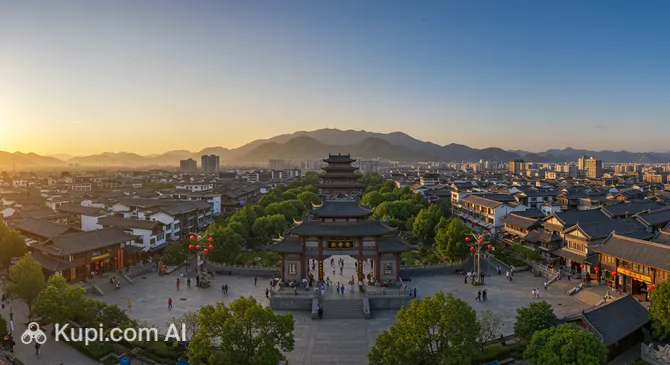
Located in the heart of Hebei Province, Shahe is a dynamic county-level city that forms part of the Xingtai prefecture. Its poetic name, which translates as "Sand River", was given in honor of the waterway that has defined the rhythm of life in this land for centuries. Today, it is a major administrative and industrial center with a population of over 480,000, where the modern industrial pace harmoniously coexists with the traditional agricultural lifestyle of northern China.
Shahe. Illustration.
Source: Kupi.com AI
The city does not strive to be a bustling tourist metropolis, which gives it a special charm of authenticity. Here you can see the real China unvarnished: from lively street markets to quiet residential blocks where life flows at a measured and calm pace. The region's rich history and its ancient heritage date back to the Sui Dynasty, creating a unique cultural layer that is still felt in the architecture and traditions of the local residents.
Shahe attracts travelers with its accessibility and proximity to major transport hubs. It is an ideal place for those who want to explore the provincial life of Hebei, enjoy walks along the river embankment, or use the city as a convenient base for exploring nearby attractions. A visit to this county is an invitation to look behind the scenes of a great country and feel its everyday pulse.
Weather Overview
Shahe is characterized by a moderate continental climate, typical for the northern part of the country. Winters here are quite cold and dry: in January, the average temperature drops to -0.3°C, and nighttime frosts down to -5°C are possible. Precipitation is extremely low during this time of year, making the air very dry. Summer, on the other hand, brings heat and humidity to the city—in July, the thermometer averages +28°C, often rising above +32°C.
Most of the annual precipitation falls between July and August, when the region is hit by heavy rains. During this time, the city's climate becomes most humid, which should be considered when planning walks along the river. The Shahe River creates a special microclimate, softening the summer heat; however, the proximity of industrial zones in Hebei Province can affect air clarity, especially on windless winter days.
The optimal time to visit the county is considered to be spring (April–May) and autumn (September–October). During these periods, a comfortable temperature is established in the range of +15...+22°C, and precipitation remains moderate. Clear skies and mild sunshine are perfect for exploring the city embankment and getting to know the daily life of this industrial center.
Average monthly temperature
Average monthly precipitation
Interesting Facts
Ancient Roots: Shahe was established as an independent county in 596 AD during the Sui Dynasty, although people have settled on these lands much earlier.
Hydronymy: The city's name literally means "Sand River", referring to the nature of the river of the same name that flows through the county and played a key role in its development.
Scale: Despite its status as a county-level city, Shahe ranks 3,356th among all cities in the world by population, highlighting the vast scale of urbanization in this part of the world.
Geography: The county covers an area of more than 925 square kilometers, encompassing not only urban development but also extensive agricultural land.
Link to the Past: Before becoming its own county, this territory was administratively part of the legendary Xiangguo County as far back as the Han Dynasty.
How to Get There
The transport accessibility of Shahe makes it a convenient point on the map of Hebei Province. The city is integrated into the developed road and rail network of Northern China, allowing travelers to easily plan their routes to Shahe. The main hub for air passengers is Shijiazhuang Zhengding International Airport, located about 150 kilometers away, from where you can reach the county by transfer or high-speed train in 2–3 hours.
For rail travel, it is most convenient to use the stations in neighboring Xingtai. High-speed trains connect the region with Beijing (about 300 km away) and other major cities. The travel time on a high-speed train from the capital to Xingtai is about an hour and a half, after which Shahe can be reached by regular bus or taxi in just 30–60 minutes.
Intercity bus services are also highly developed. Regular services from Xingtai depart every 40–50 minutes. If you prefer to drive, modern expressways provide comfortable travel, though you should account for potential local congestion at the city entrance during morning and evening rush hours.
Main Attractions
Since Shahe is primarily an administrative and industrial hub, you won't find world-class tourist landmarks here. However, the city offers its guests the chance to experience the authentic atmosphere of provincial China. The main point of attraction for locals and visitors alike is the Shahe River embankment, which has been developed for walking and outdoor recreation.
In the central part of the city, you'll find the main squares and administrative buildings, whose architecture reflects the county's development over recent decades. Strolling through these areas, you can observe the daily lives of the townspeople: from morning gymnastics to evening outdoor dancing. These are the places where the county's history, which began hundreds of years ago, meets modernity.
For those seeking local flavor, it’s worth visiting the commercial zones and local markets. Here, life is in full swing, and the absence of crowds of foreign tourists allows you to fully experience the rhythm of a real Chinese county. While the city lacks grand temple complexes, a walk through its busy streets and quiet park areas will give you a sense of the character of this industrial and residential center.
Local Cuisine
The gastronomic identity of Shahe is inextricably linked to the culinary traditions of Hebei Province, where hearty wheat-based dishes take center stage. You must try the local handmade noodles (lamian) and steamed baozi buns with various meat and vegetable fillings. Fried jiaozi dumplings, prepared according to old recipes in local family restaurants, are also popular.
The proximity of the Shahe River leaves its mark on the menu: dishes made from fresh river fish are highly valued in the city. One of the signature specialties is fried carp, prepared with aromatic spices and soy sauce. To complement the meal, locals often choose traditional huangjiu rice wine or freshly brewed green tea, varieties of which are grown in the Hebei foothills.
The food culture in the city is centered around small cafes and street markets in the central blocks. There are no fine-dining restaurants here, but cozy establishments offering homemade Hebei dishes, such as stewed meat with potatoes, are found everywhere. The atmosphere in such places is very casual, and portions are usually generous, making a gastronomic discovery of Shahe truly pleasant and affordable.
Travel Tips
Planning a trip to Shahe requires attention to detail to ensure your stay in this authentic county is as comfortable and interesting as possible.
Navigation and Connectivity: Be sure to install Baidu Maps or Amap, as international maps are often inaccurate in this region. To access familiar social networks and services, you will need a reliable VPN.
Finances: Although payment systems like WeChat Pay and Alipay dominate in China, it's better to carry some cash yuan in Shahe, as foreign bank cards are not accepted everywhere.
Language Barrier: English is practically not spoken in the county. Download an offline translator and keep a card with your hotel's name in Chinese characters.
Clothing and Seasonality: Summers in the region are hot, and winters are cold and dry. Be sure to bring comfortable shoes for walking along the embankment and warm clothing if you plan a visit between December and February.
Air Quality: During the winter period, pollution levels can rise due to heating and industrial plants. It is recommended to check the Air Quality Index (AQI) via mobile apps.
Local Transport: For getting around, it's best to use Didi taxis—it's safe and inexpensive. In the evening, avoid traveling to remote rural townships due to poor road lighting.
Etiquette: When entering homes or private shops, it is customary to greet with a nod. Remember that loud behavior in public places can be perceived as a lack of respect for those around you.
May your introduction to Shahe be a vibrant discovery of the real China and bring only positive emotions!
Entertainment & Nightlife
Nightlife in Shahe is quiet and primarily oriented towards local residents. You won't find the loud nightclubs or concept bars typical of major metropolises here. The main form of evening leisure is karaoke halls (KTV), located in the central districts. These are popular venues where Chinese families and groups of friends spend time singing their favorite songs in private rooms.
For those who prefer a more relaxed pace, cinemas in modern shopping centers are available. Most screenings are in Chinese, but a visit to the mall allows you to combine watching new releases with some window shopping. Evening activity in the city usually winds down by 10:00 PM, when the streets empty and life moves into cozy teahouses or family restaurants.
If you're looking for more vibrant experiences and dancing until dawn, it’s best to head to nearby major centers like Xingtai or Shijiazhuang. In Shahe itself, the focus is on daytime entertainment: walks in riverside parks and visits to local markets. Safety in the city is high, making evening strolls along the well-lit central streets quite comfortable.
Parks & Museums
While Shahe lacks major state museums with world-class collections, lovers of a peaceful holiday will find pleasant green zones here. The main public life and outdoor strolls are focused along the Shahe River embankment. The riverside areas have been specially landscaped for locals: there are paths, benches, and greenery that provides pleasant shade on hot summer days.
The county's urban parks, though not grand in scale, serve as important places for relaxation. Small squares in residential areas and near administrative centers are designed in a classic style with neat plantings. Residents often use these spaces for family picnics and sports. These are ideal spots to observe city life and enjoy some quiet away from the industrial zones.
The total amount of greenery in the county allows for a comfortable feel despite its industrial character. The absence of noisy tourist crowds makes a visit to local parks a particularly authentic experience. These are not ceremonial gardens for photos, but living spaces reflecting the everyday culture and the townspeople's desire for harmony with nature in an urban environment.
Getting Around
The public transport system in Shahe is quite functional and focused on travel between the center and the outskirts. The backbone consists of municipal buses that connect street committees with towns and townships. Intervals in the central part of the city are usually 15–30 minutes, making this a convenient mode of transport for budget travel.
For faster and more comfortable travel around the county, tourists often choose taxis or use mobile ride-hailing apps (such as Didi). Prices for these trips are very affordable, and the service allows you to reach any point in the city without needing to know Chinese bus routes. It's worth remembering that during morning (7:00–9:00) and evening (17:00–19:00) hours, traffic jams can occur on the main roads leading towards Xingtai.
As an eco-friendly alternative, locals actively use electric bikes and scooters. This is the most popular way to cover short distances. While specialized bike rentals for tourists may be scarce, many hotels offer such services. Overall, thanks to the paved roads in the center, navigating the city is straightforward, and for accurate navigation, it is recommended to use Chinese mapping services.
Accommodation
The accommodation market in Shahe is primarily geared towards business travelers and locals, so practical and budget options predominate. In central areas, especially within the street committee boundaries, you can find inexpensive hotels and guesthouses where prices range from 100 to 300 yuan per night. This is an excellent choice for those looking for basic comfort at a reasonable price.
In addition to traditional hotels, short-term apartment rentals are popular in the city. This format is convenient for travelers planning to stay in the region for a few days. For those traveling by car, motels are located along the main highways, offering easy access and parking. There are almost no elite five-star complexes in the county itself; for luxury accommodation, you should look at hotels in Xingtai.
When planning your trip, it is recommended to use popular Chinese booking services like Ctrip or Meituan, as choices on international platforms may be limited. During Chinese national holidays, demand for accommodation increases, so it is best to book a room in advance to guarantee a spot in the most convenient area of the city.
Nearby Cities
Thanks to its location in the densely populated Hebei Province, Shahe is an excellent starting point for exploring nearby historical and cultural centers. Just 24 kilometers away is ancient Xingtai—one of the oldest cities in Northern China, home to major shopping malls, parks, and museums. A trip there by bus or taxi takes less than an hour, making it an ideal option for a full day out.
Another interesting destination is the city of Handan, located 26 kilometers to the south. It is known for its rich history as the capital of the ancient State of Zhao. Also worth noting is Wu'an, located 32 kilometers away, where you can find picturesque natural landscapes. For those willing to travel a bit further, Anyang—the cradle of Chinese civilization—is open for visitors 85 kilometers away.
Exploring the surroundings will allow you to see the full diversity of the region: from modern metropolises to quiet county settlements like Pingxiangcheng. Good transport links and short distances between cities make it possible to create a varied itinerary and discover new facets of Hebei Province every day.
Shopping & Souvenirs
Shopping in Shahe is primarily practical and centered around lively local markets. The most interesting shopping stalls are located in the Shahe River area and in the central street committee districts. Here you can find everything: from the freshest produce and local delicacies to clothing and household items. The atmosphere of the markets allows you to immerse yourself in the true life of the county and practice the art of bargaining.
Modern shopping opportunities are represented by small shopping centers, where you can find daily necessities and Chinese chain brands. However, for major international brands and luxury boutiques, locals usually head to neighboring Xingtai. In Shahe itself, shopping is more of a way to get to know local life and find quality products from the light industry for which the region is famous.
As for souvenirs, it's worth bringing back traditional Chinese tea or local sweets from Shahe, which are sold in specialized shops. Stores usually operate from early morning until 8–9 PM. Payment in most places is made through mobile apps, but it is always useful to have some cash yuan with you at the markets.