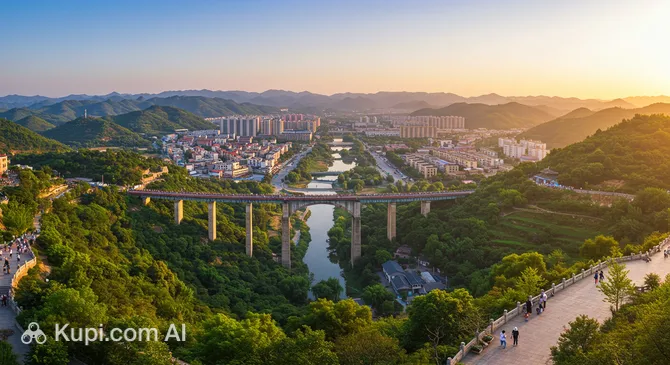
Wu'an is a dynamically developing industrial center located in Hebei Province, China. Administered by Handan Prefecture, the city is a classic example of a North Chinese industrial hub, where life moves to the rhythm of steel production, cement manufacturing, and coal mining. Despite its strictly industrial status, Wu'an possesses a unique urban character that may appeal to those wishing to see the "real," non-tourist side of China from within.
Geographically, the city is nestled in the foothills of the majestic Taihang Mountains. With a population of approximately 819,000 people, Wu'an combines dense residential areas with vast industrial zones. While the city does not claim to be a cultural capital, its proximity to natural wealth and its vital role in the regional economy make it a significant point on the provincial map.
Wu'an. Illustration.
Source: Kupi.com AI
For the curious traveler, the city can reveal its secrets through natural parks and ancient caves in the surrounding mountains. The rich history of these places dates back to antiquity, when the region was known as an iron mining center as early as the Han Dynasty. A visit to Wu'an is an opportunity to experience the daily life of working-class neighborhoods, local markets, and the genuine hospitality of residents who are not often visited by foreign tourists.
Weather Overview
The climate in Wu'an has a pronounced continental monsoon character. This means travelers should prepare for significant seasonal changes. Winters here are cold and dry: the average January temperature hovers around -0.6°C, and at night, the mercury can drop to -6°C. Conversely, summers are hot and humid—in July and August, the air warms up to +30°C and higher, with most of the annual precipitation falling during these months.
One regional feature is the influence of industrial activity on air quality, especially during windless winter periods. The terrain—the foothills of the Taihang Mountains—sometimes contributes to smog accumulation, so it is recommended to check the current city weather forecast and air quality indicators before your trip. The best times to visit are considered spring (April-May) and autumn (September-October), when comfortable moderate temperatures set in and rainfall is minimal.
Average monthly temperature
Average monthly precipitation
Interesting Facts
Coal Heart of the Region: Wu'an is one of the most important coal mining centers in Hebei Province, annually supplying millions of tons of fuel for Northern China's needs.
Cradle of Ancient Civilizations: In the nearby Taihang Mountains, archaeologists have discovered caves with rock paintings and artifacts dating back over 5,000 years.
Refractory Giant: The city boasts China's largest cluster of plants producing magnesia refractories, which are used in metallurgy worldwide.
Iron History: The first mentions of this region in Han Dynasty chronicles were related to large-scale iron ore mining and processing.
City of Workers: Wu'an's population is steadily growing due to the influx of specialists to industrial enterprises, creating a unique blend of traditional culture and industrial dynamism.
How to Get There
Getting to Wu'an is quite straightforward thanks to an extensive railway network and its proximity to major transport hubs in China. The city is well-connected to the key metropolises of Hebei Province and neighboring regions, making it accessible for both tourists and business travelers.
The city's main transport hub is Wu'an Railway Station, located on the important Shijiazhuang – Wuhan line. A high-speed train journey from Beijing takes about 2.5–3 hours, while neighboring Handan can be reached in just 30–40 minutes. This is the fastest and most comfortable way to travel.
The nearest air hub is Handan Ninghuai Airport (HHD), located approximately 70 kilometers from Wu'an. After landing, you can use taxi services or a bus; the travel time is about 1.5–2 hours depending on traffic. If you plan to travel by car, the G72 expressway provides convenient access from Beijing (about 400 km), though you should account for potential traffic jams at the city entrance.
More detailed information on routes and schedules can be found on the page dedicated to how to get to the city.
Although Wu'an is primarily known as an industrial giant, its surroundings hide surprising natural treasures. The main attraction for outdoor enthusiasts is the Taihang Mountains. Here, picturesque hiking trails lead to panoramic viewpoints offering rugged and majestic views of the mountain ranges.
The Shijiadong Caves deserve special attention. This is not just a natural monument, but also a site of world-class archaeological finds, where Neolithic artifacts were discovered. For those who prefer a more tranquil lakeside experience, a trip to the Wu'anshanhu Reservoir is an excellent choice, as it serves as both a vital resource and a popular recreation area for locals.
In the heart of the city, life bustles at Wu'anzheng Square. This is the perfect spot to observe the city's rhythm before heading to the colorful Wu'anshan Bazaar. If you find yourself craving modern comforts, stop by Wanda Plaza, which has become a key element of the city's modern infrastructure. For those interested in industrial heritage, visiting local industrial parks and resource-related museums can be an educational experience.
Local Cuisine
The culinary identity of Wu'an is closely tied to the traditions of Hebei Province, where hearty dishes made from wheat, lamb, and fresh vegetables take center stage. The gastronomy here is simple yet incredibly flavorful and nourishing—perfect for recharging after an active day.
Be sure to try huadlamian, a local spicy beef noodle dish served in a rich broth. Also popular are baozi (steamed buns) filled with meat and cabbage, and golden-brown pan-fried jiaozi (dumplings). Regional specialties include dishes featuring mushrooms gathered in the Taihang Mountains and local mountain honey, which is often used in desserts.
The food culture in the city revolves around bustling street markets and small family-run restaurants. Locals often dine at establishments offering hot pot or buy aromatic skewers at evening bazaars. For drinks, local favorites include classic green tea or the popular local beer Xuehua, which perfectly complements spicy Hebei cuisine.
Travel Tips
Traveling to Wu'an is an opportunity to see the inner workings of industrial China, and to ensure your trip is comfortable, we have prepared several practical tips.
Clothing and Environment: The regional climate is prone to contrasts, so pack according to the season. In winter, a warm jacket and a protective mask with a filter are essential (as AQI pollution levels often rise), while in summer, light clothing and sun protection are needed.
Getting Around Town: Install the Didi app for calling taxis and Baidu Maps for navigation. Buses run frequently, but knowing a few phrases in Chinese will help ensure you don't miss your stop.
Finance and Payment: Cash is rarely accepted. Be sure to set up Alipay or WeChat Pay by linking an international card. There are enough ATMs in the center, but not all work with international cards.
Communication: English is practically non-existent in Wu'an. Download an offline translator and keep a card with your hotel address written in Chinese characters.
Safety: The city is generally safe, but in the evening, it is better to avoid walking alone in remote industrial zones and mining settlements on the outskirts.
Etiquette: Chinese people are very hospitable. Greet people with a slight nod of the head. Tipping is not customary in restaurants—it may even embarrass the staff.
Health: Always drink only bottled water. Pharmacies are common in the center, but it is better to bring any specific medications with you.
What to Avoid: Do not discuss political topics and avoid photographing industrial sites if you see "no photography" signs—this will help avoid unnecessary questions.
Following these simple rules will make your stay in Wu'an productive and allow you to focus on exploring this unique industrial region.
Entertainment & Nightlife
Entertainment in Wu'an is predominantly local and family-oriented, reflecting the quiet lifestyle of an industrial city. Evening life is centered in the city heart, where locals enjoy spending time in numerous karaoke clubs (KTV). This is a great chance to get acquainted with modern Chinese pop culture and have fun with friends singing popular hits.
For those who prefer outdoor activities, city squares and parks are popular spots where groups of people can often be seen dancing or playing board games in the evenings. The atmosphere in local venues is very cozy and casual, with no strict dress code. Nightly activity usually winds down by 10:00 PM, when the last street barbecue stalls and tea houses close.
If you are looking for more vibrant nightlife, world-class clubs, or concert venues, locals recommend heading to neighboring Handan. It is located just 40 minutes away and offers a much wider selection of bars, cinemas, and entertainment centers. In Wu'an itself, it is best to enjoy the tranquility and safe evening strolls along the well-lit central streets.
Parks & Museums
The green spaces of Wu'an are a true sanctuary for the residents of this industrial center, offering opportunities for relaxation and sports. The main place for strolls is Taihang Park, which spans about 20 hectares at the foot of the mountains of the same name. Here, you can walk along the shore of a picturesque lake or follow well-maintained trails, enjoying the silence away from the factory noise.
For those who prefer fitness and morning jogs, Wu'anhu City Park is an excellent choice. Despite the city's industrial status, local authorities strive to maintain greenery, creating cozy oases amidst dense residential areas. On weekends, these parks become centers of social life, filled with children's laughter and the sounds of traditional music.
The city's cultural side is represented by small but vital museums that help one understand the region. The Wu'an Coal Museum provides detailed history on the extraction of "black gold" and how mining labor shaped the city's character. For lovers of antiquity, there are halls dedicated to archaeological finds from the Shijiadong Caves, where you can see evidence of the lives of the first settlers of these lands from thousands of years ago.
Getting Around
The public transport system in Wu'an consists primarily of an extensive bus network. Buses run throughout the city and connect the center with the outskirts, with fares costing only 1–2 yuan. This is a reliable and economical way to get around, though you should keep in mind that during peak hours (7 AM to 9 AM and 5 PM to 7 PM), transport can be crowded and traffic delays are possible.
For faster and more comfortable trips, residents and visitors actively use taxis and the popular ride-hailing service Didi. A taxi ride through the city center usually takes 10–15 minutes and is inexpensive. There are no metro or tram lines in Wu'an, so ground transport remains the only option for traveling longer distances.
In warmer months, bicycle rentals are an excellent alternative. Bike-sharing systems (such as Mobike) are popular among the youth and allow for easy travel to any point within the central districts. If you prefer walking, the compact city center is well-suited for exploring the main shopping streets and squares on your own.
Accommodation
The hotel stock in Wu'an is primarily focused on functionality and practicality. The bulk of accommodation options consists of mid-range hotels and budget guesthouses, often chosen by professionals visiting for industrial business. Despite the absence of luxury five-star resorts, the city offers a decent level of comfort for travelers.
In the city center, chain hotels like Hanting or 7 Days Inn are most popular. They provide consistent service quality and convenient locations near shopping areas and transport links. For those planning a longer stay, apartment rentals are available in new residential complexes in the central part of the city, where infrastructure is more developed and the air is cleaner than on the outskirts.
When planning your trip, it is recommended to book accommodation in advance through popular services like Ctrip or similar platforms, as rooms can fill up quickly during major industrial exhibitions or holidays. The price range is quite democratic, allowing travelers to save on accommodation and spend their budget on exploring local sights.
Nearby Cities
Wu'an can serve as an interesting starting point for exploring the surrounding Hebei Province, offering travelers both modern metropolises and historical centers. Thanks to good transport links, you can easily plan several fascinating day trips.
Just 31 kilometers away is Handan—a major cultural and economic center with a rich history. It is a great place for large-scale shopping, visiting theaters, and discovering the region's refined cuisine. For those interested in ancient Chinese history, Anyang, famous for its archaeological sites, is a must-visit. It is also worth checking out the cozy city of Shahe or heading to the large industrial hub of Xingtai.
Traveling through the surrounding areas will allow you to see the diversity of Northern China—from rugged industrial landscapes to quiet mountain villages and ancient ruins. Don't miss the chance to broaden your horizons by exploring cities located just an hour's drive from Wu'an.
Shopping & Souvenirs
Shopping in Wu'an is primarily about exploring authentic markets and modern shopping centers focused on the daily needs of residents. In the heart of the city lies Wu'an Wanda Plaza, where you can find popular clothing brands, electronics, and food courts with a variety of cuisines. This venue is the main magnet for young people and those who prefer a comfortable shopping experience.
To find something special, head to the Wu'an Night Market. The atmosphere here is unmistakable: stalls are overflowing with fresh fruit, affordable clothing, and various small goods. It is the perfect place to haggle and purchase items at very attractive prices. If you are looking for higher-end brands, locals typically make major purchases in neighboring Handan, where the selection is significantly wider.
As for souvenirs, it is worth bringing back items made from magnesia—a unique local product that has become the signature of this industrial cluster. Mountain honey from the Taihang foothills also makes a wonderful gift, renowned for its flavor and healing properties. Shops usually operate until 8:00 PM or 9:00 PM, and payments in most places are accepted via WeChat or Alipay apps.