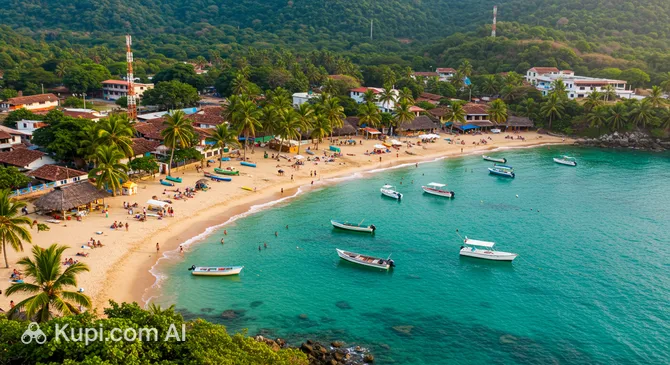
Necoclí is a city where the boundaries between the urban environment and wild nature are blurred, and cultural heritage lives not so much in showcases as on the streets and in the traditions of local residents. While you won't find the massive museum complexes that the capital of Colombia is rich in, the city offers travelers cozy green zones and cultural venues that allow for a deep sense of the Caribbean coast's atmosphere and the history of the first Spanish settlement on the mainland.
Parks and Natural Areas
The heart of the city's social life is the Main Park (Parque Principal). This is not just a square, but a true open-air living room where locals and tourists hide from the midday heat under the shade of spreading trees. The park is surrounded by colonial architecture and cafes, making it an ideal place for leisurely strolls. Fairs and cultural events are often held here, and in the evening, the lights come on, creating a romantic atmosphere for relaxing after a day at the beach.
For those who want to experience pristine nature, the Rionegro Inlet (Ensenada de Rionegro) natural reserve is a must-visit. Although this place is slightly removed from the urban area, it functions as the region's primary natural park. It is a vast ecosystem of mangrove forests where you can observe birds and marine fauna in their natural habitat. The peace and tranquility of the mangrove tunnels create a striking contrast with the busy center.
Another important green zone is the area around Ciénaga de la Marimonda. These are wetlands of immense ecological value. Here, tourists can see the unique biodiversity of the Antioquia region, including rare plant species and waterfowl. This place attracts ecotourism enthusiasts and photographers looking for shots of untouched tropical landscapes.
Museums and Cultural Centers
The primary keeper of the city's historical memory is the House of Culture (Casa de la Cultura). This institution serves as both a local history museum and an art gallery. It frequently exhibits works by local artists and craftsmen, and stores artifacts detailing the lives of indigenous peoples and the region's colonial past. Visiting the House of Culture is the best way to understand how the unique identity of the Gulf of Urabá residents was formed.
Although it is not a museum in the classic sense, the territory of Necoclí itself is considered the San Sebastián de Urabá Archaeological Zone. It was here in 1509 that one of the first Spanish settlements on the continent was founded. History buffs can find commemorative markers and excavation sites that serve as a kind of open-air museum, recalling the turbulent events of the conquistador era.
Architecture and Other Sites
Among the architectural landmarks, the Church of Our Lady of Mount Carmel (Iglesia de Nuestra Señora del Carmen) stands out, located across from the main park. This modest but elegant building is the spiritual center of the city and an example of religious architecture typical of small Colombian towns. Inside, peace reigns, and the church's facade serves as an excellent backdrop for photos.
Insider Tip: If you are interested in living culture, try to find out about the possibility of visiting one of the nearby indigenous communities (Resguardos Indígenas). This will give you a much more vivid impression than any traditional museum, allowing you to see traditions and crafts that have been preserved for centuries with your own eyes.