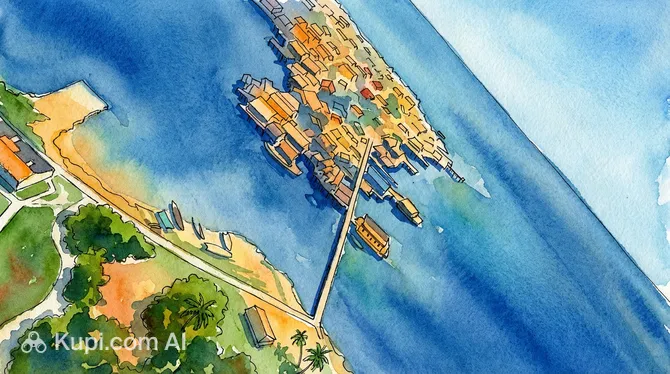
Mulatupo is a hidden gem of the San Blas Archipelago, nestled in the turquoise waters of the Caribbean Sea off the coast of Panama. This tiny island town in the Guna Yala comarca offers travelers a rare opportunity to immerse themselves in an atmosphere of absolute serenity and genuine authenticity. Here, time seems to slow down, and the modern pace of life gives way to harmony with nature and the ancient traditions of the indigenous Guna people.
Mulatupo. Illustration.
Source: Kupi.com AI
Geographically, Mulatupo is a typical coral island with a population of about 500 people. The rich history and cultural heritage of the locals are evident in every element of their daily life—from traditional palm-leaf huts to the famous "mola" needlework. Despite its modest size, the settlement has its own airport, making it an important link between civilization and the region's untouched islands.
Visiting this place is an invitation to explore crystal-clear lagoons and discover the unique social structure of the Guna. If you are looking for an ecotourism destination far from noisy resorts, Mulatupo will be the perfect spot on your travel map.
Weather Overview
Mulatupo is dominated by a classic tropical climate typical of the Caribbean basin. Temperatures remain stable throughout the year: average daytime highs are around 28–29°C, and at night, the thermometer rarely drops below 24°C. This predictability makes the region attractive to tourists at any time of year.
However, when planning a trip, it is important to consider the seasonality of precipitation. The wet season lasts from May to November, when tropical rains occur frequently, increasing the already high humidity. The most favorable weather in the city and across the archipelago is during the dry period—from December to April—when the sun shines almost constantly and the sea breeze makes being outdoors as comfortable as possible.
Average monthly temperature
Average monthly precipitation
Interesting Facts
Mulatupo is full of amazing details that make it unlike typical resorts. Here are some curious facts about this island settlement:
Mulatupo is part of the San Blas archipelago, which comprises more than 360 islands, and only about 50 of them are inhabited.
The local population, the Guna people, possesses a high degree of autonomy and carefully preserves their traditions, including a unique handicraft—mola (intricate fabric appliqués).
Mulatupo Airport (MPP) is one of the few in the entire archipelago capable of receiving regular flights, making the island an important regional transport hub.
There are practically no cars here, and the primary means of transportation between neighboring communities and islands are traditional wooden boats called ulu.
Panama as a whole has more than 1,500 islands, but the Mulatupo region is considered one of the most ecologically clean and authentic places in the entire Caribbean basin.
How to Get There
Traveling to this remote corner of the San Blas archipelago requires advance planning, as logistics here depend on aviation and water transport. The main gateway to the island is Mulatupo Airport (MPP), located about 4 kilometers from the central settlement. This is a small airfield that accepts regional flights, providing the fastest and most comfortable way to reach the destination from Panama City.
An alternative route to Mulatupo is by sea. Many travelers choose high-speed motorboats or launches departing from coastal ports on the mainland. This method allows you to fully enjoy the views of the Caribbean coast, but it takes significantly longer and is highly dependent on weather conditions. Detailed route information can be found in the how to get to the city section.
Due to the limited number of seats on flights, it is recommended to book tickets for small planes in advance, especially during the dry season. Since there is no rail connection on the islands, aviation and boats remain the only options for connecting with the outside world.
Main Attractions
The primary value of Mulatupo lies in its pristine nature. Untouched beaches with snow-white sand and turquoise Caribbean waters create ideal conditions for those seeking solitude. The island is surrounded by picturesque coral reefs, turning a simple swim into an exciting exploration of the underwater world with a mask and snorkel.
The cultural component is equally interesting: a walk through the settlement allows you to see the traditional dwellings of the Guna people, built from natural materials. Guests can learn about the local way of life, observe the process of creating the famous "molas"—intricate multi-layered fabric appliqués—and feel the rhythm of community life that hasn't changed for decades.
For outdoor enthusiasts, boat excursions are organized to the neighboring uninhabited islands of the San Blas archipelago. These trips provide access to completely wild locations where you can have a picnic on the ocean shore or go diving in areas with exceptional marine biodiversity, observing rays, turtles, and myriads of tropical fish.
Local Cuisine
The gastronomic experience in Mulatupo is inextricably linked to the riches of the ocean and the traditions of Caribbean cuisine. The foundation of the diet consists of freshly caught fish, lobsters, and crabs, prepared as simply as possible to highlight their natural flavor. Often, seafood is served with a side of rice cooked in coconut milk, which gives the dishes a characteristic mild aroma.
In addition to seafood delicacies, it is worth trying a classic Panamanian dish—Sancocho. This is a thick and hearty soup based on chicken and local root vegetables (such as yuca and yams) with fragrant herbs. The local gastro scene is represented by small family establishments where you can taste home-cooked food prepared according to ancient Guna recipes.
Traditional drinks include refreshing juices made from tropical fruits and fresh coconut milk straight from the nut. The dining culture on the island encourages leisurely outdoor lunches where the freshest ingredients are the main decoration of the table. Be sure to try fried plantains, which are served as a snack or side dish with almost any meal.
Travel Tips
A trip to Mulatupo is an amazing adventure that requires some preparation. Here are a few practical tips to help make your island holiday as comfortable as possible.
Clothing and gear: Choose light clothing made of natural fabrics such as cotton or linen. Be sure to bring a hat, high-quality sunglasses, and comfortable sandals. A dry bag will be useful for protecting electronics during boat transfers.
Finances: There are no ATMs on the island, and bank cards are practically not accepted anywhere. Be sure to have a sufficient supply of US dollar cash in small bills to pay for accommodation, food, and transport.
Health and safety: Don't forget to use sunscreen with a high SPF and insect repellent. It is recommended to bring a basic first-aid kit, as local medical facilities are limited.
Transport: Moving around the island itself is done on foot, and between islands by boat. Agree on the cost of boat transfers in advance.
Communication: The main language is Guna, but most residents understand Spanish. English is not common here, so it's useful to learn a few phrases in Spanish. Wi-Fi access can be extremely limited.
Local etiquette: Show respect for the traditions of the Guna people. Always say hello when meeting people and maintain moderate behavior.
What to avoid:Never take photos of locals, their homes, or children without prior permission—this is considered a serious mark of disrespect.
Additional tip: Plan your trip for the dry season (December – April) to avoid frequent tropical downpours and fully enjoy sea excursions.
By following these tips, you will be able to feel the true magic of the San Blas islands and return home with the warmest memories!
Entertainment & Nightlife
If you are looking for loud parties and the neon signs of nightclubs, Mulatupo might surprise you with its silence. Entertainment here is of a completely different nature—focused on nature and cultural exchange. Evening life on the island is quiet: it is a time for leisurely strolls along the Caribbean coast, watching the sunset, and having soulful conversations in small coastal cafes or guesthouses.
During the day, the focus is on water activities. Snorkeling and diving around the island are considered some of the best in the region due to the water's clarity and the preservation of the reefs. Boat tours to neighboring, completely deserted patches of land are also popular, where you can feel like a real Robinson Crusoe and enjoy the silence away from civilization.
The cultural program often includes visiting community houses where you can learn more about the beliefs and traditions of the Guna people. Occasionally, local festivals with folk dances and music are held, allowing tourists to gain a deeper understanding of the soul of this amazing archipelago. The absence of a mass entertainment industry is fully compensated for by the sincerity of the atmosphere and the chance to enjoy primordial silence under a bright starry sky.
Parks & Museums
Mulatupo and the entire surrounding San Blas archipelago can be viewed as a vast open-air natural museum. There are no classic galleries here, but the settlement itself serves as a living testament to the preservation of a unique culture. The traditional architecture of the huts, the layout of community houses, and the workshops where women create "molas" are of great interest to ethnography lovers.
From the perspective of natural attractions, the entire coastal area is a kind of marine reserve. The coral reefs surrounding the island are inhabited by hundreds of fish species, sea stars, and turtles. A visit to neighboring uninhabited islets gives an idea of what this region looked like hundreds of years ago—untouched natural zones with wild tropical vegetation and pristine beaches.
For those who want to study the region's heritage more deeply, the best source of knowledge is communication with the local residents. The entire island is steeped in the history and legends of the Guna people, passed down from generation to generation. Such immersion in the environment allows you to see not just exhibits, but a living, breathing culture that has maintained its identity in the modern world.
Getting Around
The transport system in Mulatupo is characterized by its simplicity and eco-friendliness. Due to the island's compactness, there is no need for public transport in its classic sense—all important sites are within walking distance. A walk from one end of the settlement to the other takes no more than 15 minutes, allowing tourists to fully integrate into the calm rhythm of local life.
Only boats are used for communication with the outside world and other islands. Traditional wooden ulu canoes are still popular among locals, while motorboats are more often used for transporting tourists. Boats serve as the main means of delivering food and materials, as well as transporting travelers to the airport or neighboring islands of the archipelago.
Payment for water transfers is made in cash directly to the boat owner. There are no fixed tariffs or travel cards on the island, so you should agree on the cost of the trip to your desired point in advance. This is a flexible system that requires a certain amount of communication skills and a supply of small cash bills from the tourist.
Accommodation
Accommodation in Mulatupo is geared toward those who value authenticity over standard hotel polish. You won't find multi-story chain complexes here; instead, travelers are offered cozy guesthouses and lodges, often managed by local families. This is a great opportunity to see the daily life of the Guna people from the inside and enjoy the sincere hospitality of the hosts.
Living conditions are usually quite simple: rooms with basic furniture, often in buildings constructed using traditional techniques. In some places, electricity is provided only at certain hours via generators or solar panels, which adds a special tropical flavor to the stay. Cabins built on stilts right over the water are particularly popular.
Given the limited number of options, we recommend booking accommodation well in advance, especially if your trip is planned for the period from December to April. Many guesthouse owners take bookings online, and accommodation prices remain quite affordable for budget travelers. An authentic stay in such a unique environment will be one of the most vivid memories of your trip.
Nearby Cities
Mulatupo serves as an excellent starting point for exploring the eastern part of the San Blas archipelago. The surrounding region is rich in distinctive island communities, each with its own unique character. For example, very close by is Ustupo—one of the largest settlements in the region, where you can experience the traditional Guna way of life in a more lively atmosphere.
If you decide to continue your journey along the coast, it is worth paying attention to Mamitupo and Achutupo. These small islands are famous for their picturesque views and seclusion. Another interesting destination for a trip could be Ailigandi, and for those who want to reach the very borders of the comarca, Puerto Obaldia is worth a visit.
City
Population
Distance
Ustupo
1,800
28 km
Mamitupo
500
36 km
Achutupo
—
38 km
Ailigandi
1,200
43 km
Puerto Obaldia
2,500
48 km
Exploring the nearby territories allows you to see the multi-faceted nature of life in Guna Yala. Every boat trip to a new island opens up new horizons and provides unique photo opportunities: from wild beaches to authentic villages where traditions are still more important than modern technology.
Shopping & Souvenirs
Shopping in Mulatupo is primarily about acquiring unique handmade products that cannot be found outside the region. The main treasure of the archipelago is the mola—traditional elements of Guna clothing. These bright fabrics with intricate geometric or animal patterns, made using the most complex multi-layer appliqué technique, make for a wonderful authentic gift.
In addition to fabrics, local artisans make magnificent beaded jewelry (for example, traditional wini bracelets), as well as items from coconut shells and wood. By buying souvenirs directly from the residents, you not only receive a genuine piece of art but also provide important support to the local economy. There are no shops in the traditional sense on the island, but craftswomen often display their work for sale right at their doorsteps.
For everyday small items, there are tiny shops on the island where you can find basic food and household goods. It is important to remember that all transactions are made exclusively in cash in US dollars. If you require large shopping centers, you should head to Panama City, leaving Mulatupo for the search of rare and original handcrafted goods.