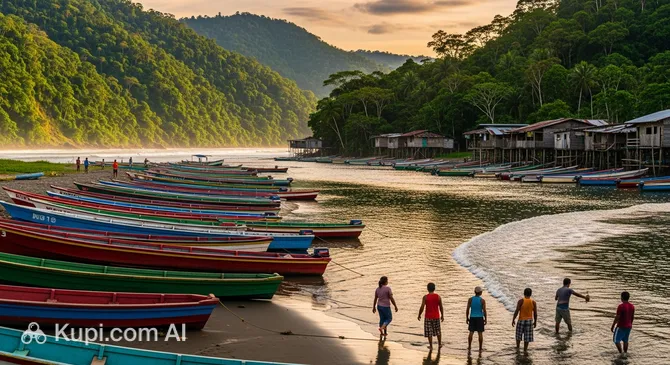
Shopping in Jaque is a reflection of the town's remote and authentic character. Visitors should adjust their expectations immediately: this is not a destination for high-end fashion, electronics, or duty-free luxury goods. Instead, the shopping experience here is focused on basic necessities and, most importantly, exquisite local craftsmanship. The retail scene consists almost entirely of small, family-owned supply stores and direct purchases from local artisans, offering a genuine connection to the community rather than a commercial transaction.
There are no designated shopping districts or pedestrian boulevards in the traditional sense. The "commercial hub" of Jaque is essentially the main village road and the area surrounding the small airstrip and river dock. Here, you will find a handful of scattered tiendas (small grocery stores) and kiosks. These humble establishments sell everything from canned food and cold drinks to basic toiletries and fishing gear. Walking from one end of the village to the other allows you to see the entire retail offering in less than an hour.
Travelers looking for shopping malls or department stores will not find them here. The infrastructure of Jaque supports a population of around 2,400 people living in the rainforest, far removed from the urban sprawl of Panama City. The concept of a mall does not exist in this part of the Darién Province. If you require specialized equipment, medicines, or specific branded items, it is absolutely essential to purchase them in the capital before traveling to Jaque.
While there is no formal central market building, the riverfront acts as a bustling open-air marketplace, particularly in the mornings. This is where the daily catch arrives, and you can see fishermen selling fresh snapper, tuna, and river shrimp directly from their boats. For fresh produce, small stands in front of local homes often sell seasonal fruits like mangoes, avocados, plantains, and coconuts. It is an informal, cash-based system that relies on what the land and sea have provided that day.
The true treasure of shopping in Jaque lies in its souvenirs. The region is home to the Emberá and Wounaan indigenous communities, who are world-renowned for their artistic skills. The most prized items are the Wounaan baskets, hand-woven from chunga palm fibers with incredible precision and geometric patterns; some are so tightly woven they can hold water. Another must-buy is Tagua nut carvings (vegetable ivory), which artisans shape into detailed figurines of local wildlife like frogs, birds, and turtles. These items are usually sold directly by the artisans in the village or during visits to their communities, ensuring that your money goes straight to the creators.
regarding opening hours and payment, the town operates on a rhythm dictated by the sun. Most small shops open around 7:00 AM or 8:00 AM and close by sunset, around 6:00 PM, though some selling drinks may stay open a bit longer. It is critical to know that cash is the only accepted payment method. Credit cards are useless in local shops, and there are no ATMs. Visitors must bring sufficient US dollars in small denominations ($1, $5, $10, $20) to cover all their purchases, as breaking a $50 or $100 bill is often impossible for local merchants.
As a remote village with an informal economy, tax-free shopping or VAT refund schemes are not applicable in Jaque. The prices you see are the final prices, and receipts are rarely issued. The trade-off is the incredibly low cost of local goods and the knowledge that your spending directly supports the livelihoods of the local families and artisans.