Support

Quimbaya

About

Quimbaya is a charming town nestled in the heart of the Quindío department, on the picturesque hills of Colombia's famous Coffee Triangle. The city enjoys a mild subtropical climate, which blesses it with evergreen landscapes and a rich variety of flora. Thanks to its location, Quimbaya often serves as a starting point for fascinating journeys through coffee routes and explorations of the region's natural beauty.

With a population of about 35,000, Quimbaya maintains a unique atmosphere of comfort and hospitality. It is not a noisy metropolis, but a place where you can enjoy a leisurely pace of life and get to know the authentic Colombian province. It is easy to feel at home here while immersing yourself in the local culture.

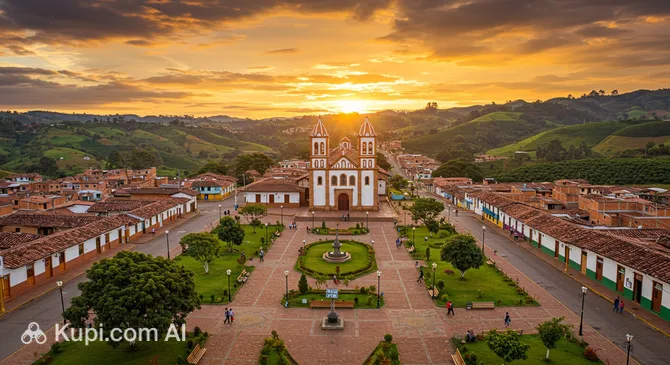
Quimbaya. Illustration.
Source: Kupi.com AI

One of the town's main gems is the Quimbaya Gold Museum (Museo del Oro Quimbaya), which displays unique artifacts from the pre-Columbian era. Additionally, Quimbaya attracts tourists with the opportunity to stroll through well-kept streets, admire colonial architecture, and, of course, inhale the intoxicating aroma of freshly brewed local coffee. There is a special "pueblo" atmosphere here, where traditions are carefully preserved and passed down from generation to generation.

A visit to Quimbaya is a wonderful opportunity to see Colombia from a different, less explored side, discover its true face, and gain unforgettable impressions. This town is sure to leave a warm mark on your heart.

You can find more interesting facts on the history of Quimbaya page.

Weather Overview

The weather in Quimbaya is characterized by remarkable stability throughout the year. The average monthly temperature fluctuates within a narrow range around 20°C, with minimum nightly values around 16-17°C and maximum daily values around 23-24°C. Precipitation is also fairly evenly distributed, with values ranging from 14 mm to 23 mm per month. A characteristic feature of the climate is the very high frequency of rainy days—precipitation can be expected almost daily, although its intensity may vary. Thus, travelers should be prepared for warm and humid weather at any time of the year.

For more detailed information on weather conditions, including the forecast for the coming days, you can visit the Climate in Quimbaya page.

Average monthly temperature

Average monthly precipitation

Interesting Facts

Besides its picturesque coffee plantations and hospitality, Quimbaya holds many fascinating stories and unique features that not all travelers know about. This town is not just a point on the map of Colombia, but a place with a rich heritage and interesting traditions.

  • The town owes its name to the ancient Quimbaya civilization, whose masters became world-famous for their incredible skill in working with gold. Their exquisite jewelry and ritual objects found in the Cauca Valley are still admired today and serve as central exhibits at the Quimbaya Gold Museum.

  • In the surroundings of Quimbaya, legends of the hidden treasures of Quimbaya chiefs are still alive. It is said that gold hidden from the Spanish conquistadors still awaits its discoverers in the local hills, giving the region an aura of mystery and adventure.

  • Quimbaya is the heart of unique traditions related to coffee harvest celebrations. Every year, vibrant festivals take place here, including parades, fresh-roasted coffee tastings, and workshops demonstrating the city's deep connection to coffee culture.

  • The town is often called a "living open-air museum" thanks to its carefully preserved local customs and crafts. The works of local craftsmen in wood, ceramics, and textiles are considered true works of art, and the atmosphere of Quimbaya itself has served as a source of inspiration for many of Colombia's cultural figures.

How to Get There

Quimbaya is located in the heart of Colombia's "Coffee Triangle," and although the town doesn't have its own airport, getting here is quite easy thanks to its proximity to the region's major transport hubs. Travelers usually combine a flight to one of the neighboring cities with a short bus or taxi ride. You can find more details on how to get to Quimbaya, and below we will look at the main and most convenient routes.

The closest airport to Quimbaya is El Edén Airport (IATA: AXM), located in the department's capital, Armenia. The distance to Quimbaya is only about 19 km. This is a regional airport that accepts flights from Bogotá and some international destinations. A taxi or transfer from here will take approximately 30–40 minutes, making it the fastest way to reach the town.

Another very popular option is Matecaña International Airport (IATA: PEI) in Pereira, located about 21 km from Quimbaya. This is a larger hub with more flights and a higher passenger volume. The travel time by car from this airport is about 40–50 minutes. If you are flying from further away, you might also consider Alfonso Bonilla Aragón Airport (IATA: CLO) in Cali. It is significantly further away (about 138 km), but it accepts many international flights; the road from there will take about 3 hours.

For your convenience, here is a summary of the main airports:

AirportPassenger trafficDistance
El Eden Airport780 00019 km
Matecana International Airport2.8 mln21 km
La Nubia Airport223 05355 km
Ibague Airport160 00073 km
Alfonso B. Aragon Airport6.7 mln138 km

As for rail transport, it is practically not used for passenger travel in this region of Colombia. There are no active railway stations in the town of Quimbaya or its surroundings that accept tourist trains. The main burden of intercity travel falls on road transport.

Therefore, if you are already in the country, the most common way to get to Quimbaya is by intercity buses. Bus stations in Armenia and Pereira offer regular and inexpensive trips (often on small "colectivo" buses) directly to Quimbaya's central square. The roads in the region are scenic and in good condition, so the trip will become part of your travel experience.

Main Attractions

Quimbaya, nestled in the heart of Colombia's coffee region, offers travelers a unique blend of cultural discovery and natural beauty. The town and its surroundings are famous for their theme parks and opportunities to experience the traditions of the Quindío region.

One of the main highlights is the National Agricultural Culture Park (PANACA). This is not just a park, but an entire world of agriculture where you can interact with more than 4,500 domestic animals, see exciting themed shows, and learn about Colombian farming in an interactive way. PANACA is ideal for families, offering educational and entertaining programs for all ages.

Equally interesting is Los Arrieros Park (Parque Los Arrieros), dedicated to the culture and traditions of the muleteers (arrieros) who played a key role in the development of the coffee region. Visitors can expect colorful performances, the chance to participate in traditional activities like grinding coffee or horseback riding, and a deeper understanding of the history and lifestyle of the locals. It is a living immersion into the past and present of coffee culture.

For those seeking a more tranquil connection with nature, bamboo rafting (balsaje) on the La Vieja River will be an unforgettable experience. This peaceful journey down a scenic river, surrounded by the lush greenery of coffee plantations, allows you to enjoy the silence, birdsong, and magnificent landscapes. Rafting is a great way to relax and see the region from a different perspective.

Of course, a trip to Quimbaya would not be complete without visiting one of the many coffee farms (fincas). Here, you can see the entire production cycle of the famous Colombian coffee with your own eyes—from growing the beans to roasting them. Many fincas offer tours, tastings, and the opportunity to buy the freshest coffee directly from the producer. It is not only educational but also incredibly aromatic!

Local Cuisine

The gastronomic scene in Quimbaya is a true immersion into the authentic flavors of the Colombian coffee region. Naturally, the star of the show here is coffee. Local coffee is famous for its rich aroma and full-bodied taste, often with notes of chocolate and caramel. Many coffee plantations around the town offer fascinating tours where you can not only learn everything about the cultivation and processing of coffee beans but also enjoy a tasting of the freshly brewed drink.

Among the dishes you must try in Quimbaya, bandeja paisa stands out—a hearty and colorful platter featuring an assortment of meat, beans, rice, fried plantains, and avocado. It is a true symbol of regional cuisine. Also popular are arepas—corn cakes served with various fillings, from cheese to meat. Don't forget to enjoy the abundance of fresh tropical fruits sold at every turn, especially in the local markets.

For dessert, locals and visitors alike love arroz con leche—a delicate rice pudding made with milk, cinnamon, and raisins. Various sweets based on guava and passion fruit are also popular. For drinks, besides coffee, be sure to try freshly squeezed juices from exotic fruits—they are a real vitamin boost and a refreshing treat.

The food culture in Quimbaya is very approachable. Locals and tourists often eat in small, cozy cafes or at bustling markets where you can find delicious and inexpensive street food, such as crispy empanadas (fried stuffed pastries). The town occasionally hosts gastronomic festivals where you can get acquainted with both traditional recipes and signature dishes from local chefs. Food here is not just a way to satisfy hunger, but an important part of culture and hospitality.

Travel Tips

Welcome to Quimbaya, a charming corner of Colombia's coffee region! To make your trip as comfortable and rewarding as possible, we have prepared some practical tips to help you navigate and enjoy every moment in this amazing place.

  1. Clothing and Essentials: A warm and humid climate prevails in Quimbaya, so choose light, breathable clothing made of natural fabrics. Don't forget a thin raincoat or umbrella, as tropical showers are not uncommon here. Comfortable shoes for walking around town and potential tours of coffee plantations are extremely important. Sunscreen, a hat, sunglasses, and repellent will also come in handy. Electrical outlets in Colombia are types A and B (American standard), with a voltage of 110V, so you may need an adapter.
  2. Transport: Within Quimbaya itself, it is convenient to get around on foot or by taxi. Taxis are relatively inexpensive, but always agree on the cost of the trip in advance or make sure the driver has turned on the meter (if there is one). For traveling between towns in the coffee region, you can use local buses ("busetas") or "chivas" (colorful open-sided buses). Renting a car can be convenient for exploring the surroundings independently, but take note of local driving habits.
  3. Finances: The official currency of Colombia is the Colombian peso (COP). Credit and debit cards (Visa, Mastercard) are accepted in most hotels, restaurants, and major stores. However, for small purchases at markets, in small shops, and for local transport fares, it's best to always have cash with you. ATMs (cajeros automáticos) are available, but it is better to withdraw money during daylight hours and inside bank branches. A 10% tip ("propina voluntaria") is often already included in the bill in restaurants; otherwise, it is at your discretion but always appreciated for good service.
  4. Health and Safety: There are pharmacies ("droguerías") in Quimbaya where you can buy basic medications. Having medical insurance is mandatory for any trip. It is recommended to drink bottled water. Quimbaya is generally considered a fairly safe town; however, basic precautions are never out of place: keep an eye on your belongings, and do not display large amounts of cash or expensive jewelry, especially after dark.
  5. Communication: The official language is Spanish. The level of English proficiency among the local population may be low, especially outside tourist areas. Learn a few basic phrases in Spanish: "Hola" (Hello), "Gracias" (Thank you), "Por favor" (Please), "¿Cuánto cuesta?" (How much does it cost?). Wi-Fi is available in most hotels and some cafes. For constant internet access, you can purchase a local SIM card (e.g., Claro, Movistar, Tigo).
  6. Local Etiquette: Colombians, and residents of Quimbaya in particular, are very friendly and hospitable. A simple "Buenos días" (Good morning), "Buenas tardes" (Good afternoon), or "Buenas noches" (Good evening) upon entering a place or starting a conversation will be appreciated. Politeness and a smile are your best assistants in communication.
  7. What to Avoid: Try not to take photos of local residents, especially children, without their prior permission. It is also not recommended to engage in discussions on sensitive political topics or discuss issues related to drug trafficking unless your interlocutor initiates such a conversation.
  8. Special Tip for Quimbaya: Do not miss the chance to immerse yourself in the unique culture of the coffee region! Be sure to visit one of the local coffee farms ("fincas") – many of them offer fascinating tours and tastings. Quimbaya is also known for its PANACA theme park (National Agricultural Culture Park), where you can learn about Colombia's rural life.

We hope these tips make your stay in Quimbaya even more pleasant and worry-free. Enjoy the authentic atmosphere, delicious coffee, and the hospitality of this wonderful Colombian town!

Entertainment & Nightlife

Quimbaya, a cozy town in the heart of Colombia's coffee region, offers its guests not only the enjoyment of scenic landscapes and aromatic coffee but also the chance to spend a pleasant evening. The nightlife here differs from the bustling activity of major cities, offering instead a unique local flavor and a chance to dive deeper into authentic Colombian culture.

Main evening entertainment in Quimbaya is traditionally centered around the central square (Parque Bolívar) and its adjacent streets. This is where you will find most of the bars and small restaurants where both locals and tourists gather. The atmosphere in these places is usually very friendly, relaxed, and conducive to conversation. Often, the fiery rhythms of salsa, merengue, or vallenato drift out from open doors, creating a festive mood.

In Quimbaya, you can find several types of establishments for evening leisure. Traditional Colombian "fondas" are very popular—these are authentic bars with unique interiors where you can have a glass or two of rum or aguardiente in the company of locals. Small bar-restaurants are also common, offering both dinner and a variety of drinks in a more tranquil setting. While Quimbaya is not famous for loud, world-renowned nightclubs, you can find very soulful places where you can, for example, combine dinner with drinks or soak in the atmosphere of a real Colombian fonda. It is important to understand that the charm of Quimbaya's nightlife lies in discovering these authentic local spots, so do not hesitate to ask for recommendations from your hotel staff or local residents. The dress code in most places is casual, although locals may dress up more formally for an evening out.

Quimbaya's nightlife is liveliest on Friday and Saturday nights. On these days, most establishments stay open later and attract the most visitors. Prices for food and drinks are generally quite moderate, which pleasantly distinguishes Quimbaya from major tourist centers. Bars usually open in the evening and stay open until midnight or slightly later, especially on weekends.

For getting around the city at night, a taxi is the safest and most convenient option. It is recommended to have your hotel or restaurant call a car for you, or to use a trusted local taxi service. Quimbaya is generally considered a fairly safe town; however, standard precautions after dark are never out of place: try to stick to well-lit streets and be mindful of your belongings.

During the day, Quimbaya and its surroundings also offer interesting leisure options. Although there are no large theaters or extensive museum complexes, you can get to know the local culture through small handicraft shops or occasional exhibitions. The main magnet of the region remains the coffee farms (fincas), many of which offer fascinating tours with tastings. Additionally, nearby theme parks dedicated to Colombia's nature and coffee culture are excellent for family fun and will help you better understand the uniqueness of this region.

Parks & Museums

Quimbaya, nestled in the Colombian department of Quindío, is famous not only for its renowned coffee plantations but also offers guests interesting opportunities to get to know the nature and rich culture of the region.

Among the green zones and parks worth visiting, several key locations stand out. National Agricultural Culture Park (PANACA) is a unique theme park located in the immediate vicinity of Quimbaya. It is a true anthem to Colombian agriculture. Here, visitors can interactively learn about various agricultural processes, see more than 4,500 domestic animals, and enjoy various shows. PANACA is a wonderful place for family vacations, where everyone can find an activity to their liking and learn many new things about rural life. Another significant park is Parque Los Arrieros. This park is dedicated to the culture of the "arrieros"—muleteers who played a vital role in the history and economic development of the coffee region. Guests can expect theatrical performances, demonstrations of traditional crafts, and exciting attractions that immerse them in the atmosphere of the past and the lives of these hardworking people.

The surroundings of Quimbaya themselves are an attraction. The endless emerald hills covered with coffee plantations are part of the Coffee Cultural Landscape of Colombia, recognized as a UNESCO World Heritage site. These picturesque landscapes offer magnificent opportunities for hiking, photography, and simply enjoying the peace and beauty of nature.

While Quimbaya itself may not have large traditional museums with extensive collections, the cultural heritage of the town and region is vividly represented in the mentioned theme parks. PANACA and Parque Los Arrieros fulfill an important cultural and educational function, introducing visitors to the history, traditions, and agrarian life of Quindío. You can also find the House of Culture (Casa de la Cultura) in town, which often serves as a venue for exhibitions by local artists and craftsmen, as well as for various cultural events reflecting Quimbaya's unique spirit.

The historical and architectural face of Quimbaya can be appreciated by walking through its center. The Central Square, as in many Colombian towns, is the heart of social life. It is surrounded by buildings with traditional architecture for this region—bright facades, carved wooden balconies, and tiled roofs. The town's main church is also located here, serving not only as a spiritual center but also as an important architectural landmark.

For an authentic experience in Quimbaya, be sure to plan a visit to one of the numerous coffee fincas (farms) in the area. Many of them offer fascinating tours where you can learn everything about the process of growing and processing coffee, from the bean to the aromatic cup, and, of course, taste the freshly brewed local drink. It is also worth stopping by the local market—it’s a great chance to see the variety of exotic fruits, chat with the residents, and perhaps purchase some unique handmade souvenirs.
Getting Around

Getting around Quimbaya and its surroundings is quite easy given the compact size of the town. The core of public transport here consists of colorful local means of transportation, perfectly suited for exploring the region.

The main types of public transport in Quimbaya, and for trips to neighboring towns and coffee farms (fincas), are buses (often small and maneuverable) and the famous "Willys" jeeps (locals call them "yipao" or "chivas" in a broader sense for colorful buses). These jeeps are not just transport but a real part of local culture, capable of taking you even to the most remote corners of the picturesque Quindío region. There are no metros, trams, or trolleybuses in Quimbaya.

The fare payment system is usually very simple: cash directly to the driver or conductor upon boarding. Fares are generally low, especially for short distances within the city. Specialized travel cards or mobile apps for paying public transport fares are typically not used in Quimbaya. It is recommended to have small bills and coins for convenience.

Buses and "Willys" jeeps run along specific routes, but you can often stop them with a wave of your hand almost anywhere along the way, especially outside the town center. Central departure points are usually located around the main square or the market. Transport starts running early in the morning and finishes work toward the evening; night services are not common. Check the route and the cost of the trip with the driver before departure.

As an alternative to public transport, taxis are always available in Quimbaya. This is a more expensive but more comfortable way to travel, especially if you are traveling with luggage or in a small group. It is better to agree on the taxi fare in advance or make sure the driver has turned on the taximeter (if available). Given the small size of the town itself, many parts of it are easy to explore on foot. For trips into nature or between nearby towns, you can also consider renting a bicycle if such a service is available.

Accommodation

When planning a trip to Quimbaya, you will find a variety of accommodation options to suit different preferences and budgets. The town and its surroundings offer traditional hotels and guesthouses as well as unique lodging opportunities, such as staying on authentic coffee farms (haciendas) where you can dive deeper into the local culture.

In Quimbaya, you can choose accommodation for every taste: from budget hostels and cozy family pensions to more comfortable mid-range hotels and charming haciendas. Apartment or house rentals may also be available, especially for those traveling as a family or in a large group who prefer more independence. Many tourists choose to stay either in the town itself to be closer to main infrastructure, or on coffee plantations in the surrounding area for a more secluded and authentic experience.

While Quimbaya may not be famous for large international hotel chains, there are many small but very hospitable local hotels and guesthouses that offer a decent level of comfort and personalized service. Particularly popular are the so-called "fincas"—coffee farms converted to host tourists, where you can not only spend the night but also learn more about the process of growing coffee.

To guarantee the best choice and prices, especially if your trip coincides with the peak tourist season or local festivals, it is recommended to book your accommodation in advance. The price range varies from very affordable options to luxury offerings, especially when it comes to exclusive haciendas. Most accommodation options can be found and booked through popular online platforms, but some smaller guesthouses or fincas may accept bookings directly.

Nearby Cities

For those who want to explore the surrounding area, Quimbaya serves as an excellent base for day trips to several interesting nearby locations.

For example, you might consider a trip to Armenia, the capital of the Quindío department, where you can immerse yourself in the region's coffee culture and visit theme parks. Another interesting option is Pereira, a large and bustling city that serves as a starting point for journeys into Los Nevados National Park. Equally attractive is Calarcá, known for its magnificent Quindío Botanical Garden and Butterfly House.

For a more comprehensive overview, here is a list of some nearby cities suitable for day visits:

CityPopulationDistance
Alcala23 1955 km
Montenegro41 8577 km
Filandia13 62813 km
Circasia28 16214 km
Armenia301 22614 km

These nearby destinations provide an insight into the diverse culture and landscapes of Colombia's region, making your trip even more rewarding.

Shopping & Souvenirs

Shopping in Quimbaya is an opportunity to purchase authentic goods from Colombia's coffee region and souvenirs reflecting the local culture. The town is not famous for giant shopping malls, but it offers cozy shops and markets where you can find something special.

Main shopping opportunities in Quimbaya are concentrated in the central part of the city, especially around the main square (Parque Principal) and its adjacent streets. Here you will find small shops offering a variety of goods: from food and clothing to household items and souvenirs.

As a rule, there are no large modern shopping centers in the traditional sense in Quimbaya. Instead, shopping here is represented by individual stores and small shopping arcades where you can find everything you need.

Be sure to check out the local market (mercado). This is a colorful place where you can buy the freshest exotic fruits, vegetables, local cheeses, spices, and other products. Sometimes you can also find handicrafts or inexpensive souvenirs here. Visiting the market is a great way to immerse yourself in the daily life of the town.

From Quimbaya and the coffee region, you should first and foremost bring back high-quality Colombian coffee. Pay attention to the products from local farms. Handmade items are also popular: these can be colorful mochila bags, woven items made from iraca or guadua fibers (a local type of bamboo), ceramics, and traditional "ruana" wraps. Don't forget about sweets based on coffee or arequipe (local dulce de leche).

Shops in Quimbaya are usually open from Monday to Saturday, roughly from 9:00-10:00 AM until 6:00-7:00 PM. Some small shops may close for a lunch break (siesta). On Sundays, most shops are closed or work on a reduced schedule. The primary method of payment, especially in markets and small shops, is cash in Colombian pesos (COP). Credit cards may be accepted in larger or more tourist-oriented establishments, but it's always better to have some cash on hand.

In Colombia, there is a VAT refund system (known as IVA) for foreign tourists on certain goods. If you make large purchases, check with the store if it participates in the Tax Free program and keep all your receipts. The tax refund procedure is usually carried out at the airport when departing the country.

Reached the end of the page?

That means the route is fully explored