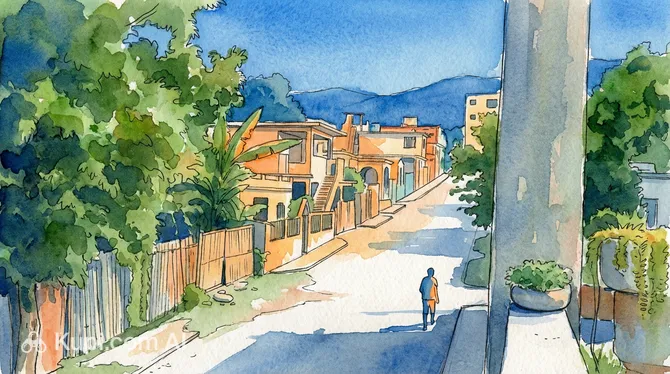
Arroyo Naranjo is one of the fifteen municipalities of the Cuban capital, located in its southwestern part. Unlike the grand facades of Old Havana, this district represents the living heart of Cuba, where residential neighborhoods, industrial zones, and the daily lives of Cuban workers are closely intertwined. With a population of over 210,000, the municipality maintains the atmosphere of an authentic suburb where life flows at its own unhurried pace.
Geographically, the district is characterized by dense development where colonial heritage sits alongside typical buildings from the second half of the 20th century. Arroyo Naranjo. Illustration.
Source: Kupi.com AI
The rich history of Arroyo Naranjo dates back to the mid-19th century, when wealthy estates and orange groves occupied the site of today's blocks. Today, it is an important transport and industrial hub that has retained its reputation as a working-class district.
While Arroyo Naranjo is not a traditional tourist center, it attracts travelers with its proximity to the city's largest park and the opportunity to see real, non-touristy Cuban life. Visiting this area is an excellent way to experience the local flavor and enjoy walks through the green zones located on its outskirts.
Weather Overview
The climate in Arroyo Naranjo is tropical, with a characteristic division into dry and wet seasons. The hottest period is traditionally summer, when daytime temperatures in July and August can reach 31–32°C. During this time, humidity increases significantly, and tropical showers become a frequent occurrence.
Winter months, from December to February, bring more comfortable weather with an average temperature of around 23–24°C. Precipitation during this period is minimal, making winter an ideal time for city walks. The detailed weather in Arroyo Naranjo by month will help you better plan your visit.
Expect a sunny and hot summer with brief but heavy rains, and a very mild, dry winter. Due to the dense urban development, a "heat island" effect can be felt during the summer months, so it is better to choose morning or evening hours for walking.
Average monthly temperature
Average monthly precipitation
Interesting Facts
Arroyo Naranjo is a place with a rich background and interesting details that reveal its unique character:
"Orange Creek": The name of the municipality translates from Spanish as exactly that. It is believed that in colonial times, the area was famous for its clean streams and extensive citrus groves.
Venerable Age: The official settlement in this territory was founded back in 1845, and it received the status of an administrative unit just three years later, in 1848.
Close to the Sky: The district is located just 6.4 kilometers from the country's international gateway — José Martí International Airport, making it a strategically important transport hub.
Labor Heritage: Historically, this area has transformed from agricultural lands and colonial haciendas into a major industrial and residential center of modern Havana.
Administrative Reform: Arroyo Naranjo acquired its modern boundaries and status as one of the capital's 15 municipalities in 1976.
How to Get There
Arroyo Naranjo's accessibility is defined by its location in southwestern Havana. The district is traversed by important road arteries, such as Avenida de la Independencia, which provide quick connections to the central quarters of the capital and the suburbs. Detailed information on routes and travel options can be found in the how to get to Arroyo Naranjo section.
The nearest and main aviation hub is José Martí International Airport, located less than 7 kilometers from the district borders. A taxi ride from the terminal to the municipality's residential areas usually takes about 15–20 minutes, making the district convenient for short stays before a flight.
The railway connection also plays a role in the district's transport system, linking it with other parts of the capital and nearby provinces. The main stations serve suburban trains, which are frequently used by workers commuting to central Havana.
Station
Passenger traffic
Distance
Havana Central railway station
8
17 km
San Martin Railway Station
1
112 km
Santa Clara railway station
4
247 km
Main Attractions
Arroyo Naranjo is primarily a residential and industrial district, so there are few classic tourist attractions. However, this municipality is home to one of the locals' favorite recreation spots — Lenin Park (Parque Lenin). This massive recreational complex, created in the early 1970s, covers a vast area and offers visitors amusement rides, an amphitheater, and picturesque walking paths.
For those interested in architecture and working-class history, a walk along the district's main streets, such as Calzada de Bejucal, reveals a mix of different construction eras. Here, you can find remnants of old colonial manors alongside functional Soviet-era buildings, which vividly illustrate Havana's urban planning history over the recent decades.
The main value of visiting Arroyo Naranjo lies in the opportunity to see authentic Cuba without the polish. The absence of tourist crowds makes this district interesting for those seeking off-the-beaten-path routes and wanting to get acquainted with the daily life, customs, and hospitality of the local residents.
Local Cuisine
Gastronomy in Arroyo Naranjo reflects the everyday tastes of the Cuban capital. Traditional home cooking prevails here, simple and hearty. The menu is based on dishes such as congrí (rice with black beans), fried plantains, and the famous ropa vieja — shredded beef slow-cooked in a spiced tomato sauce.
The dining culture in the district centers around small private cafeterias and eateries known as "paladares." Here, you can try street food, such as Cuban sandwiches or pizza with a local twist. This is a great opportunity to taste authentic dishes at prices significantly lower than the tourist rates in the city center.
As for drinks, strong Cuban coffee with plenty of sugar is popular here, as it is everywhere on the island. On a hot day, it is worth refreshing yourself with tropical fruit juice or "guarapo" — sugarcane juice, which is often sold at local markets. Alcoholic beverages are mainly represented by locally produced rum and cold beer.
Travel Tips
Visiting Arroyo Naranjo will allow you to see the real life of the Cuban capital, but such a trip requires some preparation and attentiveness.
Clothing and Equipment: Choose light clothing made of natural fabrics, as the district can be very hot due to the dense buildings. Be sure to wear comfortable shoes for walking on sidewalks that are not always level, and bring sunglasses with you.
Transport: For moving between districts, it is better to use official taxis, especially in the evening. State buses are cheap but often overcrowded and lack air conditioning.
Finance: Keep a supply of cash in local pesos (CUP) with you. Cards are accepted very rarely and only in some state stores, so cash is your primary payment tool.
Safety: Follow general precautions: do not display expensive equipment or large sums of money. Avoid walking at night in unfamiliar outskirts and unlit alleys.
Communication: Knowing basic phrases in Spanish will significantly ease communication with locals, as English is much less common here than in the center of Havana.
Etiquette: Cubans are very sociable and friendly. A greeting like "¡Hola!" and a smile will help establish contact quickly. Be prepared for people to approach you on the street with simple questions.
What to Avoid: You should not photograph military facilities or people in uniform. Also, try not to engage in political discussions and politely decline persistent offers of questionable services.
Connectivity: Wi-Fi is available in some public parks and hotels, but for constant access, it is better to purchase a local SIM card at ETECSA offices.
Following these simple rules will make your introduction to this unique district comfortable and safe.
Entertainment & Nightlife
Nightlife in Arroyo Naranjo is strictly local in character. You won't find the bright neon signs of massive clubs or high-end lounge bars here. Most entertainment venues are small neighborhood bars and cafes where locals gather in the evenings to enjoy coffee or rum to the sound of traditional music.
For more active nightlife, large-scale discos, and concert venues, residents and visitors usually head to the central parts of Havana, such as Vedado or the Old City. These areas are the capital's main cultural hubs, where life hums until dawn.
During the day, Lenin Park remains the primary leisure spot. It is an ideal space for family relaxation, where you can visit the amusement park, have an outdoor picnic, or watch a performance at the local amphitheater. This peaceful setting contrasts sharply with the noisy streets of the municipality's residential blocks.
Parks & Museums
The green oasis and main attraction of the district is rightfully considered Lenin Park. It is a vast territory with a reservoir, forest-park zones, and a developed infrastructure for recreation. Built in the late 60s and early 70s, it remains an important place for walking, picnics, and outdoor sports.
Although Arroyo Naranjo is not rich in classic museums, the very appearance of its streets can be seen as a living exhibition of Havana's industrial history. Individual 19th-century buildings have been preserved here, which were once centers of agricultural estates, giving an idea of what the capital's outskirts looked like a century and a half ago.
To visit major art galleries or historical museums, tourists will need to head to the city center. However, for lovers of nature and quiet, Arroyo Naranjo offers cozy corners away from noisy highways, where you can see typical Cuban flora and relax in the shade of palm trees.
Getting Around
The public transport system in Arroyo Naranjo is mainly represented by bus routes and route taxis. The district is an important transport hub connecting southern suburbs with the city center via highways such as Calzada de Bejucal and Avenida de la Independencia. Travel time to the central quarters is usually between 30 and 50 minutes.
For travel, "máquinas" (old American cars operating as shared taxis) and state buses are frequently used. Fares are paid in local pesos (CUP) in cash. Tourists should keep in mind that during rush hours, public transport can be very crowded, and schedules may not be strictly followed.
An alternative to buses is official taxi services, which can be called by phone or found at designated stands. This is a more comfortable and faster way to get around, especially if you need to reach the airport or remote parts of Havana in the evening. Bicycle rental is not developed in the area, so the main methods of travel remain walking or motorized transport.
Accommodation
Since Arroyo Naranjo is primarily a residential area, there are virtually no large hotel chains or luxury hotel complexes here. The main accommodation option is the private sector, represented by "casas particulares," where locals rent out rooms or apartments.
This type of accommodation allows tourists to dive deeper into Cuban life and significantly save on lodging costs compared to central hotels. Most available options are geared towards long-term rentals or budget travelers who appreciate the proximity to the airport.
To find comfortable hotels with a full range of services, it is recommended to look at neighboring areas of Havana, such as Vedado or Miramar. If you decide to stay specifically in Arroyo Naranjo, it is best to book your accommodation in advance through specialized short-term rental platforms.
Nearby Cities
Due to its location on the southern outskirts of the capital, Arroyo Naranjo is a convenient starting point for small trips through the province of Artemisa and the southern districts of Havana. Proximity to major highways makes it easy to plan day trips beyond the dense urban development.
One interesting destination is the town of Bejucal, located just 12 kilometers away. It is known for its ancient traditions and festivals, as well as its historical role in the development of the island's railways. It is also worth visiting Guanabacoa, famous for its Afro-Cuban cultural roots and colonial charm.
Of course, one cannot forget the proximity to the very heart of the country — Havana. The capital's central districts are only 15–17 kilometers away, offering an endless variety of museums, squares, and waterfronts. Exploring the surroundings of Arroyo Naranjo helps you see the contrast between the industrial suburb and the historical grandeur of the old city.
Shopping & Souvenirs
Shopping in Arroyo Naranjo is focused exclusively on the daily needs of the city's residents. You won't find huge shopping malls or fashion boutiques here. Most commercial activity is concentrated in small state-owned stores and private shops along the district's main streets.
Local agromercados (agricultural markets) may be of particular interest to travelers. These are noisy and colorful places where you can buy fresh tropical fruits, vegetables, and spices at local prices. These markets are the best place to feel the rhythm of life in the district and observe trade from the "inside."
To purchase traditional souvenirs such as cigars, rum, or folk crafts, it is recommended to travel to the central districts of Havana. In Arroyo Naranjo, retail outlets offer a basic set of goods, so for memorable gifts, it is better to head to the specialized craft markets of Old Havana.