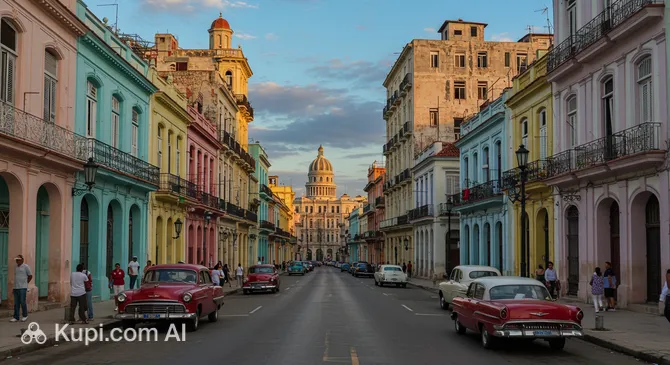
Centro Habana is the pulsating heart of the Cuban capital, a district where history, architecture, and the vibrant energy of the locals merge into a single rhythm. Located between the colonial charm of Old Havana and more modern neighborhoods, this part of the city offers travelers a chance to immerse themselves in the atmosphere of authentic Cuba. Here, narrow streets give way to grand boulevards, while laundry dries on the balconies of colorful buildings to the sounds of salsa.
Centro Havana. Illustration.
Source: Kupi.com AI
The district is known for its high population density—around 140,000 people live here—creating a unique effect of non-stop movement. Geographically, Centro Habana stretches along the coast, bordering the famous Malecón promenade. The climate is classically tropical: the hot sun and refreshing ocean breeze make strolling through the quarters pleasant almost any time of year, though the high humidity gives the city a special, "viscous" charm.
The main magnets for tourists are the magnificent facades in Art Nouveau and Art Deco styles, many of which retain traces of their early 20th-century grandeur. Exploring this area is always an adventure, where an impromptu concert or a cozy family-run "paladar" restaurant might be hiding around every corner. We invite you to feel the true Cuban soul right here, in the most dynamic corner of Havana.
Weather Overview
The weather in Centro Habana is defined by a tropical climate, characterized by warmth throughout the year. Average air temperatures range between 25–30°C. The winter months, from November to April, are considered the most comfortable for visiting: this is the dry period with mild temperatures (around 24°C) and minimal rainfall, ideal for long walks through historic quarters.
The rainy season begins in May and lasts through October, when humidity increases significantly and tropical downpours become a frequent, though usually brief, occurrence. During this period, the thermometer often rises above 30°C. Expect a truly hot summer with occasional refreshing rains that usually pass in the afternoon, quickly followed by bright sunshine.
Solar activity in Cuba is very high, so tourists are advised to always carry sunscreen and a hat, even if the sky seems cloudy. The proximity to the ocean brings a pleasant breeze to the district, which is felt particularly strongly on the Malecón promenade, softening the midday heat.
Average monthly temperature
Average monthly precipitation
Interesting Facts
Immerse yourself in the fascinating world of this district through a few exciting facts:
Centro Habana is the most densely populated district of the Cuban capital, with a record number of residents per square kilometer, making it a true open-air anthropological museum.
It is home to the famous San Lázaro Street, which historically served as the main artery connecting the old forts with the city's newer quarters.
The district is a sanctuary for Art Deco architecture: many residential buildings, despite their venerable age, have preserved unique moldings and decorative elements from the early 20th century.
These very quarters saw the birth of many modern trends in Cuban Rumba, and impromptu dance battles right on the sidewalks are still considered a common occurrence here.
In the district, you can find unique "monument houses," where old neoclassical columns stand alongside vibrant modern murals reflecting the spirit of revolution and freedom.
How to Get There
Reaching the capital's liveliest district is easy, as Centro Habana is located in close proximity to the island's main transport gateways. The primary point of arrival for international tourists is José Martí International Airport (HAV). It is located approximately 20–25 kilometers from the center. A trip by official taxi takes about 30–40 minutes; you can also use transfer buses that run between the airport and major hotels in the district.
If you are traveling within the country, Viazul buses are a convenient option. They connect Havana with popular destinations like Varadero, Trinidad, and Viñales. The bus station is a few minutes' taxi ride from the borders of Centro Habana. Rail travel is also available to travelers, though it is less predictable regarding schedules than the bus service.
Havana's Central Railway Station borders the district, making it convenient for those arriving from eastern provinces. Upon arriving in the city, it is best to use state taxis or local shared taxis to quickly reach your hotel or rented room.
Main Attractions
The district's greatest pride is the legendary Malecón promenade. This eight-kilometer "open-air living room" draws thousands of people at sunset. Here you can see fishermen, street musicians, and couples, while the ocean spray crashing against the stone parapet creates a unique backdrop for evening walks.
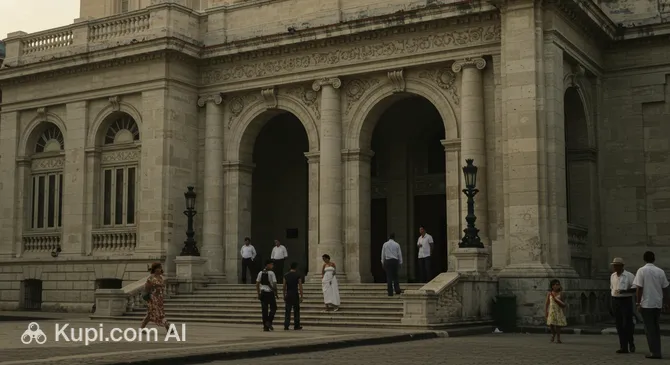
For art lovers, the National Museum of Fine Arts (Cuban Art) is a must-visit. Its galleries house the richest collection of works by local masters, from the colonial period to modern avant-garde installations, allowing you to trace the evolution of Cuban identity through visual imagery.
National Museum of Fine Arts (Cuban Art Building). Illustration.
Source: Kupi.com AI
Traveler photos:
Equally impressive is the majestic Havana Capitol (El Capitolio), whose architectural silhouette dominates the Centro Habana skyline. This building, which is an almost exact (and slightly larger) replica of the original in Washington D.C., amazes with its interior decoration and grand dome. If you're looking for something more informal, head to the Callejón de Hamel—an authentic open-air street art museum filled with vibrant graffiti and sculptures made from recycled materials.
Local Cuisine
The culinary scene in Centro Habana is a vibrant fusion of Spanish, African, and Caribbean traditions. The main dish to try in one of the local "paladares" (private restaurants) is Ropa Vieja, which translates to "old clothes." In reality, it is tender shredded beef simmered in a tomato sauce with spices, traditionally served with congrí—a mix of rice and black beans.
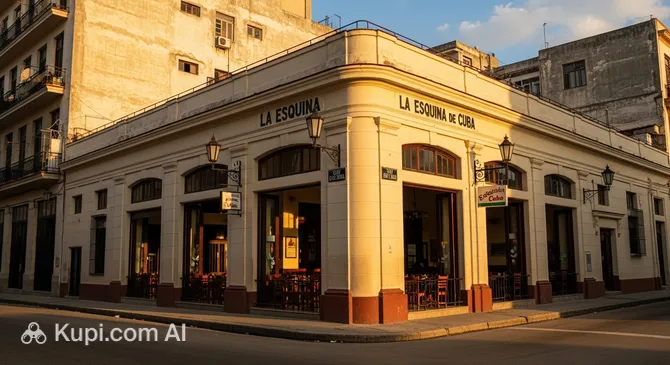
For seafood lovers, the district offers fresh grilled lobsters and shrimp. An excellent place to sample local delicacies is the La Esquina de Cuba restaurant, where you can enjoy authentic cuisine in a cozy setting. Don't forget to order fried plantains for dessert—here they come in both sweet and savory varieties.
La Esquina de Cuba. Illustration.
Source: Kupi.com AI
Traveler photos:
The drinks deserve a separate mention. Centro Habana is the perfect place to taste a real Mojito or Daiquiri made with famous Cuban rum. In the morning, energize yourself with a cup of strong and very sweet Cuban espresso coffee. Street food on San Lázaro Street, such as homemade pizza or empanadas, is a great option for a quick snack while exploring the city.
Travel Tips
Preparing for a trip to Centro Habana requires knowing a few important nuances that will make your vacation comfortable and safe.
Clothing and Essentials: Choose lightweight clothing made of natural fabrics, as it is very humid in the area. Be sure to bring comfortable closed-toe shoes for walking—sidewalks can be uneven. Don't forget sunscreen and a power adapter (American types A and B are common).
Finances: Bring cash Euros or Dollars with you. International payment system cards work inconsistently, and certain foreign cards may not be accepted at all. Exchange money only at official exchange offices (CADECA).
Transport: Try riding an almendrón (vintage car), but for reliability and comfort, use official state taxis. Always agree on the price before getting into the car.
Connectivity: A SIM card for internet (Etecsa) can be purchased at official offices or major hotels. Wi-Fi is available in parks and hotel lobbies using special prepaid cards.
Safety: Overall, the district is safe, but take standard precautions: don't flaunt expensive jewelry and keep an eye on your bag in crowded places.
Language and Etiquette: Basic phrases in Spanish ("Hola", "Gracias", "¿Cuánto cuesta?") will open many doors. Cubans are very sociable—don't be surprised if a stranger strikes up a conversation about the weather or music.
What to Avoid: Do not photograph military objects or people in uniform without permission. Also, avoid agreeing to "free" tours from persistent street touts (jineteros).
Pro Tip: The best time to visit the district is early morning or the hours before sunset, when the light perfectly highlights the texture of the old buildings and the heat begins to subside.
May your introduction to real Havana be bright and leave only warm memories of this amazing place!
Entertainment & Nightlife
Nightlife in Centro Habana is, above all, about music that doesn't stop until dawn. The main center of attraction is the famous Malecón, where youth and tourists gather with guitars and rum, creating the atmosphere of a giant party under the stars. For professional performances, check out Casa de la Musica, which regularly hosts concerts by the country's best salsa bands.
Dance enthusiasts should look into clubs near the Prado boulevard, such as the legendary "1830," where the atmosphere of old Havana meets modern rhythms. There is no strict dress code, but Cubans love to dress up for a night out, so an elegant look will help you blend in with the local crowd. Cocktail prices in bars are quite reasonable, and getting home at night is easiest by official taxi or the colorful "Coco Taxi."
During the day, entertainment shifts toward culture and walking. You can stop by the cozy La Esquina de Cuba café to rest between excursions. The area also frequently hosts street festivals and carnival processions, especially on the promenade, where shows with fireworks and dancers can last for several days in a row.
Parks & Museums
A green oasis amidst the district's dense architecture is Central Park (Parque Central). This is a place where locals gather under the shade of ancient palms for heated debates about baseball or a game of chess. The park is surrounded by magnificent buildings and serves as an ideal spot to simply observe the city bustle while sitting on one of the wrought-iron benches.
The district's primary cultural treasure is rightfully considered the National Museum of Fine Arts (Cuban Art). Its exhibitions cover a vast period of the island's history, featuring works that reflect the struggle for independence, revolutionary pathos, and the contemporary explorations of Cuban artists. Visiting this museum is a deep dive into the nation's aesthetic code.
National Museum of Fine Arts (Cuban Art Building). Illustration.
Source: Kupi.com AI
Traveler photos:
For those ready for a short trip to the edge of the district, the Colon Cemetery is a fascinating site. This grand necropolis, recognized as a UNESCO site, impresses with its mausoleums and white marble sculptures. It’s also worth stopping by the Havana City Zoo, located nearby, where you can see rare representatives of Caribbean fauna amidst tropical vegetation.
Getting Around
The transport system in Centro Habana is one of the most unique in the world. The main symbol of the city remains the almendrones—classic American cars from the 1950s. They operate as shared taxis along fixed routes. This is the cheapest and most colorful way to get around: you simply raise your hand on the roadside, confirm the route, and hop in with other passengers.
State buses, which locals call guaguas, cover the entire city but are often overcrowded. Stops are usually marked with signs, but it's best to confirm the route with the driver or neighbors in line. There is no metro in Havana, so buses and shared taxis remain the primary means of transport for most residents.
For short tourist trips, Coco Taxis—bright yellow three-wheeled motorized rickshaws shaped like coconuts—are ideal. They are maneuverable and allow you to enjoy the views during the ride. Bicycle rickshaws are also popular in the district, slowly taking you through the narrowest streets where a car cannot pass. Always agree on the price of the trip in advance, as meters are a rarity in Cuban transport.
Accommodation
The housing stock in Centro Habana offers tourists a unique experience of immersion into local life. Here you will find everything from grand historic buildings converted into boutique hotels to budget-friendly options. Particularly popular are casas particulares—private guest houses where owners rent out rooms. This is not only economical but also gives you a chance to try an authentic homemade Cuban breakfast and see the city "from the inside."
If you prefer classic comfort, look toward the area along Prado boulevard and San Lázaro street. This is where famous hotels like the historic Inglaterra are located, offering rooms with high ceilings and terraces with panoramic city views. Staying in this part of the district puts you within walking distance of most museums and the promenade.
Booking accommodation in advance is recommended, especially during the high season (November to April). Prices in Centro Habana are generally lower than in Old Havana or the upscale Vedado, while the level of service in the private sector is constantly improving. When choosing a place to stay, be sure to confirm the presence of air conditioning, as tropical nights can be quite hot.
Nearby Cities
Centro Habana serves as an excellent starting point for exploring the surroundings and other iconic spots in the capital. Literally a 15-minute walk away is historic Havana (Habana Vieja district), where the main cathedrals and colonial-era squares are concentrated. It’s an ideal destination for a walk to compare the dynamics of a residential neighborhood with the museum-like tranquility of the old center.
If you want to change the scenery for something more peaceful, head to Guanabacoa, famous for its Afro-Cuban culture traditions, or the quiet suburb of Bejucal. For those interested in the daily life of Cubans off the beaten tourist path, a trip to Arroyo Naranjo or Bauta is an interesting option.
Exploring nearby towns will allow you to see the real rural and provincial life of the island, which differs significantly from the bustle of the capital. Most of these destinations are easily reachable by taxi or local buses, making them a great choice for a short day trip.
Shopping & Souvenirs
Shopping in Centro Habana is more of a hunt for local flavor and unique handmade items than a trip to boutiques. The main shopping activities are concentrated around the Prado boulevard and adjacent streets. Open-air markets often pop up here, where local artists sell their paintings and craftsmen offer jewelry made from tropical seeds and leather.
For high-quality Cuban goods like rum, coffee, and the famous Cohiba cigars, it's better to head to specialized shops in major hotels or state-run stores. If you're looking for something special, look for a guayabera—the traditional Cuban men's shirt with characteristic pleats and pockets, which makes for an excellent and practical souvenir.
The district's food markets are a separate delight for the senses. Here you can buy the freshest exotic fruits: mangoes, pineapples, passion fruit, and guava. Keep in mind that most shops operate from the morning until siesta, and only cash is generally accepted for payment. Don't hesitate to politely haggle at street markets—it's part of the communication culture here.