Support

Sancti Spiritus

About

Sancti Spíritus is a city with a deep soul that has preserved the genuine charm of the colonial era. Located in the central part of the island, it often remains in the shadow of its famous neighbor, Trinidad, but it is here that you can experience the authentic, off-the-beaten-path atmosphere that Cuba is famous for. This is a place where time seems to have slowed its pace, allowing travelers to enjoy the authenticity of provincial life.

The city was founded by Diego Velázquez back in 1514, making it one of the oldest European settlements in the Caribbean. The rich history of Sancti Spíritus is reflected in its architecture: narrow winding streets, tiled roofs, and spacious squares. Today, about 138,000 people live here. Geographically, the city is situated on the banks of the Yayabo River, surrounded by picturesque agricultural lands, and the climate here is typically tropical—warm and humid all year round.
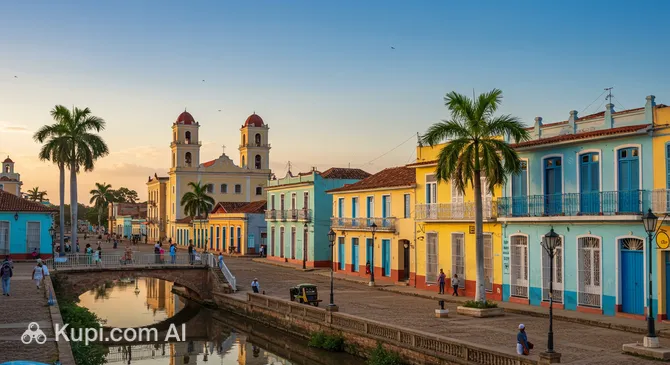
Sancti Spiritus. Illustration.
Source: Kupi.com AI

Among the main attractions, the famous bridge over the Yayabo River stands out. It is the only brick arched bridge from colonial times on the island that has survived to this day, and it is rightfully considered the symbol of the city. No less impressive is the Parroquial Mayor church (Main Parish Church of the Holy Spirit), whose tall bell tower serves as an excellent landmark for walks through the historical center.

The heart of social life is Serafín Sánchez Park, where locals and tourists gather in the evenings. Sancti Spíritus is definitely worth including in your itinerary if you want to see the island's life from the inside, without unnecessary fuss or gloss. Come here to stroll along the ancient pavements and feel the sincere hospitality of the local residents.

Weather Overview

The climate in this region is typically tropical, which guarantees warmth throughout the year; however, travelers should take the seasonality of rainfall into account. When researching what the weather in Sancti Spíritus is like, it's important to remember the clear division of the year into dry and wet periods. The most comfortable time to visit is considered to be the months from December to March: the average temperature during this time stays around +23...+25°C, and rain is very rare (only 3–6 days per month).

From May to October, the rainy season and high temperatures set in. During this period, the air warms up to an average of +28°C, and daytime maximums often exceed +32°C. The number of rainy days increases significantly, peaking in September (up to 22 days with precipitation). Expect a hot, humid summer with frequent tropical downpours and a warm, predominantly dry winter, ideal for sightseeing.

Average monthly temperature

Average monthly precipitation

Interesting Facts

The history of Sancti Spíritus is filled not only with official dates but also with colorful legends passed down by locals. Here are a few facts to help you better understand the character of this ancient city:

  • Birthplace of the Guayabera. The city disputes the right to be called the birthplace of the most famous shirt in Cuba. Locals are convinced that the garment was originally called "yayabera" in honor of the Yayabo River. According to legend, a wife sewed the four-pocket shirt for her husband so he could conveniently carry cigars and guava fruits.

  • The Secret of the Bridge's Strength. The city's symbol, the arched bridge over the Yayabo River, is shrouded in myths. There is a persistent belief that cow's milk and bull's blood were added to the mortar used to bind the bricks. It is believed that this unusual composition allowed the structure to stand for centuries, resisting high humidity and floods.

  • Escape from Ants. Sancti Spíritus is one of the few cities that was forced to "move." The settlement was originally founded on the banks of the Tuinicú River, but in 1522, residents moved it to its current location. The reason was an invasion of hordes of ants that, according to historical chronicles, literally drove the colonizers out of their first settlement.

  • Street Traps. Unlike most colonial cities with their strict grid planning, the historical center of Sancti Spíritus resembles a labyrinth. Winding streets, often ending in dead ends, were designed intentionally. This chaotic layout was meant to disorient pirates, protecting residents from sudden raids.

How to Get There

When planning a trip to the central part of the country, it's worth thinking through your route in advance, as this region does not have its own major air hub. You can find out more about how to get to Sancti Spíritus on our dedicated page with all the logistics details. Generally, travelers fly into airports in neighboring provinces and then continue their journey by taxi, rental car, or bus.

The optimal choice for arrival is Santa Clara Airport (SNU). It is located closest to the city—at a distance of about 81 km. Thanks to the relatively short distance, a car trip from here will take only about 1.5 hours, making this route the fastest and least tiring for tourists.

A good alternative is Jaime González Airport (CFG) in the city of Cienfuegos, located approximately 103 km from the destination. The drive from this airport along local highways will take roughly 1.5–2 hours. This is a convenient option if you want to combine your visit with a tour of the "Pearl of the South."

For those traveling through the eastern part of the central region, Ignacio Agramonte International Airport (CMW) in Camagüey is suitable. The distance to Sancti Spíritus is about 174 km. The transfer from here will take more time—around 2.5–3 hours—however, this airport often hosts flights with convenient schedules.

Below is a table with the main airports in the region, which will help you estimate distances and choose the most suitable flight option:

AirportPassenger trafficDistance
Santa Clara Airport500 00081 km
Jaime Gonzalez Airport50 000104 km
Jardines del Rey Airport610 000129 km
Ignacio Agramonte International Airport250 000174 km
Cayo Largo Del Sur Airport200 000221 km

Main Attractions

While many travelers know Sancti Spíritus primarily for its famous bridge, the city hides other architectural gems that allow for a deeper immersion into the atmosphere of the colonial era. The city's historical center, declared a national monument, is compact and ideal for walking, revealing picturesque streets and majestic mansions to guests.

One of the most impressive buildings is the Colonial Art Museum (Museo de Arte Colonial), located in the luxurious palace of the Valle-Iznaga family. This building, often called the "house of a hundred doors" due to its abundance of tall windows and openings, is considered one of the finest examples of 19th-century architecture in Cuba. Inside, the original interiors have been preserved: elegant furniture, French porcelain, marble floors, and massive crystal chandeliers that transport visitors back to the era of the sugar barons.

Fans of authentic walks should head to Calle Llano. This is the city's most picturesque and photographed street, which has retained its ancient cobblestone paving. Along it stretch one-story houses with tiled roofs, painted in pastel colors—blue, pink, and ochre. It is especially pleasant to walk here at sunset when the soft light emphasizes the texture of the old walls and locals sit on their porches to discuss the news.

On the banks of the Yayabo River, in a beautiful neoclassical mansion known as Quinta de Santa Elena, is the Guayabera House-Museum (Casa de la Guayabera). Since the city claims to be the birthplace of this national shirt, the museum here holds a special status. Its collection includes guayaberas that belonged to famous figures in culture, politics, and art. Besides the exhibition, this place attracts visitors with its open terrace overlooking the river and the old bridge, where you can relax and enjoy the breeze.

Local Cuisine

The cuisine of Sancti Spíritus is the quintessence of Creole traditions, where fresh products grown in the fertile Yayabo River valley play the lead role. Since the city is the center of an important agricultural region, local dishes are characterized by simplicity, generous portions, and a rich natural taste. The diet here, as elsewhere in Cuba, is based on rice, black beans, root vegetables, and pork, but it is the quality of local farm ingredients that makes the food truly special.

Among the main dishes worth trying, the king of the table is "Lechón asado"—pork roasted whole or in pieces until the skin is crispy, served with a flavorful "mojo" garlic sauce. The region is also famous for its version of "Ropa Vieja"—shredded beef simmered in a thick tomato sauce with peppers and onions. As an omnipresent side dish, you'll be offered "moros y cristianos" (rice cooked with black beans) or golden rounds of fried plantains called "tostones."

In the regional bar menu, the "Canchánchara" cocktail holds a special place. This historic drink, consisting of honey, lemon juice, water, ice, and strong cane spirit (aguardiente), is considered one of the oldest on the island and is perfectly refreshing in the heat. For non-alcoholic drinks, locals prefer "batidos" (fruit milkshakes) and freshly squeezed juices made from guava, mango, or pineapple. And, of course, no meal is complete without a cup of strong, sweet Cuban coffee.

To experience the real food culture of Sancti Spíritus, it is best to head to "paladares"—private family restaurants. It is here, in cozy courtyards or converted living rooms of colonial houses, that the most delicious homemade food is prepared. For a budget-friendly and quick snack, street stalls selling "Cuban-style pizza" on thick dough and pork sandwiches are very popular with the locals.

Travel Tips

To ensure your immersion into the colonial atmosphere is as comfortable and worry-free as possible, it's worth preparing for the specifics of local life in advance. We have gathered practical recommendations to help you feel confident on the ancient streets of Sancti Spíritus and avoid common tourist mistakes.

  1. Clothing and Footwear. Given the tropical climate, opt for loose clothing made of natural fabrics (cotton, linen). Most importantly, wear comfortable flat-soled shoes. The historical center is paved with cobblestones, especially the famous Calle Llano, so heels will be inappropriate and potentially dangerous. A hat is also essential for protection from the strong sun.
  2. Transport. The city's historical center is compact and best explored on foot. For short distances, bicitaxis are ideal—they are an inexpensive and colorful way to get around. If you plan to travel outside the city, you can rent a car, but remember that parking on the narrow center streets can be a problem.
  3. Finances. Cuba has its own specifics: cash is the main method of payment here. Bring euros or dollars (preferably in small denominations). Foreign bank cards are not accepted everywhere, and American cards do not work at all. Exchange currency only at official CADECA exchange offices. In restaurants and taxis, it is customary to leave a tip (about 10%), as it is an important part of the locals' income.
  4. Health and First Aid Kit. Local pharmacies often experience shortages of medicine, so bring a full first aid kit with you: painkillers, stomach upset remedies, plasters, and antiseptics. It is extremely important to drink only bottled water. Also, don't forget insect repellent—in the humid climate, mosquitoes can be active, especially in the evenings near the Yayabo River.
  5. Communication and Internet. Do not count on widespread fast internet. Wi-Fi is available mainly in public zones (parks, hotel lobbies) via ETECSA cards, which must be purchased in advance. We recommend downloading offline maps (e.g., Maps.me) and an offline Spanish translator, as not all staff outside hotels speak English.
  6. Local Etiquette. The residents of Sancti Spíritus are open and friendly. It is customary to say hello ("Hola" or "Buenos días") when entering small shops or getting into a taxi. Life here moves at a relaxed pace, so don't rush waiters or service staff—be patient and smile; it works best.
  7. What to Avoid. It is strongly recommended not to change money with street changers ("cambio"), even if the rate seems very favorable—the risk of fraud is high. Also, avoid drinks with ice from street stalls unless you are sure the ice is made from filtered water.
  8. Leisure Hack. Be sure to visit the "Casa de la Trova" in the evening. Unlike the more touristy Trinidad, here you will hear music played for locals. It's the best place to socialize with residents and see how they dance son and salsa, not for show, but for the soul.

Sancti Spíritus is a city that reveals itself to those who don't rush. By following these simple tips, you can enjoy its authentic charm, safe walks along the river, and the warm hospitality of the locals, leaving you with only the brightest travel memories.

Entertainment & Nightlife

Nightlife in Sancti Spíritus is notably different from the noisy parties of Havana or touristy Varadero. You won't find massive nightclubs with laser shows here, but instead, the city offers something more valuable—an authentic atmosphere filled with live music, dancing, and warm social interaction under the open sky. Evening leisure here is concentrated in the historical center, where ancient architecture provides the perfect backdrop for a relaxed yet memorable time.

The epicenter of evening activity remains Serafín Sánchez Park (Parque Serafín Sánchez). As the sun sets, this place transforms into a massive open-air living room. Locals come here with their families, young people socialize and use the public Wi-Fi, and music drifts from the surrounding cafes. It’s the best place to start your evening, feel the city's rhythm, and simply observe Cuban life. The atmosphere here is exceptionally friendly and safe.

For music and dance lovers, a visit to Casa de la Trova (Miguel Companioni House of Trova) is a must. This iconic venue is located in a beautiful colonial building near the main square. In the evenings, talented local groups perform traditional son, bolero, and salsa. The audience is a vibrant mix of tourists and locals, and the dance floor is never empty. Entry usually costs a symbolic amount, and drinks at the bar are very reasonably priced.

If you're looking for a spot for a romantic evening with a glass of wine or a cocktail, head to Taberna Yayabo. It is located at the foot of the famous arched bridge, and its terrace offers a magical view of the river and the illuminated old city. Excellent wines and cocktails are served here, and the setting encourages leisurely conversation. The dress code in most of the city's venues is casual and informal—comfort is valued over glamour here.

Fans of more modern rhythms should check out the discos at major hotels or cultural centers, such as the Centro Cultural de las Artes, which sometimes hosts parties for younger crowds. However, keep in mind that such events may not happen every day, so it's best to check the schedule with locals or at your accommodation's reception.

Practical tips for night owls:

  • The best time to head out is after 9:00 PM, once the heat has fully subsided.
  • The historical center is safe for nighttime walks, but avoid unlit outskirts.
  • Returning to your hotel at night is most convenient via bicitaxi—it's inexpensive and full of character, but it's better to agree on the price beforehand.
  • The average price for a cocktail in a bar is 2–4 dollars/euros, and entry to music venues rarely exceeds 1–2 dollars.

During the day, Sancti Spíritus offers a more measured cultural experience. You can visit the Teatro Principal—one of the oldest in Cuba—to admire its architecture or catch a rehearsal. Also of interest are the small galleries of local artists around the boulevard and, of course, the museums that tell the story of the colonial past and the region's nature.

Parks & Museums

Sancti Spíritus offers travelers a harmonious blend of green spaces and historical heritage. Located in the heart of the island, this city allows you to see the real nature of central Cuba and visit museums that carefully preserve the memory of the colonial past and local traditions.

Key Parks and Natural Areas

The green heart of the city and the center of social life is Serafín Sánchez Park (Parque Serafín Sánchez). Unlike most colonial squares where a church dominates, this park is surrounded by secular buildings in the neoclassical style. During the day, it's pleasant to take shelter in the shade of the trees while admiring the architecture of the library and old hotels, and watching the rhythm of city life.

For those seeking peace and solitude, a visit to Plaza Honorato is a must. This is the city's oldest square, where the history of Sancti Spíritus began. Today, it is a cozy, intimate square with well-kept flowerbeds, wrought-iron benches, and antique lamps. The atmosphere of tranquility here contrasts sharply with the busy center, creating perfect conditions for reading or relaxing.

Nature lovers should head outside the city to the Alturas de Banao Ecological Reserve (Reserva Ecológica Alturas de Banao), located about 20 km away. The park offers picturesque hiking trails through tropical forests to waterfalls. It’s a wonderful opportunity to breathe fresh air and get to know the endemic flora and fauna of the region.

Museums and Galleries

The city's cultural program is not limited to architecture. The Provincial History Museum (Museo Provincial), housed in the former building of the "El Progreso" society, covers the history of the region from the life of indigenous peoples to the struggle for independence. The exhibition allows you to trace the evolution of local identity through unique documents, weapons, and antiques.

Curious tourists will find the Museum of Nature and Man (Museo de la Naturaleza y el Hombre), located near the central park, very interesting. It possesses one of the most complete natural science collections in the province, including fossils and archaeological finds. The highlight of the museum is a small planetarium, which is popular with visitors of all ages.

Also worth noting is the Serafín Sánchez Birthplace Museum (Casa Natal de Serafín Sánchez). This is the birthplace of the national hero for whom the city's main park is named. The exhibition in the modest colonial house tells the story of the general's life and military exploits, helping visitors better understand the patriotic spirit of the locals.

Insider Tips

Don't limit yourself to the standard routes. Walk around the back of the Parroquial Mayor church to find the "Alley of the Priests"—a quiet and picturesque corner often overlooked by guides. And if you're interested in street art, stroll towards the Yayabo bridge area: local murals vividly and uniquely reflect the folklore and everyday life of the city.

Getting Around

The transport system of Sancti Spíritus has a distinct provincial flavor and differs significantly from what residents of megacities are used to. You won't find a metro, trams, or trolleybuses here. The city lives at a more measured pace, and public transport is represented primarily by buses, colorful bicitaxis, and horse-drawn carriages, which are not just tourist attractions but a fully functional means of transport for locals.

The main form of "people's" transport remains the city buses, which Cubans call "guaguas." The route network covers the main districts and connects the center with the outskirts. However, for a tourist, this option can be challenging: schedules are often not followed, buses are crowded, and stops are not always marked. The fare is symbolic (in local pesos), but comfort is minimal.

A much more convenient and popular way to navigate the narrow streets of the historical center is by bicitaxi. These are three-wheeled bicycles with a covered carriage for two passengers. They are ideal for short trips, such as from a hotel to a restaurant or the bus station. Bicitaxi drivers often act as guides, pointing out interesting spots along the way.

A unique feature of the transport system in Sancti Spíritus, as in other cities in the central part of the country, is the horse-drawn carriages (coches de caballos). They run along fixed routes, much like shared taxis, and have their own stops. This is an inexpensive and authentic way to get from one part of the city to another. There are both general carriages for locals and more comfortable ones aimed at tourists.

The payment system here is very simple: only cash is accepted. There are no transport cards, mobile apps, or validators in the city. On buses and collective carriages, you pay the driver upon entry or exit. It’s important to have small Cuban Peso (CUP) bills with you, as drivers may not have change for large denominations.

For more comfortable trips, there are taxis. These can be divided into state-owned (usually modern yellow cars with air conditioning) and private (the famous classic cars or "time machines"). Private drivers often work as shared taxis ("almendrones"), picking up passengers along the way, but a tourist can hire the whole car. Taxi apps do not work here; cars are hailed with a wave of the hand or found at designated stands near main squares and hotels.

Practical tips for tourists:

The main rule when using private transport (bicitaxis, horse carriages, vintage taxis) is to agree on the price beforehand, before the trip begins. Prices for foreigners are always higher than for locals, but bargaining is appropriate. Clarify which currency the price is quoted in to avoid misunderstandings.

Given the compactness of Sancti Spíritus, the best alternative to transport is often walking. The historical center is almost entirely pedestrian, and the main attractions are within walking distance of each other. Renting a car is only worth it if you plan to travel outside the city, as navigating old one-way streets can be confusing.

Accommodation

The choice of accommodation in Sancti Spíritus might not be as extensive as in major resort centers, but it possesses its own unique charm and, importantly, more affordable prices compared to the neighboring tourist hub of Trinidad. The main offerings here consist of two types of accommodation: state-owned hotels, often housed in renovated colonial mansions, and numerous private guest houses.

For travelers who want to be in the heart of the action, the Historical Center is the ideal place to stay. Areas around Serafín Sánchez Park and the pedestrian boulevard provide walking access to major attractions, including the famous Yayabo Bridge. Living here means waking up to the sounds of a city coming to life and being able to take evening strolls along beautifully lit ancient streets.

Private apartments, known in Cuba as Casas Particulares, are particularly popular. They are easily recognizable by the blue anchor sign on the door. This is the optimal choice for those seeking a combination of budget-friendly pricing and home comfort. The hosts of these houses often offer guests not just an air-conditioned room with a private bathroom, but also hearty homemade breakfasts and sincere hospitality that is sometimes missing in chain hotels.

Fans of classic hotel service should look into mid-range hotels. In the city center, they often occupy historical buildings with high ceilings and internal courtyards (patios), creating a special romantic atmosphere. On the outskirts of the city, you can find more modern complexes that are suitable for car travelers due to the availability of parking and swimming pools that offer a respite from the midday heat.

Planning Tips:

The price range in Sancti Spíritus varies from budget to mid-range. There are no luxury five-star resorts here. It is recommended to book accommodation in advance, especially popular "casas" with good reviews, if your trip falls during the "dry season" (winter-spring). Many private owners are already listed on international online platforms; however, always have cash on hand to pay for additional services on-site.

Nearby Cities

For those who want to explore the surroundings, Sancti Spíritus serves as an excellent starting point for day trips to several interesting nearby locations:

Just an hour's drive to the north is the city of Yaguajay. This place holds significant importance in Cuban history as it was the site of one of the decisive battles of the revolution under the command of Camilo Cienfuegos. Travelers can visit a large museum complex and the hero's mausoleum. Additionally, Yaguajay serves as the gateway to the Caguanes National Park, known for its coastal caves and unique mangrove ecosystem.

Heading east, you will reach Ciego de Ávila, the capital of the neighboring province. This city is often called the "city of porticoes" due to the characteristic architecture of its central streets, where long rows of columns provide shade for pedestrians. It’s interesting to walk along the boulevard here, visit Martí Park, and appreciate a more modern pace of life compared to the patriarchal Sancti Spíritus.

Fans of the non-touristy heartland should check out Placetas. Located on the Central Highway, this city is famous for its strong Spanish roots and is considered one of the centers for Cuban cigar production in the Villa Clara region. It's a great opportunity to see the everyday life of provincial Cuba without the frills.

CityPopulationDistance
Guayos15 00013 km
Cabaiguan32 00018 km
Taguasco36 36520 km
Jatibonico42 95929 km
Fomento33 52835 km

These nearby destinations offer insight into the diverse culture and landscapes of the region, making your journey through central Cuba even richer.

Shopping & Souvenirs

General Overview

Shopping in Sancti Spíritus is significantly different from the usual European experience. You won't find massive malls with global brands or luxury boutiques here. Trade in the city is more utilitarian and souvenir-oriented, offering tourists an immersion into the atmosphere of provincial Cuba. It is an ideal place to purchase authentic handmade items and local products, though the range of industrial goods may be limited.

Main Shopping Areas and Streets

The center of all commercial life in the city is El Bulevar, located on the pedestrian part of Independence Street (Calle Independencia). This is a lively promenade area where most shops, cafes, and souvenir stalls are concentrated. A stroll along the boulevard allows you to combine shopping with sightseeing, while street musicians create a special mood. This is where you can find both state-owned stores and private artisan stalls.

Shopping Centers

There are no large shopping centers in the modern sense in Sancti Spíritus. Their role is filled by state department stores of the Panamericana or TRD Caribe chains, located mainly in the center and on the boulevard. In places like "La Colonia Española" (a historical building often used for trade or cultural purposes), you can purchase basic goods, drinks, clothing, and cosmetics. The assortment here depends on deliveries, but they are great for buying rum or coffee.

Markets

For a taste of real local color, head to the agricultural markets, or "agromercados." Here, farmers sell fresh tropical fruits, vegetables, and spices. Even if you don't plan to cook, a visit here will be a gastronomic discovery: you can buy ripe mangoes, guavas, or a bunch of bananas for symbolic prices. Additionally, informal craft markets selling jewelry and wooden crafts are often found in tourist zones.

Souvenirs

The main souvenir to bring back specifically from this city is a guayabera. Since Sancti Spíritus claims to be the birthplace of this national shirt, you can find high-quality items here, including at the specialized shop at the Guayabera House-Museum. Furthermore, the region is famous for its ceramics: local potters create beautiful vases and plates in traditional styles. And, of course, Cuban rum and cigars remain a fail-safe option, best purchased in official stores.

Opening Hours and Payment

Shops typically operate from 9:00 AM to 5:00 PM or 6:00 PM from Monday to Saturday. On Sundays, most retail outlets are closed or operate on a reduced schedule (until noon). Regarding payment, Cuban Pesos (CUP) in cash are the most reliable option, especially in markets and private shops. State stores may require payment by card in foreign currency, but terminals often work inconsistently, so always carry a supply of small cash bills.

Reached the end of the page?

That means the route is fully explored