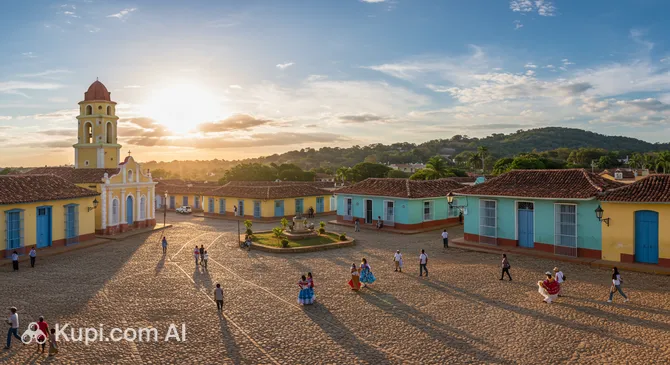
Trinidad is a true gem of the southern coast, a colonial-era scene seemingly frozen in time. This city, nestled in the Sancti Spíritus province near the Bay of Puerto de Casilda, is rightfully considered one of the most beautiful and atmospheric places Cuba has to offer. Here, travelers are instantly immersed in the 18th and 19th-century charm from when the city flourished as a hub of the sugar industry.
Trinidad. Illustration.
Source: Kupi.com AI
Trinidad's architectural appearance is striking in its integrity and vibrancy. Cobblestone streets wind between grand mansions and squares, while the facades of the houses glow with all the colors of the rainbow, creating an incredibly cheerful panorama. The rich history of Trinidad is felt in every stone: the city carefully preserves its heritage, allowing guests to feel like characters in a historical novel.
Despite its modest size and population of about 52,000 people, life here is in full swing. The city is surrounded by the picturesque green hills of the Sierra del Escambray, and the infectious rhythms of local music constantly echo through the streets. It is an ideal starting point not only for cultural walks but also for outdoor recreation: the famous sandy beaches of Ancón and the Topes de Collantes National Park, with its waterfalls and tropical forests, are very close by.
Come to Trinidad to experience authentic Cuban hospitality. This is a city that makes you fall in love at first sight, offering a unique combination of antiquity, bright colors, and a relaxed Caribbean atmosphere.
Weather Overview
The climate in Trinidad is typically tropical, hot and humid, making the city an attractive destination almost any time of year. However, when planning a trip, it is important to remember two distinct seasons: dry and wet. The current weather in Trinidad depends largely on the month of your visit, so choosing your dates can significantly affect the nature of your holiday.
The dry season, which lasts from late November to April, is considered the most comfortable for European tourists. In the "coldest" months—January and February—the average daytime temperature stays around 26–28°C, while at night it drops to a pleasant 18–19°C. There is very little rainfall during this time (about 1 mm), and the number of rainy days is only 4–5 per month, which is ideal for excursions.
The wet season begins in May and continues until October. During this time, it becomes noticeably hotter: daytime temperatures reach 31–32°C (in July and August), and nights do not bring much coolness (around 23°C). The number of rainy days increases sharply to 20–23 per month, and the amount of precipitation increases. Expect a hot summer with high humidity and frequent, though often brief, tropical downpours, followed by a dry and sunny winter.
Average monthly temperature
Average monthly precipitation
Interesting Facts
In addition to its main attractions, Trinidad holds many fascinating secrets and historical details that make getting to know this city in Cuba even more exciting for the curious traveler.
One of the oldest cities. Trinidad was founded by the conquistador Diego Velázquez in 1514, becoming the third Spanish settlement on the island. Thanks to its rich history and magnificent preservation, its historical center is deservedly included in the UNESCO World Heritage list.
Gold beneath your feet. Legends of untold treasures still circulate among locals. It is said that during the heyday of the sugar business, wealthy families, fearing pirates, buried chests of gold coins ("botijas") right in the basements or under the floors of their mansions. Some believe that part of these treasures is still waiting to be found.
A city of past millionaires. In the 18th and 19th centuries, Trinidad was perhaps the richest city in the country thanks to the sugar boom. This wealth was reflected in the architecture: to demonstrate their status, sugar barons decorated their houses with exquisite wrought-iron grilles, stained glass, and Italian marble floors, which can still be seen today.
Living heritage. Trinidad is famous for its creative atmosphere for a reason. It is believed that on its streets, you can easily meet direct descendants of famous Cuban musicians and artists of past centuries. Art is literally inherited here, turning the city into a living gallery of talent.
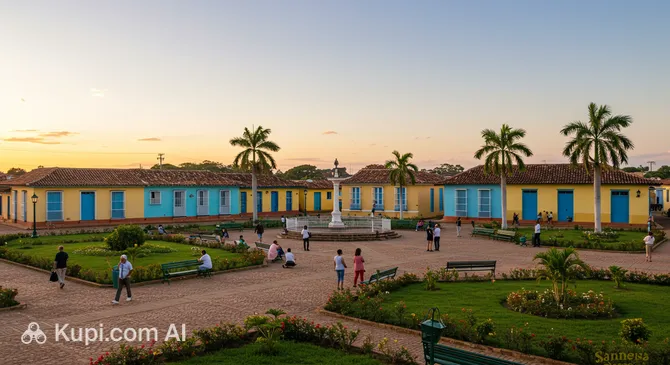
Plaza Mayor. Illustration.
Source: Kupi.com AI
Traveler photos:
How to Get There
You can reach this colorful city in various ways, but most often travelers combine a flight with a car journey. To plan your route most effectively, we recommend finding out more about how to get to Trinidad by exploring all the available options.
Trinidad itself does not have its own airport that accepts regular international flights. The nearest convenient transportation hub is Jaime González Airport (CFG), located in the city of Cienfuegos. It is only 60 km from Trinidad, and the journey by taxi or bus takes about 1.5–2 hours. This is an excellent choice if your flight lands there.
A popular alternative is Santa Clara Airport (SNU), located in the city of Santa Clara, about 77 km from Trinidad. Travel time is approximately 2–2.5 hours. This airport often handles flights from North America and Europe, making it a strategically convenient entry point for traveling through central Cuba.
Many tourists also fly into Juan Gualberto Gómez Airport (VRA) in Varadero. Although it is located much further away—203 km from Trinidad (about a 5–6 hour drive)—it is one of the country's largest aviation hubs with a huge passenger flow. Many charter flights arrive here, and from here you can reach Trinidad by rental car or intercity bus.
For convenience, here is a summary of the main airports:
As for rail service, it is currently not the primary way for tourists to reach the city. There are no direct or fast passenger trains from Havana to Trinidad. The main transportation burden falls on the roads. Travelers most often use the comfortable Viazul buses or collective taxis (colectivos) that run between popular tourist cities.
Main Attractions
Trinidad is often called a museum-city, and it bears this title rightfully. The concentration of historical monuments here is so high that a simple walk through the streets turns into a trip to the past. The city's main attractions are linked to the era of the sugar boom, when local planters built luxurious mansions, striving to surpass each other in wealth and elegance.
The heart and soul of the historical center is Plaza Mayor. This is not just a square, but a magnificent architectural ensemble that has remained virtually unchanged since the 19th century. The city's main palaces, now converted into museums, are concentrated around a cozy garden with wrought-iron fences and palm trees. A unique atmosphere of colonial Cuba reigns here: pastel building facades, red-tiled roofs, and the sounds of live music create the perfect backdrop for getting to know the city.
Plaza Mayor. Illustration.
Source: Kupi.com AI
Traveler photos:
It is impossible to imagine the panorama of Trinidad without the famous yellow bell tower of the Convent of Saint Francis of Assisi (now the Museum of the Struggle Against Bandits). This tower has become an unofficial symbol of the city and its most recognizable structure. Climbing to the very top via a spiral staircase, tourists are rewarded with the best view of the old town's tiled roofs, the Escambray Mountains, and the azure strip of the Caribbean Sea in the distance. It is an ideal spot for panoramic photos.
Just a few kilometers from the city lies the Valley of the Sugar Mills (Valle de los Ingenios)—the place where Trinidad's wealth originated. This is a picturesque valley where the ruins of old sugar plantations and estates have been preserved. The main point of interest here is the Manaca-Iznaga Tower. It once served for observing workers on the plantations, but today tourists climb its 45-meter height to enjoy breathtaking views of the green hills.
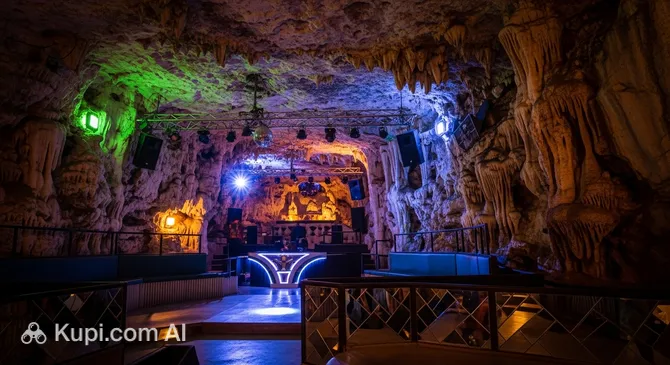
For those seeking unusual experiences, Disco Ayala is a must-visit. This place is unique for its location: the nightclub is situated inside a real natural cave. Descending underground, visitors enter halls with stalactites and modern lighting. By day, it is an interesting natural attraction, and by night, it is an epicenter of fun where you can dance to Cuban rhythms in the most exotic setting.
Disco Ayala. Illustration.
Source: Kupi.com AI
Traveler photos:
Local Cuisine
Trinidad's cuisine is a true paradise for foodies wishing to get to know Cuban culinary traditions in their most authentic form. The city's gastronomic scene combines the simplicity of home recipes with the brightness of Caribbean spices. The signature dish of the local culinary world is ropa vieja—slow-cooked beef with vegetables in a thick sauce, traditionally served with fluffy rice and sweet fried plantains.
Thanks to the proximity to the coast, seafood holds a special place on the menus of local establishments. Here, you should try the freshest shrimp, scallops, or fish grilled with aromatic herbs. Those who like to snack on the go will appreciate the variety of street food: local markets and shops offer appetizing fried yucca, sweet churros, and the famous Cuban "medianoche" sandwiches, which are perfect for a satisfying snack during a walk.
Rooftop Terrace Muñoz Tapas. Illustration.
Source: Kupi.com AI
Traveler photos:
Speaking of drinks, it's impossible not to mention the city's main symbol—the Canchánchara cocktail. It is believed that this refreshing mix of honey, lime, ice, and strong rum was invented right in this region. It is often served in special clay cups, which adds a special touch to the tasting. Of course, the classic mojito also enjoys unwavering popularity, prepared here with extra care and plenty of fresh mint.
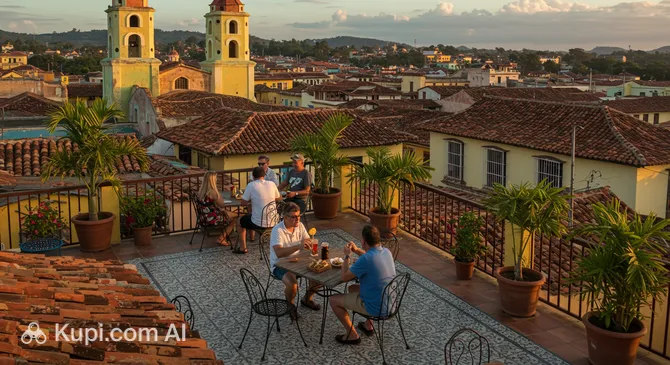
Food culture in Trinidad is diverse: from bustling street bazaars to cozy family restaurants—"paladares." To enjoy local appetizers in a pleasant atmosphere, you can visit the restaurant Terrazza Munoz Tapas. Such places allow you not only to have a delicious dinner but also to feel the hospitable spirit of old Cuba. A great way to end your gastronomic journey is to visit one of the food festivals, where local chefs reveal the secrets of Creole cuisine to the sounds of live music.
Travel Tips
Preparing for a trip to Trinidad requires attention to detail, as this city, seemingly frozen in time, has its own unique features. To ensure your holiday in one of the most colorful corners of Cuba goes perfectly, we have compiled a list of proven recommendations that will help you avoid everyday difficulties and enjoy the atmosphere.
Clothing and the most important detail—shoes. Given the hot tropical climate, bring light clothing made of natural fabrics (linen, cotton). However, the main rule for Trinidad: forget about heels. The historical center is paved with uneven cobblestones, which are extremely difficult to walk on in fashion footwear. The ideal choice is comfortable, broken-in sandals or sneakers with a thick sole. Also, don't forget a hat and sunglasses.
Transportation nuances. The city's historical center is closed to most vehicles, so your legs will be your main mode of transport. For trips to Ancón beach or nearby attractions, you can use a taxi or the tourist bus. Important: if you take a private taxi, rickshaw, or coco-taxi, always agree on the price before starting the journey to avoid unpleasant surprises at the end.
Finances and cash. In Trinidad, as in all of Cuba, cash remains "king." Bank cards (especially from US banks) may not work, and terminals often depend on connection stability. It's best to have a supply of cash in euros or dollars in small bills—these are readily accepted in private restaurants and shops. Exchange currency into local pesos only at official exchange offices (CADECA) or banks.
Health and first aid kit. Finding the right medications in local pharmacies can be challenging due to supply shortages. Be sure to bring your own first aid kit with everything you need: from painkillers and stomach remedies to bandaids. Categorically do not drink tap water—buy only bottled water. Also, bring repellent: in the evenings and during the wet season, mosquitoes can be quite active.
Connectivity and navigation. Do not count on widespread high-speed mobile internet. Wi-Fi is usually available in the lobbies of large hotels and in main squares (for example, at Cespedes Park) using ETECSA cards, which must be purchased in advance. We recommend downloading offline maps (e.g., Maps.me) and a Spanish offline translator while still at home, as not all locals speak English.
Local etiquette. Cubans are open and friendly people. It is customary to say hello ("Hola" or "Buenos días") when entering a shop or getting into a taxi. However, keep the concept of "Cuban time" in mind: the pace of life here is slow, and service in restaurants can be leisurely. Don't rush the staff; relax and enjoy the moment.
What to avoid. Do not buy cigars from street vendors who whisper offers of "real Cohibas" at half price. In 99% of cases, these are low-quality fakes, often rolled from banana leaves. For high-quality tobacco, go only to official shops at hotels or the La Casa del Habano chain.
Electricity and gadgets. The voltage in the grid can be either 110V or 220V, and sockets are most often the American type (with two flat pins). Be sure to bring an adapter-plug. In addition, given possible rolling power outages on the island, a powerful, charged Power Bank will be your indispensable companion to ensure your phone and camera are always ready to capture the city's beauty.
Following these simple rules will allow you to feel confident and safe in Trinidad. Leave your worries at home, pack comfortable shoes and cash, and let this magical city reveal all its secrets and hospitality to you!
Entertainment & Nightlife
Nightlife in Trinidad is not your typical metropolis scene with neon signs, but a unique blend of colonial romance, live music, and dancing under the stars. As the sun sets, the city transforms: the heat subsides, and the rhythms of salsa, son, and rumba begin to echo through the cobblestone streets of the historical center. The epicenter of evening attraction is always the area around Plaza Mayor. It is here, on the famous wide steps next to the House of Music (Casa de la Música), that tourists and locals gather to listen to live orchestras, dance, and enjoy a refreshing cocktail.
The atmosphere in the city center is very democratic and relaxed. There is no strict dress code: light summer clothes and comfortable shoes (remember the cobblestones!) will be appropriate everywhere. The evening usually begins around 9:00 PM with dinner or drinks on one of the many terraces. An excellent choice to start the evening is Terrazza Munoz Tapas, which offers a magnificent view of the sunset over the tiled roofs. If you want a hearty dinner before a big night out, you can stop by Sapori Italiani, popular for its cozy courtyard.
Disco Ayala. Illustration.
Source: Kupi.com AI
Traveler photos:
For those looking for more energetic entertainment and ready to dance until morning, the main destination is the legendary Disco Ayala, also known as "Las Cuevas." This venue is unique because it is located in a real natural cave on a hillside. The walk there (about 15–20 minutes uphill from the center) is an adventure in itself, but inside you will find an unforgettable atmosphere: stalactites, modern light shows, and a mix of Latin American hits and international pop music. The club usually fills up closer to midnight.
In terms of safety, Trinidad is one of the most peaceful cities in Cuba. Walking along the lit streets of the historical center at night does not cause concern; however, when returning from more remote places (like the Ayala cave), it is better to go in a group or take a taxi, which can be found at the entrance of the venues. The average price for a cocktail in bars varies but remains affordable; entry to music venues (Casa de la Música, Disco Ayala) is usually paid, and the price often includes one drink.
While Trinidad is famous for its evening program, daytime entertainment is more cultural and educational. During the day, the city lives to the rhythm of museums, art galleries, and craft workshops. You can visit the Santander family's pottery workshop, peek into small theaters, or simply enjoy the street performances that local artists often put on in the squares.
Parks & Museums
Trinidad offers travelers a unique combination of rich cultural heritage and magnificent natural landscapes surrounding the city. Here, you can spend the morning strolling through shady colonial-era squares, studying exhibitions in ancient palaces, and in the afternoon head out to explore tropical forests and waterfalls in the outskirts.
The green heart of the historical center and the main landmark for all tourists is Plaza Mayor. This is not just a square, but a well-kept open-air garden-museum decorated with palm trees, wrought-iron benches, and statues of greyhounds. A peaceful and grand atmosphere reigns here, ideal for relaxing in the shade of trees and contemplating the architectural ensemble. For a more active immersion in nature, it's worth visiting El Cubano Natural Park (Parque Natural El Cubano), located just a few kilometers from the city. This is a protected area with scenic trails, hanging bridges, and the refreshing Javira Waterfall, where you can swim in a natural pool.
Plaza Mayor. Illustration.
Source: Kupi.com AI
Traveler photos:
Trinidad's museums are portals to the past, located in the luxurious mansions of sugar barons. One of the most visited is the Romantic Museum (Museo Romántico), housed in the palace of Count Brunet. Its 14 rooms contain a unique collection of 19th-century furniture, porcelain, and decorative art objects, allowing you to imagine the daily life of the wealthiest families of that era. Equally interesting is the Municipal History Museum (Museo de Historia Municipal), located in the Cantero Palace. In addition to historical exhibits, it attracts tourists with its observation tower, which offers perhaps the best panoramic view of the city and the valley.
A special place in the architectural landscape is held by the former Convent of Saint Francis of Assisi, which now houses the National Museum of the Struggle Against Bandits. Its famous yellow bell tower is visible from almost any point in the city and is the unofficial symbol of Trinidad. The museum's exhibition is dedicated to the revolutionary events of the 1960s, but many visitors come here specifically for the architecture and the opportunity to climb the bell tower.
For those seeking authentic experiences, we suggest stopping by the Potter's House (Casa del Alfarero Santander). This is a working workshop that has been run by one family for several generations. Here you can not only see the process of creating traditional ceramics on an ancient wheel but also purchase unique handmade souvenirs that will serve as an excellent reminder of the creative spirit of this city.
Getting Around
Trinidad is a compact city, and it lacks the public transportation systems typical of large metropolises, such as subways, trams, or trolleybuses. The historical center is a pedestrian zone closed to most vehicles, so the main way to get around is by walking on the ancient cobblestones. However, for trips outside the old town or to the coast, specific local types of transport are available to tourists, which are attractions in themselves.
The most popular and organized route for travelers is the "Trinidad Bus Tour," which runs between the city center and the beaches of the Ancón peninsula. This is often an open-top double-decker bus that allows you to enjoy the views on the way to the sea. It makes several trips a day, departing from stops near major hotels and close to the historical center. Tickets are purchased directly from the driver or conductor upon boarding and usually operate on a Hop-On Hop-Off basis throughout the day, allowing you to get on and off at any stop along the route.
For short trips around the city, bicitaxis and the famous "coco-taxis"—three-wheeled yellow scooters with a streamlined shape resembling a coconut or a helmet—are incredibly popular. Bicitaxis are ideal for maneuvering through the narrow streets around the historical zone. You can also use horse-drawn carriages (coches de caballos), which serve both for sightseeing tours and as regular transport for locals wanting to get from residential areas to the center.
The payment system is as simple and conservative as possible: only cash is used here. No transport cards, validators, turnstiles, or mobile apps for calling taxis or paying for fares exist in Trinidad. You can pay in local pesos, but tourist transport drivers also readily accept foreign currency. It is extremely important to agree on the exact cost of the ride with the bicitaxi, coco-taxi, or private car driver in advance, strictly before boarding, to avoid inflated prices at the end of the journey.
As an alternative to public transport, you can consider renting bicycles, which are often offered by hosts of private guesthouses ("casas particulares"). This is an excellent and budget-friendly way to reach the beach on your own (the journey takes about 40–50 minutes). Renting a car for trips within Trinidad itself is impractical due to difficult navigation, restrictions on entry into the center, and the risk of damaging the suspension on the cobblestone streets, so a car is best used only for longer trips to the mountains or neighboring cities.
Accommodation
Choosing accommodation in Trinidad is significantly different from standard resort norms. There isn't an endless row of giant chain hotels here; instead, the city offers a unique experience of staying in historical interiors. The main part of the room stock consists of "casas particulares"—private guesthouses that have received an official license to host tourists. This is the most authentic and popular way to stay: you live in a real Cuban house (often a colonial mansion with a courtyard), chat with the hosts, and enjoy homemade breakfasts, while still maintaining your privacy.
For those who prefer classic hotel service, there are several boutique hotels in the city located in restored buildings. They offer a higher level of comfort, air-conditioned rooms, and often their own bars or pools. If your goal is exclusively an all-inclusive beach holiday, you should look at the resort area of the Ancón peninsula, located 10–15 minutes away from the city. There are large hotel complexes situated right on the shores of the Caribbean Sea.
When choosing a neighborhood, it is important to decide on your priorities. Staying in the historical center (around Plaza Mayor) means you will be within walking distance of all the museums and music venues. However, be prepared for noise in the evenings due to music and tourists, and the cobblestone streets make it difficult to move around with suitcases. Accommodation in the modern part of the city (just a 5–10 minute walk from the center) is usually cheaper, quieter, more spacious, and the conditions are often more modern.
The price range in Trinidad is quite affordable. A room in the private sector (casa particular) can be rented for 20–40 euros per night, making the trip accessible for budget travelers. Boutique hotels in the center will cost significantly more—from 100 to 200 euros and up, depending on the level of service. Beach hotels on Ancón occupy a middle price niche.
Booking Tip: Trinidad is one of the most popular destinations in Cuba, so during the high season (December–April and July–August), the best options are snapped up months in advance. It is highly recommended to book accommodation in advance through online platforms. While many private owners are ready to accept "walk-in" guests, searching for a free room with suitcases under the scorching sun can be an exhausting start to your holiday. Additionally, online booking often allows you to avoid the need to pay in cash on the spot, which is convenient given the Cuban currency system.
Nearby Cities
For those who want to explore the surroundings, Trinidad serves as an excellent starting point for day trips to several interesting nearby locations:
Just an hour's drive away is Cienfuegos, often called the "Pearl of the South." Unlike the Spanish colonial style of Trinidad, this city was founded by French settlers, which is reflected in its unique neoclassical architecture and wide boulevards. A stroll along the Malecón waterfront and a visit to José Martí Park will provide a completely different impression of Cuba.
Another attractive destination is Sancti Spíritus—the provincial capital and one of the oldest cities in the country. It is famous for its authentic atmosphere, where there are fewer tourists and more steady local life. The city's main hallmark is the picturesque bridge over the Yayabo River, the oldest on the island, preserved from colonial times.
History buffs will be interested in a visit to the city of Santa Clara. This is an important cultural and university center, known for its monuments and historical sites. The city possesses a special youthful energy and offers tourists a chance to learn about important pages of 20th-century Cuban history.
These nearby destinations allow you to get a sense of the region's diverse culture and landscapes, complementing the impressions from a seaside holiday.
Shopping & Souvenirs
Shopping
Shopping in Trinidad is not a chase for brands in glossy shopping centers, but a fascinating immersion into the world of local craftsmanship and authentic creativity. The city does not boast modern malls or boutiques of international brands. Instead, it offers tourists a unique opportunity to purchase handmade items created by local artisans, often right before your eyes. The main feature of local shopping is the open-air market atmosphere, where trade takes place on ancient cobblestone streets under the bright Caribbean sun.
Main shopping spots are concentrated in the historical center of the city, around its heart—Plaza Mayor. The streets radiating from it are effectively turned into one big open-air bazaar. Here, among colonial mansions, locals set up their tables with goods. The alleys near the Casa de la Trova and the Romantic Museum are particularly famous for their lively trade. A walk through these quarters allows you to combine viewing architectural masterpieces with searching for memorable gifts.
Plaza Mayor. Illustration.
Source: Kupi.com AI
Traveler photos:
There are no large shopping centers in the traditional sense in Trinidad. State stores of the "Caracol" or "Panamericana" chains offer a basic set of products, drinks, and clothing, but for a tourist, they are of interest mainly as places to buy factory-made rum, coffee, and cigars at fixed prices. If you are looking for high-quality Cuban cigars, it is best to visit a specialized shop at a hotel or an official La Casa del Habano outlet to avoid the fakes often offered by street vendors.
A true gem for shopping lovers are the street souvenir markets. The most famous one spontaneously arises every morning on the streets of the historical center. A huge variety of textiles reigns here. Trinidad is famous for its traditions of embroidery and lace-making. Local craftswomen offer magnificent tablecloths, napkins, dresses, and linen or cotton guayabera shirts made in the "deshilados" (drawn thread work) technique. This is painstaking manual labor that will become an exclusive reminder of your trip.
In addition to textiles, it's worth bringing back ceramics from Trinidad. The city is known for the Santander dynasty of potters, whose works are valued throughout Cuba. In their workshops or at market stalls, you can find unique clay items: from simple plates to the famous cups for the "Canchánchara" cocktail. Wood products, straw hats, primitive-style paintings by local artists, and black coral jewelry (request a certificate for export when buying the latter) are also popular.
Shops and souvenir stalls usually open around 9:00 or 10:00 AM and work until 5:00–6:00 PM. Many private vendors may close up a bit earlier if the flow of tourists subsides. Regarding payment, cash remains king in the private sector (at markets, in artisan shops). Credit cards are accepted very rarely and only in state stores or large hotels, but even there, connection failures often occur. Therefore, for comfortable shopping, it is necessary to have a supply of cash—Cuban pesos (CUP), euros, or US dollars, which souvenir sellers readily accept.