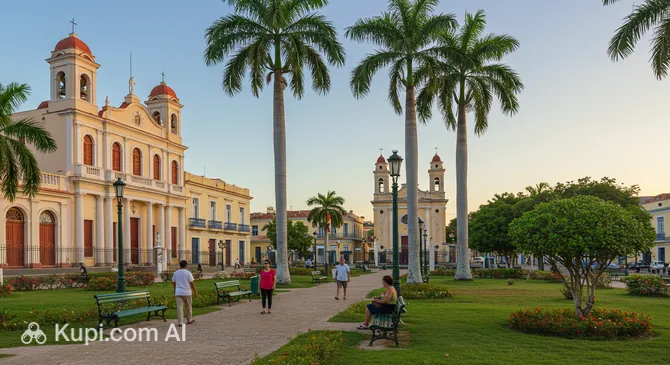
Navigating Cienfuegos is a relatively straightforward experience, as the city’s historic center is compact and grid-like, making it highly walkable. However, for reaching outlying neighborhoods like Punta Gorda or crossing the bay, the city offers a variety of transport options that range from functional to charmingly traditional. Unlike major capitals, there is no metro or tram system here; instead, the streets are dominated by a mix of buses, taxis, and distinctively local modes of travel.
The most iconic and widely used form of public transport in the city is the horse-drawn carriage, locally known as a coche de caballos. These carriages function similarly to buses, following fixed routes along major avenues such as the Prado and the Malecón. They are a primary mode of transit for residents and offer visitors an authentic and inexpensive way to travel between the city center and the Punta Gorda peninsula. You simply flag one down as it approaches and pay the driver directly upon exiting.
For shorter distances within the downtown area, bici-taxis (bicycle taxis) are extremely popular. These three-wheeled vehicles are perfect for navigating the narrower streets where larger vehicles might struggle. They operate like private taxis but at a slower pace, allowing you to take in the architecture while moving from one attraction to another. Drivers are often chatty and can provide local tips, making the ride a mini-tour in itself.
Standard public buses, known as guaguas, do operate throughout the city and connect to surrounding towns. While they are the most economical option available, costing mere cents in the local currency, they are frequently overcrowded and may not adhere to a strict timetable. For most tourists, relying on the bus system can be challenging due to the lack of clear route maps and the potential for long waits in the tropical heat.
A unique feature of the local transport network is the passenger ferry that crosses the bay. This service connects the main city with the Castillo de Jagua fortress and the community of Pasacaballos on the opposite side of the harbor entrance. The ferry ride offers spectacular views of the city from the water and is an essential experience for anyone visiting the fortress. It typically runs several times a day, though it is wise to check the current schedule at the pier before planning your trip.
When it comes to payment, the system is entirely cash-based. There are no electronic travel cards, transport apps, or tap-to-pay systems for public transit in the city. You will need to pay in Cuban Pesos (CUP). For buses and horse carriages along fixed routes, the fare is a set low price. For private services like bici-taxis or classic car taxis, you must negotiate and agree on the fare with the driver before getting in. It is crucial to carry small bills and coins, as drivers often do not have change for large denominations.
For those seeking more comfort or speed, official yellow taxis are available and are generally the most reliable option for tourists. They are equipped with air conditioning and meters, although flat rates are often offered for specific trips, such as to the airport or the botanical garden. Car rentals are available but can be expensive and are generally unnecessary if you plan to stay within the city limits, given the availability of other transport methods.
Practical advice for travelers includes planning your transport during daylight hours. While taxis are available 24/7, horse carriages and ferries operate on more limited schedules, often winding down in the evening. If you plan to stay late in the Punta Gorda area for dinner or drinks, ensure you have a plan for getting back to the center, such as pre-arranging a taxi pickup.