Support

Pantheon of the Fatherland

About

In the heart of the historic center that graces Santo Domingo stands a majestic building that has become the final resting place for the country's most prominent figures. The National Pantheon is not just an architectural monument, but a sacred national symbol that the Dominican Republic carefully preserves for future generations.
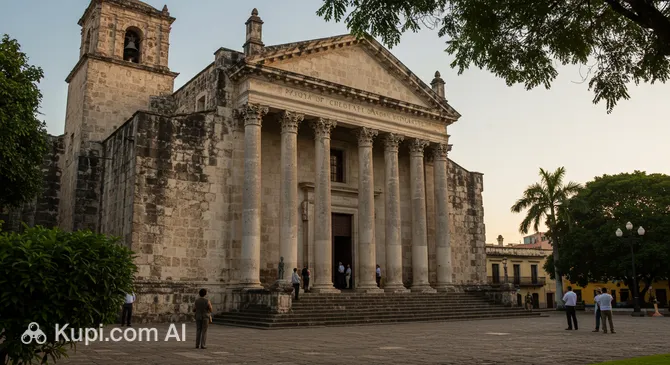
Pantheon of the Fatherland
Pantheon of the Fatherland. Иллюстрация. Источник: Kupi.com AI

Built in the first half of the 18th century as a Jesuit church, the building impresses with its austere and noble neoclassical style with Renaissance elements. The powerful facades, decorated with figures of saints and founding fathers, conceal magnificent vaulted ceilings, marble sarcophagi, and unique frescoes that create an atmosphere of solemn tranquility and deep respect for history.

Today, this site is recognized as part of the UNESCO World Heritage. Visitors are drawn not only by the building's architectural perfection but also by its significance: heroes of the struggle for independence are buried here, as well as the woman who personally sewed the first national flag. Empty niches in the walls serve as a reminder that the country's history continues to be written today, leaving room for the heroes of the future.

Contacts

For those planning a visit, here is the basic contact information for this historic site. The Pantheon is located in the heart of the historic center, making it easily accessible for tourists on foot.

How to contactContact
AddressC. Las Damas, Santo Domingo 10210, Dominican Republic

What to Do

When visiting the Pantheon, the first thing to notice is its majestic architecture. Start your tour at the facade, which features figures of the Jesuit order, and then step inside to appreciate the scale of the vaulted ceilings and the craftsmanship of the wall frescoes. In the center of the hall, it is impossible to miss the massive bronze chandelier — a historical gift that adds a special solemnity to the interior.

Strolling along the walls, you will see marble sarcophagi where the remains of national heroes rest. Of particular interest is the burial place of the woman who created the first Dominican flag. Be sure to look up — on the second floor, you can see elegant metal grilles with unique patterns, which are a fine example of the decorative art of that era.

The calm and solemn atmosphere of this place is ideal for thoughtful reflection and cultural relaxation. Here, you can not only take impressive photos but also learn much about national symbols thanks to the information plaques. A visit to the Pantheon will be an excellent addition to a walk through the Colonial Zone, allowing you to combine it with a tour of the nearby Ozama Fortress.

Getting There

This majestic memorial is located in the heart of the historic center, in the famous Colonial Zone at C. Las Damas, Santo Domingo 10210. The area is predominantly pedestrian, so the most convenient way to reach the Pantheon is on foot, walking from the Ozama Fortress or the Alcázar de Colón — the walk takes no more than 5–10 minutes.

If you are coming from Las Américas International Airport, a trip by taxi or via Uber and InDrive services will take about 30–45 minutes, depending on traffic. Public transport (local buses known as "guaguas") also runs nearby, but for maximum comfort, tourists are recommended to use taxis or simply enjoy a stroll through the cobbled streets of the old city.

Keep in mind that parking in this area is very limited, so it is better to leave a private car in one of the paid parking lots on the outskirts of the old center. A walk along Calle Las Damas — the oldest street in the New World — is a pleasure in itself, leading you straight to the doors of the Pantheon.

Ближайший город: Santo Domingo

History & Facts

The history of this majestic structure began in 1714. Originally, the building was constructed as a Jesuit church under the direction of architect Jerónimo Quezada y Garçon. Construction continued for over thirty years and was completed in 1746, after which masses were regularly held here until the Jesuits were expelled from the colony.

In the following centuries, the building changed many roles, serving as a tobacco warehouse, a school, and even a theater. It was only in the mid-20th century, in 1956, that a large-scale restoration was carried out at the initiative of the government of the time. Spanish architect Javier Barroso managed to restore the building's former glory, turning it into the National Pantheon to immortalize the memory of the country's outstanding citizens.

Today, the Pantheon is considered one of the most important symbols of Dominican statehood. It is part of the Colonial Zone, recognized as a UNESCO World Heritage site, and serves as a reminder of the rich and complex historical path the city has traveled since the first stone buildings of the Nicolás de Ovando era.

Time Needed

To leisurely explore the interior, study the architectural details of the facade, and read information about the national heroes, 45–60 minutes is enough for most visitors. This time will allow you to feel the solemn atmosphere and take memorable photographs.

If you plan to include a visit to the Pantheon in a larger walking route through the historic center, you should set aside about 2–3 hours for the overall walk. This will allow you to combine the tour of the memorial with visits to neighboring colonial monuments and a break in the cozy cafes of the old city without any rush.

Working Hours

The National Pantheon welcomes visitors daily, following a convenient schedule that allows it to be included in any sightseeing route through the city. The doors of the memorial are open to everyone from 8:00 AM to 6:00 PM.

This schedule applies to all days of the week, including weekends — from Monday to Sunday. This operating mode makes the site accessible for both early morning walks and visits at the end of the day, before sunset.

8:00 – 18:00

Nearby

A stroll around the Pantheon's surroundings allows you to dive deeper into the atmosphere of the capital and get to know its modern rhythm of life. After visiting the quiet halls of the memorial, it will be interesting to change the scenery and check out nearby parks or entertainment centers.

NameDistance
Museum of the Royal Houses0.1 km
Columbus Park0.2 km
Ozama Fortress0.3 km
Fortaleza Ozama0.3 km
Museum of Rum0.3 km
Juan Pablo Duarte Wax Museum0.3 km
Hasta La Tambora Cafe Lounge0.3 km

Reached the end of the page?

That means the route is fully explored