Support

Bahia de Caraquez

About

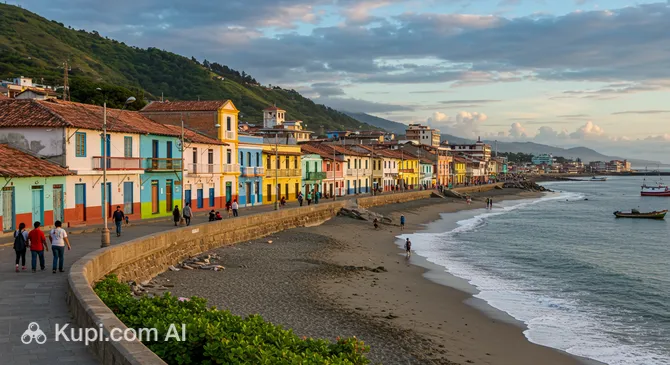
Bahía de Caráquez is a picturesque resort town, often called the "eco-capital" of the region. Located on a small peninsula at the mouth of the Chone River, it is washed by the waters of the Pacific Ocean and attracts travelers with its relaxed atmosphere, clean air, and stunning sunsets. It is an ideal destination for those seeking tranquility and harmony with nature on the coast of Ecuador.

Bahia de Caraquez. Illustration.
Source: Kupi.com AI

The city is located in the Manabí province and features a comfortable tropical climate that offers warmth almost year-round. With a population of about 21,000, Bahía de Caráquez maintains a cozy and intimate feel, avoiding the hustle and bustle of major metropolises. The rich history of Bahía de Caráquez deserves special mention, as it is here that the ancient traditions of indigenous peoples intertwine with the modern desire of residents for an ecological lifestyle, making the city a unique example of sustainable development.

Among the main points of interest are the famous Los Caras Bridge, connecting the city with neighboring San Vicente, and the picturesque Malecón promenade, perfect for evening strolls. Nature lovers will appreciate the proximity to the Isla Corazón reserve, where colonies of frigatebirds live in the mangroves. Bahía de Caráquez invites you to slow down the pace of life, enjoy the freshest seafood, and experience the genuine hospitality of the Ecuadorian coast.

Weather Overview

Weather:

The climate in Bahía de Caráquez is typical for the coastal zone of Ecuador: it is warm year-round, and there are practically no sharp temperature drops. Average daytime temperatures stay in a comfortable range from 25°C to 29°C, while nights bring pleasant freshness when the thermometer drops to 21–24°C.

The year is clearly divided into two seasons. The wet period lasts from January to May: during this time, especially in February and March, rains are frequent (up to 23 rainy days per month), but they are usually short-lived and followed by sun. The dry season, from June to December, is characterized by minimal precipitation and clear skies. For example, from August to October, rain is a rare occurrence.

Expect warm and humid months at the beginning of the year and a dry, comfortable season in the second half. Before your trip, be sure to check the detailed weather in Bahía de Caráquez to pack your bags correctly and choose the best time for your visit.

Average monthly temperature

Average monthly precipitation

Interesting Facts

Beyond the popular tourist routes, Bahía de Caráquez hides fascinating stories and unique features that make it a special place on the map. This city is not just a resort, but a living example of resilience and harmony with nature.

Bahía de Caráquez Malecón. Illustration.
Source: Kupi.com AI

Traveler photos:

  • The Country's First Eco-City. Bahía de Caráquez has officially held the title of "Ecocity" (Ecociudad) since 1999. This decision was made by residents after a series of natural disasters, when the community decided to rebuild the city based entirely on principles of sustainable development, recycling, and reforestation, becoming pioneers of this movement in Ecuador.

  • Traces of Ancient Civilization. The second part of the city's name refers to the indigenous Caras culture. According to legend, it was in this bay that representatives of this people, led by their chief Shiri Caran, landed on rafts to found a settlement that subsequently had a huge impact on the region's history before the arrival of the Incas.

  • A Record-Breaking Bridge. The city is connected to neighboring San Vicente by the Los Caras Bridge, which is the longest bridge in the country (about 2 km). The best view of this engineering marvel opens up if you visit the Malecón Bahía de Caráquez, where you can watch the giant structure soar over the confluence of the river and the ocean.

  • Peninsula City. The uniqueness of Bahía de Caráquez's location lies in the fact that it sits on a narrow sandy cape. Effectively, the city is washed by water on three sides: the Pacific Ocean and the mouth of the Chone River, which creates a special microclimate and a constant refreshing breeze that saves it from the heat.

How to Get There

When planning a trip to the Pacific coast, it is important to think through your route in advance and find out how to get to Bahía de Caráquez. Since the city itself does not have its own airport, travelers usually use a combined route: a flight to one of the major cities in Ecuador followed by a trip by land transport.

The most convenient option for arrival is Manta Airport (MEC), located in the neighboring city of Manta. This is the closest transport hub, situated just 46 km from Bahía de Caráquez. The journey from here by taxi or transfer takes about 1.5 hours, making this the fastest route after landing. The airport handles domestic flights, so it is often used as a connection point.

For international travelers, other airports serve as the main gateways. José Joaquín de Olmedo Airport (GYE) in Guayaquil is approximately 180 km away. The journey from Guayaquil to the resort by bus or car takes about 5 hours. Another option is the capital's Mariscal Sucre International Airport (UIO) in Quito (237 km as the crow flies, but the route along mountain roads is significantly longer). From the capital, the coast can be reached by comfortable bus (over 6 hours in transit) or a domestic flight to Manta.

For clarity, here is a summary of the main airports:

AirportPassenger trafficDistance
Manta Airport342 98446 km
Jose Joaquin de Olmedo Airport4.2 mln181 km
Esmeraldas Airport45 000197 km
Mariscal Sucre International Airport5.4 mln237 km
Mariscal Lamar International Airport499 852298 km

Regarding rail connections, it is impossible to reach the city of Bahía de Caráquez by train. The railway network in this region is not developed, and there are no active stations suitable for tourism purposes nearby. The main way to travel by land remains intercity buses and rental cars. The bus network is well-developed and reliably connects the resort with major cities such as Quito, Guayaquil, and Manta.

Main Attractions

Bahía de Caráquez is a city where history harmoniously intertwines with unique nature, offering travelers much more than just a beach holiday. The main attractions here are related to cultural heritage and panoramic views, which are possible thanks to the resort's special geographical location in Ecuador.

History buffs should head to the Chirije archaeological complex, located on the outskirts of the city. This site is considered the cradle of an ancient culture that existed here long before the Incas. Visiting the excavations and the local museum allows you to touch the mysteries of civilizations that were skilled navigators and traders. The atmosphere here is steeped in legends, and the surrounding dry tropical forests add a special flavor to the walk.

In the city's architectural landscape, the Iglesia de La Merced stands out. This modern building has become a symbol of spiritual rebirth and the resilience of local residents. The church attracts attention with its unusual design and serves as an important landmark in the city center. Here you can take shelter from the midday heat and appreciate the calm, peaceful atmosphere.

Bahía de Caráquez Malecón. Illustration.
Source: Kupi.com AI

Traveler photos:

One of the most notable engineering landmarks is the Los Caras Bridge (Puente Los Caras). This grand structure connects Bahía de Caráquez with neighboring San Vicente and offers excellent opportunities for photography. A walk across the bridge, especially at sunset, provides unforgettable views of the Chone River estuary, where fresh water meets the salty ocean.

While many tourists begin their acquaintance with the city by walking along the Malecón Bahía de Caráquez, it is also worth climbing to the city's viewpoints, such as "La Cruz." From there, a breathtaking panorama of the entire peninsula opens up, allowing you to appreciate the scale of the ocean and the cozy layout of this "eco-city."

Local Cuisine

The gastronomic scene in Bahía de Caráquez is a vivid reflection of the culinary traditions of the Manabí province, which is rightfully considered the "kitchen" of all Ecuador. The basis of the local diet is built on three pillars: fresh seafood, plantains (verde), and peanuts (maní). Thanks to its location at the mouth of the river and on the ocean shore, fish and shrimp reach the table literally hours after being caught, ensuring an exceptional taste.

The main culinary symbol that every tourist must try is Viche soup. It is a thick, hearty stew whose recipe dates back to pre-Columbian times. Its ingredients include fish, peanut paste, various vegetables, and spices. Another popular dish is Manabí-style ceviche: here it is often served with the addition of peanuts and lime, and always accompanied by chifles (crunchy plantain chips). For a quick street snack, corviche is perfect—a fried plantain dough pastry filled with fish and peanut sauce.

Bahía de Caráquez Malecón. Illustration.
Source: Kupi.com AI

Traveler photos:

As for drinks, the hot climate dictates its own rules. Locals quench their thirst with coconut water (agua de coco), sold straight from the nuts, or fresh juices made from passion fruit, blackberry, and naranjilla. Among alcoholic beverages, the region's signature is Caña Manabita—a strong anise-flavored sugarcane spirit, drunk neat or used in cocktails like a local version of "caipirinha."

The food culture here is relaxed and informal. Most of the best seafood restaurants are concentrated along the Malecón Bahía de Caráquez. Here you can have lunch with an ocean view, enjoying the sea breeze. If you are looking for a place to not only grab a bite but also have a drink with friends or watch a sports broadcast, it's worth stopping by H Sports Café. For those seeking maximum authenticity, we recommend visiting the morning market, where the most delicious and inexpensive breakfasts are prepared, including the famous encebollado soup.

Travel Tips

A trip to Bahía de Caráquez promises to be peaceful and full of pleasant discoveries, but a little preparation will make your vacation much more comfortable. To ensure you feel confident in this cozy "eco-city" on the coast of Ecuador, we have gathered a list of the most important recommendations to help you avoid typical tourist mistakes.

  1. Clothing and Sun Protection. The climate here is hot and humid, so prioritize light clothing made from natural fabrics (cotton, linen). Be sure to bring a hat and sunscreen with a high protection factor—the sun on the equator is very active even in cloudy weather. For evening walks by the ocean, a light windbreaker or sweater will come in handy, as the sea breeze can be cool.

  2. Transport Features. The city's main highlight is the tricimoto (motorized rickshaw). This is the primary and most convenient way to travel short distances. Always confirm the price before boarding, although within the city it is usually fixed and low. Renting a car only makes sense for trips around the Manabí province; a car is practically unnecessary within the city.

  3. Cash is King. The official currency is the US dollar. While supermarkets and large hotels accept cards, small shops, restaurants, and taxis only take cash. It is critically important to have small bills ($1, $5, $10) with you. Banknotes of $50 and $100 are accepted very reluctantly or not at all due to a lack of change.

  4. Health and Water. It is strongly recommended not to drink tap water—buy bottled water for drinking and brushing your teeth. Given the proximity to mangrove forests, be sure to bring mosquito repellent, especially if you plan evening walks or nature excursions. There are pharmacies (Farmacias) in the center, but it's better to bring specific medications with you.

  5. Language Barrier and Connectivity. Few people here know English, mostly staff at expensive hotels. Learning a few basic phrases in Spanish ("Hola," "Gracias," "¿Cuánto cuesta?") will go a long way with the locals. For reliable connectivity, it's best to buy a local SIM card (operators Claro or Movistar) at any kiosk, as Wi-Fi can be unstable.

  6. Local Etiquette. Ecuadorians are polite and friendly people. When entering a shop, an elevator, or getting into a taxi, it is customary to say hello ("Buenos días" or "Buenas tardes"). Life here flows at a relaxed pace, so try not to show impatience if restaurant service seems slow—it's part of the local "tranquilo" culture.

  7. What to Avoid. Do not leave valuables unattended on the beach, even if there are few people around. Also, try not to walk alone in unlit remote areas late at night. Most importantly, don't try to plan everything down to the minute: in Latin America, time is perceived more flexibly.

  8. Crossing Tip. To feel the local flavor, at least once cross to the neighboring town of San Vicente not by taxi over the bridge, but by a traditional panga boat. It's cheap, fast, and offers a great view of the city from the water, especially at sunset.

Bahía de Caráquez is a place where you need to slow down and enjoy the moment. By following these simple tips, you can easily blend into the rhythm of this friendly city and take home only warm memories of Manabí hospitality.

Entertainment & Nightlife

Nightlife in Bahía de Caráquez is characterized by a calm and measured rhythm, fully consistent with its status as an "eco-city." You won't find noisy metropolis-style clubs open until dawn or massive discos here. Instead, the city offers a cozy atmosphere for relaxed evenings, where the main entertainment is chatting with friends to the sound of the ocean, enjoying cocktails, and stargazing.

The epicenter of evening activity is the Malecón Bahía de Caráquez. It is here, along the coast, that most bars, small restaurants, and cafes are concentrated, coming to life after sunset. This is an ideal place for miniature "bar-hopping": you can leisurely stroll from one establishment to another, trying local snacks and drinks. The crowd here is mixed: tourists, expats, and local families. The dress code in these establishments is as casual and relaxed as possible—shorts and t-shirts are appropriate almost everywhere.

H Sports Café. Illustration.
Source: Kupi.com AI

Traveler photos:

If you are looking for a specific place to have a drink and soak up the local atmosphere, check out H Sports Café. This is a popular bar where sports fans often gather to watch broadcasts and those simply wishing to relax in a casual setting. You can order beer, cocktails, and simple snacks while enjoying the friendly service.

For those who prefer more traditional entertainment or want to spend the evening watching a movie, there is a modern cinema in the city. It is located in the El Paseo Shopping Bahía de Caráquez mall. This is an excellent option for a family evening, especially if the weather is not conducive to walking. As for daytime cultural entertainment, it is mainly represented by museums and eco-tours mentioned earlier, as there are no theaters or large concert halls in the city.

When planning an evening out, consider a few practical points. Most establishments close fairly early—around midnight or 1:00 AM, even on weekends. Prices in bars and restaurants are quite affordable. In terms of safety, the Malecón area and central streets are considered safe for walking; however, as everywhere, you should remain vigilant. To return to your hotel late at night, it is best to use a motor-taxi (tricimoto) or call an official taxi to get there quickly and comfortably.

Parks & Museums

Bahía de Caráquez, known as Ecuador's "eco-city," offers travelers a unique combination of protected natural areas and cultural spaces. Here, green zones are not just parks but true biodiversity reserves, harmoniously neighboring museums that house the region's millennial history.

One of the main natural gems in the vicinity is Isla Corazón, or "Heart Island." This mangrove forest nature reserve, located in the Chone River estuary, got its name due to its heart-like shape when viewed from above. This is a must-visit for ecotourism enthusiasts: there are water routes through mangrove tunnels where you can observe large colonies of frigatebirds and other seabirds in their natural habitat.

For those who prefer hiking, the Cerro Seco Biological Reserve (Reserva Biológica Cerro Seco) will be a real discovery. It is one of the few remaining patches of tropical dry forest on the Pacific coast. The park offers several trails of varying difficulty passing through dense vegetation where you can encounter rare birds and reptiles. Reaching the higher ground, tourists are rewarded with a panoramic view of the city and the endless ocean.

Bahía de Caráquez Malecón. Illustration.
Source: Kupi.com AI

Traveler photos:

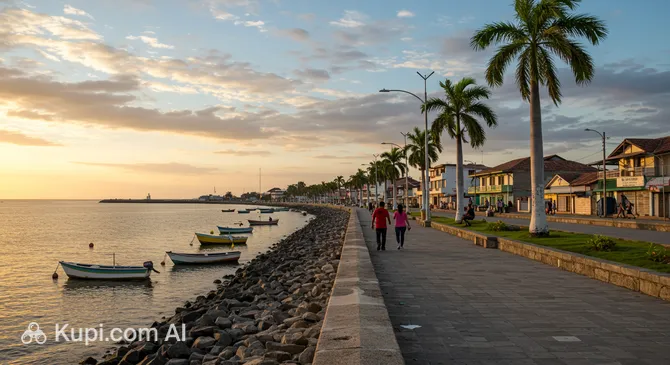
Within the city, the main promenade and recreation area is the Malecón Bahía de Caráquez. This is a well-maintained waterfront that serves as the center of the resort's social life. It's pleasant to stroll in the shade of palm trees, enjoying the fresh sea breeze and views of the river mouth. The Malecón is ideal for morning jogs or a quiet evening rest when locals come out to admire the sunset.

The city's cultural heritage is vibrantly presented in the Bahía de Caráquez Museum (Museo Bahía de Caráquez), part of the Central Bank of Ecuador's museum network. The museum's exhibition is dedicated to the rich pre-Columbian history of the region, specifically the Bahía culture (500 BC – 650 AD). Visitors can see an impressive collection of ceramics, figurines, and jewelry demonstrating the high craftsmanship of ancient artisans and navigators who inhabited these lands long before the arrival of the Spanish.

Insider Tip: If you want to combine history and nature, head to the Chirije archaeological complex, located south of the city. You can get there along the beach during low tide on special transport—it's an adventure in itself that allows you to see untouched landscapes and touch the secrets of ancient trading ports.

Getting Around

The transport system in Bahía de Caráquez perfectly matches its status as a cozy and calm resort. You won't find a metro, trams, or a complex network of city buses typical of major cities. The city is quite compact, and many distances are easily covered on foot, which fits perfectly into the "eco-city" concept. However, for longer distances or when traveling with luggage, there are several convenient and inexpensive ways to get around.

The most popular and colorful form of public transport is the tricimoto. These are motorized three-wheeled carts with a covered passenger cabin, designed for 2–3 people. They cruise throughout the city and can be hailed on almost any street with a simple wave of the hand. It is a fast, cheap, and well-ventilated way to get from your hotel to the beach or market. Since the city supports ecological initiatives, electric versions of this transport are increasingly common, operating silently and without exhaust.

Classic city buses are mainly used for connections to suburbs or neighboring towns. If you need to reach remote areas or travel outside the city, look for buses at the terminal or main stops. Yellow taxis also operate in the city, which are convenient for nighttime travel, trips to the neighboring city's airport, or if you are traveling in a large group with suitcases. They can be called by phone or found at designated stands.

The fare payment system here is as simple and traditional as possible: only cash is accepted. There are no transport cards, mobile apps, or validators. The currency is the US dollar. The cost of a tricimoto ride is usually fixed for trips within the center (around $0.50 – $1.00 per person), but for longer routes, it is better to clarify the price with the driver before boarding. In taxis, it is also recommended to agree on the fare in advance or ask to turn on the meter if there is one.

A special type of transport is the panga boats, which cruise across the Chone River estuary. Although the Los Caras Bridge significantly simplified the crossing, water transport remains a popular tourist attraction and a fast way for pedestrians to reach neighboring San Vicente. Boats depart from the pier, and the ticket is very inexpensive.

For active lifestyle enthusiasts, a bicycle is a great alternative. The city's terrain is mostly flat, and the presence of the promenade and calm traffic make cycling safe and pleasant. Rental shops can be found in hotels or travel agencies. And, of course, don't forget that Bahía de Caráquez is made for walking: most attractions, restaurants, and beaches are within walking distance of each other.

Practical advice for tourists: always have small bills ($1, $5) and coins with you. Tricimoto and taxi drivers often do not have change for large banknotes ($20 and above). Transport starts early in the morning, around 6:00 AM, and tricimotos are active until 10:00 PM – 11:00 PM. At later times, it is more reliable to order an official taxi through your hotel reception.
Accommodation

The choice of accommodation in Bahía de Caráquez will pleasantly surprise travelers with its variety and affordability. Unlike bustling metropolises, a relaxed atmosphere prevails here, and the hotel infrastructure is harmoniously integrated into the urban landscape. Tourists can choose accommodation for every taste: from inexpensive hostels for backpackers and cozy family guesthouses (hostales) to comfortable apartments in modern high-rise buildings that are a hallmark of the city skyline.

The area along the promenade is considered the most popular and convenient neighborhood to stay in. Staying here, you will be within walking distance of the ocean, restaurants, and main attractions. Many hotels and rental apartments overlook the picturesque Malecón Bahía de Caráquez, allowing you to admire sunsets and the Chone River estuary right from your balcony. Staying in the city center is also convenient due to the proximity to shops and the market, while the beach is still only a 10–15 minute walk away.

A feature of the local housing market is the wide selection of short-term apartment and condominium rentals. Many travelers, especially families or large groups, prefer to rent apartments through online platforms. This often proves more cost-effective than a hotel and provides the opportunity to use your own kitchen. The price range in the city can be described as budget and mid-range: it is difficult to find ultra-luxury all-inclusive chain resorts here, but for a very reasonable fee, you can get excellent service and a sea view.

When planning your trip, consider the seasonality. While it is usually not difficult to find a room even upon arrival, the situation changes drastically during national holidays (feriados), especially during Carnival (February-March) and Easter week. During these days, the city fills with tourists, so it is worth booking accommodation at least a month in advance. To find options, it is best to use popular international aggregators or contact owners directly through social networks, which is also common in Ecuador.

Nearby Cities

For those who want to explore the surroundings, Bahía de Caráquez serves as an excellent starting point for day trips to several interesting nearby locations:

CityPopulationDistance
San Vicente9 8193 km
Tosagua10 75128 km
Rocafuerte10 57434 km
Chone52 81038 km
Calceta17 68239 km

Each of these destinations offers its own unique experience. Manta is a major port city and a lively tourist center, known for its beaches like Playa el Murciélago and active nightlife. A trip to Portoviejo, the capital of Manabí province, will allow you to get to know the administrative and cultural heart of the region and try authentic local cuisine, which originated right here. And the closest town, Chone, offers a chance to dive into the calmer atmosphere of the Ecuadorian province and see the life of an agricultural region from the inside.

Shopping & Souvenirs

Shopping in Bahía de Caráquez is more practical and relaxed than entertainment-oriented. You won't find bustling blocks with high-fashion boutiques here; however, the city fully provides for travelers' needs in beachwear, groceries, and essentials. The special charm of local shopping comes from small shops with handmade goods that emphasize the city's status as an ecological resort and allow you to take home a piece of local culture.

The main commercial activity is concentrated in the city center (El Centro) and on the streets adjacent to the promenade. Here, amidst colonial and modern architecture, are many small shops, pharmacies, and bazaars. A walk through this area is a great way to combine finding necessary items with immersion into the daily life of the townspeople. On the central streets, you can find everything from sunglasses and swimsuits to electronics and household items.

For those who prefer a modern shopping format and the comfort of air-conditioned premises, the El Paseo Shopping Bahía de Caráquez mall is located in the city. This is the city's main mall, where a large supermarket, well-known brand clothing stores, shoe salons, and electronics outlets are gathered under one roof. It is a convenient place to stock up on groceries for self-catering or just to take a break from the heat while strolling through the galleries.

El Paseo Shopping Bahía de Caráquez. Illustration.
Source: Kupi.com AI

Traveler photos:

To experience the true taste of Ecuador, it's worth visiting the Municipal Market (Mercado Municipal). This is a realm of freshness and aromas, where local farmers sell exotic fruits, vegetables, and freshly caught fish and seafood. The market is not just a place for buying and selling, but a center for social interaction. Here you can buy ingredients for dinner cheaply and practice your Spanish while chatting with friendly vendors.

When choosing souvenirs, look for products made from tagua (vegetable ivory)—the nut of a palm tree from which local masters carve incredibly beautiful figurines and jewelry. Since the city is in Manabí province, the home of the famous straw hats, you can purchase an authentic Panama hat (sombrero de paja toquilla) of excellent quality. Also popular are crafts made from shells, coconut, and bamboo, reflecting the resort's nautical theme.

Shops in Bahía de Caráquez usually open around 9:00 AM and work until 7:00 PM or 8:00 PM. Small private shops may close for a siesta during the hottest hours of the day (from 1:00 PM to 3:00 PM), while the shopping mall operates without breaks and closes later. The primary currency is the US dollar. Supermarkets and the mall accept credit cards without issues, but at the market, in souvenir shops, and for taxis, you will need cash, so always keep small bills with you.

Ecuador has a VAT refund system (Tax Free) for foreign tourists when purchasing locally produced goods for over $50 in stores authorized by the internal revenue service (SRI). However, in small towns like Bahía de Caráquez, finding such stores can be difficult. If you make large purchases, keep your receipts to try to process a refund at the international airports in Quito or Guayaquil before departing the country.

Reached the end of the page?

That means the route is fully explored