Support

Portoviejo

About

Portoviejo is not just the administrative center of the Manabí province, but a city with a soul, which locals lovingly and proudly call the "City of Royal Tamarinds." Here, amidst green valleys and bustling streets, the modern rhythm of life harmoniously intertwines with the region's rich agricultural traditions.

Located in a picturesque river valley about 30 kilometers from the Pacific coast, the city serves as an important cultural and commercial hub. A trip to Ecuador would be incomplete without visiting this colorful place. The climate here is tropical, creating a warm, relaxed atmosphere year-round and encouraging the lush blooming of gardens that decorate the urban landscape.

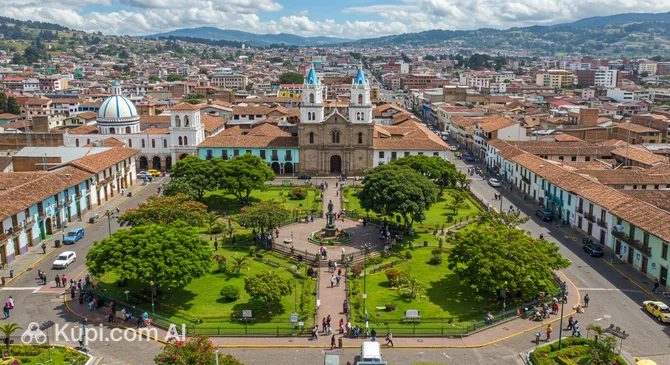
Portoviejo. Illustration.
Source: Kupi.com AI

It is one of the oldest settlements in the country, founded by Spanish colonizers back in 1535. The centuries-old history of Portoviejo has left its mark on the architecture and layout of the central districts. Tourists should definitely take a walk through Vicente Amador Flor Park, which is the heart of social life, and visit the majestic Metropolitan Cathedral of Jesus the Good Shepherd. Furthermore, the city is famous for its gastronomy: the cuisine of the Manabí province is considered one of the most delicious in the country.

Portoviejo will be an excellent starting point for exploring the region and will give you the opportunity to immerse yourself in authentic culture. The sincere hospitality of the locals and the unique charm of the "City of Tamarinds" will leave you with the brightest impressions.

Weather Overview

The climate in this region can be characterized as tropical, with constant comfortable temperatures throughout the year. Travelers should expect stable warmth: during the day, the air usually warms up to +28...+30°C, while nights remain pleasant with temperatures around +21...+23°C. Sharp cold snaps practically never occur here.

The main difference between the seasons is the amount of precipitation. The beginning of the year, from January to April, is considered the wet season: during this period, the number of rainy days can reach 21–25 per month. However, starting in May, the rains subside, and from June to November, dry weather sets in, with precipitation occurring very rarely, only 2–4 days per month. Before your trip, we recommend checking the current weather in Portoviejo to plan your wardrobe correctly.

In general, it's best to choose light clothing made of natural fabrics for your trip. If you plan a visit in the first half of the year, don't forget to bring an umbrella or a raincoat, whereas in the second half of the year, you will likely only need sun protection.

Average monthly temperature

Average monthly precipitation

Interesting Facts

In addition to its main attractions, Portoviejo holds many fascinating secrets that reveal its deep connection with the region's history and culture. Here are a few facts that will allow you to look at this city from a new perspective:
  • Global Gastronomic Recognition. In 2019, Portoviejo was officially included in the UNESCO Creative Cities Network in the "Gastronomy" category. This confirms the city's status as a culinary capital, where ancient recipes for dishes cooked in traditional clay ovens are carefully preserved.

  • The Enigma of the Stone Thrones. In the vicinity of the city, on the Jaboncillo hills, unique U-shaped stone seats were discovered, belonging to the pre-Columbian Manteño culture. Scientists believe that these "thrones" were used by the local elite and priests not only as a symbol of power but also for stargazing.

  • A City of Poets and Romantics. Portoviejo is famous not only for its tamarinds but also for its rich literary history. This corner of Ecuador has given the country many outstanding poets and writers, and the local tradition of oral folk creativity—"amofinos" (short rhyming couplets)—is an important part of the residents' cultural code.

  • A Wandering City. In the early years after its founding, the settlement did not have a permanent location. Due to frequent fires, pirate attacks, and diseases, the city was moved several times until it finally settled in its current fertile valley, protected by hills.

How to Get There

When planning a trip to the Manabí province, it is important to think through your route in advance, as direct access to the city depends on your chosen transport hub. You can find out more about how to get to Portoviejo on our specialized page, but here we will look at the most popular options for arriving via the nearest airports.

Portoviejo does not have its own airport, so travelers usually fly into neighboring cities. The most convenient and closest option is Manta Airport (IATA: MEC), located in the city of Manta. The distance to the center of Portoviejo is only about 28 km. The journey by taxi or bus takes approximately 60 minutes. This is a regional hub that accepts domestic flights, making it an excellent choice for those flying with a connection in Quito.

For international flights, travelers often choose José Joaquín de Olmedo International Airport (IATA: GYE). It is located in the large city of Guayaquil, about 137 km from Portoviejo. This is one of the country's main aviation hubs with high passenger traffic. The journey from here by land transport will take about 3 hours and 45 minutes, but the wide selection of flights compensates for the travel time.

You can also consider the capital's Mariscal Sucre International Airport (IATA: UIO) in Quito. It is located significantly further away—255 km from Portoviejo. A car or bus ride from here will be long and take around 6–7 hours; however, this airport offers the greatest number of international connections.

For clarity, here is a summary of the main airports you can use to reach the region:

AirportPassenger trafficDistance
Manta Airport342 98428 km
Jose Joaquin de Olmedo Airport4.2 mln137 km
Esmeraldas Airport45 000242 km
Mariscal Sucre International Airport5.4 mln255 km
Mariscal Lamar International Airport499 852260 km

As for rail connections, they are not developed as a mass form of passenger transport for long-distance travel in this region. Tourists arriving in Ecuador mainly rely on an extensive network of intercity buses or private transfer and taxi services to get from the airports to Portoviejo. The roads here are picturesque and allow you to enjoy the country's views before arriving at your destination.

Main Attractions

The city of Portoviejo offers travelers an interesting blend of history, culture, and modern recreation areas. While it lacks the bustle of megacities, cozy parks and unique historical monuments make it an attractive place to stop. Here are a few key locations worth visiting to feel the true spirit of the Manabí provincial capital.

La Rotonda Park (Parque La Rotonda)
This is perhaps the most popular recreation spot for both locals and tourists. An enormous modern park spanning over 15 hectares, it impresses with its infrastructure: there are artificial lagoons, canals where you can ride boats, and numerous sports grounds. In the evening, the park is transformed by beautiful lighting and dancing fountain shows. It is an ideal place for leisurely walks, picnics, and family vacations.

Hojas-Jaboncillo Archaeological Complex (Complejo Arqueológico Hojas-Jaboncillo)
Located just a few kilometers from the city, this open-air museum is a must-visit for history buffs. This is the center for studying the Manteño culture. Tourists come here to see the famous U-shaped "stone thrones" and visit the museum, which houses artifacts from the pre-Columbian era. After climbing the hill, you can also enjoy breathtaking panoramic views of the valley.

Metropolitan Cathedral of Jesus the Good Shepherd (Catedral Metropolitana de Jesús el Buen Pastor)
The city's main religious symbol stands out with its unusual modern architecture. Unlike traditional colonial churches, this cathedral has an open design with high vaults and stained glass windows that create a special play of light inside. The building is surrounded by palm trees and gardens, creating an atmosphere of peace right in the middle of the city bustle.

Portoviejo Botanical Garden (Jardín Botánico de Portoviejo)
For those who want to get closer to the region's nature, the botanical garden will be a true discovery. These are the "lungs" of the city, where a rich collection of tropical plants typical of the dry forest ecosystem and coastal zones is gathered. A walk through the garden's shady alleys is a great way to escape the midday heat and see the diversity of local flora.

Local Cuisine

Portoviejo's gastronomy is not just food, but a true cultural attraction, thanks to which the city was included in the prestigious UNESCO Creative Cities Network. The cuisine of the Manabí province is famous for its diversity and unique flavor combinations, where the main roles are played by peanuts (locally called "maní"), green bananas (verde), the freshest seafood, and fragrant local herbs.

Among the dishes every traveler must try, Viche takes first place. This is a thick and hearty soup called the "gastronomic anthem" of the region; its recipe dates back hundreds of years. The ingredients include fish or shrimp, various vegetables, legumes, and the essential peanut paste, which gives the broth a creamy texture. For a quick street snack, Corviche is perfect—crunchy fried patties made from green banana dough filled with fish and spices.

As for drinks, the status of the "City of Royal Tamarinds" dictates the menu: refreshing natural tamarind juice is served everywhere, possessing a pleasant tartness and perfectly quenching thirst in the tropical heat. Among alcoholic beverages, the region's hallmark is Caña Manabita—a high-quality, strong spirit made from sugar cane. Also popular is homemade Rompope—a sweet and thick egg liqueur with spices, often prepared by local families for the holidays.

The food culture in Portoviejo is very democratic. While there are modern restaurants, the soul of the local cuisine lives in the so-called "huecas"—small family-run cafes and eateries. This is where, along with the city markets, locals have breakfast and lunch. A special charm is added to the dishes by the tradition of using wood-fired ovens: many establishments on the outskirts of the city still cook over an open fire, which imparts a unique smoky aroma.

Travel Tips

Welcome to the hospitable "City of Royal Tamarinds"! To ensure your introduction to the capital of the Manabí province is as comfortable as possible and leaves only warm memories, we have collected a list of proven recommendations to help you easily navigate local nuances.

  1. Wardrobe for the Tropics. Given Portoviejo's hot climate, prioritize loose clothing made of natural fabrics such as cotton or linen. Be sure to bring a hat and sunglasses. For walks in La Rotonda Park, comfortable open shoes or light sneakers are suitable. If you plan to visit the Metropolitan Cathedral, remember the dress code: shoulders and knees should be covered; beachwear is inappropriate here.
  2. Getting Around the City. The main and most convenient form of transport for tourists is the official yellow taxi. They are equipped with security cameras and panic buttons. Taxi apps (such as Uber or local equivalents) work, but there may be fewer cars than in the capital. City buses are cheap, but they are often overcrowded and can be difficult to navigate without knowing the routes. Renting a car only makes sense if you plan to visit the surrounding beaches in the province.
  3. Financial Nuances. The official currency of Ecuador is the US dollar. It is critically important to have small bills ($1, $5, $10, and $20) and coins. $50 and $100 bills will simply not be accepted in many places, especially in taxis and small cafes ("huecas"), due to a lack of change or fear of counterfeits. Visa and Mastercard are accepted in supermarkets and hotels, but cash remains king in daily life.
  4. Health and Safety. Portoviejo is in a tropical zone, so using mosquito repellent is mandatory, especially in the evening and during the rainy season. Drink only bottled water; tap water is not potable. In terms of safety, stick to general rules: do not display expensive jewelry and avoid deserted outskirts after dark. Pharmacies (Farmacias) are frequent; large chains like Cruz Azul or Fybeca are reliable.
  5. Language Barrier and Connectivity. The main language of communication is Spanish. English is not widely spoken, so download an offline translator and learn basic phrases. Wi-Fi is available in most cafes and hotels, but for stable connectivity, it's better to buy a local SIM card (operators Claro or Movistar)—this can be done in official stores or small kiosks by presenting your passport.
  6. Local Etiquette. Residents of Manabí (Manabitas) are known for their warmth and openness. It is customary to say hello ("Buenos días/tardes") when entering a shop or taxi. If you see someone eating, it is polite to say "Buen provecho" (enjoy your meal)—this is highly appreciated by locals. Do not refuse an invitation or treat too abruptly, as it may be perceived as a lack of respect for their hospitality.
  7. What to Avoid. Do not take photos of locals (especially indigenous people) without their permission. Also, avoid discussing politics or criticizing local customs—Ecuadorians are patriotic and proud of their country. Most importantly, do not rush. The pace of life here is leisurely, and showing impatience in a restaurant or queue will not speed up the process but will only create tension.
  8. Gastronomic Tip. Lunch (almuerzo) is the main meal of the day. From 12:30 PM to 2:30 PM, most establishments offer set lunches at a very favorable price (usually soup, a main course, and a drink). This is the best way to try Manabí home cooking and save money, as a dinner from the menu will cost significantly more.

Portoviejo is a city that reveals itself to those ready to accept its leisurely pace and sincerity. By following these simple tips, you will be able to feel confident and safe, enjoying every moment of your journey through the heart of the Ecuadorian coast.

Entertainment & Nightlife

The nightlife in Portoviejo has its own unique charm, distinct from noisy metropolises. You won't find endless raves until dawn here, but instead, you will immerse yourself in an atmosphere of warm tropical fun, where music is loud, and people are open and friendly. Evening entertainment in the Manabí capital is closely linked to gastronomy and socializing, so many parties start with a hearty dinner and smoothly transition into dancing or karaoke.

The epicenter of nocturnal activity is the area adjacent to Avenida Manabí. This is the city's main artery, which turns into the local "Zona Rosa" after dark. Dozens of bars, grill restaurants, and small clubs are located along the avenue. It is customary to move from venue to venue, enjoying cocktails and live music. The crowd here is diverse, ranging from young people to families, and the dress code is casual—"smart casual" is appropriate everywhere. It's best to leave shorts and flip-flops for the beach, but formal suits are not required here either.

Karaoke bars hold a special place in the entertainment culture. For the residents of Portoviejo, singing is not just a hobby, but a real sport and a way to relieve stress. If you want to feel like a local, be sure to stop by one of these establishments on Avenida Reales Tamarindos. The atmosphere is always festive, and even if you don't know any Spanish songs, you will be supported with applause.

For those who prefer a quieter but spectacular evening, La Rotonda Park remains the ideal place. At night, this park completely changes its appearance: the illumination turns on, the dancing fountains with lights begin to work, and free concerts or theatrical performances often take place in open areas. This is a safe zone where you can walk until late in the evening, enjoying the cool air after a hot day.

Practical tips for tourists:

  • Time: Life in the bars starts after 8:00 PM, and clubs fill up closer to 11:00 PM. On Sundays and Mondays, many venues may be closed or have reduced hours.
  • Safety: The city center and main avenues (Manabí, Reales Tamarindos) are well-lit and patrolled. However, avoid walking alone in dark alleys.
  • Transport: Public transport runs rarely at night. The most reliable way to get to your hotel is to call an official yellow taxi through the establishment's reception or use verified apps.
  • Prices: The cost of cocktails and club entry is lower here than in Quito or Guayaquil. An average drink in a bar will cost around $3–6.

While Portoviejo is more famous for its evening leisure, there is plenty for culture lovers to do during the day. The city offers visits to small but interesting museums dedicated to archaeology and regional history, as well as modern cinemas in shopping centers. However, it is after sunset, to the rhythms of salsa and reggaeton, that the city reveals its true, passionate character.

Parks & Museums

Portoviejo harmoniously combines the dynamics of a modern city with the coziness of green oases, offering tourists the chance to relax in shady parks and immerse themselves in the region's rich past. The cultural space here is not limited to the walls of buildings: history and nature are intertwined, creating a unique atmosphere for walks and educational leisure.

Among the green zones, Las Vegas Park (Parque Las Vegas) deserves special attention. This modern public space, located on the banks of the Portoviejo River, has become the true cultural heart of the city. The park is famous for its open-air amphitheater, known as the "Acoustic Shell" (La Concha Acústica), which frequently hosts concerts and festivals. For tourists, it is an ideal place to enjoy the evening cool, walk along well-maintained paths, and see how the city lives after sunset.

Another popular spot for outdoor recreation is El Mamey Park (Parque El Mamey). Unlike the entertainment-focused nature of other zones, this park is more geared towards active recreation and sports. There is plenty of greenery, jogging tracks, and playgrounds, making it a great choice for a morning run or a peaceful picnic surrounded by tropical trees. These are the "green lungs" of residential areas, where you can observe the daily life of the locals.

For those who want to understand history more deeply, a visit to the Portoviejo Museum and Historical Archive (Museo Portoviejo y Archivo Histórico) is mandatory. Located in a restored building in the city center, this museum offers a fascinating journey through time. The exhibits cover various eras: from archaeological finds of pre-Columbian cultures to documents and photographs from the colonial and republican periods. This place allows you to see how the identity of the Manabí provincial capital was formed.

Equally interesting is the Interpretation Center of the Hojas-Jaboncillo Complex. Although the archaeological complex itself is outdoors, the museum part contains unique artifacts of the Manteño culture. Here, you can examine the famous U-shaped stone seats in detail and learn about the daily life, beliefs, and social structure of the ancient civilizations that inhabited Ecuador long before the arrival of the Spanish.

If you are looking for something special, check out the small private galleries or cultural centers that sometimes open at the city's universities. Often, works by contemporary local artists are exhibited there, whose creativity is permeated with the bright colors and images characteristic of coastal culture. A walk through such places will give you a subtler understanding of the soul of this sunny region.

Getting Around

The public transport system in Portoviejo is quite simply organized and intuitively understandable even for first-time visitors to the region. You won't find a metro or tram lines here; the main method of transport for locals and tourists remains buses and taxis. The city is relatively compact, so many distances in the center can be covered on foot, but you will definitely need transport for trips to remote areas or attractions.

The most popular and budget-friendly form of transport is the city bus. The route network covers almost all districts of the city. Buses are usually painted blue or green and run from early morning until evening (roughly until 8:00 PM or 9:00 PM). Comfort is basic; air conditioning is not available everywhere, but open windows provide ventilation. Stops are marked with signs, but drivers often stop on demand if you wave your hand.

Bus fares are paid exclusively in cash. As a rule, there are no conductors: money is handed to the driver upon entry. The fare is fixed and very affordable—usually around 30–40 cents. No transport cards or mobile apps are used for payment here, so it is critical to always have change (5, 10, 25 cent coins and $1 bills) with you.

For more comfortable and faster movement, it is recommended to use official yellow taxis. There are many of them in the city, and they are considered a safe way to get around. Although the cars are equipped with taximeters, in practice (especially in the evening), drivers often prefer to agree on a fixed price before the trip. An average trip around the city will cost $2–4. Taxi apps do not work as stably as in the capital, so it is more reliable to ask for a car at the hotel reception or take a taxi from official stands.

A feature of the transport system in Portoviejo and the entire province is the "tricimotos"—motorized rickshaws. These are three-wheeled vehicles with a roof that serve as a popular alternative to taxis for short-distance trips, especially in residential areas and on the outskirts. This is a cheap and colorful way to reach your destination with a breeze; however, their entry into the very center of the city and onto main avenues may be restricted to prevent traffic jams.

If you plan to travel outside the city, your main landmark will be the "Terminal Terrestre"—the main bus station. This is a modern transport hub from which comfortable intercity buses depart to other parts of the province and the country. Tickets for such trips are purchased at the terminal's ticket offices, and cash is also preferred here, although some large companies are beginning to accept cards.

Accommodation

The choice of accommodation in Portoviejo is quite diverse and caters to both business travelers and tourists wishing to explore the culture of the Manabí province. The hotel infrastructure here is not as extensive as in the neighboring resort city of Manta, but the city offers a decent range of options: from budget-friendly hostels and guesthouses to comfortable mid-range hotels and modern apartments.

When choosing an area to stay, you should consider the purpose of your visit. The Historical Center is suitable for those who want to be in the heart of the action, close to the main attractions and markets, though it can be quite noisy during the day. A quieter and more prestigious area is the zone around Avenida Manabí and Reales Tamarindos. Modern hotels, the best restaurants, and shopping centers are concentrated here, and transport accessibility makes it easy to reach any point in the city.

The pricing policy in Portoviejo will pleasantly surprise travelers. Budget accommodation in small family-run hotels (hostales) can be found for $15–20 per night. A room in a mid-range hotel with air conditioning, breakfast, and good Wi-Fi will cost approximately $40–70. There are virtually no luxury five-star resorts in the city itself; for a luxury vacation, tourists usually head to the coast, which is only a half-hour drive away.

Regarding booking, both international online platforms and direct bookings work here. Many small hotels actively use WhatsApp to communicate with clients. We recommend booking accommodation in advance if your trip coincides with mid-October, when the city celebrates Independence Day on a grand scale, or during religious holidays, as the demand for rooms increases sharply during these periods.

Nearby Cities

For those who want to explore the surroundings, Portoviejo serves as an excellent starting point for day trips to several interesting nearby locations. Its convenient location in the center of the province makes it easy to reach both the Pacific coast and the agricultural regions of the interior.

One of the most popular destinations is the city of Manta, located just a half-hour drive away. It is Ecuador's main seaport and a famous resort where you can spend the day on El Murciélago beach, visit the Central Bank Museum, or enjoy the freshest seafood in restaurants along the waterfront. Another interesting option is the city of Chone, surrounded by picturesque hills and farms. It is famous for its production of high-quality cocoa and chocolate, as well as authentic cuisine, making it attractive for gastronomic tourism.

CityPopulationDistance
Rocafuerte10 57414 km
Montecristi46 31223 km
Bahía de Caráquez24 63125 km
Manta217 55330 km
Jipijapa40 23236 km

These nearby destinations provide insight into the diverse culture and landscapes of the region, from sunny beaches to fertile tropical valleys.

Shopping & Souvenirs

Shopping in Portoviejo offers tourists an interesting blend of modern comfort and the colorful atmosphere of traditional Manabí trade. The city is an important commercial center for the region, so you can find both familiar brand stores and unique shops of local craftsmen. It is an excellent place to purchase authentic goods without the tourist markups typical of larger resorts.

The heart of the city's commercial life remains its Historical Center (El Centro). The streets here are always bustling and full of small shops offering clothes, shoes, and electronics at affordable prices. A walk through the central blocks will allow you to feel the true rhythm of the citizens' lives. It is also worth paying attention to the area along Avenida Manabí, where more elegant boutiques, salons, and modern commercial establishments are concentrated.

For those who prefer comfortable shopping with air conditioning, the main attraction is Paseo Shopping Portoviejo. This is a large shopping and entertainment complex featuring popular Ecuadorian and international brands, a large supermarket, a food court, and a cinema. It is an ideal place to escape the midday heat and buy everything you need in one place. The Multiplaza shopping center also operates in the city, offering a good selection of household goods and food.

To truly get a taste and feel for the spirit of the region, be sure to visit the Mercado Central (Central Market). This is not just a place of trade, but a real exhibition of Manabí's agricultural achievements. Here, the stalls overflow with the freshest tropical fruits, vegetables, seafood, and spices. At the market, you can have an inexpensive snack of traditional dishes and buy homemade products, such as peanut paste or local cheese.

As souvenirs from Portoviejo, it is worth bringing back items that Ecuador and especially the Manabí province are famous for. First and foremost are the famous Toquilla straw hats (Sombreros de paja toquilla), woven by local masters (although the center of weaving is considered the neighboring Montecristi, Portoviejo has an excellent selection and prices). Also, look out for Tagua jewelry ("vegetable ivory") and traditional sweets, such as lemon cakes or handmade candies.

Shops in shopping centers usually work seven days a week from 10:00 AM to 8:00 PM or 9:00 PM. Small private shops in the city center open around 9:00 AM and close by 6:30–7:00 PM, with some potentially closing for a lunch break. The main currency is the US dollar. Visa and Mastercard are accepted without issues in large shopping centers and supermarkets; however, in markets, taxis, and small souvenir shops, payment is cash only. It is recommended to carry small bills (up to $20), as there are often difficulties with change for large banknotes.

Regarding the Tax Free system, foreign tourists in Ecuador are entitled to a VAT (IVA) refund for the purchase of locally produced goods for an amount exceeding $50 on a single receipt. However, this procedure is not automatic in city shops. You need to keep special electronic invoices and apply for a refund at special kiosks in international airports (Quito or Guayaquil) before departing the country.
Reached the end of the page?

That means the route is fully explored