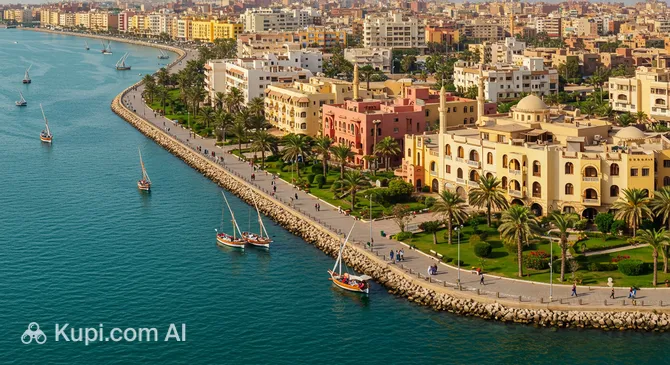
Ismailia is a surprisingly peaceful and green city in the northeastern part of Egypt, often referred to as the "city of beauty and charm." Located on the shores of the picturesque Lake Timsah, which is part of the Suez Canal system, Ismailia stands out from Egypt's bustling metropolises with its tranquil atmosphere and European flair.
Ismailia. Illustration.
Source: Kupi.com AI
The city was founded in 1863 by French engineer Ferdinand de Lesseps as the headquarters for the construction of the Great Canal. The city's rich history is reflected in its architecture: wide tree-lined boulevards and elegant British and French-style villas create a unique look that recalls the region's cosmopolitan past. Today, it is home to about 293,000 people and serves as an important administrative and transport hub.
For travelers, Ismailia offers a break from the hustle and bustle, an opportunity to walk along shady embankments, and a chance to get acquainted with the unique heritage of the Suez Canal. It is an ideal place for those who want to see another side of the country—quieter and more provincial, yet incredibly cozy and well-maintained. We invite you to enjoy the fresh breeze from the lake and discover this architectural treasure in the heart of the Egyptian desert.
Weather Overview
Ismailia is dominated by a subtropical desert climate, which, however, feels milder than in the interior of the country thanks to the proximity of the Suez Canal and Lake Timsah. Summer here is long and hot: between June and August, daytime temperatures often reach +35–40°C. Nevertheless, the city's abundant greenery and water masses create a more pleasant environment compared to dusty Cairo.
Winter in the city is very mild and comfortable, making this period ideal for excursions. In January and February, the average daytime air temperature is around +19–21°C, while at night it can drop to +9°C. Precipitation is extremely rare—most rain falls in the winter months, but even then, it is short-lived. You can always check the current city climate before your trip.
In spring, especially in April and May, periods of hot winds (Khamsin) are possible, bringing sand from the desert; however, the city's wide boulevards promote good air circulation. The best time to visit is considered to be from October to April, when the weather is sunny and moderately warm, ideal for long walks along the embankments.
Average monthly temperature
Average monthly precipitation
Interesting Facts
This city holds many surprising details that make it unlike the rest of the country. Here are some curious facts about Ismailia:
Founded in the Desert: The city was literally built from scratch in the middle of the sands in 1863 specifically for the needs of the Suez Canal Company, becoming its administrative heart.
City on Fresh Water: Despite its proximity to the saltwater canal, Ismailia is connected to the Nile by a special 130 km long navigable canal, which provides the city with fresh water and greenery.
European Planning: Unlike traditional Egyptian cities with their labyrinths of narrow streets, Ismailia was built according to European canons with wide perpendicular boulevards and plenty of parks.
Dancing City: The annual Ismailia Folklore Dance Festival is one of the most prestigious cultural events in the region, attracting performers from dozens of countries.
Crocodile Lake: The city stands on the shore of Lake Timsah, whose name translates from Arabic as "Crocodile Lake," although today these dangerous reptiles are no longer found in its waters.
How to Get There
Ismailia occupies a strategic position on the country's transport map, serving as an important hub between the capital and the Suez Canal cities. Thanks to a developed network of roads and railways, getting to Ismailia is easy, regardless of the mode of transport you choose.
The city does not have its own international airport, so most tourists arrive via Cairo International Airport (CAI). It is located approximately 120–130 km from the city. From the airport, you can reach the center of Ismailia by taxi in 1.5–2 hours or use intercity buses that depart regularly from the capital's bus stations. A bus trip from Cairo usually takes 2 to 3 hours depending on traffic conditions.
Rail travel is one of the most convenient and budget-friendly ways to get around. Trains from Cairo to Ismailia depart several times a day from the main Ramses Station, with a travel time of about 2.5–3 hours. The city is also connected by direct services to Port Said and Suez. The trains pass through the picturesque agricultural lands of the Nile Delta, offering tourists interesting views from the window.
Station
Passenger traffic
Distance
Port Said railway station
5
74 km
El-Marg
4
103 km
El-Marg
4
103 km
Alexandria railway station
8
236 km
Sderot
5
243 km
Main Attractions
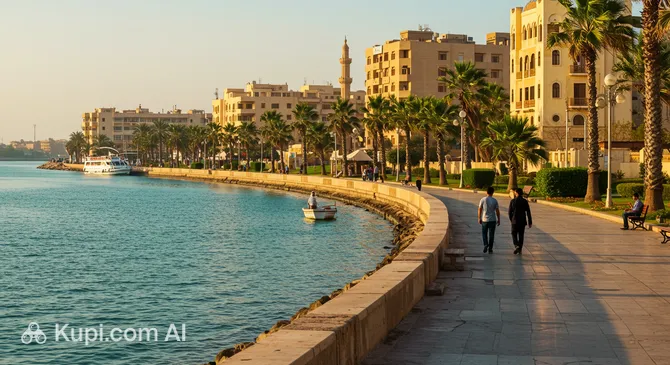
The city's main attractions are inextricably linked to its unique location and the history of the construction of the great waterway. One of the most popular locations for a stroll is the Ismailia Corniche—a picturesque embankment offering breathtaking views of the ships passing through the canal and the calm waters of Lake Timsah.
Ismailia Corniche. Illustration.
Source: Kupi.com AI
Traveler photos:
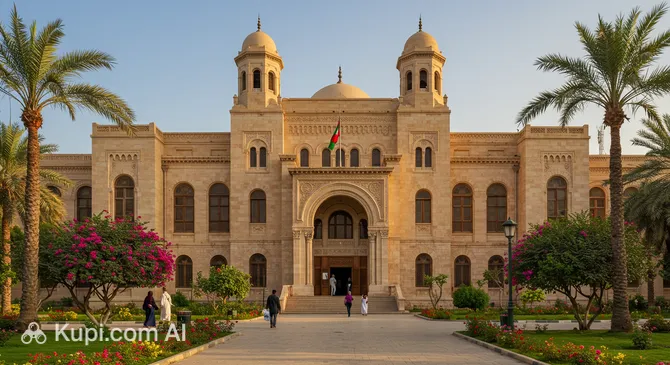
Those interested in ancient history should definitely visit the Ismailia Museum. Founded in 1932, it is considered one of the oldest in the country. Its halls house more than four thousand artifacts covering a vast period: from the era of the Pharaohs and Roman rule to the Islamic period. Particular attention should be paid to the 4th-century mosaics, which are the jewel of the collection.
Ismailia Museum. Illustration.
Source: Kupi.com AI
Traveler photos:
For fans of beach holidays and water activities, the Aldunfa Beach Club is an excellent choice. Owned by the Suez Canal Authority, this spot offers comfortable conditions for relaxing by the water, where you can enjoy the peace and panoramic views of the canal. Additionally, while walking through the center, take note of the colonial architecture and the mosque on Salah Salem Street, which impresses with the elegance of its arabesques.
Local Cuisine
The gastronomic scene in Ismailia is a harmonious blend of traditional Egyptian flavors and the freshest seafood. Thanks to its location on the canal, seafood is the basis of many menus. Be sure to try grilled fish with local spices, served in numerous establishments across the city.
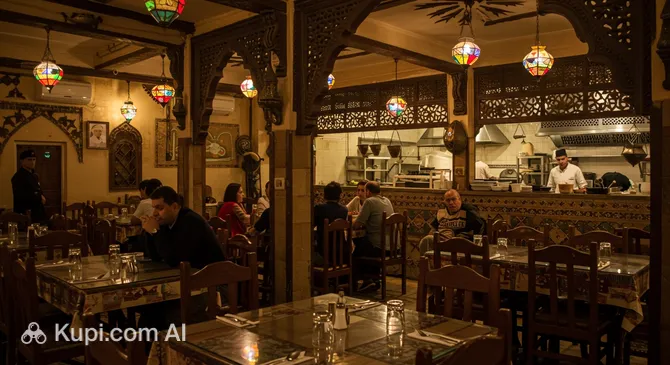
For high-quality fish and shrimp dishes, locals and tourists often head to Es-Salah an-Nabi. If you're in the mood for something more universal, including pizza or Mediterranean cuisine, it's worth stopping by Flames Restaurant, which is popular for its coziness and varied menu.
El-Salah Al-Nabi. Illustration.
Source: Kupi.com AI
Traveler photos:
In addition to seafood delicacies, Egyptian classics are prepared everywhere in Ismailia: koshary (a mix of rice, pasta, and lentils with sauce), ful medames (bean mash), and crispy ta'ameya (falafel). For dessert, order Oriental sweets or fresh juice, the selection of which in markets and street stalls is simply enormous. The food culture here is leisurely—lunch or dinner is often accompanied by long conversations over a cup of strong mint tea.
Travel Tips
Ismailia is a welcoming and safe city; however, knowing some local nuances will help make your trip even more comfortable and enjoyable. Here are some useful tips for preparing for your trip:
Clothing and Dress Code: Choose light clothing made from natural fabrics (cotton, linen), as it can be very hot in summer. Despite the liberal atmosphere, it is better to choose modest clothing that covers shoulders and knees for walks, especially when visiting mosques. Don't forget comfortable shoes for walking along the long boulevards.
Transport: Within the city, it is most convenient to get around by taxi or microbus. Always agree on the taxi fare before you get into the car. For trips to Cairo, it is best to use the train—it is more comfortable and helps avoid highway traffic.
Finance: The official currency is the Egyptian Pound (EGP). Major hotels accept cards, but you will definitely need cash in cafes, taxis, and markets. ATMs are easy to find in the city center, but it is better to have a supply of small bills for tips and small purchases.
Health: Drink only bottled water and avoid ice in street drinks. In summer, be sure to use sunscreen and wear a hat, even if you are in shady parks.
Communication: The official language is Arabic. In hotels and tourist spots, many people speak English, but knowing a few phrases in Arabic (for example, "Shukran"—thank you) will earn you the favor of the locals. For internet, it's better to buy a local SIM card in Cairo or the center of Ismailia.
Local Etiquette: It is customary to remove your shoes when entering a private home. Greet people with your right hand and remember that Egyptians are very sociable—a bit of polite "small talk" before a purchase or order is considered the norm.
What to Avoid: Do not photograph government buildings, military sites, or Suez Canal structures without explicit permission—this may cause issues with the police.
Additional Tip: Try to be on the embankment during sunset—it is the most beautiful time when the heat subsides and the sky over the canal is painted in incredible colors.
Following these simple rules will allow you to fully enjoy the beauty of the "garden city" and the hospitality of its residents. Have a great trip!
Entertainment & Nightlife
The entertainment scene in Ismailia is primarily quiet and family-oriented. You won't find loud night clubs here; instead, there is an abundance of cozy cafes and open-air restaurants, especially along the canal. Locals and visitors prefer to spend their evenings leisurely strolling along the Ismailia Corniche, enjoying the cool breeze and the sight of ships illuminated by lights.
If you are looking for a pleasant dinner in a modern setting, check out Flames Restaurant, known for its welcoming atmosphere. For those who want to feel the local rhythm of life, the establishments in the city center are perfect for a traditional tea or Turkish coffee while watching the daily bustle. For more active nightlife, tourists usually head to nearby Cairo, as Ismailia maintains its status as a quiet provincial center.
Flames Restaurant. Illustration.
Source: Kupi.com AI
Traveler photos:
Daytime entertainment includes visiting beach areas such as the Aldunfa Beach Club or shopping in local stalls. A special event in the city's cultural life is the International Folklore Dance Festival, held annually in late August. During this time, the city is transformed, filled with music and the vibrant colors of dance troupes from all over the world.
Parks & Museums
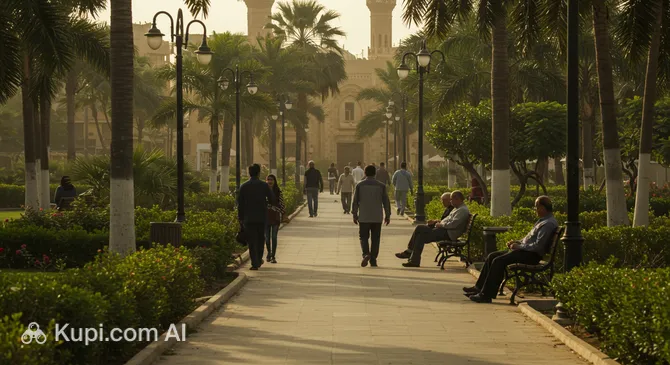
Ismailia is rightfully considered one of the "greenest" cities in the country. The abundance of trees and parks here is no accident but the result of careful planning dating back to the 19th century. Wide boulevards lined with lush greenery provide pleasant shade and significantly soften the hot climate, making walks around the city comfortable even on sunny days.
The main cultural site is the Ismailia Museum. This is a must-visit for anyone who wants to touch antiquity: the museum's collection includes unique finds from various eras—from prehistoric times to the reign of the Khedives. The museum building itself is an architectural monument surrounded by a small but well-kept garden.
The areas along Lake Timsah are perfect for outdoor recreation. The Ismailia Corniche walking zone is effectively a long park by the water, where locals have picnics and enjoy the cool air. There are also many small squares and alleys in the city that are maintained in excellent condition, which makes Ismailia stand out favorably against other Egyptian cities.
Getting Around
The public transport system in Ismailia is quite simple and effective for moving both around the center and between districts. The basis of the city's fleet consists of buses and numerous microbuses (marshrutkas). The latter are the most popular way to get around among locals: they run along all the main boulevards and connect residential quarters with the embankment and the station.
The fare in microbuses is very low, and payment is made in cash to the driver upon entry or during the trip. They do not have a fixed schedule—they depart as they fill up, but they run very frequently. Taxis are also available for tourists and are easy to hail on the street. It is important to agree on the fare with the driver in advance or ensure the meter is turned on, although a fixed price per route is more common in provincial cities.
Thanks to the wide and straight boulevards, traffic jams in Ismailia are rare, except for peak hours at the city entrances. The city is great for walking, as the main attractions and the embankment are relatively compactly located. If you are planning a trip to Cairo or other canal cities, use the railway—the station is located in the heart of Ismailia.
Accommodation
The choice of accommodation in Ismailia is primarily oriented toward those who value tranquility and proximity to the historic center or the embankment. You won't find the massive chain skyscrapers typical of Red Sea resorts here; instead, the city offers charming mid-range hotels and cozy guesthouses, many of which are located in colonial-era buildings.
The most prestigious accommodation options are concentrated along the Suez Canal and Lake Timsah. Staying here allows you to enjoy water views and light breezes. For a more budget-friendly stay, consider apartments or small hotels in the central part of the city, where main parks and shops are within walking distance. Renting accommodation from locals is also popular in Ismailia, which can be convenient for longer stays.
Accommodation prices remain quite affordable compared to Cairo or popular resorts. It is recommended to book hotels in advance if your trip coincides with the International Folklore Festival in August, when the city hosts many guests. Most properties can be booked through popular international services, and payment is most often made in cash or by card in larger hotels.
Nearby Cities
Ismailia serves as an excellent starting point for exploring the surroundings, allowing travelers to visit other important cities in the region as part of day trips. Thanks to good transport links, you can easily plan routes to neighboring governorates.
Just 120 kilometers away is the majestic Cairo, where you can go for cultural experiences such as visiting the Egyptian Museum or the Pyramids of Giza. A one-way trip takes about two to three hours. Another interesting destination to the north is Port Said—a city with a unique atmosphere of a free port and beautiful architecture, located right at the entrance to the Mediterranean Sea.
For shorter trips, small towns such as Abu Suweir, located very nearby, or Faqus are suitable. It is also interesting to look into Qantir or visit Al-Qurayin and Hehia to see provincial Egyptian life without the tourist polish.
City
Population
Distance
Abu Suwayr
30 320
16 km
Qantir
13 660
47 km
Faqous
111 532
48 km
Al Qurayn
64 453
51 km
Hehia
66 702
64 km
Exploring these destinations will help you better understand the diversity of the country, from the bustling metropolis of Cairo to authentic settlements in the Nile Delta. Most of these cities are accessible by train or regular buses, making trips convenient and inexpensive.
Shopping & Souvenirs
Shopping in Ismailia is primarily an introduction to local flavor and traditional goods. You won't find giant shopping malls with global brands here, but you can enjoy the atmosphere of authentic Eastern bazaars. The main commercial activity is concentrated on the central streets and markets, where life is in full swing from morning until late evening.
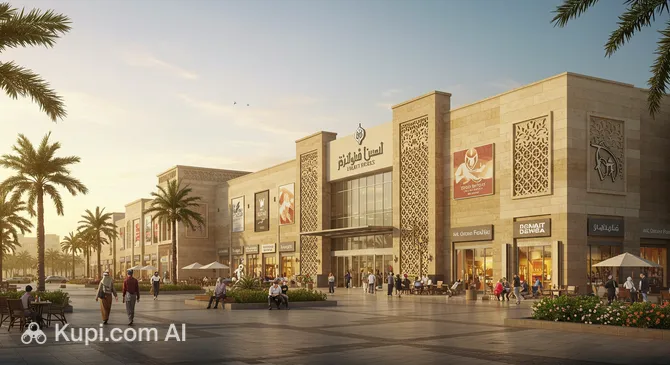
One notable shopping spot is Maradona Stores, which offers a wide range of goods. In local markets, look out for high-quality Egyptian textiles, spices, and perfume oils. As a unique souvenir from Ismailia, people often bring back ship models—a tribute to the great Suez Canal—as well as handmade copper and leather items.
Maradona Stores. Illustration.
Source: Kupi.com AI
Traveler photos:
Shops are usually open from 10:00 to 22:00, although many stalls may close during the afternoon heat and reopen in the evening. Payment in most outlets is made in cash in the local currency (Egyptian pounds). In small shops and bazaars, it is customary to bargain—this is not only a way to lower the price but also an important part of the local social etiquette.