Suez is one of the most important port cities in northeastern Egypt, located at the northern tip of the Gulf of Suez on the Red Sea. It is a city with a unique atmosphere, where the pulse of life is set by the rhythm of international shipping. With a population of over half a million, it serves as a key administrative center and industrial hub of the region, attracting those who want to see one of humanity's greatest engineering feats with their own eyes.
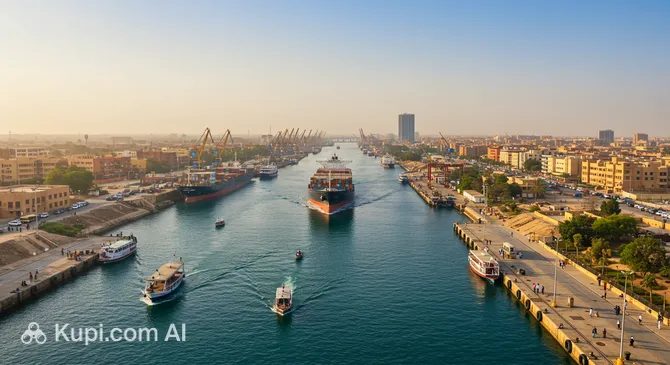
The city's geographical position makes it a strategic point on the world map. This is where the famous Suez Canal begins, connecting the Mediterranean and Red Seas. Suez. Illustration.
Source: Kupi.com AI
Despite its industrial appearance, the city's rich history dates back to antiquity, when the ancient port of Clysma stood on this site, serving as a vital trade center for the region.
For tourists, Suez is primarily interesting as a place to experience the scale of global maritime trade and visit cultural sites such as the National Museum of Suez. The city invites travelers to discover the country's maritime heritage and see how one of the planet's main transport arteries functions.
Weather Overview
The climate in Suez is characterized as typically hot desert, though the proximity of the Red Sea moderates the conditions with a refreshing breeze. Summers here are long and hot: in July and August, average daytime temperatures often reach +36...+37°C. Rainfall during this period is virtually non-existent, so the air remains very dry.
Winter in the city is mild and pleasant, making it an ideal season for a visit. In January and February, daytime temperatures hover around +18...+20°C, while nights can drop to a comfortable +10°C. If you want to know more about how the weather in Suez changes throughout the year, we recommend checking a detailed forecast.
The best times for a trip are considered spring (March–April) and autumn (October–November), when there is a perfect balance between warmth and cool air. During these months, humidity is moderate, and the sea breeze makes walks along the canal very comfortable.
Average monthly temperature
Average monthly precipitation
Interesting Facts
The Suez Canal is a true engineering masterpiece, approximately 160 kilometers long, which allows ships to shorten their journey by 8,000 kilometers, eliminating the need to sail around the entire continent of Africa.
In ancient times, a thriving port called Clysma prospered on the site of the modern city; it was considered one of the most important trade hubs on the Red Sea and a significant Christian center.
Few know that before the modern canal, there was the so-called "Canal of the Pharaohs," which connected the Nile to the Red Sea long before the Common Era.
In 2015, an ambitious project was completed: a new 72-kilometer section of the Suez Canal was built in record time—just one year.
Suez is a vital departure point for pilgrims traveling by sea to Saudi Arabia to perform the Hajj.
How to Get There
The transport accessibility of Suez is due to its strategic position at the crossroads of maritime and land routes. Most travelers arrive in the city via Cairo, which is the main transport hub of Egypt. You can find more details by studying the ways to get to Suez on our dedicated page.
While there is no international airport in Suez itself, the city is conveniently connected to Cairo International Airport by a network of modern highways. The journey by car or tour bus takes about 2-3 hours. There is also a regular bus service between the cities, which is considered the most practical and budget-friendly option for tourists.
For those who prefer classic travel, rail service is available. The railway connects Suez with the country's largest cities, offering a chance to see Egyptian landscapes from a train window. Additionally, the city remains an important seaport, maintaining ferry links with other Red Sea ports in different countries.
Station
Passenger traffic
Distance
El-Marg
4
119 km
El-Marg
4
119 km
Port Said railway station
5
145 km
1
236 km
1
236 km
Main Attractions
Undoubtedly, the main draw in Suez is the Suez Canal itself. This grand hydraulic engineering project serves as an invisible thread linking Europe and Africa. Travelers often gather at the waterfront to watch the colossal tankers and container ships pass by, a sight that is truly impressive in scale.
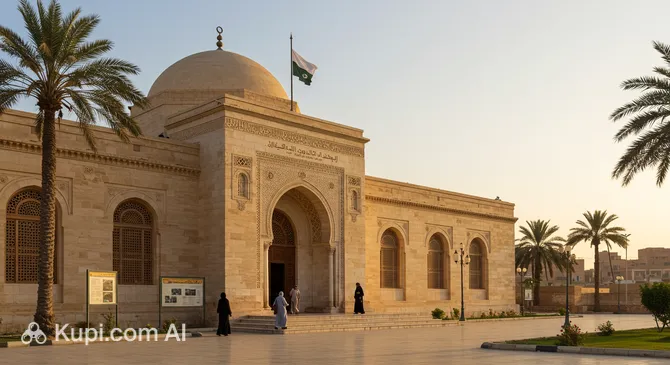
For those interested in the region's past, the National Museum of Suez is a must-visit. Its halls house an exposition covering the city's history from Predynastic times to the opening of the canal. Here, you can see artifacts found in the surrounding area and learn about the role of the port of Clysma in ancient trade.
Suez National Museum. Illustration.
Source: Kupi.com AI
Traveler photos:
The very appearance of Suez reflects its functional role as a major port. The city is interesting for its authentic atmosphere as a working maritime center, where you can stroll along the piers, browse small souvenir shops, and witness the daily life of sailors and port workers, which has remained largely unchanged for decades.
Local Cuisine
The gastronomic scene in Suez is a true paradise for seafood lovers. The proximity to the Red Sea defines the main focus of the local cuisine: the freshest fish, squid, and shrimp are prepared here according to traditional Egyptian recipes. A popular cooking method is "singari"—baking fish open-faced with spices and vegetables.
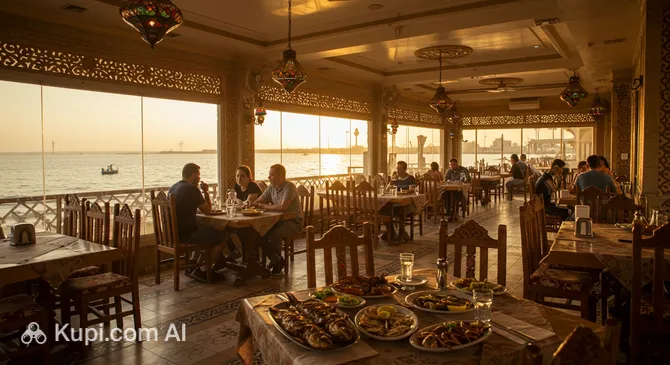
If you want to taste the best the sea has to offer, it's worth visiting the Fares Seafood and Grill restaurant. This establishment is famous for its grilling mastery and a wide selection of maritime delicacies. Another noteworthy spot is El-Sersawy, where you can experience the authentic taste of local cuisine in a casual and lively setting.
Fares Seafood & Grill. Illustration.
Source: Kupi.com AI
Traveler photos:
In addition to fish, classic Egyptian dishes are popular in Suez: aromatic koshary, hearty ful medames (fava beans), and freshly baked flatbreads. For drinks, locals prefer strong black tea with mint or hibiscus (karkade). The food culture here is social; restaurant dinners often stretch late into the night with slow conversation and views of the bustling port city.
El Sersawy. Illustration.
Source: Kupi.com AI
Traveler photos:
Travel Tips
Visiting Suez is a unique experience that lets you discover the industrial heart of Egypt. To ensure your trip goes smoothly and leaves only pleasant impressions, check out our practical tips.
Clothing and Essentials: Choose light clothing made of natural fabrics, as it can get very hot in Suez. Don't forget sunglasses and sunscreen. When visiting mosques or residential areas, dress modestly (shoulders and knees covered).
Transport: To get around the city, it is best to use licensed taxis or mobile ride-hailing apps. Microbuses are an option for the adventurous and are very inexpensive.
Finances: The official currency is the Egyptian Pound (EGP). Large hotels accept cards, but always carry cash for markets and small cafes. ATMs are available in the center and near banks.
Health and Safety: Drink only bottled water. Be cautious when crossing roads due to heavy truck traffic. Main tourist zones are generally safe, but standard vigilance is advised.
Communication: The primary language is Arabic. In port areas and hotels, English is spoken, but knowing a few phrases in Arabic (e.g., "Shokran" — thank you) will bring a smile to the locals' faces.
Local Etiquette: Egyptians are hospitable people. Being the first to say hello is a great way to build rapport. Remember that during prayer times, life in some neighborhoods may temporarily slow down.
What to Avoid: Do not photograph government buildings, port security, or canal safety zones—this is strictly prohibited and can lead to trouble.
Extra Tip: Try to reach the waterfront during the hours when large ship convoys pass through the canal—it is an unforgettable sight.
May your visit to Suez become a bright chapter in your Egyptian travel story!
Entertainment & Nightlife
The entertainment scene in Suez is calm and practical, catering primarily to the local population and transit travelers. While there is virtually no Western-style active nightlife, the city offers excellent opportunities for a leisurely evening. The main areas for walking are concentrated along the banks of the Suez Canal, where the lights of the city and port come alive after sunset.
A popular way to spend an evening is visiting local cafes and restaurants. Places like Fares Seafood and Grill offer an excellent setting for dinner in a pleasant atmosphere. Here, you can enjoy fresh seafood while observing the steady pace of the port city. The crowd in such establishments is usually a mix of local families and ship crews from around the world.
Fares Seafood & Grill. Illustration.
Source: Kupi.com AI
Traveler photos:
For culture enthusiasts, the National Museum of Suez is open during the day, while the evening can be spent in one of the cozy spots like El-Sersawy, which serves traditional Egyptian coffee and sweets. If you are looking for loud parties and large clubs, it is worth remembering that locals and tourists typically head to Cairo, located just a couple of hours away, for that kind of entertainment.
Parks & Museums
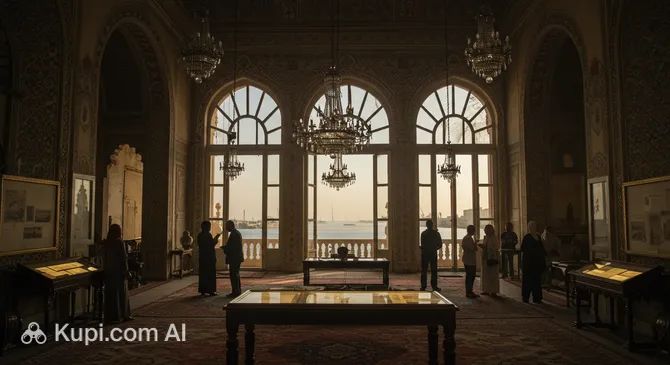
The cultural life of Suez is inextricably linked to its storied past and its role in world trade. The city's main museum site is the National Museum of Suez. This modern institution offers visitors a fascinating journey through time: from the era of the Pharaohs, when the first canal between the Nile and the sea was built, to the momentous events of the 19th century. The museum boasts a rich collection of artifacts and models that explain the region's historical significance in detail.
Suez National Museum. Illustration.
Source: Kupi.com AI
Traveler photos:
Green spaces are less common in Suez than in resort towns; however, the promenades along the Suez Canal shoreline partly compensate for this. Locals often spend time in small squares and open areas by the water, where they can enjoy the sea breeze and panoramic views of the giant ships passing by. For more extensive park and garden walks, travelers often head to nearby Ismailia, known for its lush green landscapes.
Getting Around
The public transport system in Suez is typical of large Egyptian cities. The backbone of passenger transport is microbuses. They run on set routes and are the cheapest way to get around the city. They don't have a fixed schedule, but they run quite frequently—simply wave your hand from the roadside to catch one.
For greater comfort, tourists prefer using taxis. Both official services and private drivers operate in Suez. It is recommended to agree on the fare in advance or ensure the meter is used, if available. Recently, ride-hailing apps have also become popular in the city, making trips more transparent and safer for foreigners.
In the central part of the city, especially in areas adjacent to the waterfront and main attractions, it is convenient to get around on foot. However, be mindful of the heavy truck traffic near the port. Bicycle rentals and car-sharing have not yet become widespread in Suez, so taxis and microbuses remain the traveler's primary helpers.
Accommodation
The hotel infrastructure in Suez is primarily geared toward business travelers, sailors, and pilgrims. While you won't find a huge selection of luxury five-star resorts typical of Sharm El Sheikh, the city offers a decent choice of mid-range hotels and cozy apartments. Most high-quality accommodation options are concentrated near the waterfront or in the central part of the city.
Small city hotels are popular in Suez, providing basic comfort and easy access to the port zones. For those planning a cultural itinerary, staying near attractions like the National Museum of Suez might be beneficial. The city also has a well-developed market for long-term apartment rentals, which is convenient for those staying on business or waiting for a ship.
The price range in Suez is quite affordable. It is recommended to book accommodation in advance, especially during pilgrimage periods when the demand for hotels increases due to the flow of believers heading to holy sites. Booking through international online services is the most reliable way to ensure a comfortable stay.
Nearby Cities
Thanks to its location, Suez serves as an excellent starting point for exploring the northern Red Sea coast and the Nile Valley. A well-developed road network makes it easy to plan trips to neighboring regions to see different sides of Egypt.
Just 75 kilometers away lies Ismailia—a charming and green city on the shores of Lake Timsah, also located on the Suez Canal. It is known for its European architecture and tranquil atmosphere. Another interesting destination is the ancient city of Bilbeis, which is famous for its history and traditional crafts.
Also, don't forget about Cairo, which can be reached in a couple of hours. The capital offers an endless array of museums and historical monuments. Exploring the surroundings of Suez will allow you to complement the industrial port landscape with vibrant cultural experiences and Egypt's natural beauty.
Shopping & Souvenirs
Shopping in Suez is primarily about experiencing the flavor of local markets and the functionality of a port city. There are no giant shopping malls with global brands here, but authentic Egyptian goods are available in abundance. The main trade happens at the city bazaars, where you can find everything from spices and fresh seafood to textiles and clothing.
For tourists, the most interesting shops are located near the Suez Canal viewpoints. Here, you can purchase original maritime-themed souvenirs, paintings of the canal, and ship models. In the central districts, there are also shops selling Egyptian cotton products, which are world-renowned for their quality.
Typical souvenirs from Suez are often related to its status as a maritime gateway. These can include compasses, decorative ship wheels, or shell crafts. Shops are usually open from morning until late evening, with a break during the hot afternoon hours. In most shops and markets, it is preferable to pay in cash (Egyptian pounds), and the ability to bargain will help you get the best price.