Support

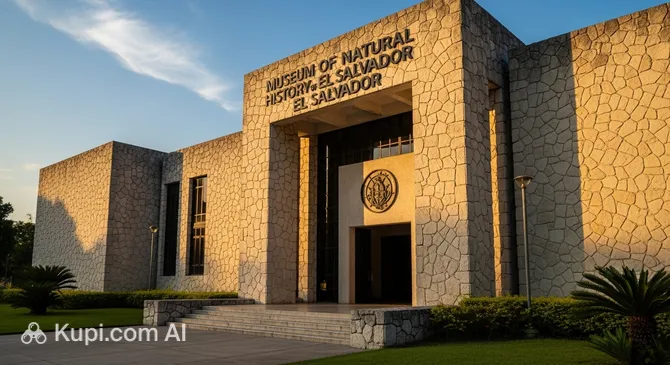
Museum of Natural History of El Salvador

About

If you want to glimpse the distant past of Central America, the Natural History Museum of El Salvador (MUHNES) is the perfect starting point. It is a leading scientific institution located in the picturesque Saburo Hirao Park in San Salvador. The museum is dedicated to preserving and studying the incredible biological and geological richness of El Salvador.
\n
Museum of Natural History of El Salvador. Source: Kupi.com AI
\n

The museum houses unique national collections covering various scientific fields, from entomology and ornithology to paleontology and geology. Here, you can see rare fossils, mineral specimens, and an extensive collection of plants represented in the National Herbarium. For tourists, it is not just an academic space, but an opportunity to see El Salvador from an unconventional perspective—through the lens of its ancient history and natural diversity.

\n

The museum actively participates in regional research projects, so its exhibitions are constantly updated and supplemented with new discoveries. Thanks to the friendly atmosphere and the educational nature of the displays, it is popular with both researchers and families looking to spend quality time outdoors.

Contacts

For more details before your visit or to organize a group tour, you can use the following contact information:

\n\n \n \n \n \n \n \n \n \n \n \n \n \n \n \n \n \n
AddressParque Saburo Hirao final, San Salvador, El Salvador
Phone+503 2270 9228, +503 2270 1387
Emailjceren@cultura.gob.sv, jmenjivar@cultura.gob.sv
Official Websitecultura.gob.sv

What to Do

The highlights of your visit will be the three permanent halls, each opening a chapter in the region's history. In the "Rocks and Minerals" hall, you can see amazing specimens from the Earth's interior, while the "Paleontology" exhibition introduces you to the prehistoric inhabitants of these lands. The "Ecosystems" hall vividly demonstrates the country's modern natural diversity, helping visitors better understand the region's ecology.

\n

For those who prefer an active format, the museum organizes guided tours and educational workshops. This is a great chance to ask specialists questions and learn more about identifying rare animal and plant species. Temporary traveling exhibitions dedicated to current environmental topics or new archaeological discoveries are also frequently held here.

\n

Families with children will appreciate the availability of special play areas and interactive programs. After exploring the main collection, you can relax in the shady garden or visit the cozy restaurant. The grounds are fully stroller-accessible, making the walk as comfortable and pleasant as possible for all types of travelers.

Getting There

The attraction is located in the San Jacinto district, at the end of Los Viveros street. If you are planning a trip from the center of San Salvador, it is most convenient to use a taxi or a ride-sharing app—this will save time and ensure a comfortable ride directly to the entrance of Saburo Hirao Park.

\n

For those who prefer public transport, look for routes heading to the Nicaragua colony or directly to the San Jacinto district. After getting off at the stop nearest the park, you will need to walk a short distance. The route takes you through picturesque residential areas, offering a glimpse of local life.

\n

Travelers in a rental car should note that parking is available on-site; however, it fills up quickly on weekends and holidays. It is recommended to arrive at opening time to easily find a spot and begin your tour in a relaxed environment.

History & Facts

The history of this scientific institution began on October 9, 1883, when the National Museum of El Salvador was founded by state decree. Initially, it was conceived as a universal repository, combining collections of minerals, botany, zoology, and even fine arts. It wasn't until 1941 that a specialized Department of Natural Sciences was established within it, which became the foundation for the future museum.

\n

The Natural History Museum of El Salvador gained its current status and independence in 1976. At that time, it moved to its permanent location in Saburo Hirao Park. Before this, the museum's collections "traveled" through the city for a long time: they were housed in the University of El Salvador building, at Villa España, in the Faculty of Chemistry, and even in the old Presidential Residence.

\n

Today, the museum is the primary guardian of the country's biological and paleontological heritage. Over the last decade, its holdings have expanded significantly through international projects and donations. The National Herbarium is considered particularly valuable, serving as a vital resource for scientists from across the region studying Central American flora.

Time Needed

To leisurely explore all three exhibition halls and get acquainted with the main exhibits of the paleontological collection, we recommend setting aside approximately 2–3 hours. This will be enough time to read the information plaques and pay attention to the most impressive finds.

\n

If you are planning a visit with children or want to stroll through the garden surrounding the museum and Saburo Hirao Park, it is better to plan for half a day. The presence of play areas and rest spots makes for a longer, more relaxed stay in this green part of the city.

Working Hours

The museum is open to the public from Tuesday to Sunday. Guests are welcome from 09:00 to 16:00. Please note that Monday is the official day off, when the institution is closed for internal work and collection maintenance.

\n

Before your trip, we recommend checking the official website or confirming by phone, as the schedule may change on holidays. The best time to visit is during the morning hours on weekdays, when there are fewer people in the halls and you can study the exhibits in peace.

Nearby

A visit to the museum can easily be combined with exploring other interesting sites in the southern and central parts of the city. Since the museum is located within a large park, a walk in the fresh air is a natural extension of the cultural program.

\n

Exploring the surrounding area will allow you to see both modern monuments and historical buildings that reflect the capital's architectural style from different eras. Below is a list of sites within easy reach:

\n\n \n \n \n \n \n \n \n \n \n \n \n \n \n \n \n \n \n \n \n \n \n \n \n \n \n \n \n \n \n \n \n \n \n \n \n \n \n \n \n \n
NameDistance (km)
Parque Saburo Hirao0.4
Edificio Julia L. de Duke2.4
Club La Dalia2.6
Kilómetro Cero2.7
Sivarland2.8
Fish Ocean Center3.1
Complejo Don Rúa3.9
Casa de Roque Dalton3.9
Monument to the Divine Savior of the World4.1

Reached the end of the page?

That means the route is fully explored