Support

Catedral del Espíritu Santo

About

In the heart of the city of Quetzaltenango stands the Holy Spirit Cathedral—a majestic structure that has become the spiritual center of western Guatemala. This temple serves as the seat of the archdiocese and is recognized as a first-category architectural monument, carefully preserving the region's history for centuries.
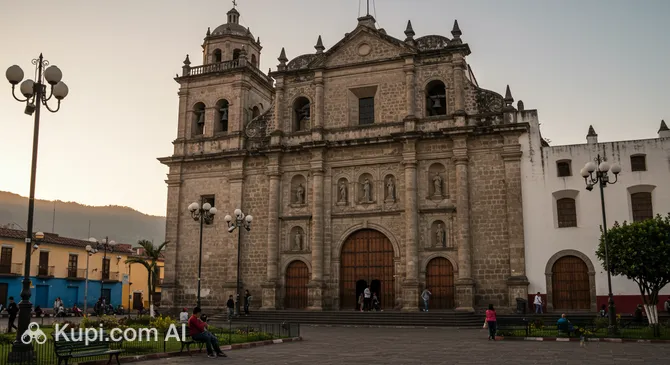
Cathedral of the Holy Spirit. Source: Kupi.com AI

The cathedral's appearance is a unique blend of Baroque and Neoclassical architecture. Special attention is drawn to the preserved ancient facade, decorated with elegant stucco and columns, which contrasts with the later elements of the building. For locals, it is not just an art monument, but a place housing deeply revered relics—the images of the Divine Just Judge and the Virgin of the Rosary.

An interesting feature of the cathedral is its connection to the traditions of the indigenous Maya population. The architectural design of some facade elements was planned to fit harmoniously into the cultural context of the region, making the cathedral an important link between colonial heritage and local customs.

Contacts

To contact the parish or check the times for festive liturgies, you can use the church's official contact information.

Address RFMJ+FQ6, Quetzaltenango, Guatemala
Phone +502 7761 2539
Official Website Facebook Page
Google Maps Open Map

What to Do

A visit to the cathedral offers guests a chance to touch the living religious tradition of the city. You can witness solemn services that take place here daily. Inside the temple, an atmosphere of peace and reverence prevails: the flicker of hundreds of candles at numerous altars creates a unique prayerful mood, as believers come here with their most personal requests.

Be sure to take time to study the original 17th-century Baroque facade. Observing the detailed sculptures and ornaments, you can appreciate the craftsmanship of past builders. One of the most unusual details is the roofless open entrance portal. It is believed that this design was specifically intended for Maya believers so that they could see the stars and the open sky during prayer, maintaining a connection with their ancient views of nature.

Near the entrance of the temple, you can often find local vendors offering candles and handmade rosaries. Remember the rules of conduct: there is a strict ban on photography inside the cathedral, which helps maintain the intimacy of the prayer process and respect the feelings of the parishioners.

Getting There

The Holy Spirit Cathedral occupies a central position in the historical part of the city, located directly adjacent to Central Park (Parque Centroamérica). It is the heart of the city's social life, so finding it is easy—the building is one of the most prominent architectural landmarks in Quetzaltenango.

If you are staying in the city center, it is most convenient to reach the cathedral on foot, enjoying the colonial atmosphere of the streets. From more distant areas, you can take a taxi or local buses, which frequently pass through the central square. For those traveling by rental car, the coordinates are: 14.8336634° latitude and -91.5180999° longitude.

Quetzaltenango is well-connected by transport to other regions of the country. Regular bus services arrive here from the capital and major tourist centers, making a visit to the cathedral accessible for travelers exploring the highlands.

History & Facts

The history of the cathedral began in the 16th century when Spanish settlers founded it shortly after the victory over the legendary Maya-K'iche' ruler Tecún Umán. The city was dedicated to the Holy Spirit in honor of this triumph, and the first mention of a visit to the church by Bishop Francisco Marroquín dates back to 1532.

The original building, in a lavish Baroque style, was subjected to severe natural tests over the centuries. Devastating earthquakes in 1765, 1853, and 1902 caused irreparable damage to the structure. In the late 19th century, a difficult decision was made to demolish the old structures, and in 1899, the construction of a new Neoclassical church began, designed by the talented Italian architect Alberto Porta.

One of the cathedral's most revered relics is the image of the Virgin of the Rosary. According to legend, when the capital of Guatemala was moved to a new location after a catastrophic earthquake, the statue was being transported from Antigua Guatemala, but it "decided" to stay in Quetzaltenango, becoming the city's patroness. In 1983, the significance of this holy image was confirmed on a global level: during his visit, Pope John Paul II solemnly crowned the icon.

The cathedral's modern appearance continues to evolve: restoration work on the domes damaged by the 2017 earthquakes is planned for completion by 2027. It is a living monument that blends the colonial past with the modern faith of the city's residents.

Time Needed

A quick look at the architecture of the facade and the interior of the church usually takes about 30–40 minutes. This is enough time to view the main altars, the unique entrance portal, and to feel the solemn atmosphere of the place.

If you plan to attend a festive service or wish to study the historical details of the Neoclassical interior more closely, it is worth setting aside about 1–1.5 hours. Keep in mind that the cathedral is an active religious site, so visiting times may vary depending on the mass schedule.

Working Hours

The cathedral is open to visitors throughout the week, with the exception of Sunday, when the church doors are closed for tourist visits. The main operating hours are as follows:

  • Monday: 08:00 – 18:00
  • Tuesday – Friday: 09:00 – 17:00
  • Saturday: 09:00 – 12:00
  • Sunday: Closed

Please note that services are held several times a day and on weekends, during which access to certain parts of the church for viewing may be restricted.

Nearby

The cathedral's location in the very center of the city makes it an ideal starting point for further exploring the culture and life of the region. A walk around the neighborhood will allow you to see both historical monuments and modern entertainment venues.

Name Distance (km)
Puente de los Chocoyos 0.3
Zurich 0.9
Fauna Pet Xela 1.0
Monumento a la Marimba 1.3
Antigua Zona Militar Quetzaltenango 1.7
ACUARIO AQUALAND 1.8
Minerva Temple 2.1
El Tinajón 2.3
Jump Xtreme Parka 2.7
AcuaRios & Jardines de Xelajú 3.4

Reached the end of the page?

That means the route is fully explored