Support

Museo del Niño y del agua

About

Imagine a place where the laws of physics turn into a thrilling game, and an ordinary drop of water becomes the main character in amazing discoveries. The Museum of the Child and Water (Museo del Niño y del Agua) is a unique interactive space in the city of Tuxtla Gutiérrez, designed specifically to spark curiosity and a love for science in young visitors.
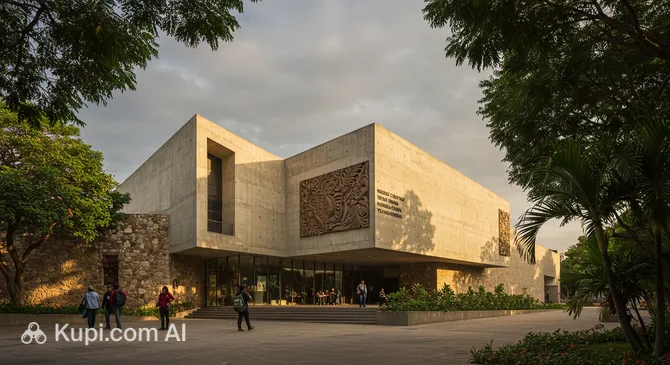
Children and Water Museum. Source: Kupi.com AI

Located in the state of Chiapas, sunny Mexico, this museum harmoniously combines educational methods with entertainment. Here, the emphasis is not only on a child's general development but also on environmental education, highlighting the vital role water plays in our ecosystem. Thanks to high ratings from visitors, it is rightfully considered one of the best spots for family leisure in the region.

The museum offers a modern approach to learning: instead of the usual display cases, you'll find exhibits that can and should be touched. It is an educational platform where, through experiments and fun, children learn about how rivers are formed, how the water cycle works in nature, and why it is so important to protect the environment.

Contacts

If you are planning a group visit or want to clarify details about hosting children's parties, we recommend contacting the administration in advance. Up-to-date information about the museum's operation and potential schedule changes can be obtained via the official phone number.

Below are the main contact details and the exact address for navigation:

Address Zona Sin Asignación de Nombre de Col 24, 29049 Tuxtla Gutiérrez, Chis., Mexico
Phone +52 961 688 2111
Google Maps Open Map

What to Do

The main feature of this place is total interactivity. Visitors can look forward to fascinating experiments with liquids, where they can control water flows, create artificial waves, and study the workings of miniature dam models. In a fun and engaging way, children get to know hydrodynamics and simulations of ocean and river water cycles.

Special sensory zones are provided for the little ones, where they can safely explore the properties of materials through touch. Regular environmental workshops and science shows are held, turning complex facts about nature into clear and vivid experiences. It’s a great opportunity for the whole family to participate in quizzes and creative activities.

The museum pays special attention to water conservation programs, which is particularly relevant for the state of Chiapas with its unique natural landmarks. Themed installations using multimedia technology and costumed tours make every visit unique, allowing parents and children to learn and play together.

Getting There

Getting to the museum in Tuxtla Gutiérrez is quite simple, as it is located in the Col 24 district, almost within the city limits. The most comfortable way is to use a taxi; a trip from the city center or the airport will take from 20 to 30 minutes, depending on traffic.

For those who prefer public transport, city buses or minibuses (colectivos) running through the center to stops in the Col 24 area are suitable. If you are near the Zocalo de la Ciudad, the walk to some transport departure points will take no more than 7-10 minutes.

Tourists arriving from the neighboring city of San Cristóbal de las Casas can take ADO buses or private shuttles—the journey takes about an hour. For travelers in their own cars, parking is provided near the museum grounds.

History & Facts

Although the Museum of the Child and Water itself is a modern educational center, it is located in a place with a colossal historical past. The city of Tuxtla Gutiérrez grew on the foundation of an ancient Zoque Indian settlement named Coyatoc, which translates to "place of many rabbits."

In the late 15th century, these lands were conquered by the Aztecs, and later, in the 16th century, Spanish colonizers settled here, changing the name to Tuxtla. The city gained the status of the capital of the state of Chiapas in 1892, which gave a powerful boost to the development of cultural and educational institutions, including such educational platforms for the younger generation.

Interestingly, the Chiapas region has always attracted researchers of antiquity. For example, in 1959, the famous archaeologist Tatiana Proskouriakoff worked here with ceramic collections. The modern museum continues the tradition of preserving knowledge, focusing on the region's most precious resource—water, which plays a key role in the ecosystem of the Sumidero Canyon and all of Mexico.

Time Needed

To leisurely explore all the halls and give children enough time to play with the exhibits, it is recommended to set aside about 2–3 hours for the visit. This time is quite sufficient for a basic introduction to the interactive zones and participating in several experiments.

If you plan to participate in additional workshops or if your family prefers a detailed study of each stand, it's worth planning for up to 4 hours. This approach will help avoid rushing and make the educational process as effective as possible for little explorers.

Working Hours

When planning your visit to the Museum of the Child and Water, please note that the institution is closed on Mondays. On weekdays, the museum's doors are open to little explorers from 10:00 AM to 4:00 PM, which is convenient for a morning visit.

On weekends, the schedule shifts slightly: on Saturday and Sunday, the museum opens at 10:30 AM and also closes at 4:00 PM. We recommend arriving in the morning to have time to see all the exhibits before closing, as entry usually stops an hour before the end of working hours.

Nearby

After immersing yourselves in the world of science and water experiments, it's worth spending time at other interesting locations in the city. Exploring the surroundings of the Chiapas capital will help you better understand the biodiversity and culture of this hospitable region.

Nearby, you will find specialized aquariums and parks for active recreation, which will be a great continuation of your family itinerary:

Attraction Type Distance (km)
Acuario la burbuja Aquarium 0.7
Centro de Convivencia Infantil de Tuxtla Gutiérrez Children's center 2.4
Pollo's house Entertainment 2.4
Cerros de los náhuales Natural landmark 3.2
Acuario Aquarium Aquarium 3.9
Xtreme Park Tuxtla Amusement park 4
Vida Acuática Aquarium 4.1
AquaBio Biology center 4.4
Dr. Pez Aquarium 4.5
Ex Fuente Mactumactzá Historical site 6.5

Reached the end of the page?

That means the route is fully explored