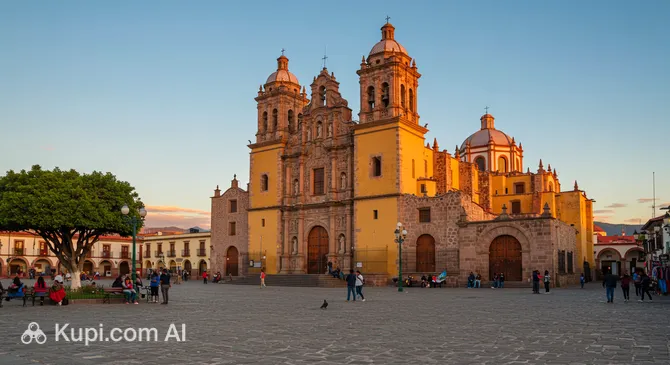
In the heart of San Cristóbal de las Casas stands one of the region's most recognizable buildings—the Cathedral. This majestic Catholic church, located on the central Zocalo square, is the spiritual center of the diocese and a brilliant monument of the colonial era that Mexico is famous for.
Cathedral of San Cristóbal de las Casas. Illustration.
Source: Kupi.com AI
Traveler photos:
The cathedral's architecture is striking in its uniqueness: elements of 18th-century Baroque, Moorish motifs, and indigenous decorative art coexist harmoniously here. The building's yellow-orange facade with its elegant carvings not only catches the eye but also symbolizes the connection between eras, its hues reminiscent of the traditional clothing of the Maya people.
Inside, the cathedral is divided into three naves and decorated with gilded elements and antique interior details. This site is a rare example of how European religious architecture was adapted under the influence of local traditions, creating a unique look that draws thousands of travelers and pilgrims every year.
Contacts
For those planning a visit, the main contact information and location of the cathedral are provided below. The church is active, so visitors are encouraged to maintain silence and show respect to the parishioners.
The main reason to step inside is the magnificent interior decoration. You can admire rich gilded altars, an ancient carved choir, and numerous artistic details in the Baroque style. The soft light and silence of the church create an ideal atmosphere for peaceful contemplation and the study of religious art.
Outside, the cathedral serves as a stunning backdrop for photos. Its unusual facade looks especially striking in the rays of the setting sun. In the evening, life on the Zocalo comes alive: authentic costumed performances by local indigenous people are often held here, offering a glimpse into the living traditions of Chiapas state.
Since the cathedral is at the epicenter of San Cristóbal's urban life, a visit can easily be combined with a walk along the pedestrian streets. After touring the church, you can head to the historic Arco del Carmen or climb Guadalupe and San Cristóbal hills, which offer breathtaking panoramas of the entire city.
Getting There
Finding the city's main sanctuary is easy, as it is located in the very heart of the historical center on the central Zocalo square. The exact address is Plaza 31 de Marzo Norte No. 3. The city is nestled in the picturesque Jovel Valley, surrounded by the majestic mountains of Chiapas, making the journey there very impressive.
If you are staying in the central part, it is best to reach the cathedral on foot, strolling through the colonial streets. For those coming from further away, a taxi is a convenient option—drivers know the location well and will take you right to the main entrance.
For travelers arriving from other cities in Mexico, tourist bus tours are often organized. You can also use the services of local transport companies (colectivos) that run between key points in the region, but for maximum comfort within the city, it is better to choose an official taxi or walking tours.
Nearest city: San Cristobal de las Casas
History & Facts
The history of this majestic structure began almost simultaneously with the founding of the settlement itself. The official date is March 31, 1528, when the Spanish captain Diego de Mazariegos laid the foundation for the future city and its main spiritual center. Initially, the temple was dedicated to Saint Christopher the Martyr and the Virgin Mary.
The Dominican order played a special role in the cathedral's development. One must also mention the prominent figure of the first bishop of Chiapas, Bartolomé de las Casas. He became world-famous for his active defense of the rights of the indigenous population, and the city received the second part of its name in his honor.
From an architectural standpoint, the building represents a unique layer of history. Over decades of construction, it absorbed features of European Baroque and Renaissance, which intricately intertwined with local artistic traditions. This is not just a building, but a symbol of the complex process of two worlds merging, leaving an indelible mark on the region's culture.
Time Needed
To leisurely explore the cathedral's interior, study the altar details, and feel its atmosphere, 30 to 60 minutes is usually enough. This time will suffice for viewing the architectural elements and taking memorable photos of the facade.
However, if you plan to stay in the area until evening, it’s worth setting aside an additional 1–2 hours. As dusk falls, colorful costumed performances organized by local indigenous communities often take place on the square in front of the cathedral, turning a simple walk into a full cultural immersion.
Working Hours
The Cathedral welcomes parishioners and tourists daily. The schedule is divided into two parts with a midday break: from 9:00 AM to 1:30 PM and from 4:30 PM to 8:00 PM.
This schedule remains consistent throughout the week, from Monday to Sunday. It is recommended to plan your visit for the morning or late afternoon to avoid the doors being closed during the siesta.
9:00 – 13:30, 4:30 – 20:00
Nearby
Exploring the surroundings of the central square will allow you to dive deeper into the colonial era atmosphere and get to know the modern life of Chiapas state. Many interesting sites are concentrated around the cathedral, all within a few minutes' walk.
You can walk through pedestrian zones, visit small museums, or check out aquariums to add variety to your travel itinerary.