Support

Museo Regional de Antropología Carlos Pellicer Cámara

About

Located in the picturesque city of Villahermosa, the Carlos Pellicer Cámara Regional Museum of Anthropology is rightfully considered one of the most important cultural centers in Mexico. This grand collection of antiquities is the second most significant in the country, following the famous National Museum in the capital. The museum is home to more than 10,000 unique artifacts, spanning the rich history of the Olmec, Maya, Zoque, and Nahua cultures.
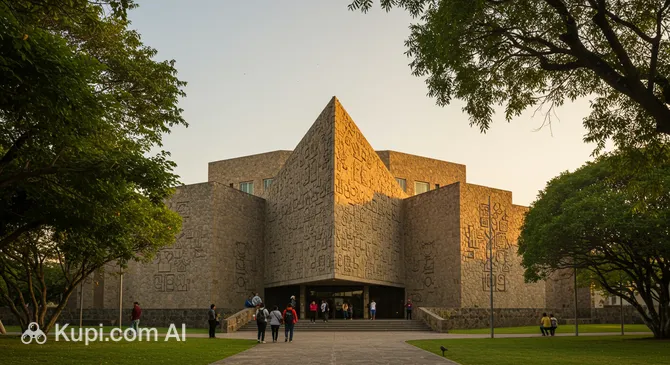
Carlos Pellicer Cámara Regional Museum of Anthropology. Source: Kupi.com AI

The museum building itself is a work of art in the style of late 20th-century modernism. Designed by architect Jaime Ortiz Monasterio, it stands on the left bank of the Grijalva River. Inside, visitors will find three levels of fascinating exhibitions that lead through the centuries—from the Preclassic period (800 BC) to the Spanish conquest. Special attention is given to the grandeur of the pre-Hispanic civilizations of the country's southeast.

The museum's halls display more than just everyday items; they hold true treasures: monumental basalt sculptures from La Venta, exquisite objects made of jade, stone, and shells. Thanks to the museography updated in 2018, a visit becomes an engaging interactive journey where ancient stelae and mysterious hieroglyphs "come to life" through modern information presentation methods.

Contacts

To clarify visit details or organize group tours, you can use the official contact details of the institution.

Address Perif. Carlos Pellicer Cámara 511, Guayabal, 86080 Villahermosa, Tab., Mexico
Phone +52 993 312 6344
Website tabasco.gob.mx
Email museoarqueologicopellicer@hotmail.com
Google Maps View on map

What to Do

The first thing to do is head to the hall where the monumental basalt sculptures from La Venta are exhibited. These massive Olmec heads and figures amaze the imagination with their scale and craftsmanship. Be sure to find the famous "Stela No. 6," also known as the "Stela of Time"—this 7th–8th-century artifact is one of the most important monuments of Maya writing and consistently draws the attention of researchers and mystery lovers.

The modern layout of the museum allows you to not just look at the exhibits but to dive deep into the context of their creation. Interactive panels and multimedia guides will help decipher the glyphs on ancient slabs and understand the meaning of ritual vessels. For those traveling with family, the museum regularly hosts educational workshops and temporary exhibitions that make history clear and interesting even for the youngest visitors.

Photography enthusiasts will love the contrast between the clean lines of modern architecture and the ancient statues. After exploring the interior halls, be sure to step out onto the terrace or take a walk through the surrounding CICOM area—it offers magnificent views of the river, which serve as a great backdrop for memorable photos. Many tourists note that the warm atmosphere and high level of service make this museum the best place to get acquainted with the spirit of Tabasco.

Getting There

The museum is conveniently located in the CICOM zone on the left bank of the picturesque Grijalva river. If you are in the city center, a car or taxi ride via Periférico Carlos Pellicer Cámara or Avenida Universidad will take only about 10–15 minutes. The cost of a taxi ride (using popular apps like Uber) will be approximately 100–200 Mexican pesos.

For those who prefer public transport, bus routes heading towards the CICOM cultural center are available. Additionally, the museum's location allows for a pleasant walk or bike ride along the embankment, enjoying the river views.

If you are arriving from Villahermosa International Airport, the distance is about 20 kilometers. A taxi ride will take 30 to 40 minutes and cost approximately 500 pesos. You can also use the comfortable ADO buses, which will take you to the city center, where you can easily transfer to local transport to reach the museum.

History & Facts

The soul and founder of this place was the famous native of Tabasco, the outstanding poet Carlos Pellicer Cámara, known by his contemporaries as the "Poet of America." Inspired by the history of his homeland, in the 1940s he began collecting archaeological treasures, opening the first museum in a former prison building. Pellicer dedicated 26 years of his life to managing this collection, striving to preserve the heritage of ancient civilizations for future generations.

The construction of the modern museum building began in the 1970s at the poet's initiative and with government support. The design by architect Jaime Ortiz Monasterio won the competition due to its bold modernist style. The official opening took place on February 16, 1980, exactly three years after the death of Carlos Pellicer, in whose honor the museum was named.

The institution's history has not been without its challenges: in 2007, the building was seriously damaged by a devastating flood. This led to a large-scale reconstruction, completed in 2011. In 2018, the exhibition was completely updated using modern technologies, allowing the museum to become one of the most innovative and visited cultural sites in the region, carefully housing between 700 and 10,000 priceless artifacts.

Time Needed

To leisurely tour all three levels of the museum, discover the main masterpieces of the Olmec and Maya collections, and explore the interactive materials, most travelers need 2 to 3 hours. This is enough time to soak in the ancient atmosphere and appreciate the architectural features of the building.

If you plan to visit as part of an organized group or want to study each stela in detail with an audio guide, we recommend setting aside about 4 hours. Given the museum's convenient location by the river, it is also worth leaving some time for a walk along the embankment after your tour.

Working Hours

The museum is open to visitors from Tuesday to Sunday, offering a convenient schedule on both weekdays and weekends. Please note that the institution is closed on Mondays.

  • Tuesday — Friday: 9:00 AM to 4:00 PM
  • Saturday — Sunday: 9:00 AM to 6:00 PM

Nearby

Villahermosa is a city with a rich cultural environment, and a visit to the anthropology museum can easily be combined with exploring other points of interest. A stroll through the surrounding area will allow you to better feel the atmosphere of the state of Tabasco.

Attraction Distance (km)
Diversis Fauna Acuario - Sucursal Guayabal 0.7
Malecon Villahermosa 1
Centro Historico Calle Ignacio Zaragoza 1.4
Parque Museo La Venta 2.8
Puffers Acuario 2.6

Reached the end of the page?

That means the route is fully explored