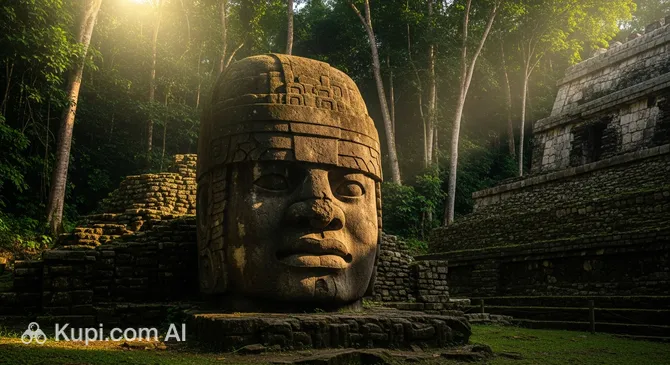
The Mayan Head is an impressive symbol of the ancient city of Palenque, one of the most enigmatic archaeological sites of the Mayan civilization. Located in southern Mexico, this complex is recognized as a masterpiece of architecture and art thanks to its delicate carving and harmony with the surrounding tropical forest.
Maya Head. Illustration.
Source: Kupi.com AI
Traveler photos:
Unlike many other Mayan cities, Palenque stands out for its lack of traditional massive stelae, instead focusing on stucco reliefs and complex hieroglyphic panels. This historical monument was the capital of the powerful Baakal kingdom and still holds many secrets hidden beneath the dense canopy of the Chiapas jungle.
Today, the ruins represent a unique combination of majestic pyramids, temples, and palace structures. This place is perfect for those who want to touch the history of ancient builders and see firsthand how nature and human genius have intertwined over the centuries.
Contacts
For those planning a visit to the famous ruins, it is helpful to have official information on hand. Although the site is located in the heart of the jungle, it has clear territorial divisions and contact details for navigation.
A visit to this site offers guests a unique chance to explore the Temple of Inscriptions—a grand structure famous for its long texts consisting of 618 hieroglyphic blocks. Be sure to explore the Palace complex, where the social elite once lived, and climb to the observation decks to see the city panorama through the jungle mist.
History buffs will appreciate the opportunity to see replicas of artifacts from the famous royal tomb. A walk through the park grounds turns into a real adventure: you will cross streams, climb ancient steps, and study complex bas-reliefs telling stories of Mayan life and gods. The information centers and on-site museum house valuable finds that help visualize the daily life of this vanished civilization.
Getting There
The journey to the ancient monuments in the state of Chiapas in southern Mexico usually begins with arrival in the modern city of Palenque. The archaeological zone is located in the immediate vicinity of the city, making it easy to reach.
The most convenient way is to use a taxi or shuttle vans (collectivos), which run regularly from the city center to the park entrance. For those who prefer independence, renting a car is a great option, allowing you to follow your own schedule. Many hotels also offer organized guided tours with transfers.
Keep in mind that from the entrance of the archaeological complex to the main structures, including the "Mayan Head," you will need to walk across uneven and hilly terrain. The tropical forest creates a special atmosphere but requires comfortable closed-toe shoes for moving easily along the humid trails.
Nearest city: Palenque
History & Facts
The Mayan Head and the entire Palenque complex are silent witnesses to the peak of the Baakal kingdom. The first settlements here appeared as early as the 1st or 2nd century AD, but the city achieved true greatness between 600 and 800 AD. This was the Golden Age, when rulers built monumental pyramids and priests made discoveries ahead of their time.
A discovery in 1952 was of particular scientific significance: a royal tomb with a unique sarcophagus was found inside the Temple of Inscriptions. This shifted historians' perspectives, revealing that Mayan pyramids served not only as temple platforms but also as final resting places for great kings, much like the Egyptian pyramids.
Surprisingly, by the 9th century, this thriving metropolis was completely abandoned by its inhabitants. The reasons for this sudden exodus still spark debate among scholars, ranging from internal conflicts to environmental crises. The tropical forest hid the majestic facades for centuries, preserving them for modern researchers and travelers.
Time Needed
To leisurely explore the complex's main highlights, including the famous bas-reliefs and temples, usually takes about 3-4 hours. This is enough time to walk the main routes and take memorable photos against the backdrop of ancient stones and jungle.
If you are an archaeology enthusiast and want to study the hieroglyphic inscriptions in detail, visit the local museum, and explore the remote corners of the site, it is better to set aside a full day (6-8 hours). Arriving early will help you avoid the midday heat and large tour groups.
Working Hours
The archaeological zone welcomes visitors daily; however, the exact schedule may vary depending on the season and ongoing restoration work. It is recommended to plan your visit for the morning hours, when the air temperature is most comfortable for walking.
Since official data on opening hours can be updated, we advise tourists to check the latest information on the official website or verify the schedule at the city's information center before setting out.
Nearby
Exploring the surroundings of the Palenque archaeological zone will help you dive deeper into local culture and enjoy the hospitality of the state of Chiapas. After walking through the ancient ruins, it's worth stopping by nearby establishments to share your impressions over a cup of Mexican coffee or a traditional dinner.