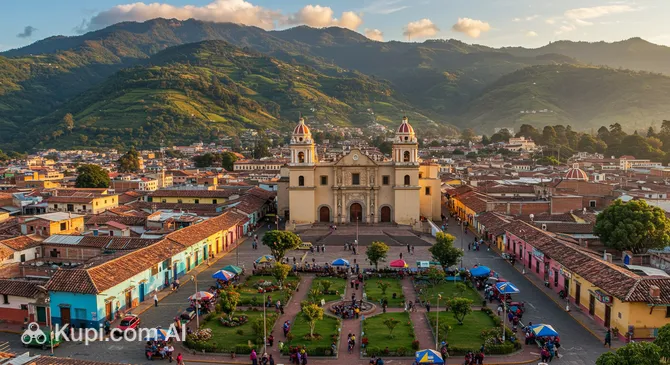
Quetzaltenango, widely known by its indigenous K'iche' Maya name Xelajú or simply Xela, is the second-largest city in Guatemala. Nestled in a sweeping valley surrounded by towering volcanoes, this city serves as a vibrant cultural and commercial hub in the western highlands. Its high altitude, sitting at over 2,330 meters above sea level, gives it a crisp, cool climate that distinguishes it from the tropical heat found elsewhere in the region.
With a population of approximately 225,000 inhabitants, the city balances the amenities of a modern urban center with a distinct traditional charm. Visitors are often drawn to its well-preserved neoclassical architecture, particularly around the Parque Centro América, which stands as a testament to the city's prosperous past. To delve deeper into the region's fascinating background, exploring the history of Quetzaltenango reveals a narrative rich in indigenous heritage and colonial influence.
Quetzaltenango. Illustration.
Source: Kupi.com AI
Beyond the city center, the area is a paradise for outdoor enthusiasts. It is an ideal base for hiking the majestic Santa María Volcano or relaxing in the natural thermal waters of Fuentes Georginas. Whether you are here to study Spanish at one of its renowned language schools or to embark on high-altitude adventures, Quetzaltenango offers an authentic and unforgettable travel experience.
Weather Overview
Due to its high elevation, the weather in Quetzaltenango is characterized by a subtropical highland climate that feels significantly cooler than the coastal regions of Guatemala. Temperatures remain relatively consistent throughout the year, with average highs generally hovering between 20°C and 22°C. However, nights can be quite crisp, with minimum temperatures often dropping to around 10°C to 11°C during the colder months of December and January.
The city experiences two distinct seasons regarding precipitation. The dry season, spanning roughly from December to February, sees very little rainfall and clear skies. Conversely, the rainy season from May to October is marked by frequent showers; during this period, you can expect rain almost daily, with data showing up to 30 or 31 wet days per month. Travelers planning a visit during the wet season should come prepared for regular afternoon downpours.
Average monthly temperature
Average monthly precipitation
Interesting Facts
Beyond the main attractions, Quetzaltenango holds many fascinating secrets and historical footnotes that surprise many visitors. Here are a few intriguing details about this highland city that reveal its unique character.
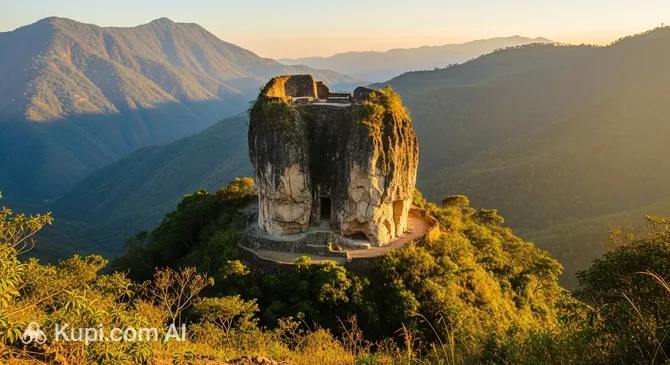
Minerva Temple. Illustration.
Source: Kupi.com AI
Traveler photos:
The Sixth State: In the 19th century, Quetzaltenango was the capital of the "State of Los Altos," a short-lived republic that declared independence from Guatemala. This legacy of autonomy and regional pride is still strongly felt in the local culture today.
A Musical Masterpiece: The city inspired the famous waltz "Luna de Xelajú," composed by Paco Pérez. This song is so beloved across the nation that it is widely considered to be Guatemala's second national anthem.
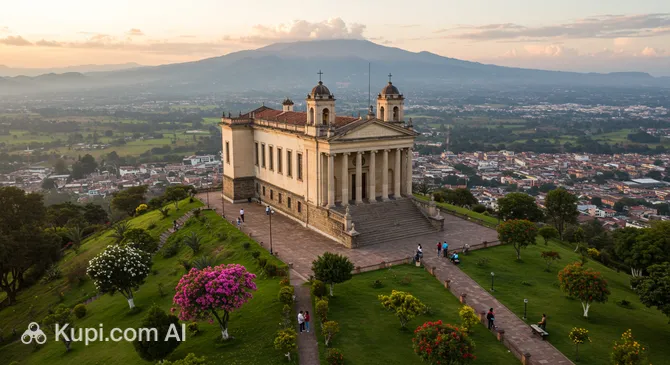
Temple of Wisdom: The city features an imposing Minerva Temple, built to honor the goddess of wisdom. It was part of a nationwide project to promote education initiated by President Manuel Estrada Cabrera, who was a native of Quetzaltenango.
Volcanic Architecture: Many of the historic buildings surrounding the Central America Park are constructed from volcanic stone quarried nearby, giving the city center a distinctive, enduring gray aesthetic that differs from the colorful colonial style of Antigua.
How to Get There
Reaching the western highlands of Guatemala is an adventure that rewards travelers with stunning mountain views. While the journey can be winding, there are several ways to approach the city depending on your starting point. For a detailed breakdown of all transport options, including buses and shuttles, you can read more about how to get to Quetzaltenango.
The primary entry point for most international visitors is La Aurora International Airport(GUA). Located in Guatemala City, this is the country's busiest air hub. Although it is situated approximately 111 km from Quetzaltenango, the mountainous terrain means the journey by taxi or shuttle typically takes around 3 hours. It offers the widest range of international connections and tourist services.
The city does have its own local facility, Quetzaltenango Airport (AAZ), located just 3.3 km from the center. A taxi ride from here to the heart of the city takes only about 25 minutes. However, this airport is very small and primarily serves regional or charter flights, so flight schedules may be limited compared to the capital.
Another option, particularly relevant for those traveling from Mexico, is Tapachula International Airport (TAP). Situated in Tapachula, Mexico, it is roughly 91 km away. The drive takes approximately 2 hours and 40 minutes, though you must factor in additional time for crossing the international border.
For clarity, here is a summary of the main airports:
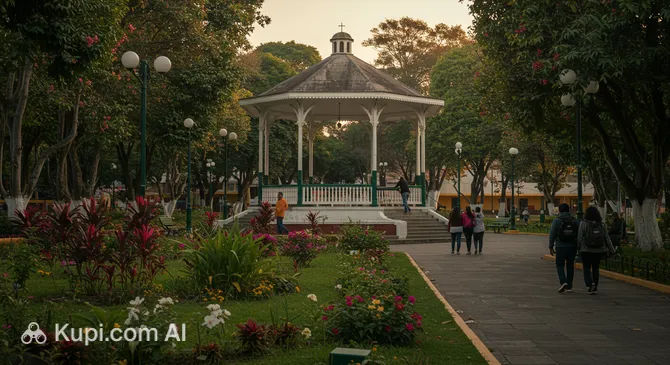
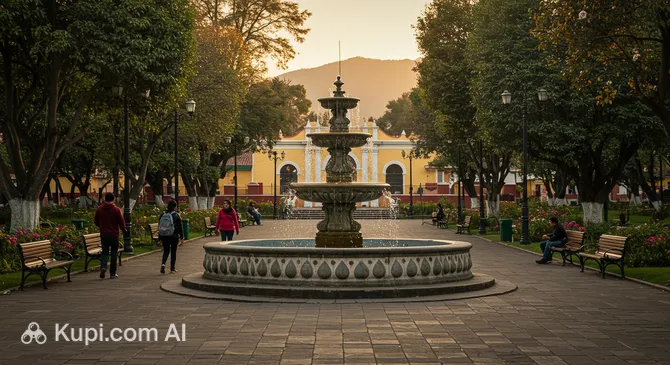
The heart of the city beats strongest at Central America Park. This plaza is not just a meeting point but an open-air gallery of neoclassical grandeur. Flanked by majestic columns and historic buildings, the park features beautiful gardens and monuments that reflect the city's rich past. It is the perfect place to sit on a bench, watch daily life unfold, and admire the architectural elegance that defines the historic center of Xela.
Central America Park. Illustration.
Source: Kupi.com AI
Traveler photos:
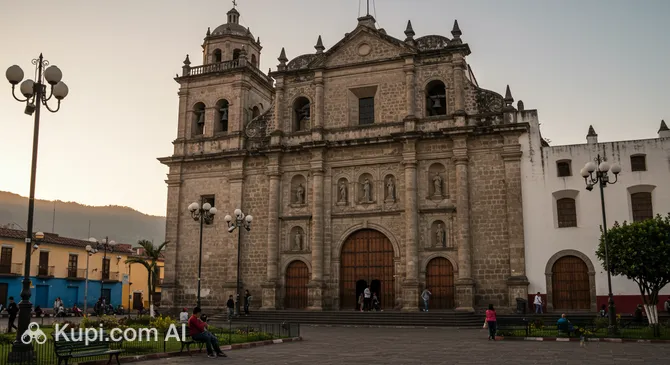
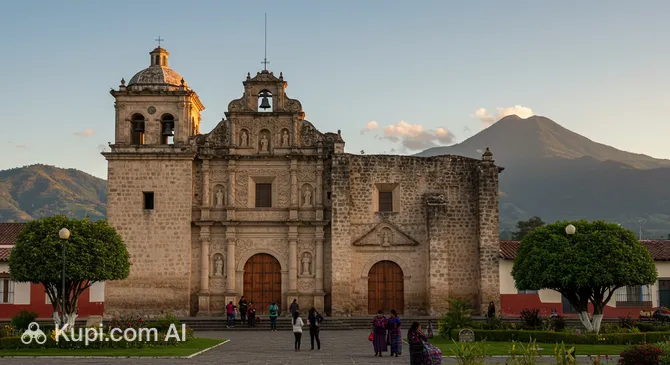
Standing prominently on the east side of the central plaza is the Cathedral of the Holy Spirit. This religious site is fascinating due to its unique dual facade; the original 16th-century colonial facade stands in front of a larger, more modern structure built behind it. This architectural contrast tells the story of the city's resilience and evolution, making it a compelling stop for history buffs and photographers alike.
Cathedral of the Holy Spirit. Illustration.
Source: Kupi.com AI
Traveler photos:
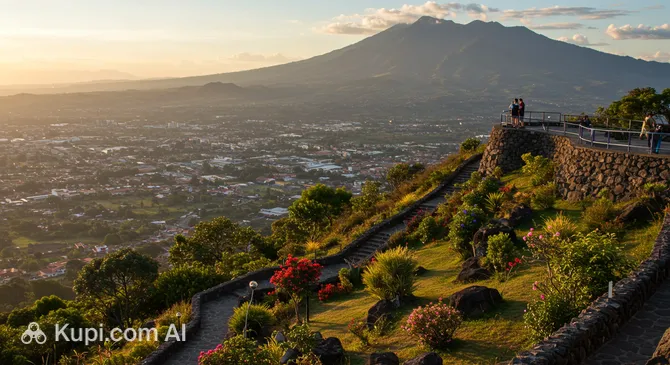
For a panoramic perspective of the valley, a visit to Cerro El Baúl Municipal Park is essential. Located just outside the city center, this lava dome offers sweeping views of Quetzaltenango and the towering volcanoes that surround it. The park is a favorite among locals for weekend picnics and features a giant concrete slide that provides a thrill for visitors of all ages. It is an excellent spot to breathe fresh air and appreciate the highland landscape.
Cerro El Baúl Municipal Park. Illustration.
Source: Kupi.com AI
Traveler photos:
Another architectural gem is the San Nicolás Church. With its striking Neo-Gothic design, this church stands out from the typical colonial style found in much of Guatemala. Its towering spires and intricate details make it one of the most photogenic landmarks in the city. The interior is equally impressive, offering a peaceful atmosphere for reflection away from the bustling streets.
San Nicolás Church. Illustration.
Source: Kupi.com AI
Traveler photos:
To experience the city's bohemian side, travelers should stop by La Luna Museum Café. This establishment is more than just a place to grab a drink; it is a journey back in time, filled with antiques, vintage photographs, and historical memorabilia. The cozy ambiance makes it a top choice for enjoying a cup of local hot chocolate or coffee while soaking in the artistic and intellectual culture that Quetzaltenango is famous for.
Local Cuisine
The culinary landscape of Quetzaltenango is as distinct as its culture, blending ancient Maya K'iche' traditions with Spanish colonial influences. Due to the city's high altitude and cooler climate, the local cuisine tends to be hearty and warming, featuring rich stews, spiced drinks, and corn-based staples. The food scene here is unpretentious yet deeply flavorful, inviting visitors to explore everything from bustling market stalls to elegant historic dining rooms.
One of the most iconic dishes you must try is paches. While similar to the corn-based tamales found elsewhere in Guatemala, these are unique to the highlands because they are made primarily from mashed potatoes mixed with a savory tomato sauce and chili, usually containing a piece of meat in the center. They are traditionally wrapped in banana leaves and are a Thursday tradition for many local families. Another staple is the sheca, a type of sweet bread often flavored with anise. The best versions are filled with ingredients like beans, cheese, or blackberry jam and are perfect when paired with a hot drink.
Given the chilly evenings, warm beverages play a central role in the local diet. Atol de elote, a creamy, sweet corn drink, is a favorite comfort specifically found in street markets. For something with a bit more kick, look for caldo de frutas (fruit broth). This is a traditional artisanal liquor made from fermented fruits—typically apples, peaches, pears, and cherries—giving it a deep red color and a sweet, potent flavor. It is a regional specialty that is difficult to find outside the Western Highlands.
Bar Salón Tecún. Illustration.
Source: Kupi.com AI
Traveler photos:
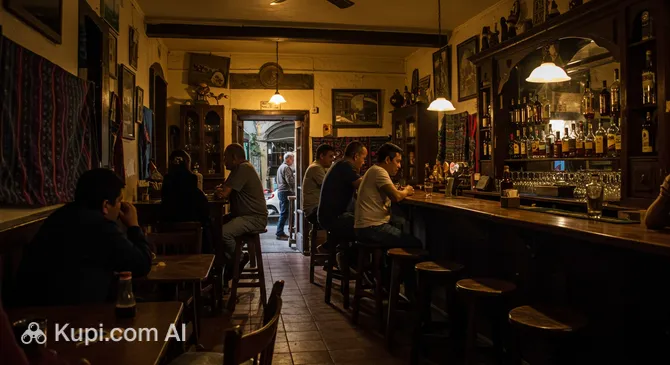
Dining in Xela offers a mix of history and gastronomy. For a relaxed atmosphere in the heart of the city, Bar Salón Tecún is a legendary spot. Located inside the historic Pasaje Enríquez, it has been serving locals and travelers for decades. It is an excellent place to enjoy a draft beer or a casual meal while soaking in the classic ambiance of the city center.
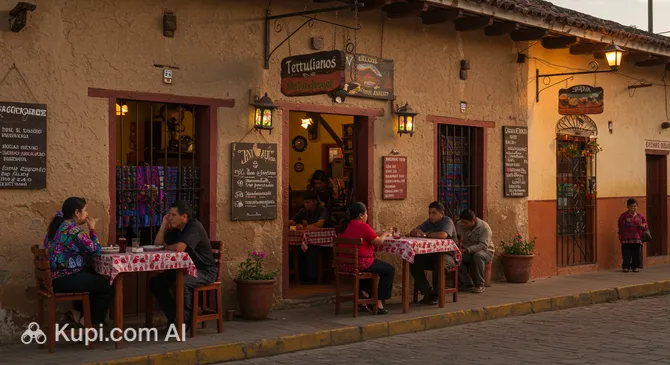
If you are looking for a more refined culinary experience, Tertulianos Restaurant is widely considered one of the best in the city. Housed in a beautifully restored neoclassical villa, it serves a fusion of international and local cuisine. The elegant setting, complete with a glass-enclosed seating area, makes it a top choice for a special dinner. For dessert enthusiasts, Brule Gourmet offers exquisite pastries and coffee, highlighting the region's reputation for producing some of the finest coffee beans in the world.
Tertulianos Restaurant. Illustration.
Source: Kupi.com AI
Traveler photos:
Travel Tips
Welcome to the Guatemalan highlands! Visiting Quetzaltenango offers a more authentic and gritty experience than the tourist-polished streets of Antigua, but the high altitude and bustling urban energy require a bit of preparation. Here are some practical tips to help you navigate Xela like a pro and enjoy your stay comfortably.
Pack Layers for the Cold: Unlike the tropical coast, Xela gets surprisingly cold, especially at night when temperatures can drop near freezing. Bring a warm jacket, a fleece, and long pants. Since you will likely be walking on cobblestone streets or hiking nearby volcanoes, sturdy and comfortable walking shoes are essential.
Navigating the City: The historic center (Zone 1) is best explored on foot, as many attractions are clustered around the central park. For longer distances, ride-hailing apps like Uber are available and generally safer and more convenient than hailing random taxis on the street. Local "microbuses" are very cheap but can be confusing and crowded for first-time visitors.
Cash and Currency: The local currency is the Quetzal (GTQ). While upscale restaurants and hotels accept credit cards, cash is absolute king in markets, small cafes, and for transport. ATMs are widely available around the Parque Centro América; it is wise to withdraw cash during the day and keep small bills handy for street vendors.
Health and Altitude: At over 2,300 meters (7,500 feet), the altitude can affect some travelers. Take it easy on your first day, stay hydrated, and avoid heavy meals. Do not drink tap water; always buy bottled or purified water. Pharmacies are common in the city center if you need basic medication or remedies for altitude sickness.
Language and Communication: Xela is a major hub for Spanish language schools, so while you will find students, English is not as widely spoken by locals here as it is in Antigua. Learning a few basic phrases in Spanish will be incredibly helpful. For connectivity, you can easily buy a prepaid SIM card from Tigo or Claro at many corner shops; just bring your passport.
Etiquette and Photography: People in Xela are generally polite and conservative. A simple greeting of "Buenos días" or "Buenas tardes" when entering a shop or passing someone on a quiet street is expected. Be very respectful when taking photos of indigenous Maya people; always ask for permission first, as taking photos without consent is considered rude and can cause offense.
Hiking Safety: One of the biggest draws of Xela is the nearby volcanoes, but never hike alone. Robberies can occur on isolated trails, and weather conditions change rapidly at high altitudes. Always hire a certified local guide or join a tour group for treks up Santa María or to Lake Chicabal to ensure both your safety and a better experience.
Market Awareness: When visiting the bustling markets like Mercado La Democracia or Minerva, keep your valuables secure. These areas are vibrant and worth visiting, but they are also crowded, making them prime spots for pickpockets. Carry your backpack on your front and avoid displaying expensive electronics.
By keeping these tips in mind, you will be well-equipped to embrace the unique charm of Quetzaltenango. Whether you are sipping hot chocolate in a historic cafe or trekking up a volcano, Xela rewards those who come prepared with an unforgettable cultural adventure.
Entertainment & Nightlife
Entertainment and Nightlife:
While Quetzaltenango is often celebrated for its history and trekking, its nightlife scene is a vibrant reflection of its status as a university city. The atmosphere here is distinct from the tourist-heavy vibes of Antigua; it is more bohemian, authentic, and driven by a mix of local students, volunteers, and hikers. The nightlife typically kicks off later in the week, with Thursday through Saturday being the busiest nights. Most venues are casual, so there is no need for a strict dress code—jeans and a warm jacket are the standard uniform against the chilly highland air.
The epicenter of evening entertainment is undoubtedly Zone 1, particularly around the Central Park. The historic Pasaje Enríquez, an elegant arcade on the western side of the plaza, serves as the city's main watering hole. This covered passage is lined with bars and cafes that spill out onto the walkway, creating a lively, communal atmosphere. The most iconic spot here is Bar Salón Tecún. Stepping inside feels like entering a piece of living history; it is the perfect place to sip a "Gallo" beer or a cocktail while surrounded by locals and travelers sharing stories of their volcanic adventures.
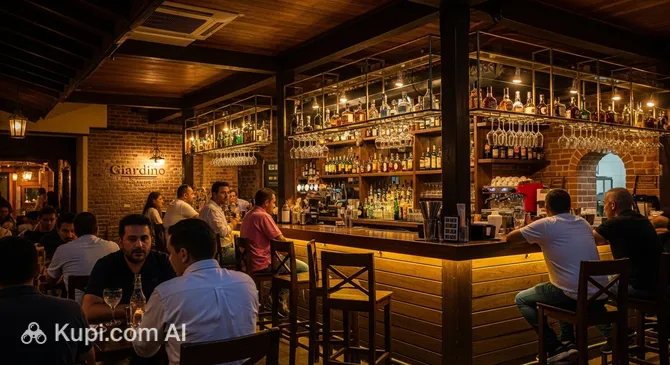
Beyond the arcade, the streets surrounding the park are dotted with salsa clubs, rock bars, and cozy lounges. For those seeking a more relaxed evening with good food and drinks, Giardino Ristorante-Pizzeria offers a welcoming environment. It is a great spot to unwind after a long day of exploring, offering a comfortable setting that bridges the gap between a dinner venue and a night out.
Giardino Ristorante-Pizzeria. Illustration.
Source: Kupi.com AI
Traveler photos:
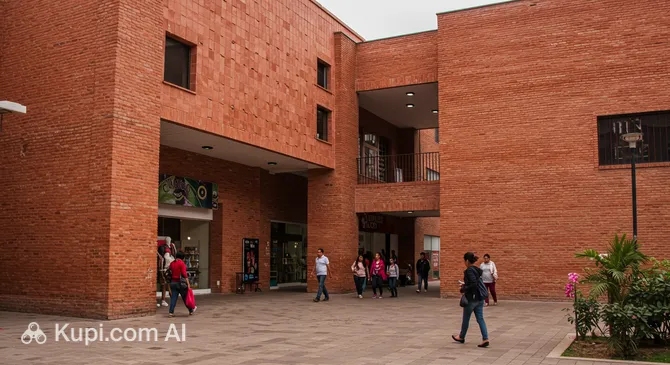
For a more modern entertainment experience, including cinemas and contemporary dining, the city's shopping malls are popular destinations. Utz Ulew Mall is a striking architectural landmark in the city that offers a safe and polished environment for an evening out. It features a modern movie theater showing the latest international releases, often with subtitles, making it a good option for a low-key night.
Utz Ulew Mall. Illustration.
Source: Kupi.com AI
Traveler photos:
Regarding safety and logistics, it is important to stay vigilant. While the area around Parque Centro América is generally safe in the early evening, the streets can empty out quickly. Walking alone late at night is discouraged, even for short distances. The best way to get around after dark is by using a radio taxi or a ride-sharing app like Uber, which is reliable in Xela. Bars and clubs typically close around 1:00 AM due to local regulations, so the party tends to start earlier than in other Latin American cities.
During the daytime, entertainment in Quetzaltenango leans towards the cultural. The city is home to the stunning Municipal Theater, which hosts plays, concerts, and cultural events throughout the year. Additionally, you can spend hours exploring the Pradera Xela Shopping Center for a mix of shopping and family-friendly activities, or visit local museums to deepen your understanding of the region's heritage before the sun goes down.
Parks & Museums
Exploring the green spaces and cultural institutions of Quetzaltenango offers a deeper understanding of the city's rich heritage and daily life. Beyond the bustling central plaza, the city is dotted with tranquil parks and fascinating museums that preserve the legacy of the "State of Los Altos." Whether you are looking to relax under the shade of a tree or dive into the region's complex history, Xela has plenty to offer.
One of the most serene spots in the city is Simón Bolívar Park. Located in Zone 1, this area was historically known as the Plaza of San Sebastián before the 1902 earthquake destroyed the church that stood there. Today, it serves as a peaceful retreat for locals, featuring well-maintained gardens and a prominent statue of the South American liberator, Simón Bolívar. It is an excellent place to take a quiet walk and appreciate the more residential atmosphere of the historic center.
Simón Bolívar Park. Illustration.
Source: Kupi.com AI
Traveler photos:
For a larger recreational area, Minerva Park is a favorite destination for families. This expansive green space is home to the majestic Temple of Minerva and the city's zoo, Zoológico Minerva. The park provides ample space for jogging, picnics, and outdoor sports, making it a lively hub of activity on weekends. The zoo itself, though modest, houses a variety of local fauna and offers an educational glimpse into the wildlife of the Guatemalan highlands.
Visitors interested in the region's trading history should visit El Tinajón. This historical landmark was once a crucial watering station for pack animals and merchants traveling through the highlands. The site preserves the large water tank, or "tinajón," which stands as a monument to the city's commercial past. It is a unique slice of local history that reminds passersby of the days when mules and horses were the primary engines of transport.
El Tinajón. Illustration.
Source: Kupi.com AI
Traveler photos:
When it comes to museums, the Natural History Museum (Museo de Historia Natural) is a must-visit. Located within the Casa de la Cultura on the south side of the Central Park, this eclectic museum holds a vast collection ranging from pre-Columbian Maya pottery and jade to stuffed birds and historical documents. It is particularly famous for its exhibit on the marimba, Guatemala's national instrument, showcasing its evolution and cultural significance.
Another key cultural venue is the Los Altos Railway Museum (Museo del Ferrocarril de Los Altos), situated in the Centro Intercultural. This museum tells the tragic but fascinating story of the electric railway that once connected Quetzaltenango to the coast in the 1930s. Through photographs, artifacts, and preserved train cars, visitors can learn about this ambitious engineering project that was cut short by natural disasters and political decisions.
For a truly authentic experience, seek out the Ixkik' Mayan Costume Museum. Unlike the larger museums, this intimate venue focuses specifically on the intricate textiles and traditional clothing of the Maya people. It offers a colorful and detailed look at the symbolism woven into the huipiles (blouses) and fabrics used by different indigenous communities across the country.
Getting Around
Public transport in Quetzaltenango is an informal yet extensive network that relies primarily on microbuses (minivans) and, to a lesser extent, larger refurbished school buses known locally as camionetas. There is no metro, tram, or train system within the city. The microbuses are the most common way for locals to travel between zones; they are numbered and typically display their destination or main stops on the windshield. While they are efficient and frequent during the day, they can be crowded and chaotic for first-time visitors.
The payment system is entirely cash-based. There are no travel cards, digital apps, or pre-purchased tickets for urban transit. You simply pay the driver or the assistant (known as the ayudante) once you have boarded or upon exiting, depending on the specific route's custom. Fares are incredibly affordable, generally costing between Q1.25 and Q2.50 per ride, though rates may increase slightly in the evenings or on weekends. It is essential to carry small bills and coins, as drivers rarely have change for large denominations.
For tourists wishing to use the bus system, knowing the route beforehand is helpful, as official bus stops are not always clearly marked. You can often flag down a microbus anywhere along its route by simply waving your hand. Service typically begins around 6:00 AM and runs until approximately 7:00 PM or 8:00 PM. After dark, public transport becomes scarce and is generally not recommended for safety reasons. Always keep your belongings close and be aware of pickpockets, especially during rush hour.
Given the informal nature of the buses, many travelers prefer using taxis or ride-sharing apps for convenience and safety. Traditional taxis are white and can be found at designated stands or hailed on the street, but they do not use meters; you must negotiate and agree on the fare before getting in to avoid being overcharged. Alternatively, Uber is widely available, reliable, and often safer for tourists since the price is fixed and the trip is tracked via GPS.
Walking is also a viable option, particularly if you are staying within the historic center (Zone 1), where many attractions, cafes, and language schools are clustered. The city is relatively compact in this area, but be mindful of the altitude if you are not used to it. For trips to the outskirts or other zones, combining walking with a taxi or Uber is usually the most stress-free approach for visitors.
Accommodation
Where to Stay:
Accommodation in Quetzaltenango caters to a wide range of travelers, from backpackers and language students to business professionals and families. The city is primarily divided into two main zones for tourists: the historic Zone 1, where colonial charm abounds, and the more modern Zone 3, which offers contemporary amenities and shopping centers. Choosing between these areas depends largely on whether you prioritize atmospheric heritage or modern convenience.
Zone 1 is the heart of the city and the preferred base for most visitors. Staying here puts you within walking distance of the Central Park, the municipal theater, and the vibrant cafe scene. Many hotels in this area are housed in restored colonial mansions featuring beautiful courtyards and antique furnishings. This zone is also the hub for hostels and budget accommodations, making it the center of social life for the many students who come to Xela to learn Spanish.
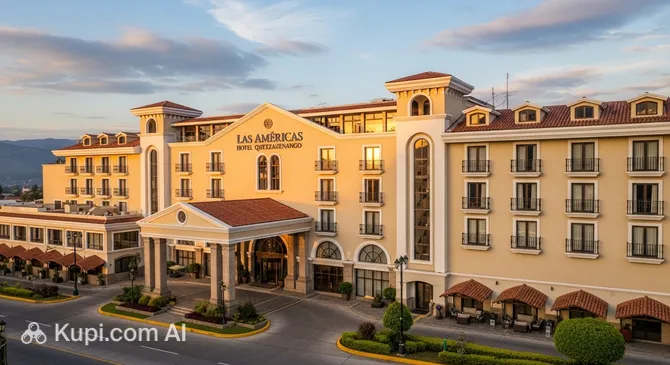
For those seeking luxury and international standards, Zone 3 is the place to look. This area feels like a different city, characterized by wide avenues and shopping malls. A standout option here is the Las Americas Hotel Quetzaltenango. Known for its extensive facilities, this hotel offers a resort-like experience with comfortable rooms, event spaces, and easy access to the commercial district, making it a favorite for business travelers and those who prefer a modern touch over colonial rusticism.
Las Americas Hotel Quetzaltenango. Illustration.
Source: Kupi.com AI
Traveler photos:
A unique aspect of lodging in Xela is the prevalence of homestays. Because the city is a global destination for Spanish language immersion, many families rent out rooms to students. This is an affordable and culturally enriching way to stay, often including home-cooked meals and the opportunity to practice Spanish daily. If you are enrolling in a language school, they can almost always arrange this for you.
One practical tip for all travelers: Quetzaltenango is cold, especially at night. Central heating is rare in Guatemala, even in the highlands. While high-end hotels like Las Americas will have heating, many budget and mid-range options in the historic center do not. It is advisable to ask for extra blankets (chumpas or cobijas) upon check-in, or look for accommodations that specifically advertise heaters or fireplaces in the room.
Nearby Cities
For those looking to explore the surroundings, Quetzaltenango serves as an excellent base for day trips to several interesting nearby locations:
City
Population
Distance
Olintepeque
39 383
5 km
Almolonga
17 305
5 km
La Esperanza
24 948
7 km
Zunil
15 893
8 km
Salcaja
21 577
8 km
Among these, San Francisco El Alto is particularly famous for its massive Friday market, which is widely considered the largest and most authentic in the highlands, offering panoramic views of the valley alongside bustling trade in textiles and livestock. Just a short drive away lies Ostuncalco (San Juan Ostuncalco), a town celebrated for its rich musical heritage and craftsmanship, specifically as a center for manufacturing marimbas, Guatemala's national instrument. For those interested in artisan traditions, Totonicapán is renowned for its production of ceramics and intricate textiles, as well as its unique communal forest management system.
These nearby destinations offer a glimpse into the diverse culture and landscapes of the region, making them perfect for short excursions from Xela.
Shopping & Souvenirs
Shopping in Quetzaltenango offers a fascinating contrast between the vibrant, chaotic energy of traditional indigenous markets and the polished convenience of modern retail centers. As the commercial hub of the western highlands, the city attracts shoppers from all over the region, resulting in a diverse marketplace where you can find everything from handwoven Maya textiles and fresh produce to international fashion brands and electronics.
For those interested in local culture and handicrafts, the historic center (Zone 1) is the best starting point. The streets surrounding the Central Park are dotted with small boutiques, bookstores, and souvenir shops selling regional crafts. Walking down the narrow avenues here, you will find stores offering leather goods, traditional clothing, and the city's famous chocolate. Conversely, Zone 3, particularly along Avenida Las Américas, serves as the modern commercial artery, lined with large supermarkets, department stores, and plazas that cater to contemporary needs.
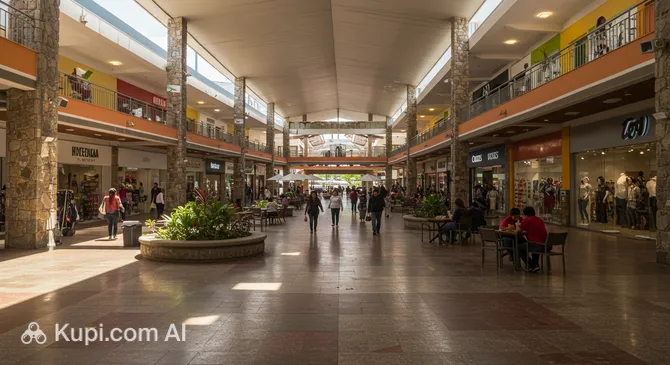
If you prefer a one-stop shopping experience with modern amenities, the city boasts several impressive malls. The Pradera Xela Shopping Center is one of the largest and most established in the region. Located in Zone 3, it features a wide range of clothing stores, a food court, and a cinema, making it a popular destination for families on weekends.
Pradera Xela Shopping Center. Illustration.
Source: Kupi.com AI
Traveler photos:
Another prominent destination is the Utz Ulew Mall, easily recognizable by its towering, onion-shaped dome structure. This upscale complex offers a sophisticated shopping environment with international brands, trendy coffee shops, and plenty of parking. It is an excellent place to find high-quality apparel or simply enjoy a comfortable stroll indoors, away from the elements.
However, to truly experience the soul of Xela, you must visit its traditional markets. Mercado La Democracia in Zone 3 is a bustling labyrinth of stalls that spills out onto the surrounding streets. Here, vendors sell fresh fruits, vegetables, flowers, and household items in a lively, authentic atmosphere. For an even larger scale, Mercado Minerva, located near the bus terminal, is the city's main trading post. It is a chaotic but colorful experience where wholesale goods meet retail, offering a glimpse into the daily life of the highlands.
When it comes to souvenirs, Quetzaltenango specializes in items that reflect its highland heritage. Textiles are a top choice, with intricate huipiles (blouses) and blankets woven in the distinct patterns of nearby towns like Totonicapán and Zunil. The region is also famous for its chocolate, often sold in discs for making hot cocoa, and shecas, a traditional sweet bread that makes for a delicious edible gift. Additionally, bottles of Caldo de Frutas, the local artisanal fruit liquor, are a unique keepsake found only in this area.
Store hours typically run from 9:00 AM to 6:00 PM or 7:00 PM for general retail shops, while shopping malls usually stay open until 8:00 PM or 9:00 PM. Payment methods vary by location; major malls, supermarkets, and upscale restaurants readily accept credit and debit cards. However, in traditional markets, street stalls, and smaller shops in the historic center, cash is essential. It is advisable to carry small denominations of Quetzales, as vendors often struggle to make change for large bills.
Regarding taxes, a Value Added Tax (IVA) of 12% is generally included in the sticker price of goods. Guatemala does not have a widely accessible tax-refund system for tourists similar to those found in Europe or North America. Therefore, the price you see is typically the final price you pay, and travelers should not expect to claim VAT refunds at the airport upon departure.