Support

Awassa

About the Airport

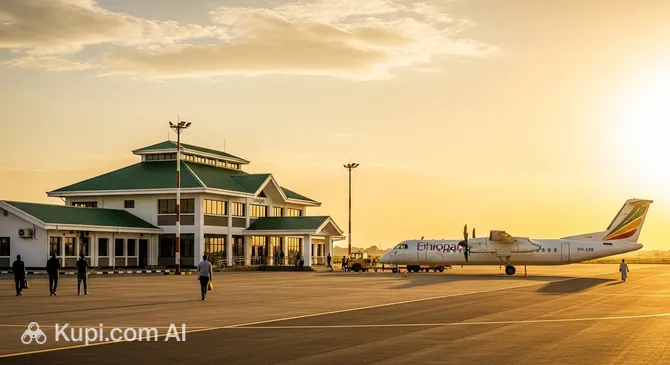
Awassa. Source: Kupi.com Binoculars

Awassa Airport (AWA), also known as Hawassa Airport, is the modern gateway to the southern part of Ethiopia. Located near the city of the same name on the shores of a picturesque lake, it serves as a key transport hub for tourists and business travellers eager to explore the culturally and naturally rich Sidama region. Opened in 2015, this airport has significantly simplified access to one of the country's fastest-growing cities, offering passengers comfort and convenience at the start of their Ethiopian adventure.

IATA Code AWA
ICAO Code HALA
City Awassa
Distance to Centre approx. 15 km
Status Domestic
Passengers per Year Exact current data unavailable; serves domestic flights.
Popular Airlines Ethiopian Airlines
Schedule "Awassa" Online Board

Despite its modest size, Awassa Airport boasts modern infrastructure. Its main feature is a new runway over 3,000 metres long, capable of accommodating modern aircraft. The airport primarily serves domestic flights, mainly to the capital Addis Ababa, operated by the national carrier Ethiopian Airlines. This makes Awassa easily accessible for travellers arriving in Ethiopia via Bole International Airport.

Contact Information

Finding direct and up-to-date contact details for a small regional airport like Awassa (AWA) can be challenging, as it does not have a centralised public information service. Most inquiries are handled through the airlines operating the flights.

  • Official Website: Awassa Airport (also known as Hawassa) does not have a separate official website. It is recommended to check all information regarding flights, departure, and arrival status on the website of the airline you are flying with (e.g., Ethiopian Airlines).
  • Information Desk Phone: There is no direct public phone number for general inquiries at the airport. For real-time information regarding your flight, please contact your airline.
  • Airport Address: Hawassa Airport, Sidama, Ethiopia. The airport is located northwest of the city of Awassa.
  • Email: A dedicated email address for passenger communication is not provided.
  • Social Media: The airport does not maintain official social media pages.
  • Lost & Found Information: If your luggage has been lost or damaged, you must contact the Lost & Found service of your airline directly at the arrival airport or through their official support channels.
  • Passenger Support Contacts: For all questions related to tickets, check-in, special needs, or schedule changes, please contact your airline's customer support service.

How to Get to the Airport

There are several ways to get to Awassa Airport (AWA) from the city centre of Awassa. The choice of transport depends on your budget, the amount of luggage, and the time you have available.

The most convenient and fastest option for tourists is a taxi or private transfer. The journey from the city centre to the airport usually takes about 20-30 minutes, depending on traffic. It is essential to discuss the cost of the trip with the driver in advance, as most taxis are not equipped with meters. A taxi is the most reliable way to reach the airport on time, especially if you have many suitcases.

A more economical alternative is a ride on a local three-wheeled taxi, known as a "Bajaj". This is a popular mode of transport in cities across Ethiopia, excellent for short distances and travellers with light luggage. As with regular taxis, you must agree on the price before starting the journey. This option allows you to save money and experience the local atmosphere.

Although there is a public transport network in the city in the form of minibuses, tourists may find it inconvenient for trips to the airport. They are often crowded, and there is practically no space for large luggage. If you are travelling light and are ready for an adventure, you can check the route with locals, but for guaranteed comfort, it is better to choose another method.

For those who prefer maximum freedom of movement, car rental is available. Several rental agencies operate in Awassa, but it is recommended to book a car well in advance, especially during the tourist season. Ensure you have an International Driving Permit. There is parking at the airport, but it is designed more for short-term stops for dropping off and picking up passengers than for long-term vehicle storage.

Terminals and Map

Awassa Airport (AWA) is a modern and compact aviation hub served by one passenger terminal. The building was constructed relatively recently, so it features a thoughtful and passenger-friendly structure. The terminal handles all flights—both arrivals and departures—which completely eliminates the need to transfer between different buildings and makes navigation within the airport extremely simple.

The terminal layout is intuitive. All main zones are located sequentially and within walking distance of each other. Immediately after entering the building, you find yourself in the general area with check-in counters. After completing check-in and dropping off luggage, passengers proceed to security screening, followed by a small but comfortable departure lounge with several boarding gates. The arrival zone is just as simple: after disembarking the aircraft, passengers enter the baggage claim hall, and from there, proceed directly to the exit for taxis and parking.

Thanks to the airport's compact size and low passenger volume, completing all pre-flight procedures usually does not take much time. Queues for check-in and security are generally minimal. For domestic flights, it is recommended to arrive at the airport approximately 1-1.5 hours before departure. This time will be more than sufficient to complete all formalities without rushing and wait for your flight. Getting lost in Awassa airport is practically impossible, making it very convenient for travellers.

Airport History

The history of Awassa Airport (AWA), also known as Hawassa Airport, does not span many decades, as it is one of the most modern aviation hubs in Ethiopia. Its grand opening took place in May 2016, marking a significant event for the entire region.

The primary reason for the airport's construction was the need to improve transport infrastructure to support rapid economic growth. The gateway was intended to serve the major Hawassa Industrial Park, as well as to stimulate tourism development around Lake Awassa and other picturesque lakes of the Rift Valley. The project was implemented as part of a government programme to develop regional aviation and connect remote parts of the country with the capital.

The airport was designed and built to modern international standards from the outset. Its runway and terminal were initially calculated to accommodate medium-haul aircraft, such as the Boeing 737 and similar models. Therefore, the airport's history is not a tale of numerous modernisations, but an example of the purposeful creation of an advanced infrastructure facility from scratch.

Thus, the main achievement in the short history of Awassa Airport is its role as a catalyst for economic development and a key transport hub. It has opened the region to business and travellers, significantly reducing travel time and providing new opportunities for locals and visitors to the country.

Services and Facilities

Awassa Airport (AWA) is a regional air hub providing passengers with the essential amenities needed for a comfortable wait for their flight. The airport's infrastructure is focused on meeting the basic needs of travellers departing from or arriving in this scenic region of Ethiopia.

In the terminal, you will find small cafes and snack bars where you can have a bite to eat or drink coffee before your flight. There are also several shops offering souvenirs, travel goods, and locally produced products. Waiting areas are equipped with seats, though it is worth noting that seating may be limited during peak hours. Facilities for charging electronic devices and access to Wi-Fi may be unstable, so it is recommended to carry a portable power bank.

Basic services such as a currency exchange or ATM are usually available on the airport premises, but for larger transactions, it is better to use banking services in the city of Awassa itself. The terminal building has a first aid post. Airport staff are ready to assist passengers travelling with children and persons with reduced mobility. To receive special assistance, such as the provision of a wheelchair, it is recommended to contact your airline in advance.

There are no specialised business lounges or conference centres at the airport. For business meetings, it is better to use the infrastructure of hotels and business centres in Awassa. There are also no hotels directly on the airport grounds; however, the city, located a few minutes' drive away, offers a wide selection of accommodation options to suit every taste and budget.

Where to Eat

When planning a flight from the city of Awassa, it is important to remember that Awassa Airport (AWA) is a small regional airport, and the choice of dining establishments here is quite modest. Unlike large international hubs, you will not find a wide variety of restaurants and cafes here, but having a snack before departure is still possible.

A small cafe or kiosk usually operates within the single airport terminal. Most often, such points are located in the public hall before the security zone (landside), but sometimes a small counter with drinks and snacks may be found in the departure zone (airside). Here you can order Ethiopia's signature drink—magnificent local coffee, known as "Buna". It is typically served with fresh pastries, sandwiches, or other simple snacks.

For a quick snack, a cup of aromatic coffee with a bun is ideal. If you are counting on a full lunch or dinner, it is highly recommended to eat at one of the numerous establishments in the city of Awassa before travelling to the airport. This will allow you to enjoy the full variety of Ethiopian cuisine without rushing.

Passengers with specific dietary needs should be particularly attentive. Finding certified vegetarian, vegan, gluten-free, or Halal dishes here is practically impossible. If you have strict dietary restrictions, the most reliable option is to bring food with you.

Prices at the airport are generally low, especially compared to European standards. The cafeteria's opening hours depend directly on the flight schedule—it usually opens a few hours before the first departure and closes after the last plane leaves.

Travel Tips

Travelling through the airport of Awassa city in Ethiopia will be easier and more pleasant if you follow a few useful tips. Since this is a small regional airport serving mainly domestic flights, many procedures here are faster than in major international hubs.

For domestic flights, it is recommended to arrive at the airport 1.5–2 hours before departure. This time will be sufficient to check in for the flight and pass security screening without haste. Keep your identification and ticket ready. To save time, use online check-in if your airline provides this option.

When choosing a seat on a plane flying to or from Awassa, prefer a window seat. You may be treated to stunning views of the Great Rift Valley lakes. If comfort and the ability to leave the cabin quickly upon arrival are important to you, choose an aisle seat.

Hand luggage rules are standard: liquids in containers of no more than 100 ml each must be packed in a transparent bag. Sharp objects and flammable substances are prohibited. Always check the exact allowances and rules on your airline's website, as they may differ slightly.

Awassa Airport is rarely used for transfers. Most likely, your connection will be in Addis Ababa. When planning such a route, ensure you have enough time between flights and check if you need to re-check your luggage. Customs control is only undergone on international flights, so this procedure is absent when flying within Ethiopia.

In case of a flight delay, contact airline representatives for information. Depending on the length of the wait, you may be offered meal vouchers. Since the airport is small, leisure opportunities are limited, so it is useful to have a book, a charged power bank, and a light snack with you. To save money, book tickets in advance and consider travelling with hand luggage only, if possible.

Reached the end of the page?

That means the route is fully explored