Support

Aba Tenna D Yilma Airport

About the Airport

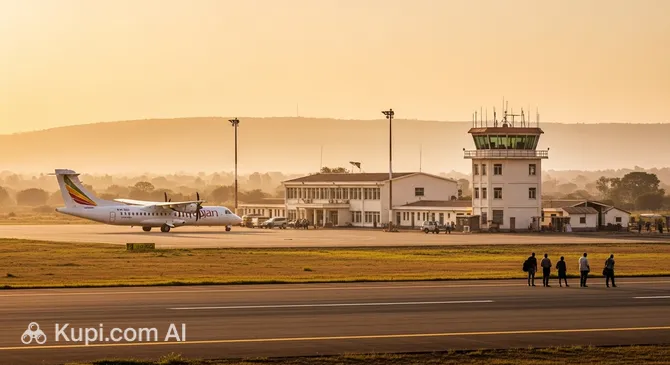
Aba Tenna D Yilma Airport. Source: Kupi.com Binoculars

Aba Tenna D Yilma International Airport serves as the vibrant aerial gateway to Eastern Ethiopia, marking the beginning of a journey into a world of ancient legends and trade routes. The air harbour not only connects the region with the capital but also serves as a starting point for trips to the famous walled city of Harar and the bustling Dire Dawa. Compact and cosy, this airport allows tourists to instantly immerse themselves in the atmosphere of local hospitality, bypassing the hustle and bustle of giant hubs.

IATA Code DIR
ICAO Code HADR
City Dire Dawa
Distance to Centre About 3-5 km
Status International
Passengers per Year Over 200,000
Schedule Regular flights

Airport Features and Benefits

Aba Tenna D Yilma Airport occupies an important place in the country's aviation network, being a significant node for passenger and cargo transport. Its runway, with a length of 2,679 metres, allows it to accommodate modern medium-haul aircraft, ensuring stable connections with Addis Ababa and neighbouring Djibouti.

The main advantage of the terminal is its convenience and the absence of queues typical of large capital airports. Thanks to its favourable location, the journey from the arrival zone to the city centre takes just a few minutes (the distance is only about 3-5 km), which is especially appreciated by travellers tired from the road. Furthermore, the airport plays a critically important role in the region's economy, ensuring the rapid export of local goods.

Contact Information

Below is the main contact information for Aba Tenna D Yilma International Airport (DIR). Please bear in mind that for regional airports, some data may be limited, and for many queries, it is more effective to contact your airline directly.

  • Official Website: The airport is managed by Ethiopian Airports. Up-to-date information can be found on their corporate portal. A separate website dedicated exclusively to the Dire Dawa airport may not be available.
  • Information Desk Phone: The main contact number for the airport is: +251 25 111 2570. It is also recommended to contact your airline's representative office to clarify flight information.
  • Address: Aba Tenna Dejazmach Yilma International Airport (DIR), Dire Dawa, Ethiopia. The airport is located approximately 2 km from the city centre of Dire Dawa.
  • Email: As a rule, the airport does not have a publicly available email address for general enquiries. For communication, it is recommended to use contact forms on the official websites of airlines or the operator, Ethiopian Airports.
  • Social Media: To obtain real-time information about flight status and airport news, it is best to follow the official pages of the main carrier — Ethiopian Airlines.
  • Lost Luggage Information: For all questions related to lost or damaged luggage, it is necessary to contact the Lost & Found service of the airline whose services you used.
  • Passenger Support Contacts: To resolve issues regarding booking, changing tickets, check-in, and other aspects of the flight, you should contact your airline's support service directly.

How to Get to the Airport

Getting to Aba Tenna Dejazmach Yilma International Airport (DIR) from the city of Dire Dawa is effortless, as it is located just 2 km from the centre. The trip usually takes 5–10 minutes depending on traffic conditions. In Ethiopia, several convenient modes of transport are available for tourists, ranging from budget-friendly to more comfortable options.

Taxis and Auto-Rickshaws (Bajaj)

The most popular and convenient way to get to the airport is by taxi. You can find blue-and-white Lada cars or more modern taxis throughout the city. It is extremely important to agree on the fare in advance, as meters are rarely used. The trip will be inexpensive, but the price may vary. An even more budget-friendly and authentic option is the three-wheeled auto-rickshaws known as "Bajaj". They are ideal for travellers with light luggage and offer a quick and cheap way to reach the terminal.

Public Transport

For the most economical and adventurous travellers, there are local route taxis — blue minibuses that locals call "blue donkeys". This is the cheapest way to travel, but it may not be very comfortable due to the large number of passengers and the lack of a strict schedule. If you want to immerse yourself in local life and are travelling light, this can be an interesting experience.

Car Rental and Transfers

In Dire Dawa, you can rent a car, however, many tourists prefer to hire a car with a driver. This eliminates the need to navigate the peculiarities of local traffic and search for parking. Also, many hotels offer an airport transfer service, which is a reliable and convenient, albeit more expensive, option. It is recommended to book a transfer in advance.

Airport Parking

If you decide to drive to the airport in your own or a rented vehicle, parking is provided at Aba Tenna Dejazmach Yilma Airport. Usually, both short-term and long-term parking options are available, which is convenient for those leaving their car for the duration of their trip.

Terminals and Map

Aba Tenna D Yilma Airport is a compact and functional aviation hub with one main terminal. Such a structure is typical for regional airports and makes navigation for passengers as simple and convenient as possible. The terminal serves both international and domestic flights, effectively separating passenger flows.

The terminal building has a simple and clear layout. Departure and arrival zones are clearly separated. Typically, the ground level houses the check-in counters, the baggage claim area for arriving passengers, and customs control counters. Waiting lounges and boarding gates are located after passing through security and passport control, which is mandatory for international destinations.

Due to the small size of the airport, completing pre-flight formalities here usually takes less time than in major transport hubs. Nevertheless, it is recommended to arrive at the airport well in advance: at least 2 hours before an international flight and 1–1.5 hours before a domestic one. This will allow you to calmly check in your luggage, pass through screening, and find your boarding gate.

To navigate the terminal, simply follow the signs, which are clearly visible and intuitive. All main services — from check-in to boarding — are within the same building and within walking distance of each other. You can move between zones on foot; there is no need to use shuttles or other types of transport. Airport staff are always ready to help and answer passengers' questions.

Airport History

Aba Tenna Dejazmach Yilma International Airport (DIR) is not just an air gateway to the city of Dire Dawa, but also one of the oldest and most significant aviation hubs in Ethiopia. Its history is closely intertwined with the development of the city itself. The airport is named after Dejazmach Yilma Makonnen, a respected historical figure and governor of Harar province, highlighting its deep roots in local culture.

The airport was founded in the first half of the 20th century, and its emergence was directly linked to the construction of the famous Ethio-Djibouti railway, which gave life to the city of Dire Dawa. Initially, the airfield was used mainly for military and postal needs. In the mid-1930s, its infrastructure was significantly expanded, laying the foundation for future growth as an important civil facility.

A new stage in the airport's history began after the founding of the national carrier, Ethiopian Airlines, in 1945. It quickly turned into a key domestic hub, ensuring air connections between the eastern regions of the country and the capital. For many decades, it served a growing passenger flow and made a significant contribution to the economic development of the region.

One of the main events in the modern history of the airport was its large-scale modernisation and acquisition of international status. In the late 20th and early 21st centuries, a comprehensive reconstruction was carried out: a new passenger terminal was built, and the runway was improved. This allowed the airport to accept larger aircraft, such as the Boeing 737, and launch direct flights to neighbouring countries.

Today, Aba Tenna Dejazmach Yilma Airport is the second most important international airport in Ethiopia. It serves not only as a starting point for tourists wishing to visit Dire Dawa and the ancient city of Harar but also plays an important role as a cargo centre. An interesting fact: the airport is one of the key nodes for the export of khat — an important agricultural crop for the local economy, making it a unique economic facility in the region.

Services and Amenities

Aba Tenna Dejazmach Yilma International Airport (DIR), despite its modest size, provides passengers with all necessary services for a comfortable wait for their flight. In the terminal, you will find several cafes and snack bars where you can have a bite to eat, drink coffee, or try local beverages. Small shops are also open, offering souvenirs, travel goods, and newspapers.

For those who appreciate enhanced comfort, the airport features waiting lounges. Business class passengers and airline loyalty card holders can use the VIP lounge services, where snacks, drinks, and a more private atmosphere are offered. It is recommended to check access conditions with your airline. Other passengers can settle in the general waiting hall.

Staying connected at the airport is easy. Passengers have access to wireless internet (Wi-Fi), and special stands and sockets are provided in the waiting hall for charging gadgets. Before departure or upon arrival in Ethiopia, you can use financial services: currency exchange points and ATMs where you can withdraw cash are available in the terminal.

The airport is equipped to assist various categories of passengers. There is a medical point on the premises for first aid. For travellers with children, mother and child rooms are provided. Passengers with reduced mobility can count on staff assistance, as well as the presence of ramps and specially equipped restrooms for convenient movement around the terminal.

Although there are no hotels directly on the airport grounds, many accommodation options can be found in the city of Dire Dawa, which is just a few minutes away by taxi. For business travellers, basic business services, such as copying or faxing, may be available in the VIP lounge, however, specialised conference rooms are not provided at the airport.

Where to Eat

The selection of dining establishments at Aba Tenna D Yilma International Airport (DIR) reflects its compact size and regional significance. You won't find large international chains here, but you can enjoy authentic local cuisine and drink a cup of famous Ethiopian coffee before your flight. The main food outlets are concentrated in the main terminal building, typically in the public zone (landside, before security control).

For travellers wishing to have a full meal, small restaurants operating in the airport offer classics of Ethiopian cuisine. This is an excellent opportunity to enjoy dishes such as injera (traditional flatbread made from teff flour) with various sauces and stews called "wat" one last time. Be sure to try doro wat (spicy chicken stew) or numerous vegetarian options. For a quick snack, local cafes are perfect, where you can order fresh pastries, sandwiches, and, of course, excellent coffee prepared in the traditional way.

The location of establishments should be taken into account when planning your time. Most cafes and restaurants are located in the zone before security control (landside). After passing through screening (airside), the choice is usually very limited and may be reduced to a small kiosk with drinks and packaged snacks. Therefore, if you want a substantial meal, it is better to do so before checking in for your flight. Opening hours are usually tied to the flight schedule, especially international ones.

From the perspective of dietary preferences, Ethiopian cuisine offers many options. Thanks to local Orthodox traditions involving fasting days, finding vegetarian and vegan dishes is very easy — simply ask for the "fasting food" menu. Halal dishes are also widely available. Travellers with gluten intolerance should clarify the composition of injera: traditionally it is made from gluten-free teff flour, but sometimes wheat or barley flour is added.

Prices for food and drinks at Dire Dawa airport are generally moderate, especially in comparison with large international hubs. Although the cost will be slightly higher than in the city itself, it remains quite affordable. This allows for a comfortable snack or lunch without spending significant funds.

Travel Tips

To ensure your journey through Aba Tenna D Yilma Airport in Dire Dawa is as comfortable as possible, make use of these practical tips. Planning ahead will help avoid unnecessary stress and make your trip more pleasant.

Arrival Time and Check-in. For international flights, it is recommended to arrive at the airport at least 3 hours before departure, and for domestic flights — 1.5–2 hours. Despite the relatively small size of the terminal, queues can form at check-in counters and security points during peak hours. Keep your passport, visa (if required), and ticket handy to speed up the process.

Passing Control and Seat Selection. When passing through security control, be prepared to remove all electronic devices and containers with liquids from your hand luggage. To get a window seat with the best view of the unique landscapes of Ethiopia or an aisle seat for greater comfort, try to check in online as soon as it opens with your airline.

Hand Luggage. Standard rules apply here as well: liquids are allowed in containers up to 100 ml, packed in a transparent bag. Sharp objects, weapons, and flammable substances are prohibited. Transport power banks and lithium batteries only in hand luggage, not in checked baggage. When exporting souvenirs, especially antique items or handicrafts, check customs regulations to avoid problems.

Customs Control and Transit. When entering or leaving, be prepared to declare large amounts of foreign currency and valuable items. If you are flying in transit, clarify in advance whether you will need to collect and re-check your luggage. Typically, on short connections, luggage is transferred automatically, but it is always better to double-check this with an airline representative.

Savings and Unforeseen Situations. To save money, check in for your flight online and bring an empty water bottle that can be filled after passing security. In case of a flight delay or cancellation, immediately contact your airline representative. They are obliged to provide you with information, and in case of a long wait — vouchers for food or hotel accommodation. Keep all receipts for unforeseen expenses for possible compensation.

Reached the end of the page?

That means the route is fully explored